
Product Quality Audit Checklist With Task Deadline
Try Before you Buy Download Free Sample Product
Audience
Editable
of Time
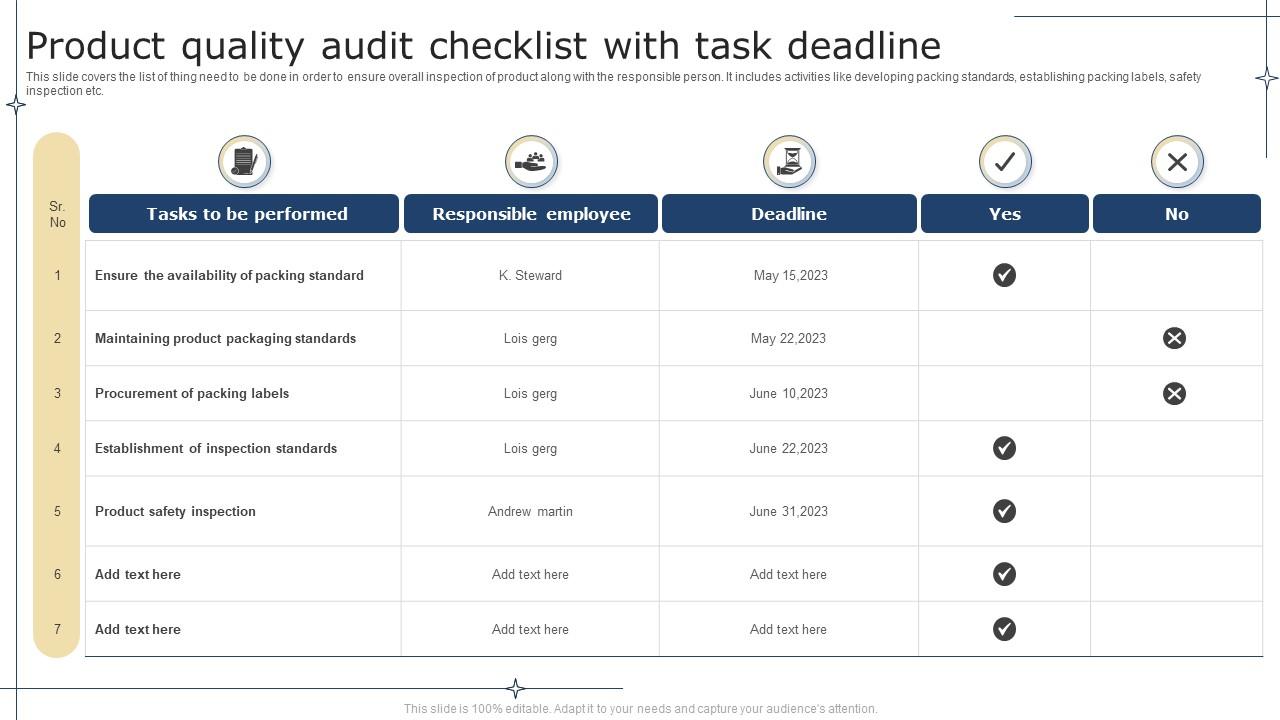
This slide covers the list of thing need to be done in order to ensure overall inspection of product along with the responsible person. It includes activities like developing packing standards, establishing packing labels, safety inspection etc.
People who downloaded this PowerPoint presentation also viewed the following :
Product Quality Audit Checklist With Task Deadline with all 6 slides:
Use our Product Quality Audit Checklist With Task Deadline to effectively help you save your valuable time. They are readymade to fit into any presentation structure.
FAQs for Product Quality Audit Checklist
Key elements include product specifications compliance, manufacturing process controls, raw material quality standards, testing protocols, documentation accuracy, and defect tracking systems. These components streamline quality assurance by ensuring consistent production standards, minimizing costly recalls, and enhancing customer satisfaction, with many manufacturing organizations finding that comprehensive checklists ultimately deliver improved operational efficiency and competitive market advantage.
Audit frequency depends on product complexity, regulatory requirements, risk levels, production volumes, and historical quality performance data. High-risk products like pharmaceuticals or automotive components typically require monthly audits, while stable consumer goods may need quarterly reviews, with many organizations finding that data-driven scheduling based on defect rates and customer feedback ultimately delivers optimal quality assurance and cost efficiency.
Employee training ensures consistent quality standards by educating staff on proper procedures, quality control measures, inspection techniques, and compliance requirements across all production stages. Well-trained employees can identify defects early, reduce waste, maintain equipment properly, and follow standardized processes, with manufacturing organizations finding that comprehensive training programs ultimately deliver fewer recalls, higher customer satisfaction, and stronger competitive advantage.
Technology enhances product quality audit efficiency through automated data collection, real-time monitoring systems, digital documentation platforms, AI-powered defect detection, and integrated analytics dashboards. These technologies streamline auditing processes by reducing manual inspection time, minimizing human error, and enabling predictive quality insights, with manufacturing and pharmaceutical companies finding that digital audit systems deliver faster compliance reporting and significantly improved operational transparency.
Common pitfalls include inadequate preparation, inconsistent evaluation criteria, insufficient documentation, limited stakeholder involvement, and rushing the audit process. These oversights compromise audit effectiveness by missing critical defects, creating compliance gaps, and reducing actionable insights, with many organizations finding that thorough preparation and systematic approaches ultimately deliver more accurate assessments and sustainable quality improvements.
Customer feedback and complaints directly shape audit checklists by identifying recurring quality issues, performance gaps, and customer pain points that require systematic inspection. These insights enable organizations to prioritize critical checkpoints, refine testing protocols, and enhance quality standards, with many manufacturers finding that customer-driven audits significantly reduce defect rates and improve product reliability.
Quality audit checklists can be tailored by incorporating industry-specific regulatory requirements, customized risk assessment criteria, sector-relevant compliance standards, specialized equipment protocols, and targeted performance metrics. For example, pharmaceutical companies emphasize contamination controls and FDA compliance, while manufacturing focuses on safety protocols and production efficiency, ultimately enabling organizations to streamline auditing processes and maintain competitive advantage.
Companies should document audit findings through structured reports that include identified deficiencies, root cause analyses, corrective action plans, and assigned responsibilities with timelines. This systematic approach enables organizations to track resolution progress, demonstrate compliance to stakeholders, and build comprehensive quality databases, with many manufacturers finding that detailed documentation streamlines future audits while enhancing overall operational transparency.
Key metrics include defect rates, customer satisfaction scores, compliance percentages, return/warranty claim rates, and first-pass yield measurements. These metrics enable organizations to identify quality gaps, track improvement trends, and benchmark performance against industry standards, with many manufacturing and retail companies finding that combining quantitative defect data with customer feedback scores delivers comprehensive quality insights and competitive advantage.
Cross-functional teams enhance product quality audits by bringing diverse expertise from engineering, manufacturing, quality assurance, supply chain, and customer service departments together. These collaborative approaches streamline audit processes through shared insights, comprehensive risk assessment, and real-time problem identification, with many organizations finding that integrated team structures deliver faster issue resolution and improved product consistency.
Failing to meet product quality standards can result in product liability lawsuits, regulatory fines, compliance violations, recall costs, and potential criminal charges in severe cases. These legal consequences ultimately lead to significant financial losses, damaged brand reputation, and increased insurance premiums, with many companies finding that proactive quality management systems deliver far greater long-term value than reactive legal defense strategies.
Risk assessments identify potential quality vulnerabilities, compliance gaps, regulatory requirements, supplier issues, and process weaknesses that must be systematically evaluated during audits. Through comprehensive risk mapping, organizations prioritize critical checkpoints, allocate inspection resources strategically, and focus audit efforts on high-impact areas, ultimately delivering proactive quality control and enhanced product reliability across manufacturing operations.
Best practices for updating a product quality audit checklist include conducting regular reviews based on regulatory changes, incorporating feedback from audit findings, aligning with industry standards evolution, integrating new technology requirements, and analyzing customer complaint patterns. Through systematic quarterly assessments, organizations streamline compliance processes, enhance defect detection capabilities, and maintain competitive advantage, with many manufacturing and healthcare companies finding that proactive checklist evolution significantly reduces audit failures while improving operational efficiency.
Companies foster a quality culture through leadership commitment, employee training programs, clear quality standards, regular feedback mechanisms, and recognition systems that reward quality achievements. This approach enables organizations across manufacturing, healthcare, and financial services to streamline audit processes, reduce non-conformances, and enhance operational efficiency, with many finding that engaged employees proactively identify issues before formal audits.
Quality audit management tools include digital checklists, audit management software, statistical process control systems, compliance tracking platforms, and integrated quality management suites. These technologies streamline audit workflows by automating documentation, enabling real-time collaboration, and generating comprehensive reports, with many manufacturing and retail organizations finding that centralized platforms significantly reduce audit time while enhancing accuracy and regulatory compliance.
-
A library of engaging, customizable and content-ready templates.Â
-
Great work on designing the presentation. I just loved it!







