Product recall traceability checklist with comments

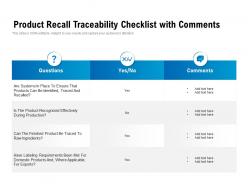
Product recall traceability checklist with comments
Slide 1 of 2
Favourites Favourites

Try Before you Buy Download Free Sample Product

Audience Impress Your
Audience
Editable 100%
Editable
Time Save Hours
of Time
The Biggest Sale is ending soon in
0
0
:
0
0
:
0
0
Presenting this set of slides with name Product Recall Traceability Checklist With Comments. The topics discussed in these slides are Effectively, Raw Ingredients, Requirements. This is a completely editable PowerPoint presentation and is available for immediate download. Download now and impress your audience.

People who downloaded this PowerPoint presentation also viewed the following :

FAQs for Product recall traceability

Key elements include affected product identification, batch/lot numbers, distribution channels, customer contact information, and regulatory compliance requirements. These components streamline recall execution by enabling rapid product location, facilitating targeted customer notifications, and ensuring regulatory adherence, with manufacturers finding that comprehensive checklists significantly reduce recall timeframes and enhance consumer safety outcomes.

Organizations ensure regulatory compliance during recalls by establishing clear documentation protocols, maintaining comprehensive traceability records, coordinating with regulatory bodies, and implementing standardized communication procedures. Through systematic recall management systems, companies in pharmaceuticals, automotive, and food manufacturing streamline reporting requirements, accelerate response times, and minimize legal exposure, while ultimately protecting consumer safety and preserving brand reputation in increasingly regulated markets.

Technology revolutionizes product traceability during recalls through IoT sensors, blockchain systems, RFID tracking, barcode scanning, and cloud-based databases that create comprehensive audit trails. These digital solutions enable manufacturers to instantly identify affected batches, trace distribution channels, and notify retailers within hours rather than days, ultimately minimizing consumer risk while reducing recall costs and protecting brand reputation.

Traceability checklists should be reviewed quarterly and updated immediately following regulatory changes, product recalls, or supply chain modifications. Many organizations in food, pharmaceutical, and automotive sectors find that regular quarterly reviews, combined with real-time updates when incidents occur, ensure comprehensive coverage while maintaining operational efficiency and regulatory compliance.

Common pitfalls include incomplete supplier documentation, inadequate lot tracking systems, poor communication protocols, insufficient staff training, and outdated contact databases. These oversights can severely delay recall execution and regulatory compliance, with many companies finding that regular audits of their traceability systems and cross-departmental coordination drills ultimately deliver faster response times and reduced liability exposure.

Companies leverage data analytics to improve recall traceability by implementing predictive modeling, real-time monitoring systems, automated pattern recognition, and integrated supply chain visibility platforms. Through advanced analytics, organizations can identify potential quality issues earlier, accelerate product identification during recalls, and streamline communication across distribution networks, ultimately reducing response times and minimizing financial impact while enhancing consumer safety.

Staff training on traceability checklists should include comprehensive system navigation, data entry protocols, escalation procedures, documentation requirements, and regular assessment cycles. Through structured workshops and hands-on simulations, organizations can ensure employees understand critical checkpoints, maintain accurate records, and respond swiftly during recalls, ultimately delivering faster containment and enhanced consumer safety.

Supply chain transparency significantly enhances product recall traceability by providing comprehensive visibility into sourcing, manufacturing processes, and distribution channels throughout the entire product journey. With detailed supplier documentation, batch tracking systems, and real-time inventory monitoring, companies can quickly identify affected products, pinpoint contamination sources, and execute targeted recalls, ultimately minimizing consumer risk and reducing recall costs.

Consumer recall information should include product purchase date and location, batch or lot numbers, product serial numbers, symptoms or issues experienced, and retained packaging details. This comprehensive data enables manufacturers to quickly identify affected production runs, assess recall scope across retail channels, and implement targeted remediation strategies, ultimately minimizing consumer risk while streamlining recovery operations.

Cross-functional teams enhance product traceability by establishing shared data protocols, implementing integrated tracking systems, and creating unified communication channels across departments. Through collaborative platforms, supply chain, quality assurance, and IT teams streamline information flow, accelerate recall responses, and maintain comprehensive audit trails, ultimately delivering faster incident resolution and enhanced regulatory compliance.

Essential documentation includes batch records, supplier certificates, production logs, distribution tracking, and customer delivery records. These comprehensive records enable manufacturers to quickly identify affected products, trace contamination sources, and execute targeted recalls efficiently, with many organizations finding that detailed documentation significantly reduces recall scope, minimizes costs, and demonstrates regulatory compliance during investigations.

Businesses assess traceability checklist effectiveness by measuring recall completion time, tracking accuracy of product identification, evaluating supplier response rates, and analyzing customer communication success. Through post-recall audits, companies can identify system gaps, streamline future processes, and strengthen supply chain partnerships, with many organizations finding that regular assessment reduces recall costs by up to 40% while enhancing consumer trust.

Risk assessment serves as the foundation for developing effective product recall traceability checklists by identifying potential failure points, prioritizing critical tracking requirements, and establishing clear escalation protocols. This strategic approach enables manufacturers across industries like pharmaceuticals, automotive, and food production to streamline recall procedures, minimize consumer exposure, and ultimately deliver faster containment responses while reducing regulatory penalties and brand damage.

External stakeholders significantly influence recall traceability effectiveness through supply chain transparency, regulatory compliance requirements, and information sharing protocols. Suppliers enhance traceability by providing detailed batch records, retailers streamline communication channels for faster consumer notifications, and regulatory bodies establish standardized reporting frameworks, ultimately enabling organizations to execute more comprehensive recalls while building stronger stakeholder relationships and consumer trust.

Organizations should adopt multi-channel communication strategies including immediate press releases, social media updates, website notifications, direct customer contact, and retailer coordination to ensure comprehensive public awareness. These approaches work by maximizing reach, providing clear instructions, and maintaining transparency throughout the recall process, with many companies finding that proactive, consistent messaging across platforms ultimately preserves consumer trust and minimizes reputational damage.

Ratings and Reviews

0% of 100
Write a review
Most Relevant Reviews

No Reviews