


Project Conclusion Powerpoint Presentation Slides
Need to present a project summary report. Not to worry! We have come with content ready Project Conclusion PowerPoint Presentation Slides. This PPT has various slides on project management including, healthcard, dashboard, performance analysis, deadlines, milestones, budget and cost analysis, open issues etc. Business summary presentation background is custom made to serve the purpose of current professional scenario. Furthermore, project brief Presentation slide can also be used for similar topics like summary and conclusion, project performance report, project description etc. This complete PowerPoint presentation on project summary helps to analyze project performance. You can use this business report complete deck to present project cost revenues and budgets. Our project closure PPT is useful to recognize that objective set have been achieved or not. Download this content ready business summary PPT slide to give an overview of your business project. Bounce your thoughts of our Project Conclusion Powerpoint Presentation Slides They will give you a valuable response.
Need to present a project summary report. Not to worry! We have come with content ready Project Conclusion PowerPoint Prese..




















-

- Google Slides is a new FREE Presentation software from Google.
- All our content is 100% compatible with Google Slides.
- Just download our designs, and upload them to Google Slides and they will work automatically.
- Amaze your audience with SlideTeam and Google Slides.
-

Want Changes to This PPT Slide? Check out our Presentation Design Services
-

- WideScreen Aspect ratio is becoming a very popular format. When you download this product, the downloaded ZIP will contain this product in both standard and widescreen format.
-
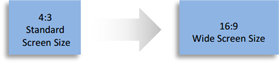
- Some older products that we have may only be in standard format, but they can easily be converted to widescreen.
- To do this, please open the SlideTeam product in Powerpoint, and go to
- Design ( On the top bar) -> Page Setup -> and select "On-screen Show (16:9)” in the drop down for "Slides Sized for".
- The slide or theme will change to widescreen, and all graphics will adjust automatically. You can similarly convert our content to any other desired screen aspect ratio.
Compatible With Google Slides

Get This In WideScreen
You must be logged in to download this presentation.


Do you want to remove this product from your favourites?
PowerPoint presentation slides
Showcasing Project Conclusion PowerPoint Presentation Slides. The PPT deck includes a set of 30 PowerPoint slides and professional layouts. The presentation is 100% editable in PowerPoint. Change the fonts, text, and color as per your requirements., you can download the PPT in both widescreen (16:9) and standard (4:3) aspect ratio. The PPT presentation contains editable charts and graphs, timelines, roadmaps, and other professional PowerPoint templates as well as icons.

People who downloaded this PowerPoint presentation also viewed the following :
Content of this Powerpoint Presentation
Slide 1: This slide introduces Project Conclusion with an image in background.
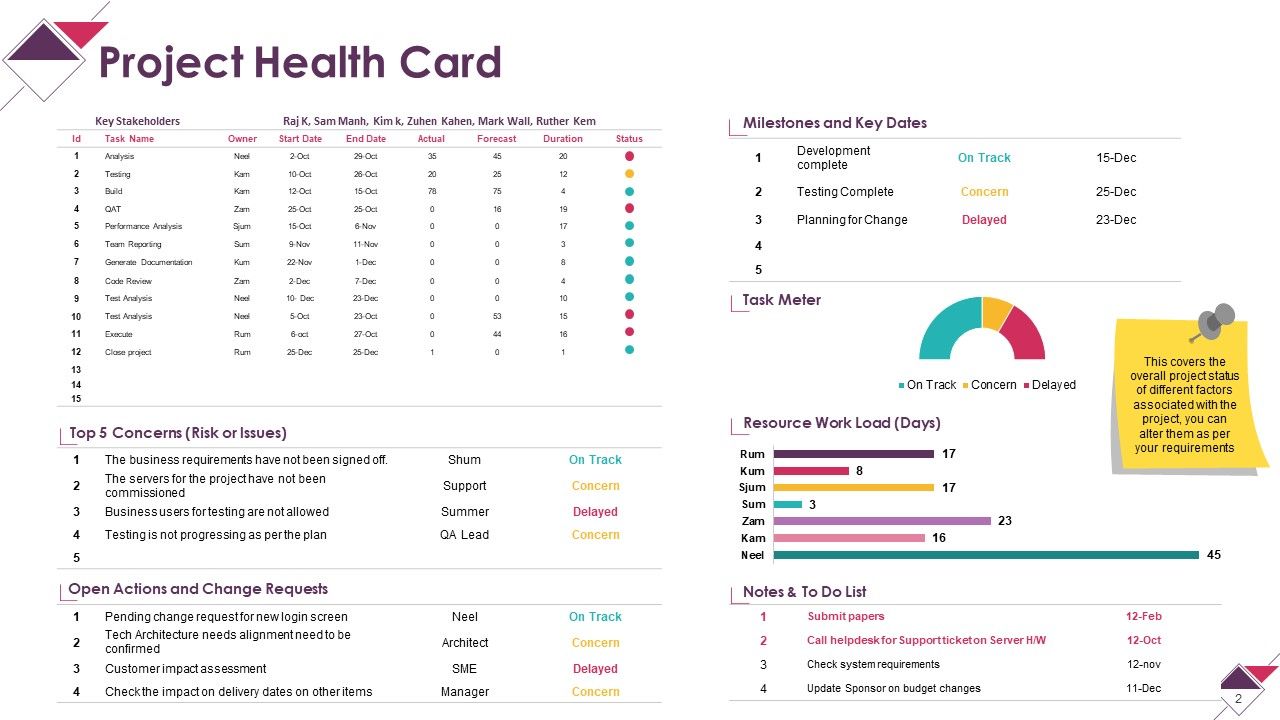
Slide 2: This slide shows a Project Health Card with Task Meter, Milestones and Key Dates, Resource Work Load (Days), Notes & To Do List, Open Actions and Change Requests, Top 5 Concerns (Risk or Issues).
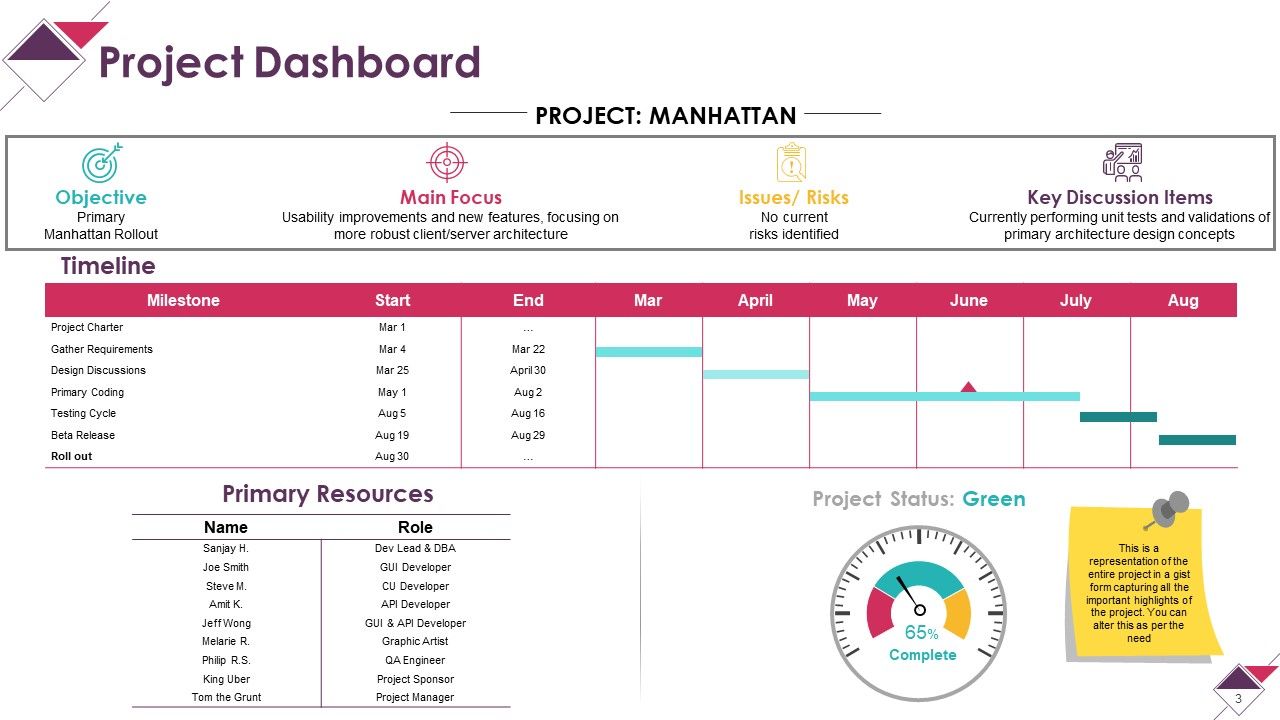
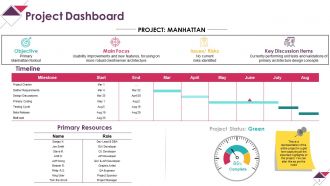
Slide 3: This slide presents a Project Dashboard with- Primary Resources, Objective, Main Focus, Issues/ Risks, Key Discussion Items, Timeline.
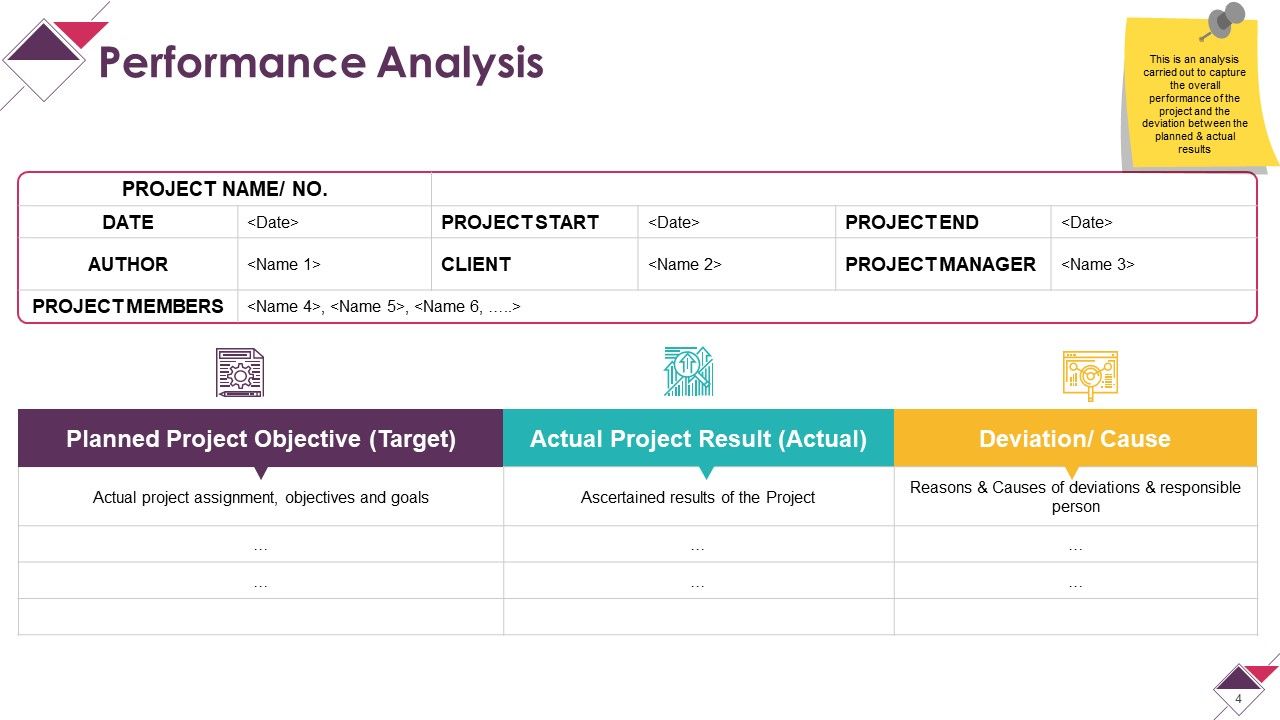
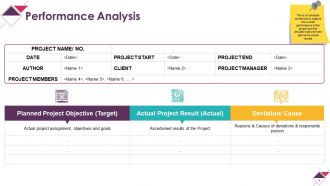
Slide 4: This slide showcases a Performance Analysis with- Planned Project Objective (Target), Actual Project Result (Actual), Deviation/ Cause. This is an analysis carried out to capture the overall performance of the project and the deviation between the planned & actual results.
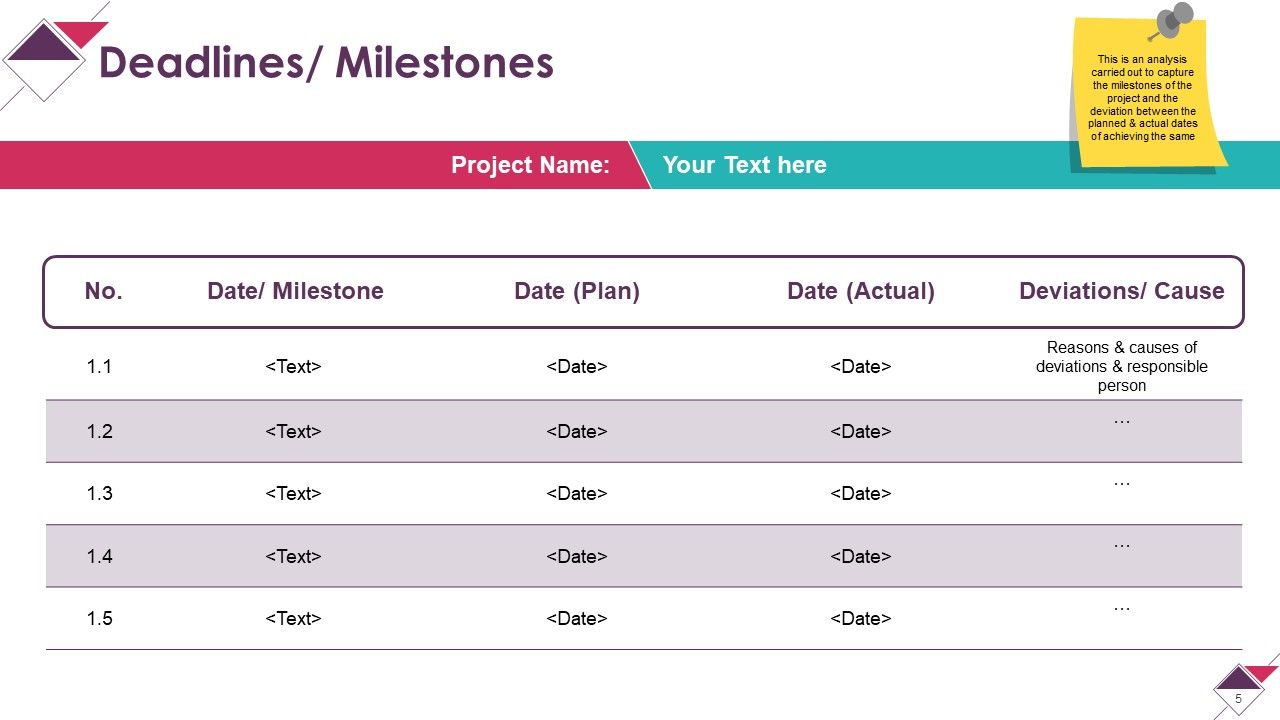
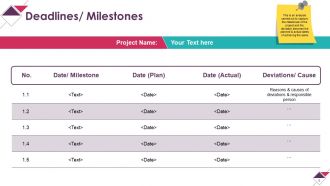
Slide 5: This slide presents Deadlines/ Milestones with- Date/ Milestone, Date (Plan), Date (Actual), Deviations/ Cause, Project Name. This is an analysis carried out to capture the milestones of the project and the deviation between the planned & actual dates of achieving the same
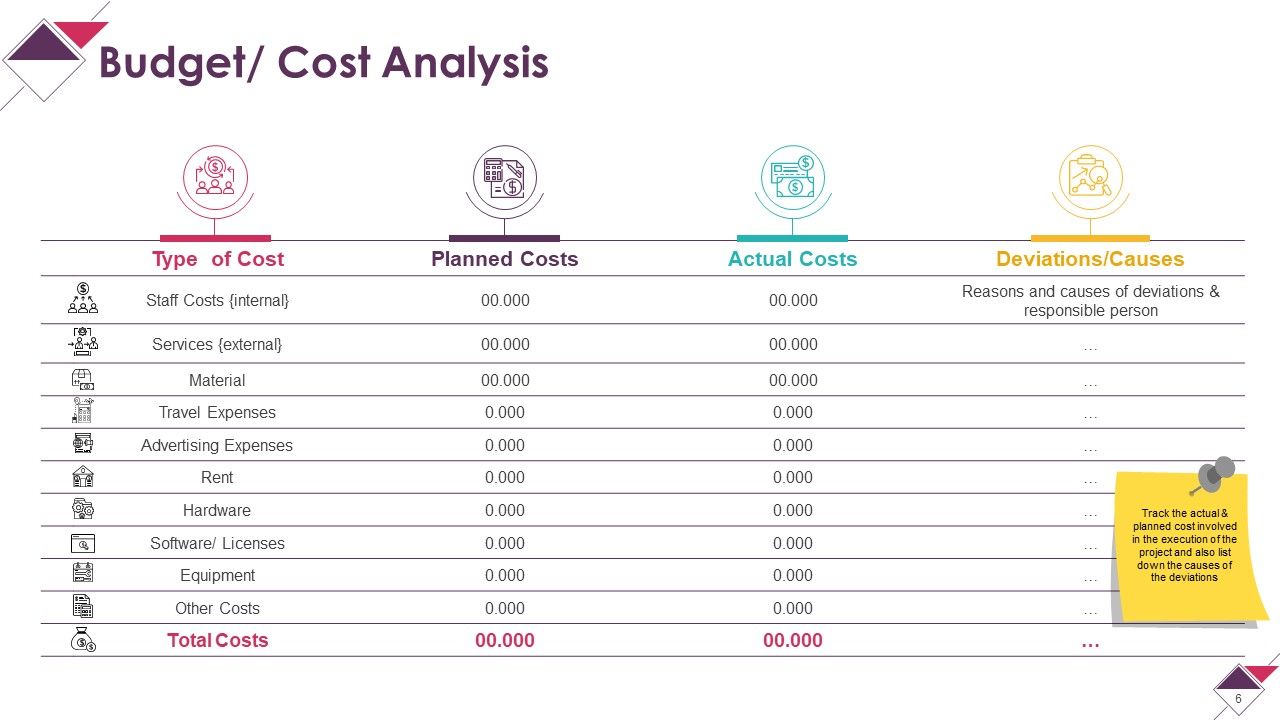
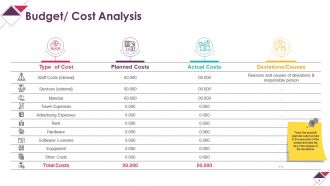
Slide 6: This slide presents Budget/ Cost Analysis. Track the actual & planned cost involved in the execution of the project and also list down the causes of the deviations.
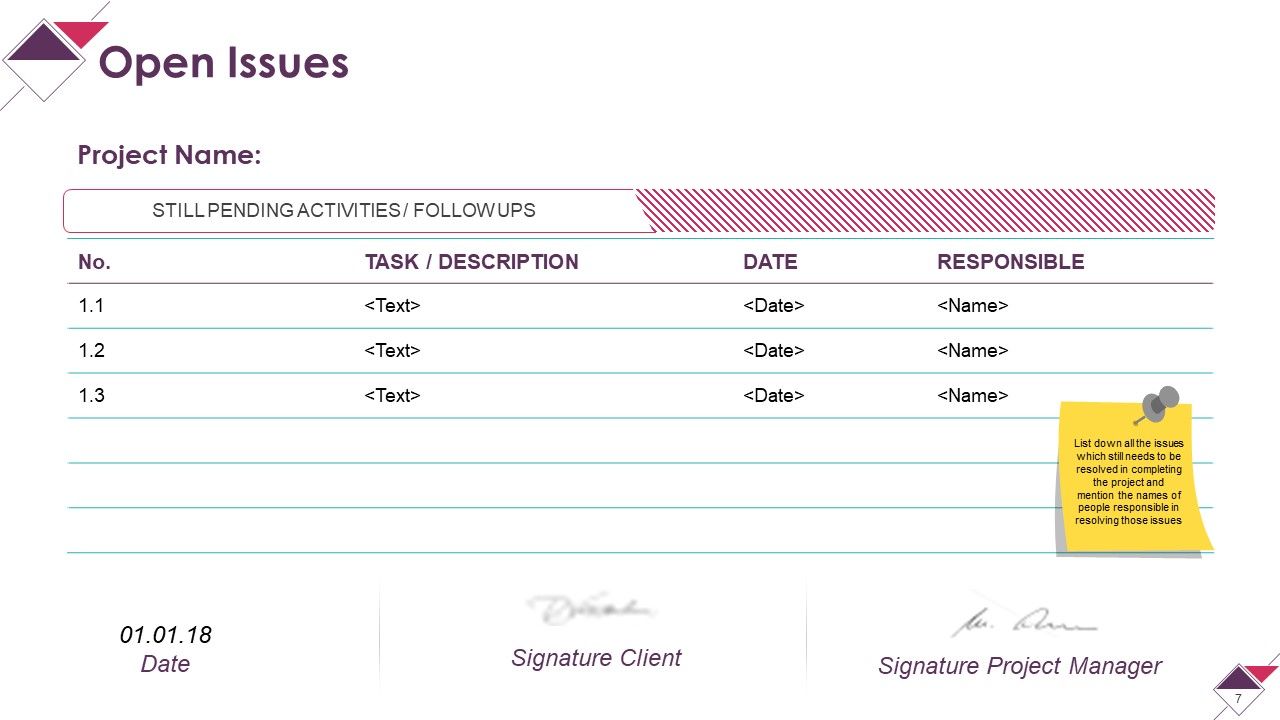
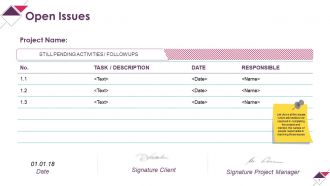
Slide 7: This slide displays Open Issues with- Project Name, Date, Responsible to address issues. List down all the issues which still needs to be resolved in completing the project and mention the names of people responsible in resolving those issues.
Slide 8: This is a Coffee Break image slide to halt. This is a representative image, and can be replaced by your own image.
Slide 9: This slide is titled Graph & charts
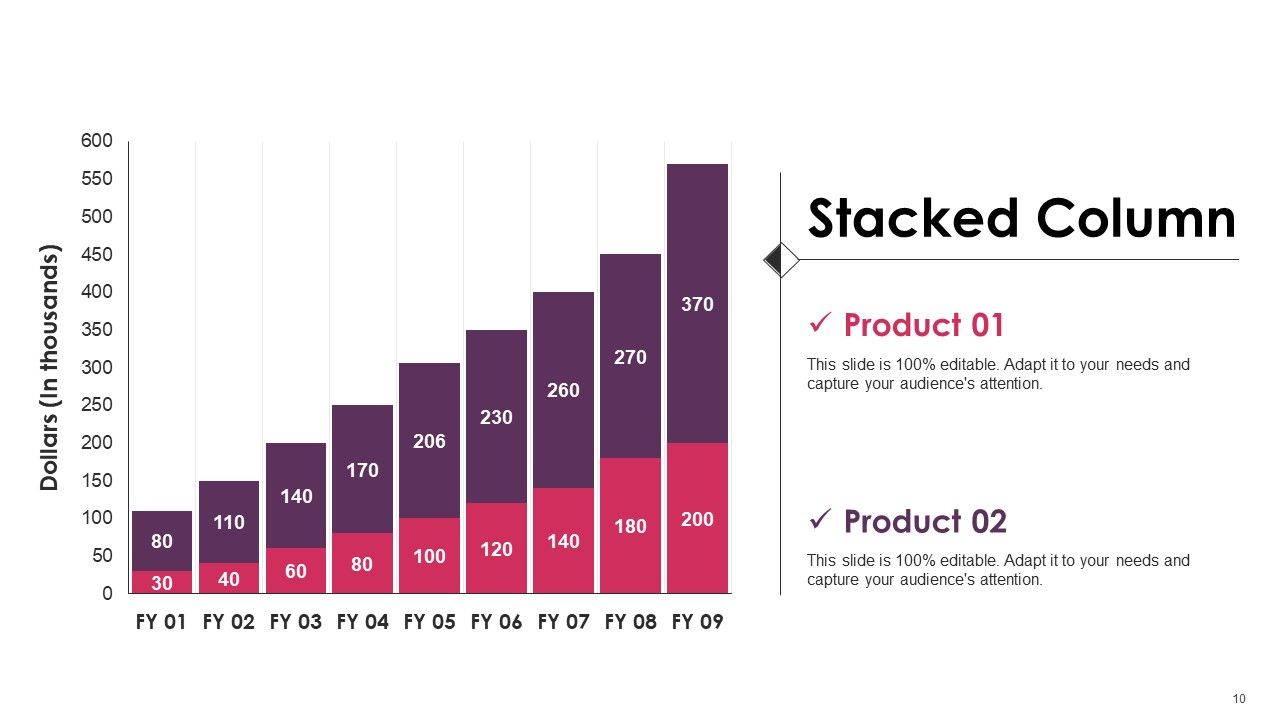
Slide 10: This slide presents a Stacked Column for product/entity comparison.
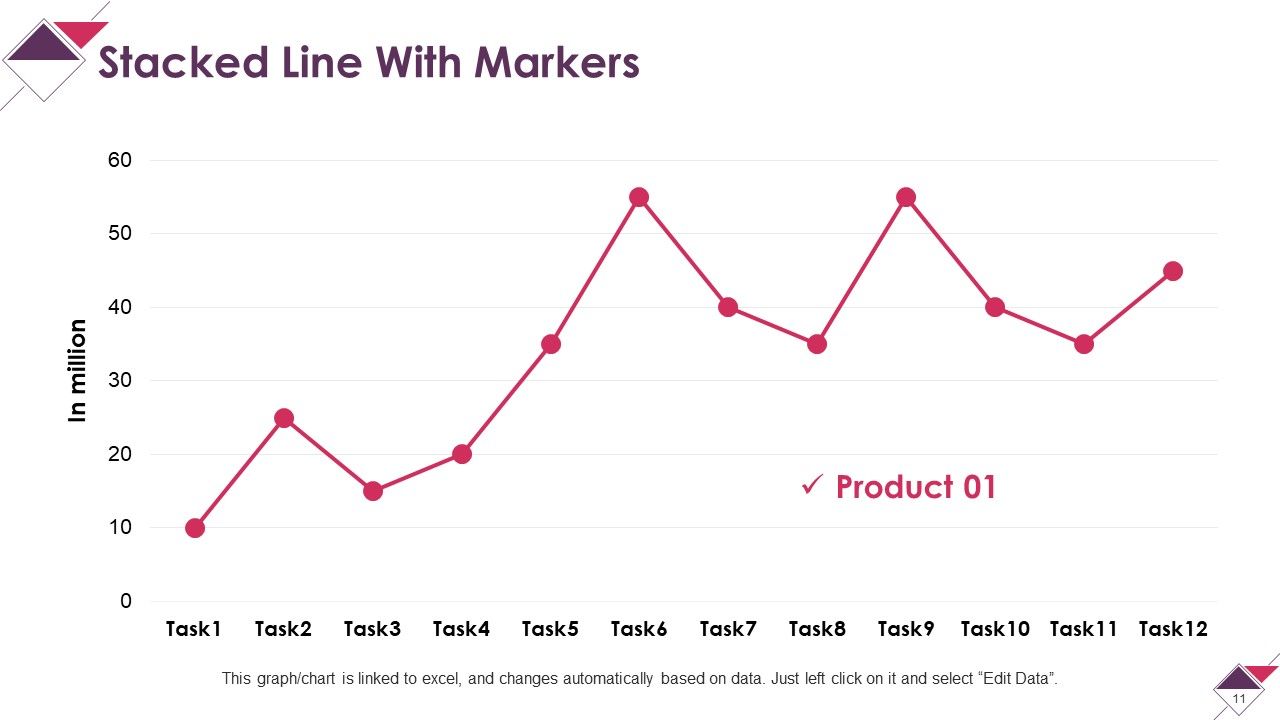
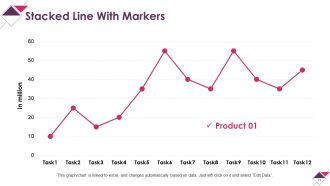
Slide 11: This slide presents a Stacked Line with markers for product/entity growth or positioning.
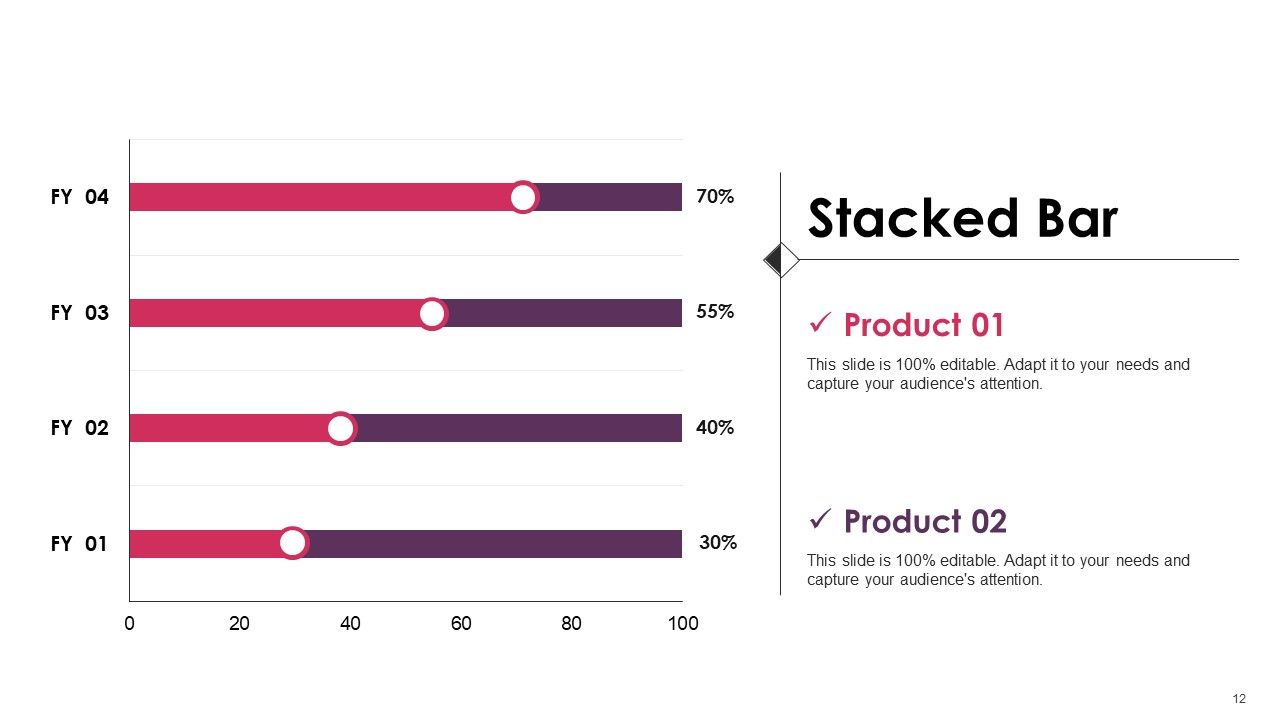
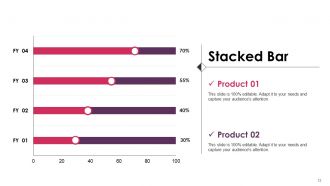
Slide 12: This slide presents a Stacked Bar chart for product/entity comparison.
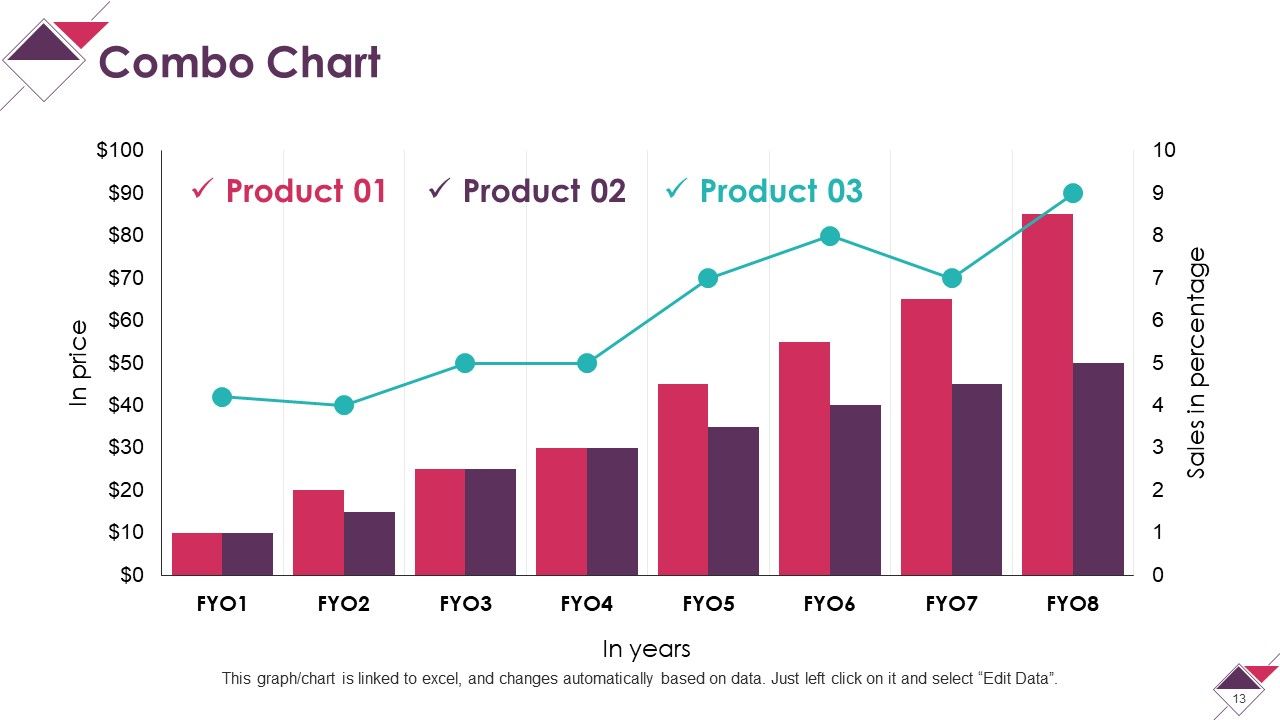
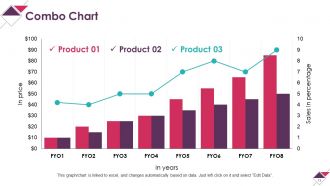
Slide 13: This slide presents a Combo chart for product/entity comparison.
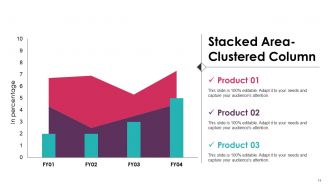
Slide 14: This slide presents a Stacked Area Clustered column for product/entity comparison.
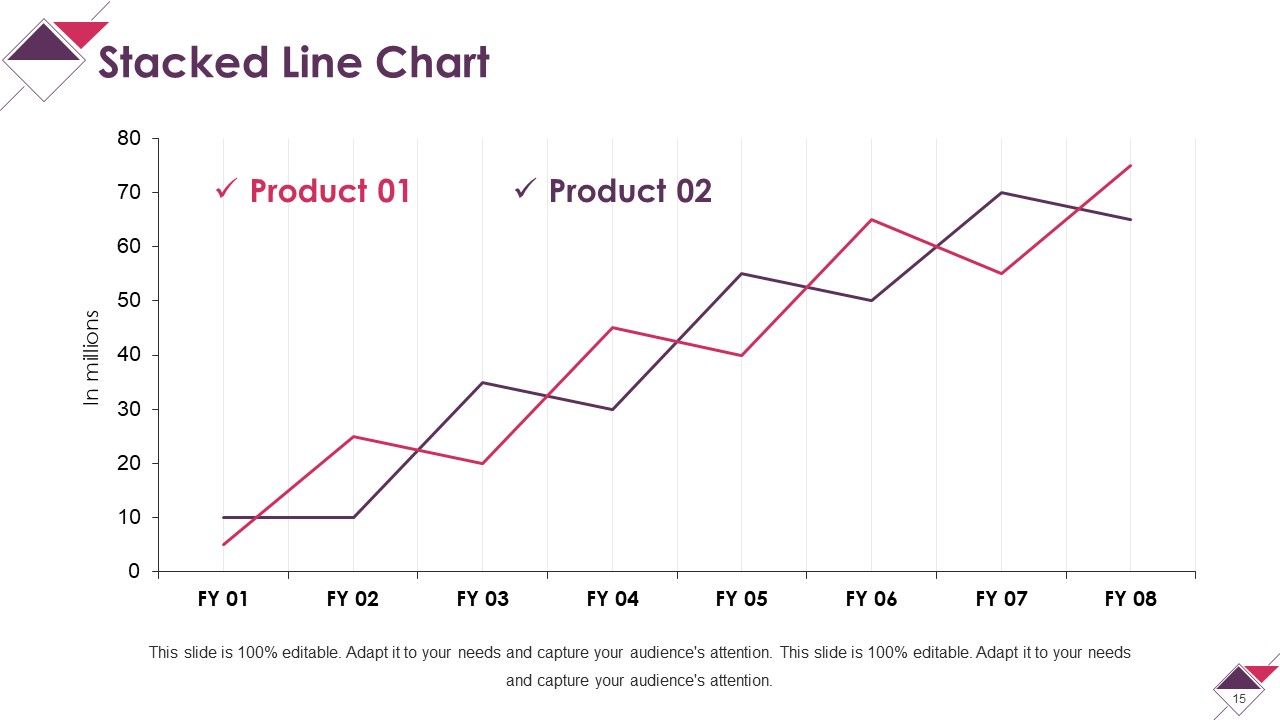
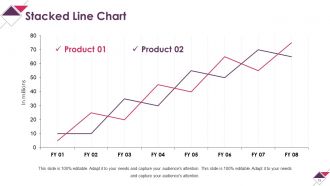
Slide 15: This slide presents a Stacked Line Chart to show product/entity growth or positioning.
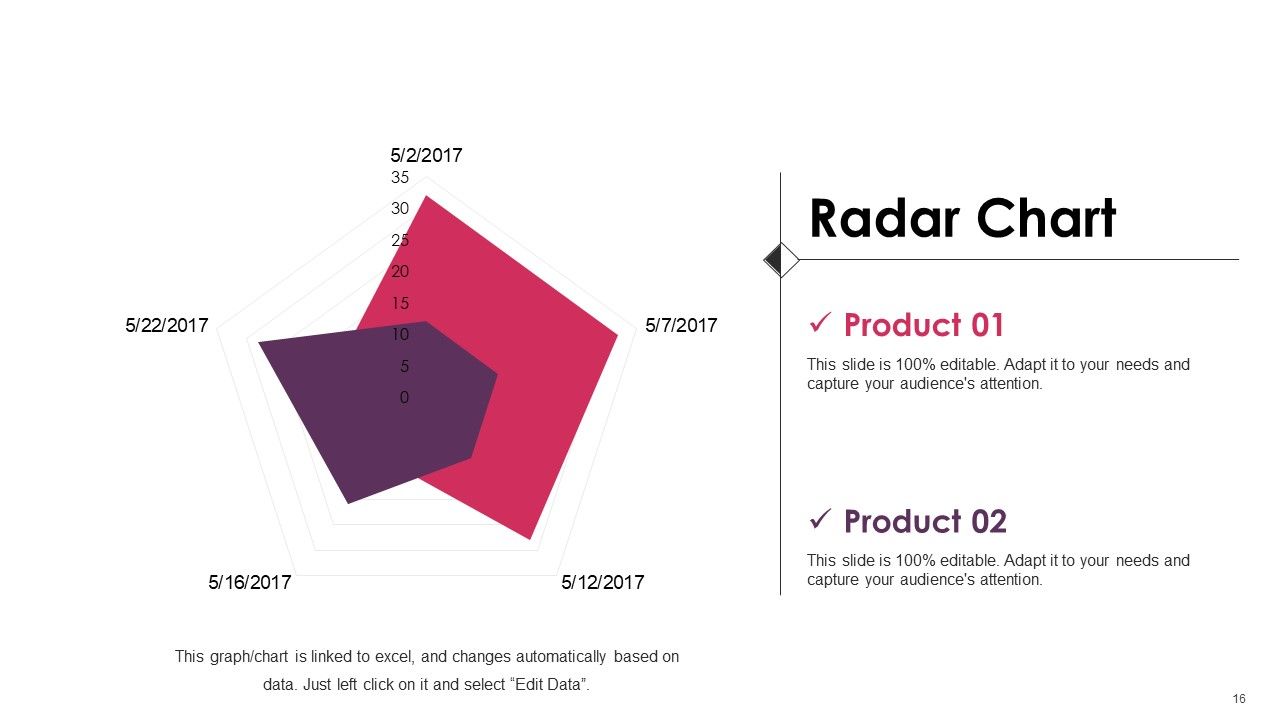
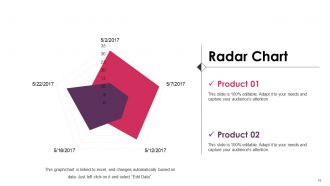
Slide 16: This slide presents a Radar Chart for product/entity comparison.
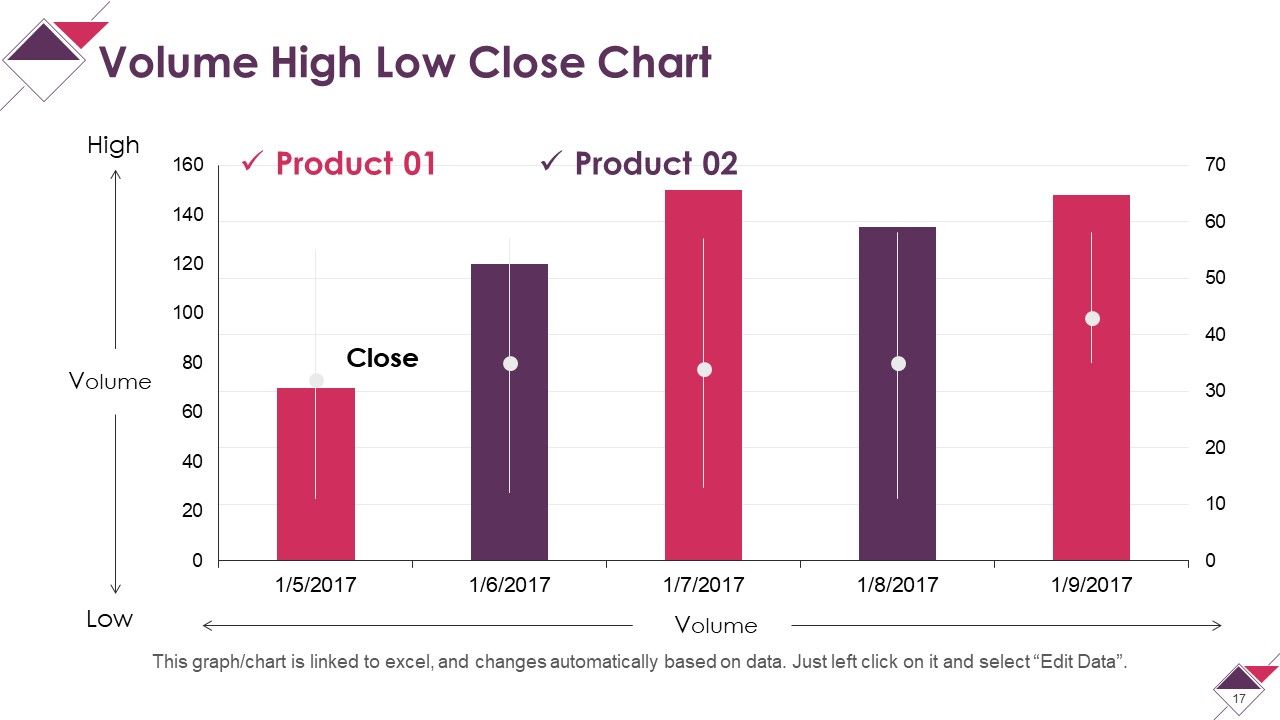
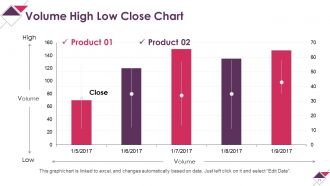
Slide 17: This slide shows Volume High Low Close Chart for different product comparison.
Slide 18: This slide is titled Additional Slides to proceed forward.
Slide 19: This slide shows Our Mission. State your mission here.
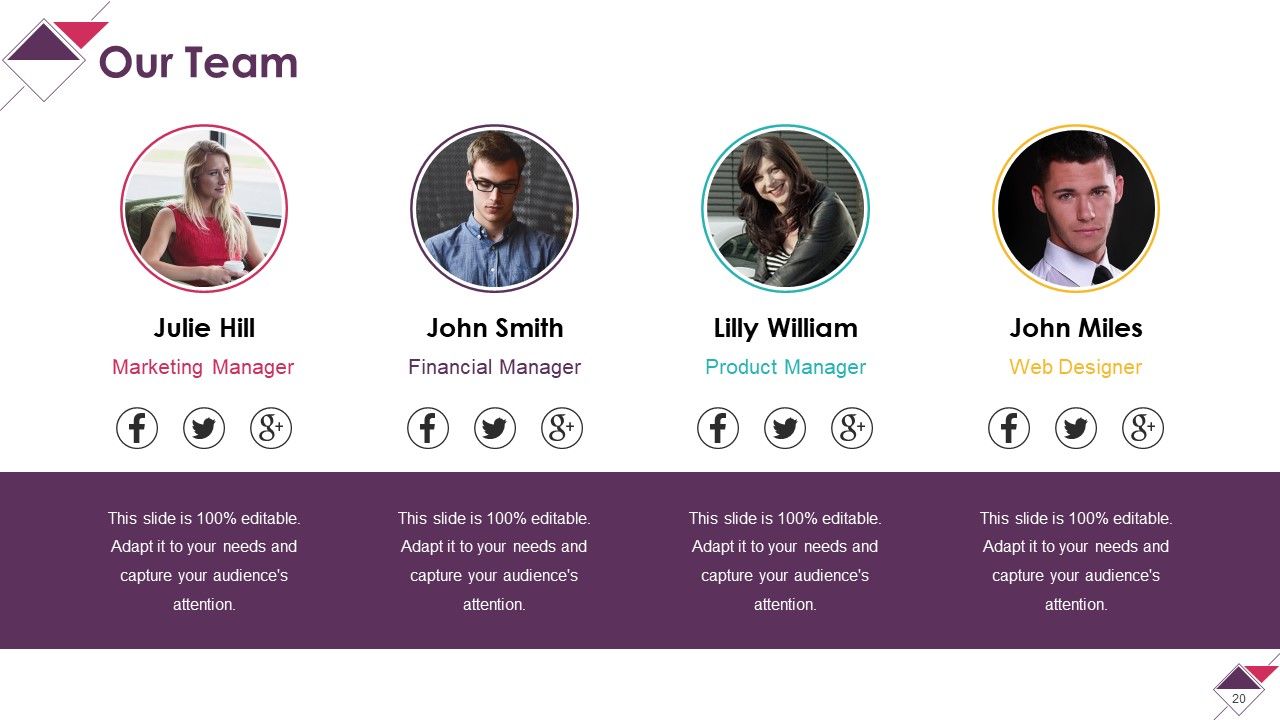
Slide 20: This slide presents Our Team with name, designation and image boxes.
Slide 21: This is an About Our Company slide. State company/team specifications here.
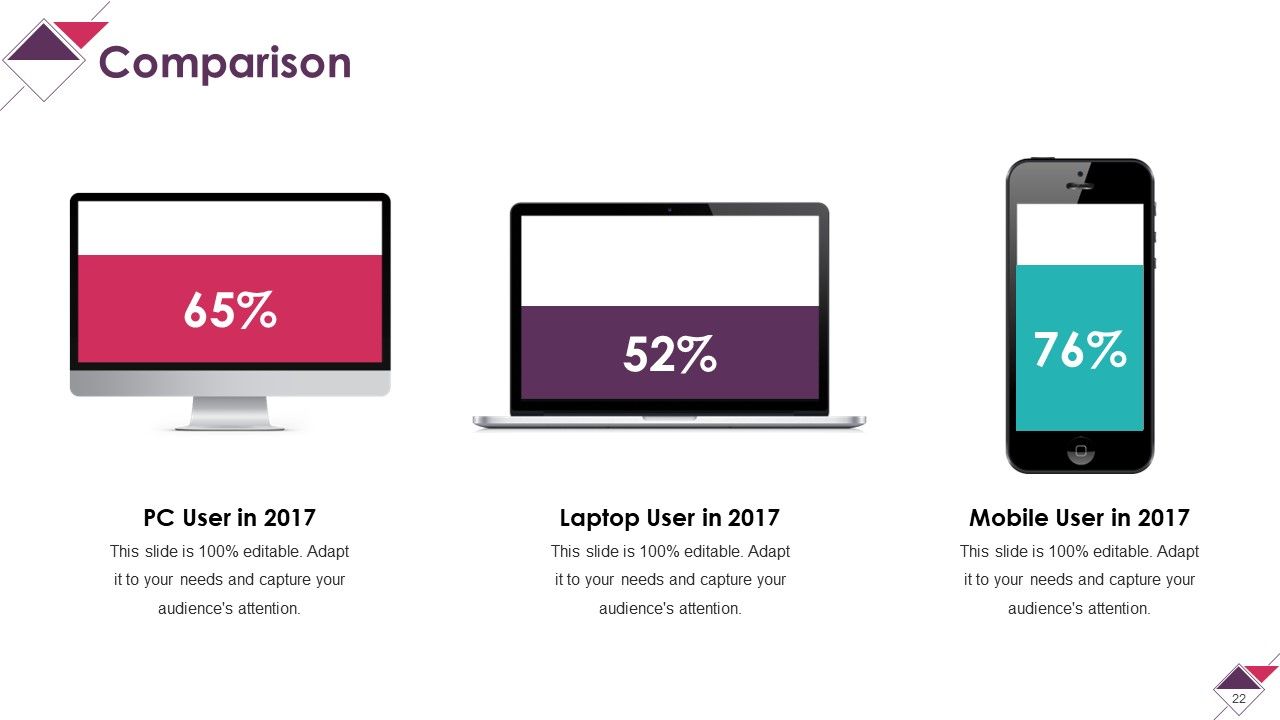
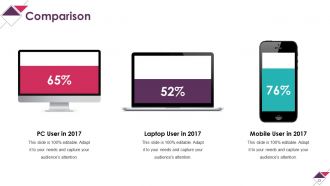
Slide 22: This slide shows a Comparison slide with mobile, laptop and computer users.
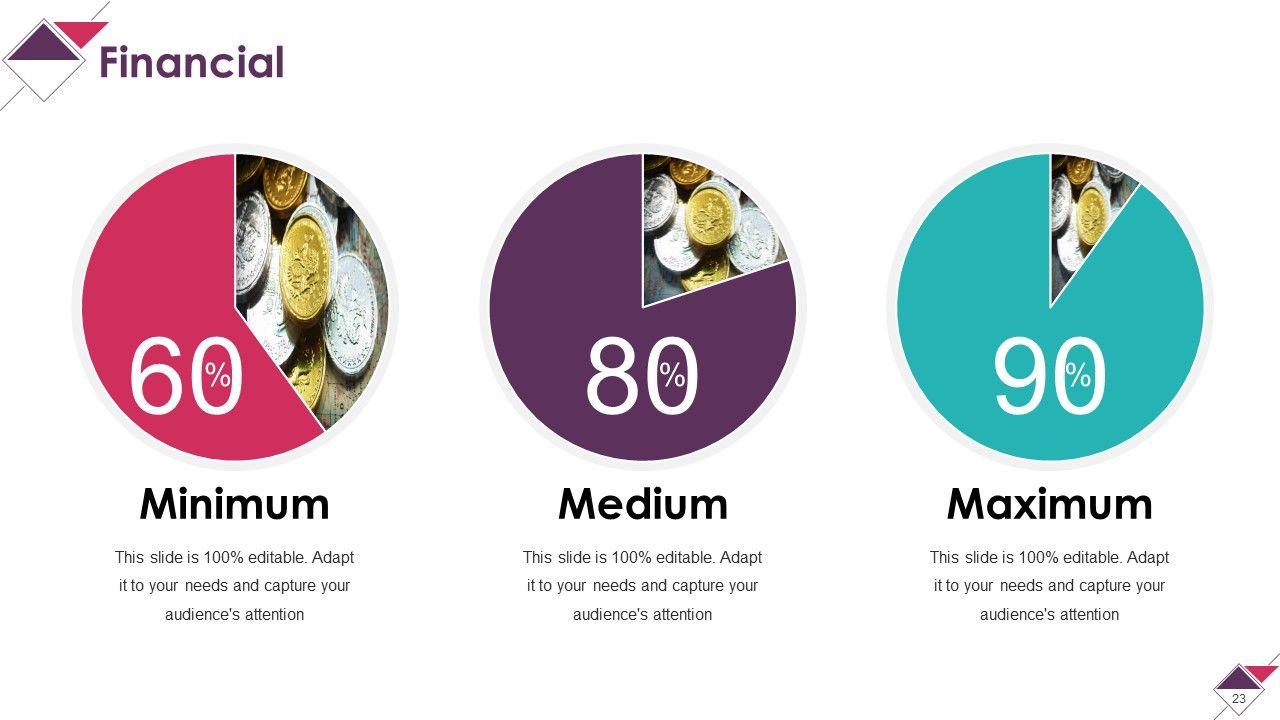
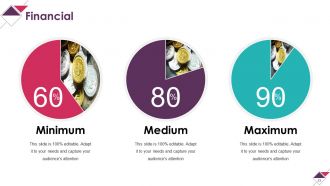
Slide 23: This slide showcases Financial score in terms of Minimum, Medium, Maximum. State financial aspects here.
Slide 24: This is a Quotes slide. State your message, beliefs or anything you want to convey here.
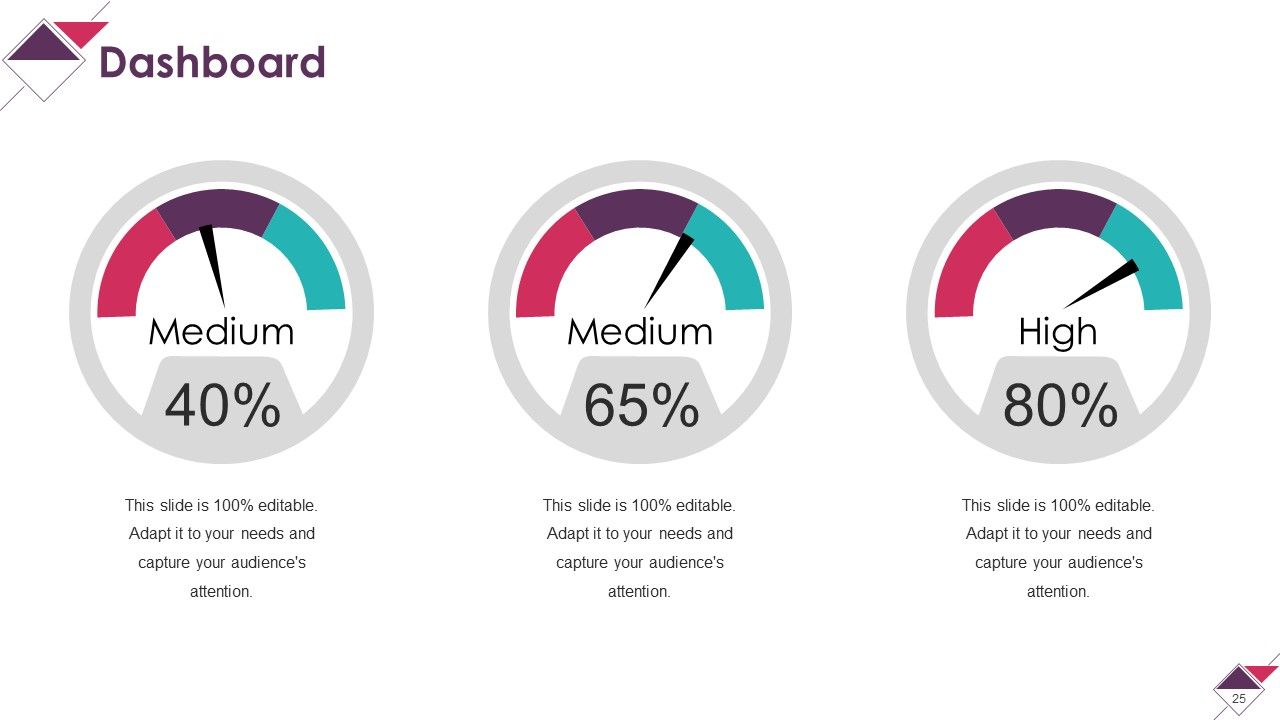
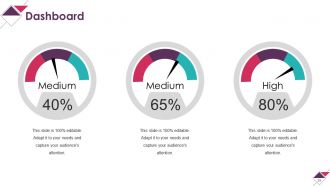
Slide 25: This slide presents a Dashboard with Medium and High scores.
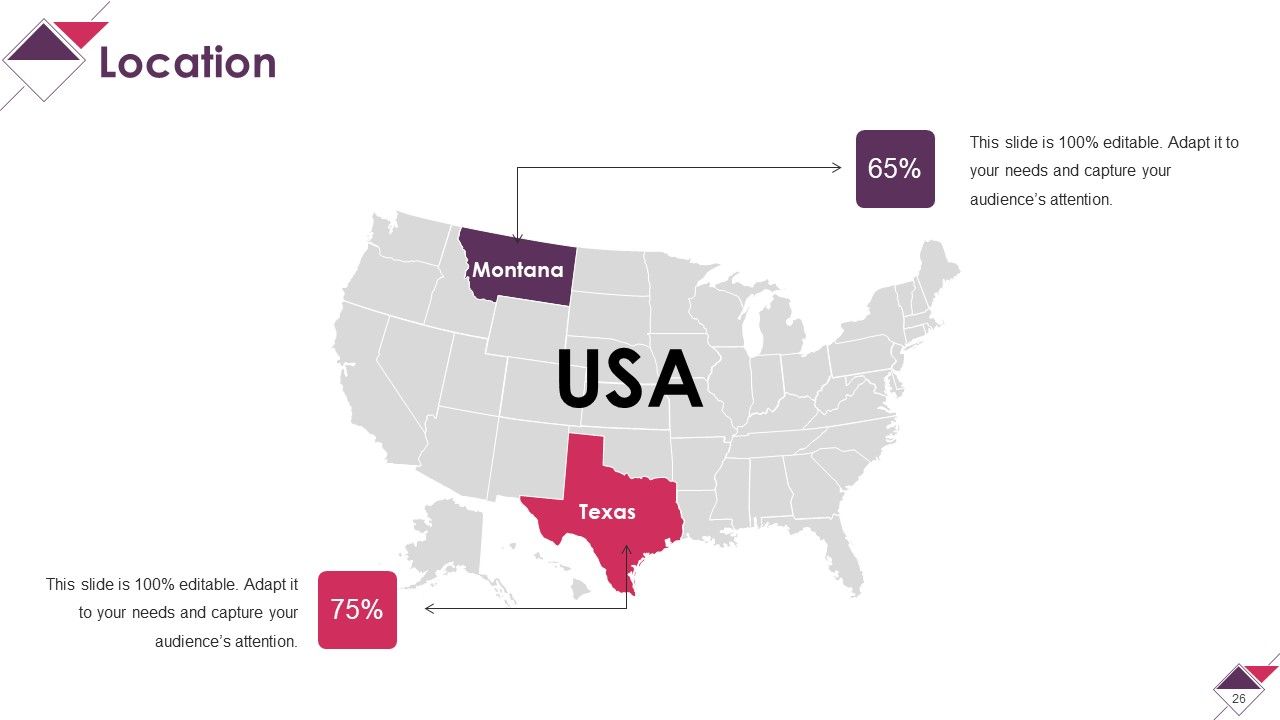
Slide 26: This is a Location slide of USA image to show American presence, growth etc.
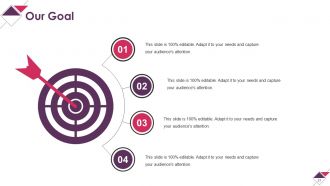
Slide 27: This is Our Goal slide. State your goals here.
Slide 28: This is a Mind Map slide to state specification, information etc.
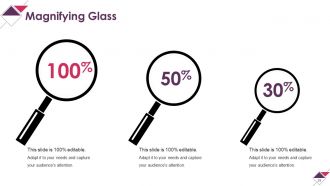
Slide 29: This is a Magnifying glass slide to state data specifications, information etc.
Slide 30: This is a Thank You slide with Address# street number, city, state, Contact Numbers, Email Address.
Project Conclusion Powerpoint Presentation Slides with all 30 slides:
Disprove invalid conclusions with our Project Conclusion Powerpoint Presentation Slides. Indicate the flaws in the findings.
-
Design layout is very impressive.
-
Awesomely designed templates, Easy to understand.
