Project governance process 5 steps

Project governance process 5 steps
Slide 1 of 2
Favourites Favourites

Try Before you Buy Download Free Sample Product

Audience Impress Your
Audience
Editable 100%
Editable
Time Save Hours
of Time
The Biggest Sale is ending soon in
0
0
:
0
0
:
0
0
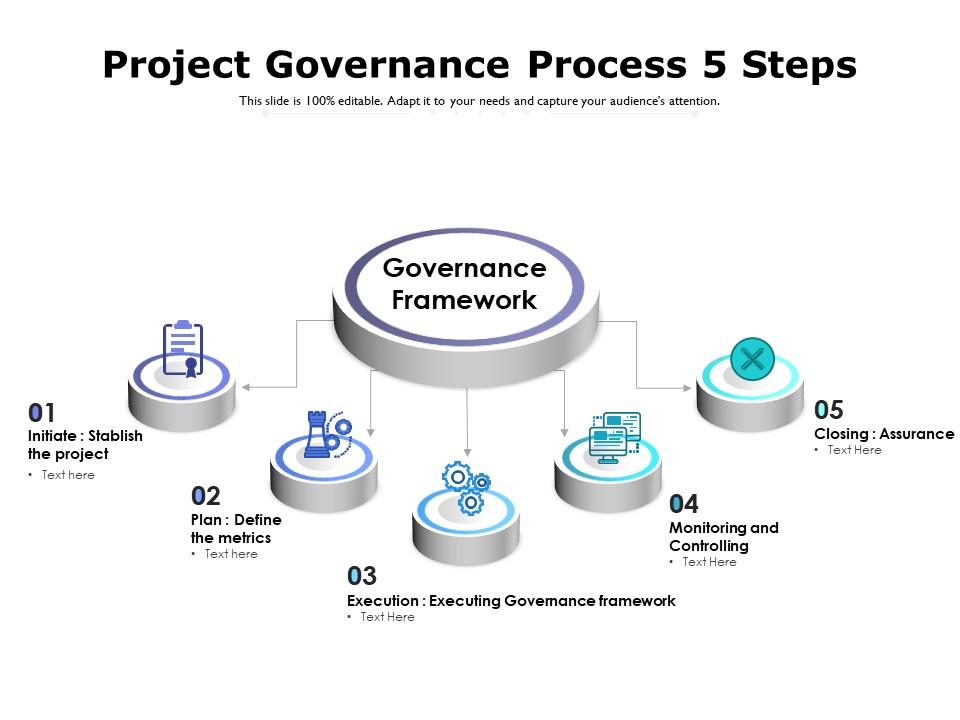
Presenting this set of slides with name Project Governance Process 5 Steps. This is a five stage process. The stages in this process are Monitoring And Controlling, Executing Governance Framework, Assurance, Define The Metrics, Stablish The Project. This is a completely editable PowerPoint presentation and is available for immediate download. Download now and impress your audience.

People who downloaded this PowerPoint presentation also viewed the following :

FAQs for Project governance

Key components include governance structure with defined roles, standardized processes for decision-making, risk management protocols, performance monitoring systems, and stakeholder communication frameworks. These elements work together by establishing clear accountability, streamlining project oversight, and enabling consistent quality control, with many organizations finding that structured governance ultimately delivers faster project completion and reduced operational costs.

Organizations can tailor project governance by implementing tiered frameworks that scale oversight intensity, reporting frequency, and decision-making levels based on project risk and investment size. Smaller projects might require monthly check-ins with department heads, while complex enterprise initiatives demand weekly steering committees and executive sponsorship, with many companies finding that flexible governance structures reduce administrative burden while maintaining strategic alignment and accountability.

Stakeholder engagement serves as the foundation of effective project governance, ensuring alignment through regular communication, feedback collection, decision-making participation, and expectation management. Through structured engagement frameworks, organizations streamline project oversight, minimize risks, and accelerate delivery timelines, with many finding that active stakeholder involvement ultimately delivers better outcomes and stronger organizational buy-in.

Project governance supports risk management by establishing structured oversight frameworks, standardized assessment protocols, and clear escalation procedures that enable early identification and proactive mitigation. Through governance committees and regular reviews, organizations streamline risk monitoring, enhance decision-making transparency, and ensure consistent mitigation strategies across projects, ultimately delivering reduced project failures and improved stakeholder confidence.

Common implementation challenges include lack of executive support, resistance to standardized processes, inadequate training and resources, unclear roles and responsibilities, and insufficient communication frameworks. These obstacles often stem from organizational culture issues and competing priorities, with many companies finding that gradual implementation, stakeholder buy-in, and flexible governance structures help overcome resistance while delivering improved project outcomes.

Technology enhances project governance by automating reporting workflows, providing real-time dashboards for stakeholder visibility, and enabling data-driven decision making through advanced analytics. Cloud-based project management platforms streamline compliance tracking, risk monitoring, and resource allocation across teams, while AI-powered tools deliver predictive insights that help organizations proactively address issues and maintain strategic alignment.

Effective project governance metrics include schedule adherence, budget variance, risk mitigation success, stakeholder satisfaction scores, and deliverable quality measurements. These indicators enable organizations to assess governance frameworks by tracking decision-making speed, resource allocation efficiency, and compliance rates, with many project-driven industries finding that balanced scorecards ultimately deliver improved project outcomes and strategic alignment.

Project governance provides strategic oversight, stakeholder alignment, and organizational compliance frameworks, while project management focuses on tactical execution, resource coordination, and day-to-day deliverables. These functions overlap in risk management and performance monitoring, with many organizations finding that governance sets the strategic direction and accountability structures, while project management translates these into operational success through scheduling, budgeting, and team leadership.

Accountability in project governance requires clear role definitions, regular milestone reviews, transparent reporting mechanisms, defined escalation paths, and performance metrics tracking. These strategies streamline decision-making by establishing ownership boundaries, enabling real-time progress monitoring, and creating systematic feedback loops, with many organizations finding that structured governance frameworks ultimately deliver improved project outcomes and stakeholder confidence.

Organizations ensure regulatory compliance through project governance by establishing clear oversight frameworks, implementing regular compliance checkpoints, and maintaining detailed documentation throughout project lifecycles. These governance structures enable systematic risk assessment, automated compliance monitoring, and stakeholder accountability, with many financial services and healthcare organizations finding that integrated governance processes significantly reduce regulatory violations while accelerating project delivery timelines.

Best practices for establishing a project governance board include defining clear roles and responsibilities, selecting members with diverse expertise, establishing regular meeting cadences, creating standardized reporting templates, and implementing transparent decision-making processes. These governance structures streamline project oversight by ensuring accountability, facilitating strategic alignment, and enabling rapid issue resolution, with many organizations finding that well-structured boards ultimately deliver improved project success rates and enhanced stakeholder confidence.

Cultural differences impact project governance through varying communication styles, decision-making hierarchies, time orientations, and conflict resolution approaches across international teams. While these differences present coordination challenges, organizations increasingly find that diverse perspectives enhance risk assessment, stakeholder engagement, and strategic planning, with many global companies developing culturally adaptive governance frameworks that ultimately deliver stronger project outcomes.

**INPUT**: What training and resources are essential for project governance professionals? **OUTPUT**: Essential training includes project management methodologies, risk assessment frameworks, stakeholder management, financial oversight, and governance compliance standards. These competencies enable professionals to streamline decision-making processes, enhance project transparency, and deliver strategic oversight, with many organizations finding that well-trained governance teams significantly improve project success rates and operational efficiency. **Word count**: 54 words

Lessons learned from past projects inform future governance processes by identifying recurring risks, streamlining decision-making frameworks, and refining resource allocation strategies. Organizations systematically capture these insights through post-project reviews and governance audits, with many finding that documented lessons significantly reduce project delays, enhance stakeholder communication, and ultimately deliver more predictable outcomes across their project portfolios.

Agile methodologies transform traditional project governance by introducing iterative decision-making, distributed authority, and continuous stakeholder feedback loops, challenging hierarchical approval structures. While this presents governance complexity, many organizations find that adaptive frameworks enable faster project pivots, enhanced transparency, and improved risk management, ultimately delivering better alignment between project outcomes and business objectives.

Ratings and Reviews

0% of 100
Write a review
Most Relevant Reviews

No Reviews