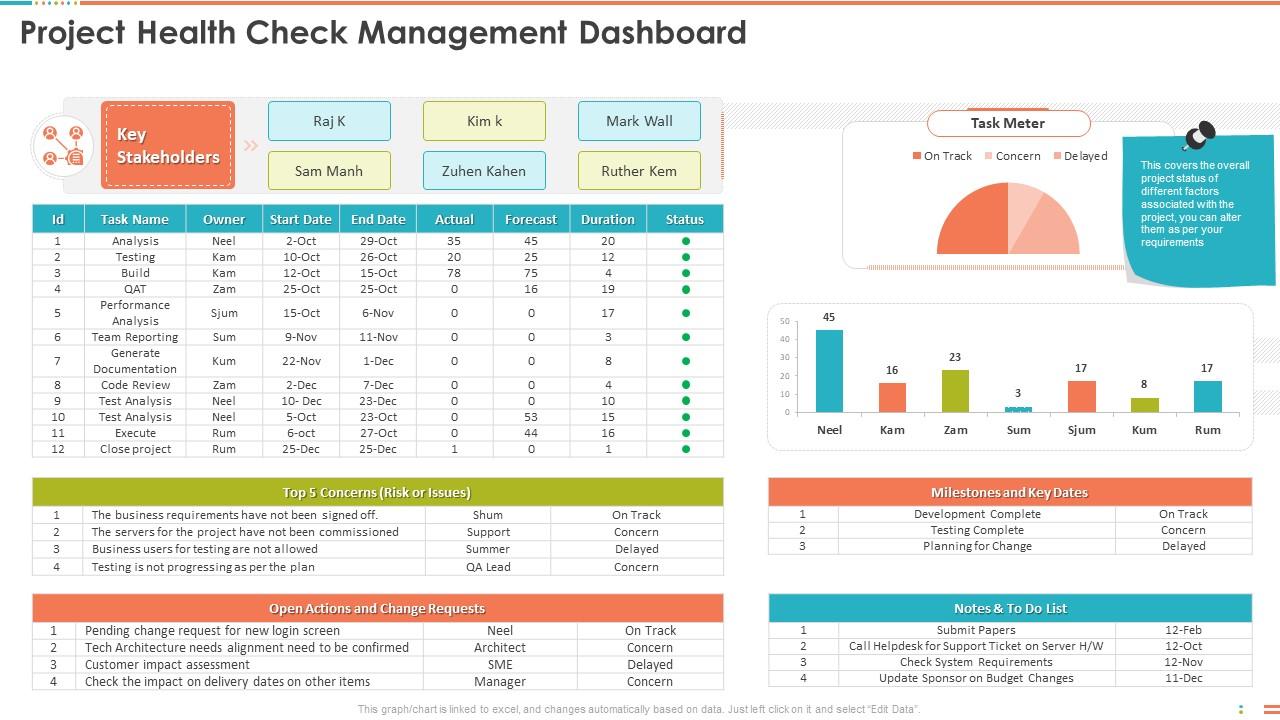
Project Health Check Management Dashboard Project Management Bundle
Try Before you Buy Download Free Sample Product
Audience
Editable
of Time
Our Project Health Check Management Dashboard Project Management Bundle are topically designed to provide an attractive backdrop to any subject. Use them to look like a presentation pro.
People who downloaded this PowerPoint presentation also viewed the following :
Project Health Check Management Dashboard Project Management Bundle with all 7 slides:
Use our Project Health Check Management Dashboard Project Management Bundle to effectively help you save your valuable time. They are readymade to fit into any presentation structure.
FAQs for Project Health Check Management Dashboard
Focus on scope, timeline, budget, and team health as your main metrics. Budget variance and schedule delays are obvious, but stakeholder satisfaction and team morale matter just as much - honestly, I've watched projects with solid numbers completely fall apart because people were burned out or had no clue what they were doing. Risk exposure, quality stuff, and how well everyone's communicating are key too. Keep your dashboard dead simple or you won't actually use it. Check these weekly and flag anything that's been heading south for two weeks running.
Honestly, project health checks are game-changers because they force everyone to actually say what's bugging them instead of silently fuming. You'll catch those sneaky communication gaps and misaligned priorities before they torpedo your timeline. People assume everything's peachy when it definitely isn't - this fixes that. The real magic? Getting your team to have those awkward but necessary conversations about what's broken. I'd do them monthly, maybe 30 minutes tops. Sounds boring but trust me, it'll change how smoothly you all work together. Way better than playing detective with project issues later.
Honestly, once a month works for most projects. If things are moving super fast or it's risky, maybe every two weeks? Weekly is way too much unless everything's on fire - your team will hate you lol. The whole point is catching problems before they get weird, but not driving everyone crazy with constant check-ins. Longer projects (like 6+ months) do great with monthly since you get enough time to actually see patterns. I'd start monthly and see how it feels. You can always change it up if needed.
So you basically look at two things - how likely is this to happen, and how screwed are you if it does? I make a little chart with those two factors because I'm weirdly visual like that. The scary high-probability, high-impact stuff needs plans right away. Medium risks just get checked on regularly. Low ones? Just keep 'em somewhere you won't forget. Your team's gonna catch things you miss, so definitely loop them in. Write it all down and make sure someone owns each big risk - otherwise nothing actually gets done about it.
Depends what your team's already using, honestly. Asana or Monday.com are solid for tracking milestones - you can spot bottlenecks pretty fast. If you're more visual, Tableau works great, though I've seen teams crush it with just a Google Sheet that has good conditional formatting. Way simpler than you'd think! Jira's another option if you're already in that ecosystem. Oh, and don't sleep on Slack or Teams - sometimes you'll catch issues just from how people are talking in channels. The real trick is picking whatever your team won't abandon after two weeks.
Honestly, health checks are a game changer for dealing with stakeholders. Instead of awkwardly saying "we're good!" when things are obviously falling apart, you've got actual data to show them. The visual dashboards make exec meetings so much less painful - trust me on this one. Stakeholders actually back off the micromanaging once they see regular reports and know what's happening. You can point to exactly where you're crushing it and where you need help. It's way better than trying to sugarcoat problems. Use them to set realistic expectations upfront and get buy-in when you need to pivot.
Honestly, getting feedback is what makes these health checks actually worth doing instead of just another waste of time. You'll want input from your team, stakeholders, maybe even clients - basically anyone who can give you the real story. Metrics and reports are fine but they don't tell you everything. Sometimes they're completely off base, actually. Create spaces where people feel safe being honest about blockers or whatever's bugging them. The trick is timing it right and asking the right questions to the right people. I'd start with maybe 3-4 key people who really know what's going on.
So first, grab the company's top 3-4 strategic goals and make a simple matrix. Rate how well your project deliverables actually support each goal - I use 1-5 but whatever works. Don't sugarcoat it because that's pointless. Then send quick surveys to stakeholders asking if they see the connection between your project and company direction. Honestly, this part can be awkward but you need their real opinion. If most of your scores are below 3, you've got problems. Either change your project scope or have some uncomfortable talks with leadership about what actually matters right now.
Honestly, the biggest mistake is getting obsessed with numbers while completely ignoring the human element. Don't just chat with the executives - those frontline people know where things actually break down. I've watched teams rush through these in like 30 minutes (terrible idea) and miss huge red flags. Oh, and when problems come up? Don't let it turn into a finger-pointing disaster. Block out several hours minimum. Talk to different levels of people. Go in genuinely curious instead of just going through the motions.
So basically, health checks show you where your team's actually getting shit done vs. just looking busy. You'll catch who's drowning in work and who's coasting. Plus you can see if people are wasting time on projects that don't really matter. It's honestly like cleaning your desk - suddenly everything makes sense. The info helps you move people around smarter, figure out what skills you're missing, or throw more money at stuff that's actually working. I'd say run them monthly so problems don't snowball into disasters.
Oh man, when health checks go red you've gotta move fast. Loop in leadership right away - this stuff can make or break entire projects, honestly. Focus on the worst problems first, the ones that'll completely wreck your timeline or budget. Build out a recovery plan with clear actions and deadlines for each mess you need to fix. Also bump up how often you're checking in with everyone (trust me on this). If you need extra help or outside expertise, now's the time to ask. Just be super honest with stakeholders about how bad things are while showing them your actual plan to dig out of it.
Honestly, the key is being transparent but not making people feel attacked. Start with a quick overview - where things stand overall. Then break down specifics like timeline, budget, major risks. I've watched so many teams shut down when you present findings like you're pointing fingers, so frame it as "here's what we found" instead of "this is broken." Charts and dashboards help too - way easier to digest than walls of text. But here's the thing that really matters: don't just dump problems on people. Always include potential fixes or next steps so everyone walks away thinking "okay, we can handle this."
Health checks are basically how you turn all those painful lessons into something useful for next time. Look for the patterns - like if stakeholder communication always falls apart around week 3, or scope creep hits every damn project. That data becomes your cheat sheet. Honestly, it's nice to step back and see what's actually working too, not just the disasters. The trick is documenting this stuff somewhere your team will genuinely use later. Not buried in some random folder that everyone forgets about - we've all been there.
Dude, culture totally makes or breaks these health checks. Trust levels matter huge - open teams will actually tell you what's wrong, but in strict hierarchies? Good luck getting honest feedback from anyone below the boss. Your approach needs to match too. Some cultures want you to be super direct, others get offended if you're not diplomatic enough. Oh, and time stuff is weird - I've seen teams that only care about quick fixes while others want to plan everything six months out. Basically, you gotta read the room and adjust your whole format accordingly. Otherwise you'll just get those useless "everything's fine" responses.
Mix schedule stuff with budget and quality tracking - that's your best bet. Watch schedule variance (hitting those milestones?), budget variance, scope creep percentage, plus team velocity. Don't skip quality metrics like defect rates and customer satisfaction either. Honestly, I've seen too many "successful" projects that were total disasters because quality sucked. Team burnout signals matter too - burnt out people deliver crap work. Pick maybe 4-6 that actually fit your project type. Weekly dashboard reviews work great, nothing fancy needed.
-
Helpful product design for delivering presentation.
-
Great designs, Easily Editable.