Project highlights of apartment builder

Project highlights of apartment builder
Slide 1 of 2
Favourites Favourites

Try Before you Buy Download Free Sample Product

Audience Impress Your
Audience
Editable 100%
Editable
Time Save Hours
of Time
The Biggest Sale is ending soon in
0
0
:
0
0
:
0
0
Presenting this set of slides with name Project Highlights Of Apartment Builder. This is a eleven stage process. The stages in this process are Project Highlights, Apartment Builder. This is a completely editable PowerPoint presentation and is available for immediate download. Download now and impress your audience.

People who downloaded this PowerPoint presentation also viewed the following :

Content of this Powerpoint Presentation

Description:

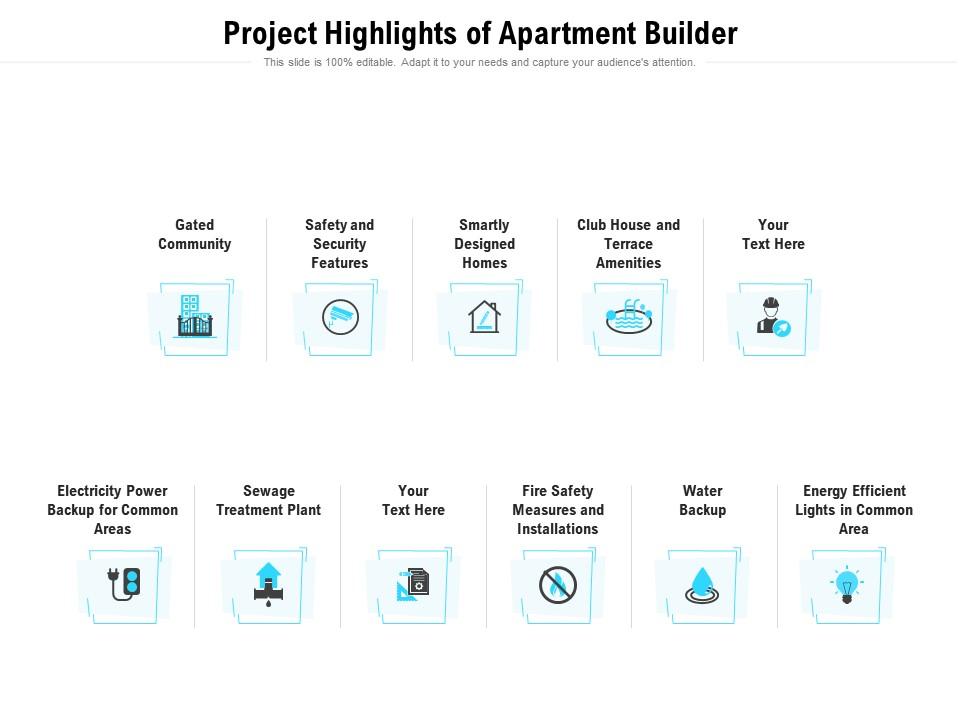
The image is a PowerPoint slide titled "Project Highlights of Apartment Builder," which is designed to showcase the key features and amenities of an apartment construction project. The slide is divided into eight sections, each with an icon and a label, indicating different selling points of the apartment complex:

1. Gated Community

2. Safety and Security Features

3. Smartly Designed Homes

4. Club House and Terrace Amenities

5. Electricity Power Backup for Common Areas

6. Sewage Treatment Plant

7. Fire Safety Measures and Installations

8. Water Backup

9. Energy Efficient Lights in Common Area

Use Cases:

Here are seven industries where this slide can be effectively used:

1. Real Estate:

Use: Marketing new residential developments

Presenter: Sales Manager

Audience: Prospective buyers, real estate agents

2. Architectural Design:

Use: Presenting design features of a new project

Presenter: Architect

Audience: Clients, developers

3. Construction:

Use: Highlighting construction capabilities and project features

Presenter: Project Manager

Audience: Investors, local authorities

4. Urban Development:

Use: Showcasing sustainable urban living solutions

Presenter: Urban Planner

Audience: Government officials, community groups

5. Sustainable Energy Solutions:

Use: Demonstrating integration of green technologies in building projects

Presenter: Sustainability Consultant

Audience: Environmental groups, policy makers

6. Property Management:

Use: Advertising property features to potential tenants

Presenter: Property Manager

Audience: Tenants, leasing agents

7. Security Systems:

Use: Illustrating the security features installed in living spaces

Presenter: Security Solutions Provider

Audience: Homeowners association, residents

FAQs for Project highlights

Key factors influencing apartment construction costs in urban areas include land prices, labor expenses, material costs, zoning regulations, and infrastructure requirements. These elements significantly impact project budgets, with developers in cities like New York and San Francisco finding that strategic planning, efficient design, and streamlined permitting processes ultimately deliver cost optimization and competitive advantage.

Zoning laws significantly impact apartment construction by dictating building height limits, density requirements, setback distances, and permitted land uses within designated areas. These regulations determine project feasibility, construction costs, and timeline compliance, with developers in urban markets like Seattle and Austin finding that navigating complex zoning requirements ultimately influences both development scale and profitability outcomes.

Sustainability plays a central role in modern apartment construction through energy-efficient systems, sustainable materials, water conservation technologies, green building certifications, and renewable energy integration. These approaches streamline operational costs, enhance tenant satisfaction, and meet increasingly stringent environmental regulations, with many developers finding that sustainable buildings deliver significant competitive advantages and long-term profitability.

Effective apartment construction project management strategies include detailed timeline planning, integrated cost control systems, stakeholder communication protocols, risk mitigation frameworks, and quality assurance checkpoints. These approaches streamline operations by coordinating subcontractors efficiently, minimizing delays through proactive scheduling, and ensuring budget adherence, with many developers finding that strategic resource allocation ultimately delivers faster completion times and enhanced profit margins.

Technology streamlines apartment construction through Building Information Modeling (BIM), automated project management systems, drone surveying, and prefabrication technologies. These innovations enhance efficiency by reducing design errors, optimizing resource allocation, and accelerating timelines, with many developers finding that integrated construction tech delivers faster project completion and significantly lower costs.

Current apartment design trends include open-concept layouts, smart home integration, flexible multipurpose spaces, sustainable materials, and enhanced outdoor access through balconies or terraces. These design elements streamline modern living by maximizing space efficiency, reducing energy costs, and accommodating remote work needs, with many residential developers finding that these features significantly enhance marketability and tenant satisfaction.

Weather conditions significantly impact apartment construction timelines through seasonal delays, material delivery disruptions, and safety restrictions that can extend projects by weeks or months. Construction teams increasingly use weather-resistant materials, covered work areas, and flexible scheduling strategies, with many developers finding that proactive planning and adaptive project management ultimately minimize delays while maintaining quality standards across varying climate conditions.

Eco-friendly apartment construction commonly utilizes recycled steel, bamboo flooring, low-VOC paints, energy-efficient insulation, and sustainable concrete alternatives like fly ash concrete. These materials enhance building performance by reducing environmental impact, improving indoor air quality, and lowering long-term operational costs, with many developers finding that sustainable materials ultimately deliver both regulatory compliance and competitive market advantage.

Developers can address community concerns through transparent communication, regular town halls, environmental impact assessments, traffic management plans, and phased construction schedules that minimize disruption. By engaging residents early, providing clear timelines, and incorporating feedback into project designs, developers build trust while streamlining approval processes, ultimately delivering projects that enhance neighborhood value and community acceptance.

Best practices for ensuring safety on apartment construction sites include comprehensive worker training, regular safety inspections, proper personal protective equipment usage, hazard identification protocols, and strict adherence to OSHA guidelines. These safety measures streamline project timelines by preventing costly accidents, reducing insurance claims, and maintaining workforce productivity, with many construction companies finding that proactive safety investments ultimately deliver enhanced project efficiency and competitive advantage in securing future contracts.

Skilled labor availability directly influences apartment construction pace by determining project timelines, quality standards, and operational efficiency across all building phases. Labor shortages can delay construction schedules and increase costs, while abundant skilled workers enable faster project completion, higher quality outcomes, and competitive pricing, with many developers finding that investing in workforce training ultimately delivers sustained construction capacity and market advantage.

Common financing options for apartment construction projects include construction-to-permanent loans, bridge financing, developer loans, equity partnerships, and government-backed programs like FHA multifamily loans. These financing mechanisms enable developers to secure capital through phased funding, risk-sharing partnerships, and specialized lending products, with many real estate developers finding that strategic combinations of debt and equity financing ultimately deliver better project feasibility and enhanced returns on investment.

Local demographics significantly influence apartment construction through factors like age distribution, income levels, household composition, and lifestyle preferences, driving developers to tailor unit types accordingly. For example, areas with young professionals favor studio and one-bedroom units with modern amenities, while family-oriented neighborhoods see more two and three-bedroom developments, ultimately delivering housing that matches community needs and maximizes occupancy rates.

Legal considerations for apartment permits include zoning compliance, building codes adherence, environmental impact assessments, accessibility requirements, and fire safety regulations. These requirements streamline the approval process by ensuring structural integrity, resident safety, and community standards, with many developers finding that early legal consultation minimizes delays and delivers faster project completions.

Apartment construction projects enhance local infrastructure by driving upgrades to utilities, transportation networks, and public services to accommodate increased residential density. These developments often catalyze improvements in water systems, electrical grids, and road capacity, while generating tax revenue that funds schools, parks, and community facilities, ultimately creating more robust neighborhoods that benefit existing and new residents alike.

Ratings and Reviews

0% of 100
Write a review
Most Relevant Reviews

No Reviews