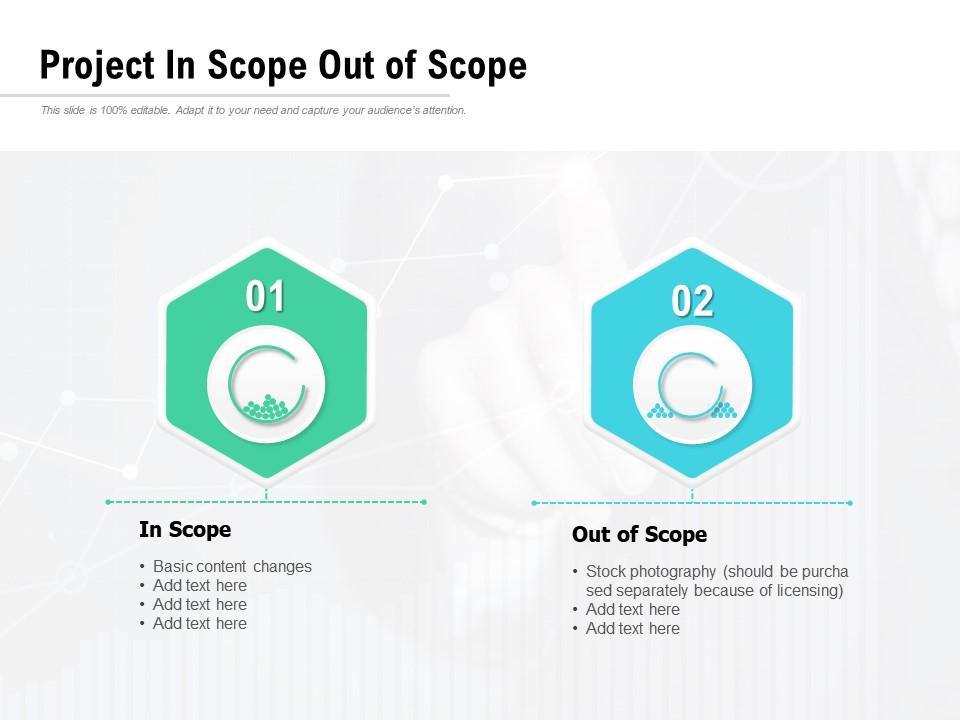
Project in scope out of scope

Project in scope out of scope
Slide 1 of 2

or

Favourites Favourites

Try Before you Buy Download Free Sample Product

Audience Impress Your
Audience
Editable 100%
Editable
Time Save Hours
of Time
The Biggest Sale is ending soon in
0
0
:
0
0
:
0
0
Presenting this set of slides with name Project In Scope Out Of Scope. This is a two stage process. The stages in this process are Project, Scope, Out Of Scope. This is a completely editable PowerPoint presentation and is available for immediate download. Download now and impress your audience.

People who downloaded this PowerPoint presentation also viewed the following :

FAQs for Project in scope

So there are five main pieces: planning, defining, creating your WBS (work breakdown structure), validation, and scope control. Honestly, most projects crash and burn right at the defining stage - you've got to nail down what's included and what isn't. Break everything into smaller chunks with the WBS, then get stakeholders to actually sign off during validation. Here's the thing though - scope creep is like a slow poison for your timeline and budget. Monitor changes constantly throughout the project. Oh, and document everything upfront plus have a decent change control process. Trust me on this one.

Look, you've gotta nail down your scope upfront or you'll hate your life later. Write down exactly what you're delivering and what you're NOT doing - trust me on this. Get stakeholders to actually sign off before you start anything. Otherwise you'll get those annoying "oh can we just add..." requests every week. Your budget estimates will actually mean something too. I learned this the hard way on a project that went completely sideways because we were too vague at the start. Having clear boundaries lets you confidently shut down random asks without looking like the bad guy.

Honestly, interviews are your best bet - you can actually dig into what people need. Surveys work if you've got tons of stakeholders to reach quickly. Don't sleep on just watching people work either, because what they SAY they do vs what actually happens? Totally different things. Document analysis is useful but half those process docs haven't been updated since 2019 lol. Focus groups and prototyping workshops are solid for bigger projects. I'd pick maybe 2-3 methods that match how your people like to communicate and how much time they've got.

So basically, product scope is *what* you're building - like the actual features and stuff. Project scope? That's all the work you'll need to do to make it happen. Say you're making an app. Product scope covers things like login functionality, payment systems, whatever. But project scope includes literally everything else - meetings, coding, testing, docs, deployment. Honestly, it's way more work than people think at first. Here's the thing though - always nail down your product scope before you start mapping out all the project tasks. Makes life so much easier.

So the WBS is like your project's family tree, but for tasks instead of people. Break everything down into smaller pieces so you don't miss anything important. It helps you figure out what's actually in scope (and what isn't), estimate work better, and track how things are going. Honestly, I've seen too many projects go sideways because people skipped this step. When stakeholders start throwing around new requests, you'll have something concrete to point to. Get it done early and update it as you go - trust me, it'll save you from those annoying scope creep conversations later.

Oh man, stakeholders are the worst for this - they'll constantly throw "must-haves" at you that magically weren't important during planning. Here's what saved my butt: set up a formal change process right away. Document every request, figure out how it'll mess with your timeline and budget, then make them sign off before you do anything. Regular check-ins help too, honestly. You can push back without being a total jerk about it. Just don't let them slowly kill your project with a thousand tiny changes - I've seen that happen way too many times.

Oh man, scope creep is gonna be your worst enemy. Stakeholders will keep asking for "just one tiny thing" like you can magically add features without breaking timelines. Nobody ever agrees on what "finished" means either - drives me crazy. Then leadership changes their mind halfway through and suddenly your priorities are totally different. Document literally everything, even the stupid stuff. Have those awkward scope meetings regularly too. Oh, and get a real change process in place because "we'll deal with it later" never works out.

Ugh, scope creep is the worst. Catch it early or you're screwed. Document every "tiny" request because they pile up crazy fast. When someone wants to add stuff, figure out how it'll mess with your timeline and budget first. Then get actual approval - don't just wing it. Here's the thing that saved my butt on like three projects: make them choose. Want feature X? Cool, what are we cutting or pushing back? I used to be terrible at saying no, but stakeholders respect the honesty way more than I expected. Just tie everything back to your original goals and update docs as you go.

Honestly, I'd start with something like Monday.com or Asana for the basics - solid project management tools that handle baseline docs and change requests pretty well. Notion is where it's at though if you want to get fancy with custom scope registers (maybe I'm biased but whatever). Got complex dependencies? Microsoft Project still crushes it for formal change control stuff. Just make sure whatever you pick has version control and approval workflows baked in. Here's the thing - none of it matters if your team won't actually use it. Pick something everyone will adopt and stick with it religiously.

Yeah, these two are totally connected - can't really separate them. Someone wants to change the scope? That triggers your change management process to figure out how it affects your timeline, budget, all that stuff. Think of it like a gatekeeper situation. The change control board looks at requests and decides what flies. If they approve something, you update your scope docs and baseline right away. Honestly, skip this integration and scope creep will destroy you - learned that the hard way once. Just document everything and get stakeholders to actually sign off.

Look, a scope management plan is basically your project's guardrails - it spells out what work you're doing and what you're NOT doing. Trust me on this one, skip it and you'll get buried under endless change requests. Been there, done that, bought the t-shirt. The plan sets clear boundaries with stakeholders and gives you a real process for handling changes (because they will happen). Document your scope definition and change control steps early. Otherwise you're just asking for that classic scope creep disaster. Honestly, it's like having a bouncer for your project timeline.

Set up weekly check-ins (bi-weekly if it's simple stuff). I know it sounds weird, but literally read your original goals out loud at each meeting - works every time. Then compare where you are now vs. what you planned. When new tasks pop up, ask yourself: does this actually help us hit the original target? Or are we just being people-pleasers? Keep a quick log of any scope changes and how they mess with your timeline. Honestly, most teams skip this until everything's already on fire. Make it routine from day one and you'll catch the drift way earlier.

Track your scope management with these metrics - scope creep percentage is huge (basically how much your project ballooned from the original plan). Change request volume matters too, plus how fast you actually process them. Budget variance from scope changes will save your butt - nobody likes surprise costs. Schedule impact is another big one. Oh, and stakeholder satisfaction scores about scope clarity, though that one's kinda subjective. Set your baseline scope early and measure deviations consistently. Honestly, most PMs skip this step and then wonder why everything goes sideways. The data helps you actually improve next time.

Start with solid documentation and get everyone on board upfront. Write out a detailed scope statement and make stakeholders formally approve it. Set up a change control process - any tweaks need written requests plus impact assessments. I'd do regular scope check-ins with the team because drift happens fast. Honestly, I've watched projects completely derail over "tiny" additions that weren't so tiny. Be super clear about boundaries with everyone involved. Don't feel bad about saying no to stuff outside what you agreed on. Oh, and document literally everything - make people sign off on changes.

Look, good scope management basically means no one gets blindsided later. You lay out exactly what you're building (and what you're NOT building) right from the start. That way when your boss comes asking for "just this tiny extra thing" - and trust me, they always do - you can point to the original agreement without looking like the bad guy. Keep everyone in the loop about trade-offs too. Honestly, stakeholders just want to know what to expect and when. Nail that, and you'll look like a rockstar when you actually deliver what was promised. Get signatures on everything upfront though.

Ratings and Reviews

0% of 100
Review Form
Write a review
Most Relevant Reviews

No Reviews