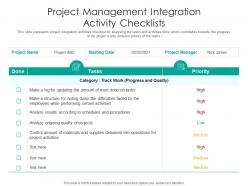
Project management integration activity checklists
Try Before you Buy Download Free Sample Product
Audience
Editable
of Time
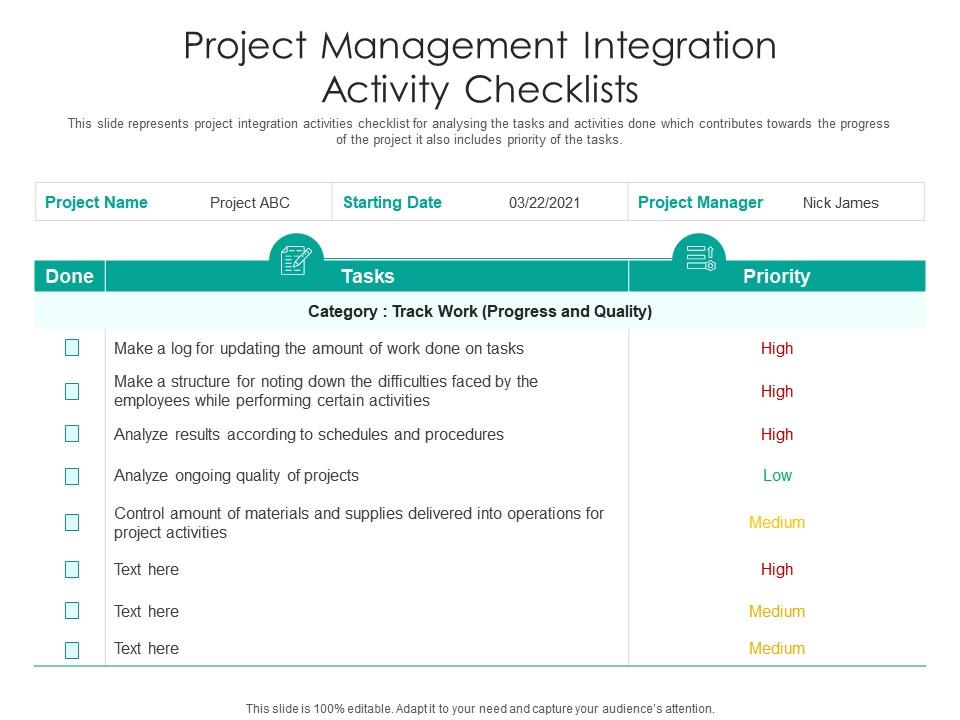
This slide represents project integration activities checklist for analysing the tasks and activities done which contributes towards the progress of the project it also includes priority of the tasks.
People who downloaded this PowerPoint presentation also viewed the following :
Project management integration activity checklists with all 2 slides:
Use our Project Management Integration Activity Checklists to effectively help you save your valuable time. They are readymade to fit into any presentation structure.
FAQs for Project management
So basically you've got six main pieces to juggle: project charter, management plan, directing the actual work, monitoring everything, change control, and closing it out. Honestly the charter and plan are where I'd focus first - get those solid and the rest flows way easier. Integration is just making sure all your processes actually talk to each other instead of being weird isolated islands. Yeah, it feels like a lot when you first start! But once you get the rhythm down it's not too bad. The charter kicks things off, then your management plan becomes like your GPS for everything else.
So integration management is basically making sure all your project pieces actually fit together instead of everyone going rogue. Think conductor keeping an orchestra in sync - otherwise it's just chaos. You're coordinating scope, timeline, budget, all that fun stuff so teams don't work in silos and then suddenly realize their work doesn't match up. Honestly, I've seen this disaster happen way too many times! The key? Map out how everything connects before you start, then keep checking those connections as you go. Saves you from those "oh shit" moments later.
Honestly, start with a work breakdown structure - it's like the skeleton of your whole project. Gantt charts are clutch for seeing timelines, and tools like Asana or Monday.com make dependency tracking way less painful. I'm kind of obsessed with mapping out what depends on what because one delay can domino everything else. Regular milestone check-ins keep teams talking instead of going rogue in their own little worlds. Oh, and cross-functional meetings aren't just corporate BS - they actually prevent those "wait, you needed what from us?" moments. The WBS foundation thing really does save you from chaos later.
Start by figuring out who your stakeholders are and what actually keeps them up at night. Different people need different info - execs want the big picture stuff, users want to know if their workflow's gonna get screwed up, IT needs the nitty-gritty technical details. Don't blast everyone with the same boring update (seriously, nobody reads those). Create separate communication tracks instead. Run working sessions where people can actually weigh in on stuff that affects them. Then - and this is crucial - show them how you used their input. People just want to feel like they're part of it, not steamrolled by it.
Honestly, communication is what makes or breaks project integration. Without it, teams end up working in completely different directions - I've watched entire projects fall apart because of this. You need regular check-ins and some kind of standardized way everyone reports progress. Make sure info flows both ways too, not just top-down. Figure out who needs what information and when they need it. Sounds obvious but most people skip this step and then wonder why everything's chaotic later. Oh, and don't let teams work in silos - that's where you get people doing the same work twice.
Okay so first thing - figure out which company goals your project actually affects. Then write project objectives that directly support those bigger goals. I've watched so many projects nail the technical stuff but completely miss the strategic mark, which is honestly painful to see. Check in with stakeholders regularly because priorities change all the time. Your project needs to change with them. Oh, and definitely put all these connections in your project charter - people need to see why they're building what they're building. Makes everything way clearer.
Scope creep will kill you every time - that's the big one. Teams stop talking to each other too, just firing off emails instead of actually coordinating. Plus everyone thinks their part of the project is obviously the most critical (spoiler: they're all wrong). What works is getting your integration points nailed down from day one. Document everything, even the boring stuff. Weekly cross-team meetings where people actually show up and engage. Oh, and designate one person as the integration owner who can break ties when things get messy. Don't wait until you're halfway through to figure this out.
So integration management is like being the conductor while everyone else plays their instruments. You're not just focused on scope or budget or timeline - you're making sure all those pieces actually work together. It's where you write the project charter, handle changes that ripple across different areas, catch stuff before it falls through cracks. Honestly, it's probably the trickiest part because you can't just optimize one thing in a bubble. You're always stepping back to see how everything connects. Way different from just managing, say, your schedule in isolation.
Track the obvious stuff first - delivery times, budget overruns, scope changes. But honestly? The people metrics are where you'll really see what's happening. Send out quick surveys about stakeholder satisfaction. Watch how often teams actually talk to each other, not just the scheduled meetings. Decision speed is huge too - are things getting stuck in approval hell? Oh, and resource utilization rates will show you if integration is creating bottlenecks. Pick maybe 3-4 that actually matter for your situation though. Otherwise you'll drown in data and still not know if it's working.
Honestly, agile just makes everything flow better between teams. You're not doing those awkward waterfall handoffs anymore - instead there's constant communication through standups and sprint reviews. Daily check-ins keep everyone on the same page, which is huge. Problems get caught early since you're iterating instead of waiting months for some formal review. Cross-functional teams are where I'd start if you're trying this out. They basically force different departments to actually talk to each other, which sounds obvious but... yeah, doesn't always happen otherwise. The whole thing just breaks down those weird silos that form.
Start with a visual map of all your dependencies - trust me, drawing it out prevents so many headaches down the road. Figure out what's on your critical path first, then focus on those relationships. Don't wait for problems to set up regular check-ins between teams working on connected stuff. Make handoff requirements crystal clear so nobody's guessing what they need to deliver. Oh, and definitely pad your timeline for dependency delays because they're basically guaranteed to happen. The whole point is making these connections visible to your entire team, not just keeping track yourself.
Honestly, the right tech setup can save you so much headache. I'd start by figuring out where your biggest integration mess-ups happen right now. Then find tools that actually play nice together - like MS Project, Asana, Monday.com. They'll centralize your data instead of having it scattered everywhere. Real-time dashboards are clutch because you can see how one change ripples through everything else. Automated workflows handle the boring status updates too. Just don't pick something that doesn't connect to what you're already using - learned that one the hard way!
Honestly, the biggest thing is just getting everyone talking regularly - like actual check-ins where people can flag issues before they become disasters. Document stuff that matters (skip the fluff nobody reads anyway). Map out who's doing what upfront because I've seen too many projects die when teams keep bumping into each other or waiting forever for someone to make a call. Oh, and try pairing people from different teams on the same work when you can. Communication sounds boring but it's literally everything. Start your next thing by figuring out where teams will need to work together first.
Honestly, cultural stuff can totally derail your project if you don't think about it upfront. Germans want everything mapped out perfectly while Brazilian teams are way more go-with-the-flow. Communication styles are huge too - some cultures are super direct, others beat around the bush forever. Time zones already suck without adding misunderstandings to the mix! I'd map out these differences right away and set up protocols that actually work for everyone. Regular check-ins help, plus shared docs so nobody's confused. Oh and establish this stuff from the start - trying to fix it midway through is a nightmare.
Change management is what keeps your integrated project from falling apart when stuff inevitably shifts. One small tweak can totally mess up your scope, timeline, budget - everything's connected. You've got to look at how every change request affects ALL the moving pieces, not just the obvious stuff. Set up a change control board early (trust me on this one), and make sure they actually get how everything links together. Otherwise you'll be scrambling to fix things that broke three steps down the line. It's honestly one of those things that seems boring until it saves your project.
-
Unique research projects to present in meeting.
-
Innovative and Colorful designs.
-
Awesome use of colors and designs in product templates.