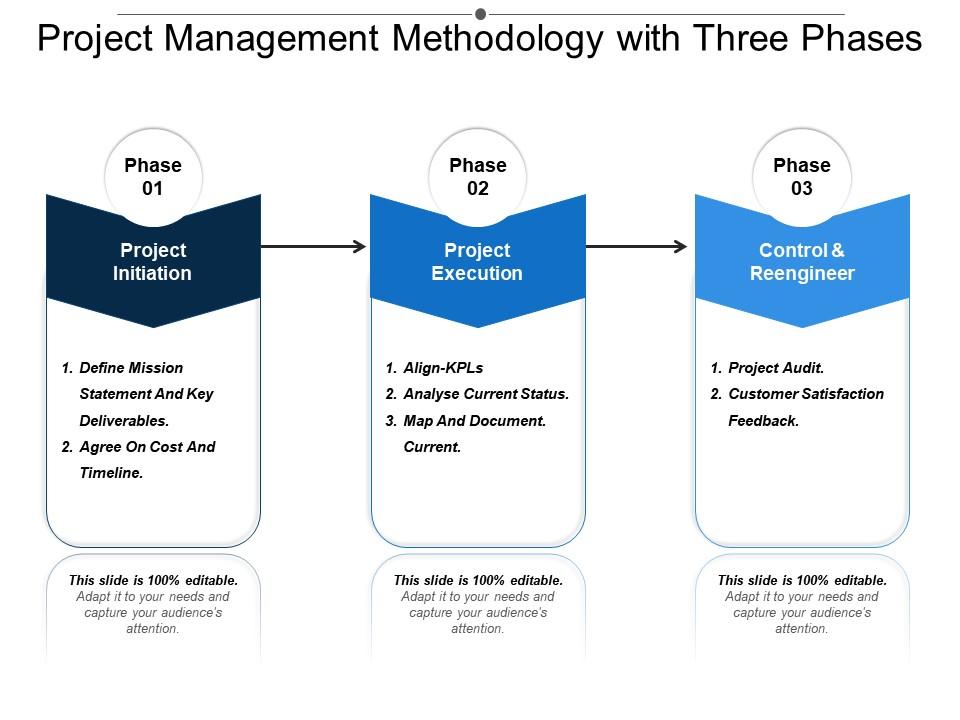
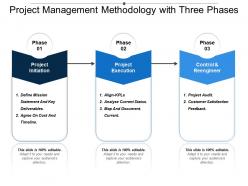
Project management methodology with three phases

Rating:
90%
Project management methodology with three phases
Slide 1 of 5
Favourites Favourites

Try Before you Buy Download Free Sample Product

Audience Impress Your
Audience
Editable 100%
Editable
Time Save Hours
of Time
The Biggest Sale is ending soon in
0
0
:
0
0
:
0
0
Rating:
90%
Presenting this set of slides with name - Project Management Methodology With Three Phases. This is a three stage process. The stages in this process are Problem Statement And Solution, Challenges And Solutions, Issues And Solutions.

People who downloaded this PowerPoint presentation also viewed the following :

FAQs for Project management methodology

So basically initiation is the "should we even do this?" phase - you're getting buy-in, writing up the business case, that whole song and dance. Planning comes after and that's when you dive into the actual nuts and bolts. Timelines, who's doing what, risk mapping, all the detailed stuff that makes or breaks a project. Think of it this way: initiation answers "is this worth it?" while planning tackles "ok how are we gonna pull this off?" Honestly though, don't skimp on that first part. I've seen too many PMs jump straight into planning and then wonder why everything's a mess later.

Honestly, stakeholder analysis can make or break your project. You'll figure out who actually has power and influence - not just who thinks they do. Then you can communicate with them the right way instead of treating everyone the same. I've watched projects completely crash because someone ignored a random VP who controlled the budget. It helps you spot who might push back early, plus you'll find unexpected allies. The whole point is avoiding those nasty surprises during execution when it's way harder to fix things.

Start with a risk register - just dump everything there first. Get your team together for brainstorming sessions, do some SWOT analysis, talk to stakeholders (they always catch stuff you miss). Those probability/impact matrices are honestly game-changers for figuring out what actually needs your attention vs. what's just noise. I'd also run some "what-if" scenarios if you have time. Don't get bogged down perfecting everything upfront though - document first, then worry about refining your responses later. Way easier that way.

Honestly, good communication can totally save your project - or completely tank it. Teams stay on track when everyone knows what's happening and when things are due. But if people aren't talking? That's when you get scope creep and really annoyed stakeholders who have no clue what's going on. I've literally watched projects fall apart because nobody was doing regular status updates (so frustrating!). The cool thing is you'll catch issues early while they're still fixable. Set up weekly check-ins right away, plus make sure people know who to escalate problems to.

Honestly, start with the basics - did you hit your timeline, budget, and scope? But that's just scratching the surface. The real test is whether people actually like what you built and if it's solving the problem you started with. I always ask the team and users for honest feedback (sometimes brutal but worth it). Check if people are actually using your solution too. If you launched something and nobody's touching it, well... that tells you everything. Don't forget to write down what went wrong and what worked - future you will thank you for it.

Think of documentation as your project's brain - without it, you're constantly forgetting stuff and starting over. When planning, write down what you're actually trying to build so nobody gets confused later. Track your progress and decisions as you go because people have terrible memories about what they agreed to (seriously, it's wild how fast they forget). Your docs will save you during monitoring too - patterns jump out way easier when everything's written down. Oh, and handovers become painless instead of chaotic. Just start with the basics though. Overcomplicate it and everyone ignores it completely.

So agile basically takes those old-school project phases and chops them up into little cycles. You're doing planning, building, and testing all within each 2-4 week sprint instead of giant chunks upfront. Way better than waterfall IMO - less of that "oh crap, nothing works" panic at the end. Each sprint you're actually shipping something that works, which feels pretty great honestly. The whole thing becomes this rhythm of plan-build-review-repeat. I'd say try it on just one smaller project first? That way you can get a feel for the constant iteration without going all-in right away.

Honestly, scope creep will kill you if you're not careful. People always want "just one more thing" that turns into massive rework. Getting straight answers from your team about where they actually are? Good luck with that. I swear some people think status updates are optional. Budget and timeline issues follow right behind, especially when stakeholders stop communicating clearly. The team energy thing is real too - everyone's pumped at kickoff, then reality hits. Regular check-ins with actual metrics help, and you've gotta learn to push back on changes that'll wreck your schedule. Sounds harsh but it works.

Ugh, scope creep is the worst - it basically guarantees your timeline goes out the window. You know how it is: stakeholders always want "just one tiny thing" that turns into three weeks of extra work. Then everything gets backed up because the new stuff interferes with what you've already built. Honestly, I've seen projects double their timeline because of this. Your sanity depends on writing down every single requirement upfront (even the obvious ones) and making people fill out actual change requests. Trust me, when they have to explain why their "quick addition" is worth delaying launch by two months, they suddenly don't need it so badly.

First things first - get those final deliverables reviewed and signed off. Create a handover plan for whoever's taking over daily ops. Schedule knowledge transfer sessions too, because honestly, people forget details way faster than they expect. Document lessons learned while they're still fresh in everyone's heads. Oh, and don't just let it fizzle out naturally - that's where projects usually go wrong. Close out contracts properly. Release your resources. Celebrate with the team! Being systematic about closure beats winging it every time.

Track four main things: schedule variance (are you on time?), budget variance (actual vs planned spending), scope creep (surprise changes), and quality stuff like defect rates. Weekly check-ins work great for most projects—bi-weekly if it's smaller. Compare everything against your original baseline. Honestly, I get way too focused on budget numbers, but the other three are just as crucial. Oh, and here's the thing—if anything drifts more than 10% from your plan, that's when you need to dig in and fix it before everything goes sideways.

Oh man, team dynamics are wild - they totally change as your project moves along. At the start everyone's pumped but confused about who does what. Planning gets people working together, but honestly? That's when the drama usually hits because everyone has opinions on how to do things. Once you're actually executing though, the team bonds over all the chaos you're dealing with together. The end is always weird - like, yay we're done but also sad the gang's breaking up. Communication shifts constantly, trust builds (or doesn't), and people's personalities come out differently in each phase. Just check in with everyone regularly and adapt your style to whatever emotional mess they're in at the moment.

Do it within a week or two while people still remember what actually happened. Get everyone important in the room and make sure it doesn't turn into a blame game - nobody's gonna be honest if they think they'll get thrown under the bus. I usually keep these to 90 minutes tops because honestly, people check out after that. Cover what worked, what was a disaster, and what you'd change. The key part though? Actually write stuff down and give people specific things to fix, otherwise you just wasted everyone's time talking about feelings.

Oh man, this is such a real thing! Different cultures handle project phases completely differently. Some teams want crazy detailed planning upfront while others just dive in - super confusing if you're not ready for it. Then you've got the hierarchy thing where certain cultures need formal approvals for everything, but others are way more casual about decisions. Feedback styles are all over the place too. Honestly, the closing phase can be weird since some cultures go big on celebrations and others barely acknowledge it. My advice? Just ask your teammates early how they like to work instead of guessing.

There's actually some pretty sweet tech out there for PMs now. AI feasibility tools and stakeholder mapping help with project kickoffs. Planning's where it gets interesting though - predictive analytics can map timelines way better than old-school Gantt charts (those things feel so 2010). Real-time collaboration platforms track execution automatically, plus ML can spot bottlenecks coming. Monitoring? Automated dashboards pull everything together. Honestly don't try implementing all this stuff at once. Pick one tool per phase or you'll drive your team crazy. Start small and build from there.

Ratings and Reviews

90% of 100
Write a review
Most Relevant Reviews
  1. 80%

    by Earl Contreras

    Understandable and informative presentation.
  2. 100%

    by Christoper Chavez

    Informative design.

2 Item(s)

per page: