Project plan process with feasibility study

Rating:
93%
Project plan process with feasibility study
Slide 1 of 2
Favourites Favourites

Try Before you Buy Download Free Sample Product

Audience Impress Your
Audience
Editable 100%
Editable
Time Save Hours
of Time
The Biggest Sale is ending soon in
0
0
:
0
0
:
0
0
Rating:
93%
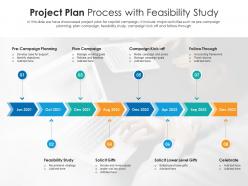
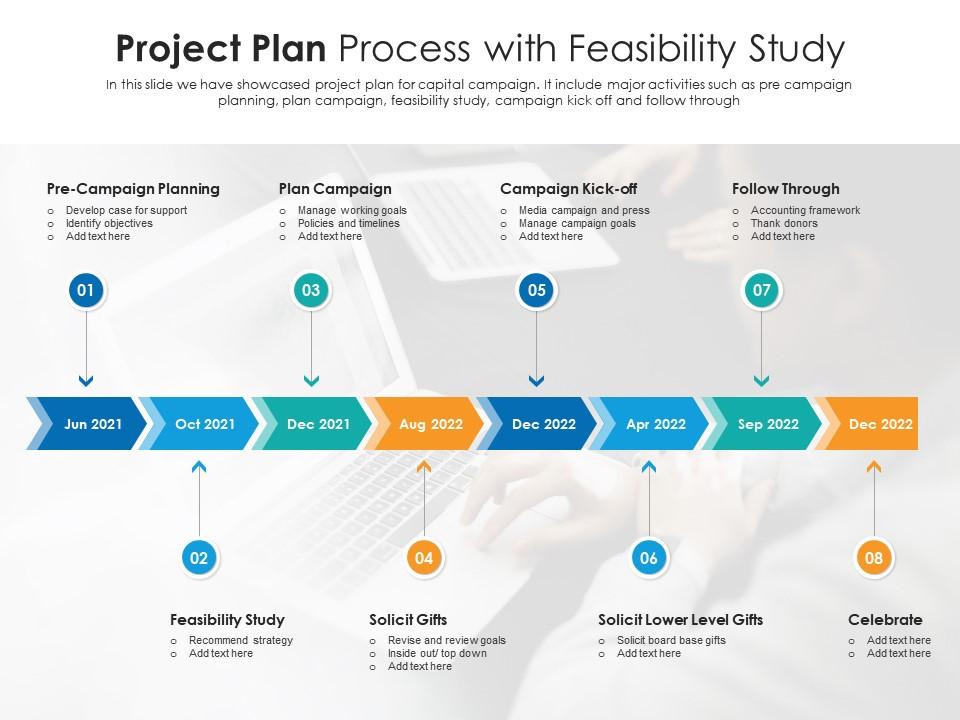
In this slide we have showcased project plan for capital campaign. It include major activities such as pre campaign planning, plan campaign, feasibility study, campaign kick off and follow through Introducing our premium set of slides with Project Plan Process With Feasibility Study. Elucidate the eight stages and present information using this PPT slide. This is a completely adaptable PowerPoint template design that can be used to interpret topics like Planning, Framework, Strategy. So download instantly and tailor it with your information.
FAQs for Project plan process

A comprehensive project feasibility study should include market analysis, technical requirements assessment, financial projections, resource availability evaluation, and risk identification. These elements work together by validating market demand, confirming technical viability, and projecting returns, with many organizations finding that thorough feasibility studies reduce project failure rates and enable more strategic resource allocation decisions.

Stakeholder analysis influences project feasibility by identifying key supporters, potential resistors, resource controllers, and decision-makers who can make or break implementation success. Through comprehensive stakeholder mapping, project managers can anticipate political challenges, secure necessary approvals, and align diverse interests early, with many organizations finding that proactive stakeholder engagement significantly reduces project risks and enhances overall viability.

Common financial metrics for assessing project feasibility include net present value (NPV), return on investment (ROI), internal rate of return (IRR), payback period, and cost-benefit analysis. These metrics enable organizations to evaluate profitability, risk, and strategic alignment by comparing projected cash flows, investment requirements, and market opportunities, with many companies finding that combining multiple metrics delivers more comprehensive feasibility assessments and informed decision-making.

Technical feasibility is determined by evaluating resource requirements, technology constraints, skill availability, timeline realism, and integration capabilities with existing systems. Through comprehensive technical assessments, organizations can identify potential roadblocks, estimate development costs, and validate whether current infrastructure supports project goals, ultimately ensuring strategic investments align with operational capabilities and deliver measurable business outcomes.

Regulatory requirements can significantly impact project feasibility through compliance costs, timeline extensions, resource allocation demands, operational constraints, and market access limitations. These requirements often necessitate additional planning phases, specialized expertise, and budget adjustments, with many organizations finding that early regulatory assessment ultimately delivers competitive advantage by ensuring smoother implementation and avoiding costly delays.

Market research provides critical data on customer demand, competitive landscape, target audience preferences, pricing strategies, and market size to validate project viability. Through comprehensive market analysis, organizations can identify potential risks, revenue opportunities, and strategic positioning, while minimizing investment uncertainties and ensuring alignment with market needs, ultimately delivering informed decision-making and competitive advantage.

Risk assessment integrates into project feasibility analysis by evaluating potential threats, quantifying their financial impact, and developing mitigation strategies during the planning phase. Through systematic risk identification and probability modeling, organizations can adjust timelines, budgets, and resource allocation proactively, ultimately delivering more realistic project expectations and strategic contingency plans.

Best practices for evaluating resource availability include conducting comprehensive skill audits, analyzing current capacity utilization, assessing budget constraints, reviewing team member availability, and identifying potential external resource needs. These assessments enable organizations to streamline project planning by accurately forecasting resource gaps, optimizing allocation strategies, and establishing realistic timelines, ultimately delivering more successful project outcomes and competitive advantage.

Timeline estimation significantly affects project feasibility by influencing resource allocation, budget projections, and stakeholder confidence in successful delivery. Unrealistic timelines can undermine credibility with investors and team members, while well-structured estimates enhance project approval rates and secure necessary funding, ultimately delivering strategic advantage through improved planning accuracy and stakeholder buy-in.

Effective feasibility study tools include Microsoft Project, Smartsheet, SWOT analysis templates, financial modeling software like Excel or Tableau, and risk assessment platforms such as @RISK or Monte Carlo simulators. These technologies streamline project evaluation by automating calculations, visualizing data trends, and generating comprehensive reports, with many organizations finding that integrated software suites ultimately deliver faster decision-making and more accurate resource allocation.

Team capacity directly influences project feasibility by determining realistic timelines, resource allocation, and deliverable scope, while inadequate capacity can lead to missed deadlines, compromised quality, and budget overruns. Organizations increasingly find that aligning project requirements with actual team bandwidth, skills availability, and workload distribution enables more accurate planning, reduced risks, and ultimately delivers sustainable project outcomes while maintaining team productivity and morale.

A pilot study enables organizations to test project assumptions, identify potential risks, validate technical approaches, and gather real-world performance data before full-scale implementation. Through controlled testing environments, companies across sectors like manufacturing and healthcare can assess resource requirements, stakeholder acceptance, and operational challenges, ultimately reducing implementation costs while enhancing strategic decision-making accuracy.

Stakeholder buy-in improves project feasibility outcomes by securing necessary resources, reducing resistance to change, and ensuring alignment with organizational priorities and strategic objectives. When key stakeholders actively support initiatives, projects experience smoother implementation phases, faster decision-making processes, and enhanced resource allocation, with many organizations finding that early engagement ultimately delivers higher success rates and sustainable competitive advantages.

**INPUT**: What are the implications of project scope creep on feasibility assessments? **OUTPUT**: Project scope creep significantly impacts feasibility assessments by altering resource requirements, timeline projections, budget allocations, and risk profiles beyond original parameters. These changes often compromise strategic objectives and operational efficiency, with many organizations finding that continuous scope expansion ultimately undermines competitive advantage and delivery timelines. **Word count: 50 words**

Qualitative project feasibility can be measured through structured surveys, focus groups, stakeholder interviews, user experience testing, and behavioral analytics to capture satisfaction levels and morale indicators. These assessment methods enable organizations to quantify subjective factors through rating scales, sentiment analysis, and feedback patterns, ultimately delivering comprehensive insights that complement traditional financial metrics and enhance project success rates.

Ratings and Reviews

93% of 100
Review Form
Write a review
Most Relevant Reviews
  1. 80%

    by Kyle Anderson

    Design layout is very impressive.
  2. 100%

    by Edwin Valdez

    Excellent design and quick turnaround.
  3. 100%

    by Edwin Valdez

    The Designed Graphic are very professional and classic.

3 Item(s)

per page: