Project Scoping To Meet Customers Needs Product Status And Tasks Report Dashboards

Rating:
80%
Project Scoping To Meet Customers Needs Product Status And Tasks Report Dashboards
Slide 1 of 7
Favourites Favourites

Try Before you Buy Download Free Sample Product

Audience Impress Your
Audience
Editable 100%
Editable
Time Save Hours
of Time
The Biggest Sale is ending soon in
0
0
:
0
0
:
0
0
Rating:
80%
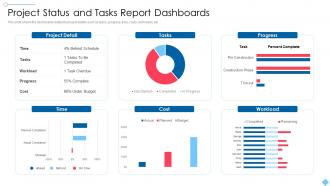
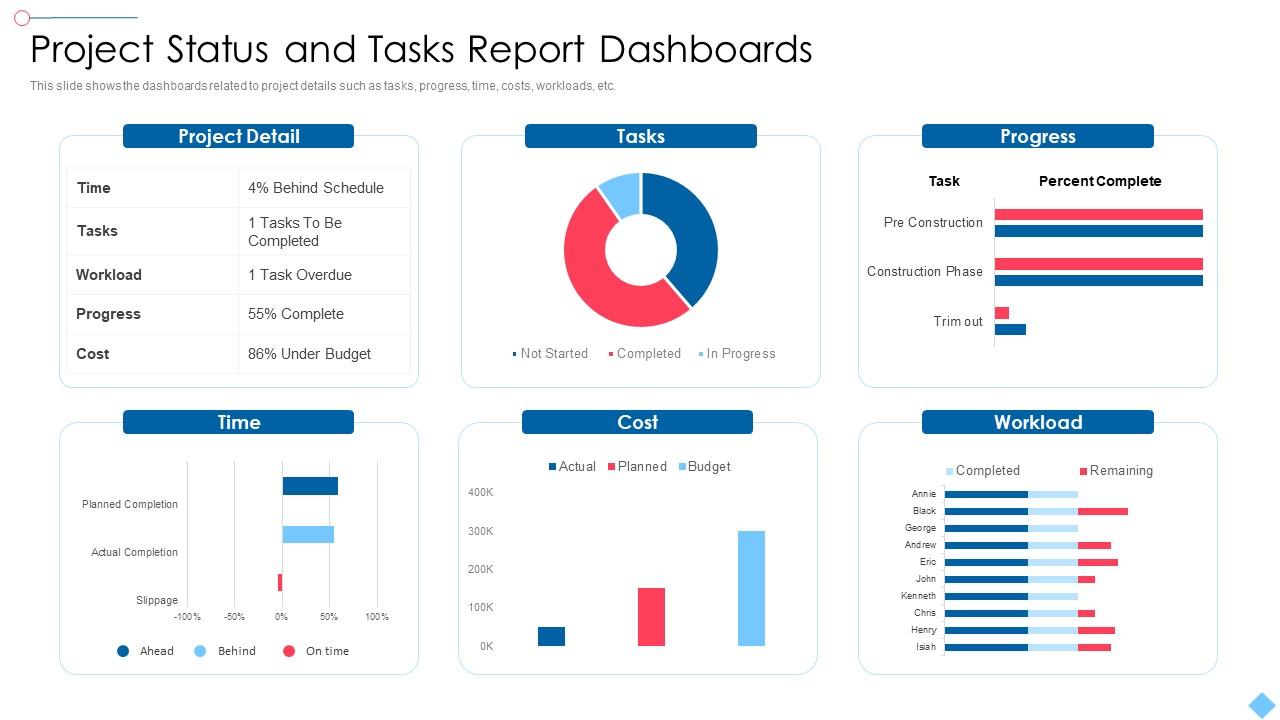
This slide shows the dashboards related to project details such as tasks, progress, time, costs, workloads, etc. Deliver an outstanding presentation on the topic using this Project Scoping To Meet Customers Needs Product Status And Tasks Report Dashboards. Dispense information and present a thorough explanation of Project Status And Tasks Report Dashboards using the slides given. This template can be altered and personalized to fit your needs. It is also available for immediate download. So grab it now.
FAQs for Project Scoping To Meet Customers Needs Product Status And

Key components include project objectives, deliverables, timeline, budget, resource requirements, stakeholder roles, and success criteria. These elements work together by establishing clear boundaries, defining expectations, and providing measurable milestones, with many organizations finding that comprehensive scoping reduces project delays by up to 40% while ensuring stakeholder alignment and successful delivery.

Project scoping varies significantly across industries, with IT projects focusing on software requirements, user stories, technical specifications, and iterative development phases, while construction emphasizes physical deliverables, regulatory compliance, materials, and sequential milestones. These industry-specific approaches enable organizations to streamline resource allocation, manage stakeholder expectations effectively, and ultimately deliver projects that meet sector-specific standards and operational requirements.

Project scope definition methodologies include Work Breakdown Structure (WBS), scope statement development, stakeholder analysis, requirements gathering workshops, and progressive elaboration techniques. These approaches streamline project planning by establishing clear deliverables, identifying resource requirements, and setting realistic boundaries, with many organizations finding that systematic scoping reduces project overruns while enhancing team alignment and client satisfaction.

Stakeholder input can be effectively gathered through structured interviews, collaborative workshops, surveys, focus groups, and stakeholder mapping exercises that identify key decision-makers and influencers. These methods enable project teams to capture diverse perspectives, align expectations, and prioritize requirements early, ultimately reducing scope creep and ensuring project deliverables meet stakeholder needs across the organization.

Common project scoping pitfalls include inadequate stakeholder consultation, poorly defined deliverables, unrealistic timeline assumptions, insufficient risk assessment, and scope creep vulnerability. These challenges often result from rushed planning processes, with many organizations finding that thorough upfront analysis, clear boundary setting, and regular stakeholder alignment ultimately deliver more predictable outcomes and reduced project costs.

Project scope creep occurs when additional features, requirements, or deliverables are added without proper approval, timeline adjustments, or budget modifications, often through informal requests or unclear initial specifications. Effective prevention strategies include establishing detailed scope documentation, implementing formal change control processes, maintaining regular stakeholder communication, and setting clear boundaries, with many organizations finding that proactive scope management ultimately delivers projects on time and within budget.

Project scoping tools include Microsoft Project, Asana, Trello, Jira, and Monday.com, along with specialized software like Smartsheet and Wrike. These platforms streamline scope definition, task breakdown, and stakeholder collaboration by enabling real-time updates, resource allocation tracking, and scope change management, with many organizations finding that integrated project management suites deliver enhanced visibility and control.

Ensuring alignment requires establishing clear connections between project deliverables and strategic business objectives, conducting stakeholder mapping to identify key decision-makers, and implementing regular scope validation checkpoints throughout the project lifecycle. Through structured governance frameworks and milestone reviews, organizations streamline resource allocation, minimize scope drift, and ultimately deliver projects that enhance competitive positioning and operational efficiency.

Risk assessment serves as a critical foundation in project scoping, helping identify potential obstacles, resource constraints, timeline challenges, and budget overruns before project initiation. Through systematic risk evaluation, project managers can develop more realistic scope boundaries, allocate appropriate contingency resources, and establish mitigation strategies, ultimately delivering more predictable outcomes and reducing costly scope creep throughout execution.

Balancing detailed project scope with flexibility requires establishing clear core requirements while building in structured change management processes, regular review checkpoints, and contingency buffers for timeline and budget adjustments. Many organizations achieve this through agile methodologies and phased delivery approaches, enabling teams to maintain project direction while adapting to evolving business needs and market conditions.

Project timeline and resource estimation techniques include work breakdown structures, expert judgment, analogous estimating, parametric modeling, and three-point estimation methods. These approaches streamline planning by breaking complex projects into manageable components, leveraging historical data, and accounting for uncertainties, with many organizations finding that combining multiple techniques delivers more accurate forecasts and enhanced resource allocation.

Project scope should be reviewed at major project milestones, during phase gates, and when significant changes occur, typically every 2-4 weeks for most projects. However, agile methodologies often require more frequent reviews during sprint planning and retrospectives, while traditional waterfall projects may review scope at predetermined stage completions, with many organizations finding that regular scope monitoring prevents costly scope creep and ensures project alignment with evolving business objectives.

Best practices for communicating project scope include creating detailed scope documents, conducting stakeholder alignment meetings, using visual project maps, establishing regular update cadences, and implementing change management protocols. These approaches streamline communication by ensuring transparency, minimizing misunderstandings, and maintaining consistent expectations, with many organizations finding that structured scope communication reduces project delays and enhances stakeholder buy-in throughout delivery.

Project success is measured by evaluating deliverable completion, adherence to timeline and budget constraints, stakeholder satisfaction levels, and achievement of defined objectives within scope boundaries. Through key performance indicators, milestone tracking, and scope variance analysis, organizations can assess whether projects delivered expected outcomes, maintained quality standards, and provided strategic value, ultimately determining return on investment and competitive advantage.

Visual aids enhance project scope understanding by providing clear timelines, milestone maps, deliverable breakdowns, resource allocation charts, and stakeholder responsibility matrices. These tools streamline communication across teams while minimizing misunderstandings, with many organizations finding that visual project frameworks accelerate decision-making and ultimately deliver better alignment between stakeholders and projected outcomes.

Ratings and Reviews

80% of 100
Review Form
Write a review
Most Relevant Reviews
  1. 80%

    by Clay Castillo

    Awesome presentation, really professional and easy to edit.
  2. 80%

    by Claude Price

    Excellent work done on template design and graphics.

2 Item(s)

per page: