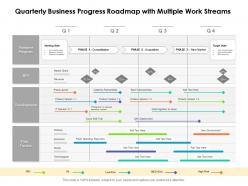
Quarterly business progress roadmap with multiple work streams

Quarterly business progress roadmap with multiple work streams
Slide 1 of 2
Favourites Favourites

Try Before you Buy Download Free Sample Product

Audience Impress Your
Audience
Editable 100%
Editable
Time Save Hours
of Time
The Biggest Sale is ending soon in
0
0
:
0
0
:
0
0
Presenting Quarterly Business Progress Roadmap With Multiple Work Streams PowerPoint slide which is 100 percent editable. You can change the color, font size, font type, and shapes of this PPT layout according to your needs. This PPT template is compatible with Google Slides and is available in both 4,3 and 16,9 aspect ratios. This ready to use PowerPoint presentation can be downloaded in various formats like PDF, JPG, and PNG.

People who downloaded this PowerPoint presentation also viewed the following :

FAQs for Quarterly business progress roadmap with

So for your quarterly roadmap, you need five things. First, nail down your big strategic goals for the quarter. Map out your main projects with timelines - honestly, I always pad these because stuff takes way longer than you think. Figure out who's doing what and how much budget you'll need. Oh, and pick your KPIs so you actually know if things are working. Major milestones are key too. I'd do monthly check-ins to see if you're on track or need to pivot. Nothing worse than realizing you're off course at the end of the quarter.

So here's what actually works - take your big company vision and chop it into themes your team can realistically impact. Honestly, this sounds obvious but most people skip it. When quarterly planning hits, literally ask "does this goal push forward our main themes?" Write that connection down somewhere visible. I can't tell you how many teams I've watched chase stuff that feels busy but doesn't move anything important. Short goals work better than rambling ones, by the way. The hardest part? Saying no to cool projects that don't fit your themes. Even when they seem urgent.

Honestly, I'd just go with **Asana** or **Monday.com** - they're super intuitive and won't make your team hate you. **Miro** is amazing for those messy brainstorming sessions where you're mapping everything out visually. **Jira** is solid if your team's pretty technical, but it can feel like overkill sometimes. Oh, and **Notion** is great if you're one of those people who wants literally everything in one place (I get it). Here's the thing though - pick whatever your team will actually use. I've seen so many fancy setups just die after a couple weeks because nobody wanted to update them. Definitely do the free trial thing first.

Set measurable KPIs upfront - revenue targets, customer numbers, project deadlines, whatever matters for your goals. Track weekly or every two weeks so you're not panicking at quarter-end wondering where you stand. I just use a simple spreadsheet honestly, nothing fancy. Be real about what's actually working vs what's not. If you're consistently hitting only 60% of targets, maybe they're too aggressive or your approach needs tweaking. Don't wait until the end to course-correct - adjust mid-quarter when you can still do something about it.

Honestly, you can't build a decent quarterly roadmap without getting feedback from everyone first. Customers, team leads, executives, partners - all of them. Otherwise you're just guessing what matters. I learned this the hard way last year when we completely missed what users actually wanted. Get their input early in your planning, not at the end when it's too late to change anything. That feedback helps you figure out what to prioritize and sets realistic timelines. Plus it keeps everyone aligned instead of pulling in different directions.

Honestly, flexibility is everything with roadmaps. Build in wiggle room from day one - rigid plans are death traps. Monthly check-ins work pretty well for assessing what's actually happening in the market. I've watched teams cling to outdated plans just because "we already committed" which is honestly nuts. Quick pivots are your friend when stuff hits the fan. Figure out what roadmap items still make sense vs what needs the axe. Oh, and treat it like a living doc that evolves. Gospel roadmaps are how you end up building features nobody wants anymore.

Honestly, the worst thing you can do is pack way too much in there. Your team will burn out trying to hit everything. Make your goals super specific too - "get more sales" is useless but "land 50 enterprise clients" actually means something. Monthly check-ins are a must because stuff always changes (learned this the hard way). And get everyone important on board from day one or they'll keep adding random requests later. Stick to maybe 3-5 big things max. Trust me, less is more here.

Honestly, you want to check that roadmap way more than quarterly. I do quick reviews every two weeks with my team - keeps us from going completely off track. Customer feedback changes things fast, plus leadership always throws curveballs. Monthly at minimum though, because waiting until quarter-end is just asking for trouble. Three months is forever in product time, you know? Those bi-weekly check-ins don't have to be fancy. Just see if your priorities still make sense and nothing major shifted. Trust me, catching problems early beats scrambling later.

Honestly, you gotta pull department heads into the actual planning - not just show them the finished roadmap later. Create working groups for your big projects where each team has someone who actually cares about the outcome. I've watched so many plans crash because Marketing learns Engineering's timeline from a random quarterly update... like seriously? Get everyone on shared project tools so they can see what's blocking what in real-time. Oh and don't wait until quarter-end for check-ins - do them every couple weeks. Start with figuring out which departments need to work together on your biggest stuff first.

Honestly, quarterly roadmaps are game-changers for accountability. People can't hide when everyone knows who's doing what by when. No more "wait, whose job was that again?" nonsense. You'll get those check-ins every three months to fix what's broken and celebrate the wins (which feels amazing, btw). The best part? Everyone sees how their random Tuesday tasks actually matter for the big picture. That connection makes people give a damn about quality. Oh, and start small - just pick your top 3-5 priorities for next quarter with clear owners and deadlines.

Track completion rates, milestone dates, and resource utilization first - that's your bread and butter. Sprint velocity or customer feedback work great as leading indicators too. Honestly, I've wasted so much time on vanity metrics that looked impressive but told me nothing useful. Pick 3-5 KPIs max that actually connect to your roadmap goals. You'll want a simple weekly dashboard you can glance at without getting overwhelmed. Flag anything trending downward early though - way easier to fix problems mid-quarter than scrambling at the end when it's too late.

Your team's input is honestly make-or-break for quarterly planning. They're the ones in the trenches seeing what actually works and what doesn't. Bottlenecks you'd never think of? They know them. Unrealistic deadlines? They'll call that out too. When people help build the plan, they actually want to see it succeed - weird how that works. I learned this the hard way once when I skipped proper input sessions and everything fell apart by month two. Get them involved early in the process, not just some afterthought survey. Their day-to-day reality beats leadership assumptions every time.

Honestly, you'll want to mix it up - kick things off with an all-hands to cover the big picture stuff, then send a detailed follow-up that people can actually reference later. Town halls are solid too, especially with Q&A built in. I've watched companies totally bomb this by just doing boring email blasts (nobody reads those anyway). Have your department heads take the message and make it relevant to their specific teams. Maybe throw together a simple one-pager or visual roadmap that won't make people's eyes glaze over. The real trick? Hit them through different channels over a few weeks instead of one announcement that dies in their inbox.

Honestly, quarterly roadmaps are your secret weapon against bigger companies. They're stuck in endless approval cycles while you can pivot fast when things change. I've seen startups completely outpace Fortune 500s just by being quicker to spot opportunities. Focus on 2-3 big wins each quarter instead of doing everything at once. Your next planning session? Pick one thing you're already good at and go all-in on it. Big corps are still figuring out their budgets while you're already executing. It's actually kind of unfair how much faster you can move.

Honestly, keep it visual and tell a story with your roadmap. Big picture first - show how your objectives connect to company goals. Skip the text-heavy slides (seriously, nobody wants to read a spreadsheet presentation). Timelines and swimlanes work way better. Break your major stuff into clear milestones with owners and dates. Here's the thing though - be upfront about dependencies and risks from the start. Stakeholders actually respect the honesty when you admit what might blow up. Each section needs specific success metrics so there's zero confusion about what "finished" means.

Ratings and Reviews

0% of 100
Review Form
Write a review
Most Relevant Reviews

No Reviews