Recruitment Dashboard Metrics With Open Positions

Rating:
100%
Recruitment Dashboard Metrics With Open Positions
Slide 1 of 7

or

Favourites Favourites

Try Before you Buy Download Free Sample Product

Audience Impress Your
Audience
Editable 100%
Editable
Time Save Hours
of Time
The Biggest Sale is ending soon in
0
0
:
0
0
:
0
0
Rating:
100%
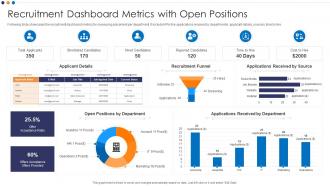
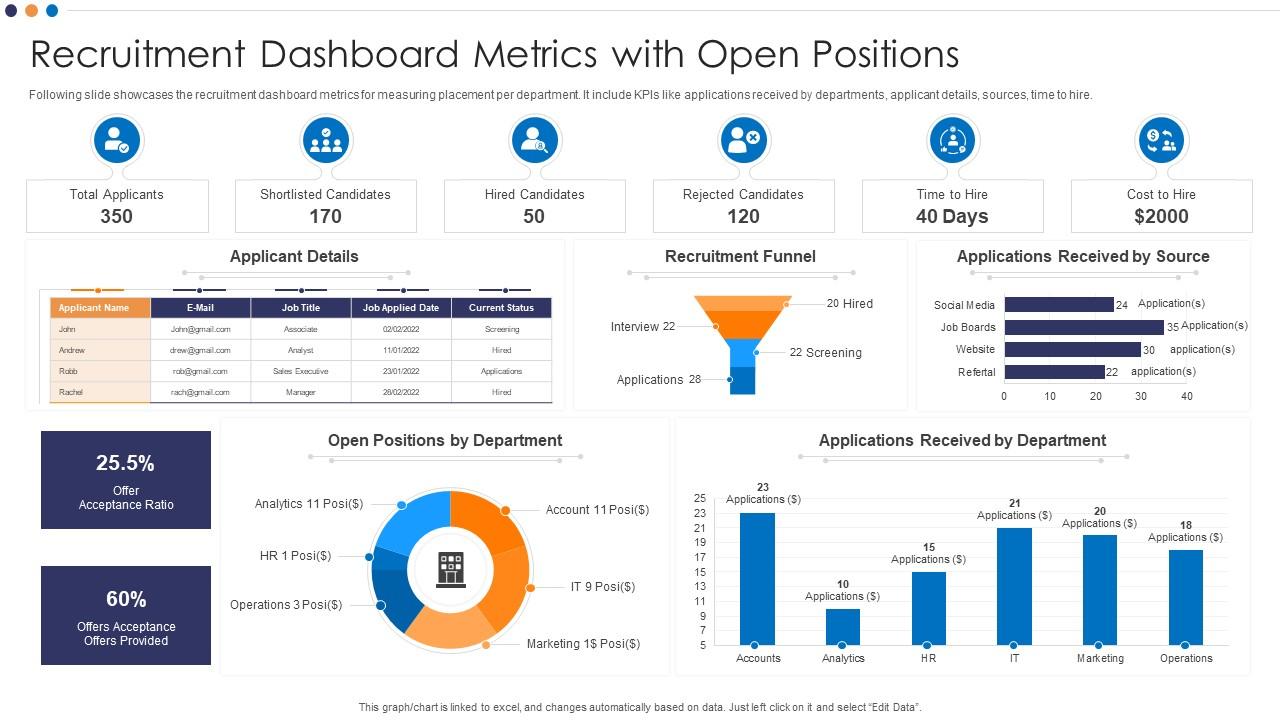
Following slide showcases the recruitment dashboard metrics for measuring placement per department. It include KPIs like applications received by departments, applicant details, sources, time to hire. Presenting our well structured Recruitment Dashboard Metrics With Open Positions. The topics discussed in this slide are Recruitment Funnel, Hired Candidates, Rejected Candidates. This is an instantly available PowerPoint presentation that can be edited conveniently. Download it right away and captivate your audience.
People who downloaded this PowerPoint presentation also viewed the following :

FAQs for Recruitment Dashboard Metrics

Track time-to-fill, cost-per-hire, and quality of hire first - those are your bread and butter metrics. Source effectiveness matters too since you want to know which channels actually work (spoiler: it's probably not the expensive job board you think). Offer acceptance rate is clutch because rejected offers are soul-crushing and expensive. Oh, and candidate experience scores are becoming a big deal if you don't want people trashing your company on Glassdoor. Start simple though. Don't go crazy tracking twenty different things right away or you'll hate your life analyzing all that data.

Ugh, time-to-fill is basically a warning light for your whole process. Long hiring cycles mean you're burning cash on extra interviews and coordination - plus your hiring managers are probably losing their minds waiting. I'd start by figuring out where people get stuck in your pipeline. Are approvals taking forever? Too many interview rounds? Crappy sourcing? That's where you'll see the biggest wins. Just don't obsess over speed alone though - you still need decent hires at the end of it. Track both or you'll end up with fast bad decisions instead of slow good ones.

Honestly? Quality beats everything else when it comes to hiring. Sure, you can fill positions super fast and keep costs low, but if people are bombing out after six months, what's the point? I've watched teams get totally fixated on speed - like it's some kind of competition - while hiring absolute disasters. The real stuff to track: how your new hires perform after 90 days, whether they stick around for a year, and if hiring managers actually like them. Performance ratings matter way more than how quickly you can stuff bodies into roles.

Look, most people just glance at the total cost-per-hire and think they're done - but that's basically useless. You gotta break it down by where you're finding people (job boards, recruiters, referrals) and what level roles you're filling. Compare internal vs external costs too. Don't forget time-to-fill and quality stuff either, because hiring someone cheap who bails after two months? Yeah, that's not actually cheap. I learned this the hard way at my last job - we kept using this one recruiter who seemed affordable until we realized their hires kept flaming out. Track it monthly and you'll see which channels are worth your money.

Your offer acceptance rate shows how many people actually take the job when you ask them. Around 85-90% is pretty solid. Low numbers? Usually means your salary's weak, company reputation needs work, or you're going after people who aren't really interested. I've watched teams waste months chasing candidates who were never gonna leave their current gig - such a pain. Check this monthly and actually ask people why they said no. Those conversations are gold. Short sentences tell you nothing, but the real feedback helps you figure out what's broken in your process.

So source of hire metrics track where your best people actually come from - job boards, referrals, social media, whatever. The real value is seeing which channels bring candidates who perform well and don't bail after six months. I've seen companies blow their budget on expensive job boards that flood them with resumes but deliver maybe one decent hire. Meanwhile, employee referrals are quietly crushing it. The data shows you where to focus your energy instead of just guessing. Track it for your next batch of hires - you'll start noticing patterns pretty quick.

Honestly, just keep it simple - send super short surveys after each stage, like 3-5 questions tops. Nobody wants to fill out some massive form when they've already spent hours interviewing with you. Start right after the phone screen, then again after onsite interviews. Exit interviews work too if someone drops out of your process. You can also watch for indirect stuff - are people responding to your emails quickly? Check Glassdoor occasionally since candidates sometimes vent there about bad interview experiences (learned that the hard way). Response rates tell you a lot without asking directly. The trick is getting feedback throughout the process, not waiting until the very end when it's too late to fix anything.

Look, diversity metrics basically show you where your hiring process is screwing up. Track stuff like how many people from different backgrounds make it from application to interview - the data will expose blind spots you never noticed. I'd focus on maybe 2-3 metrics to start (don't overwhelm yourself). You might find certain job boards aren't reaching diverse candidates, or your interview panels are way too similar. Once you see the patterns, you can fix your sourcing strategy and rewrite those job descriptions. The numbers really don't lie about this stuff.

So basically, your turnover rate shows exactly how many people you'll need to replace - it's like a crystal ball for your hiring workload. Losing 20% of staff each year? You're hiring at least that many just to break even, not counting any growth positions. High turnover puts you in constant fire-drill mode, which honestly just makes recruiting way more stressful and expensive. I'd definitely track it by department though since some teams always have higher turnover than others. Use last year's numbers to plan your hiring budget - it's surprisingly accurate once you get the hang of it.

Okay so your ATS is basically gonna track everything for you automatically - application numbers, which job sites actually work, how long hiring takes, all that stuff. You get dashboards showing where candidates drop out and what's slowing things down. Honestly, the best thing is ditching those awful spreadsheets we used to do manually. It captures rejection feedback, diversity data, interviewer notes without you doing anything. Just don't be like most people who set it up then completely ignore the reports - that's where the good stuff is hiding.

Looking at funnel conversion rates shows you exactly where candidates bail out. Maybe they're not applying after seeing your job posts, or ditching during interviews - the data can be brutal about how messy your process really is. But that's good! Better to know than keep guessing what's broken. Track your application-to-phone-screen numbers first, then phone-screen-to-final-interview. Those two usually reveal the biggest problems. You can actually see if tweaks you make help or just create new issues. Honestly saved me so much time once I started doing this properly.

Honestly, recruitment metrics are all over the place depending on your industry. Tech roles? You're looking at 90+ days easy. Retail might be 30 days max. Healthcare obsesses over quality because of compliance stuff, while startups are laser-focused on cost-per-hire since they're usually broke. Finance companies care way more about retention since replacing someone costs a fortune. Here's the thing though - you can't compare your manufacturing stats to some consulting firm's numbers. That's just setting yourself up to look bad. Find industry-specific benchmarks instead. That's how you'll set realistic goals and actually prove to your boss that you're killing it.

Dude, stick to the metrics that actually matter to the C-suite. Time to fill, cost per hire, and quality of hire - those are your golden trio. Offer acceptance rates matter too, plus retention at 90 days and one year. Skip the vanity metrics like LinkedIn outreach numbers (honestly, who cares?). What execs really want is the story. Are you filling critical spots quickly enough? Staying on budget? Most importantly - are these people actually good and sticking around? Throw it all in a simple dashboard with trends over time. Always add context about what's happening in the market or any hiring nightmares you're dealing with. Makes a huge difference.

Look at your hiring data from the past 2-3 years and map it against business metrics - that's your starting point. Most companies totally ignore this goldmine of info, which is crazy to me. Track seasonal spikes, when departments usually expand, and retention patterns. Then match those trends with your revenue forecasts and business pipeline. You'll start seeing when you need to ramp up or scale back teams. Build some dashboards that pull this together automatically so you're not always playing catch-up. Trust me, it beats scrambling to fill roles last minute.

Honestly, start by figuring out which job boards actually work for you - don't waste money on the duds. Speed is everything because good people disappear fast (learned this the hard way). Your interview process needs to be consistent so you're not all over the place with different candidates. But here's what really matters - track your numbers weekly. Time-to-hire, cost-per-hire, how happy candidates are with the process. I know it sounds boring, but you'll catch problems way earlier. Also, candidate satisfaction surveys are gold - most companies skip this and wonder why they can't close offers.

Ratings and Reviews

100% of 100
Review Form
Write a review
Most Relevant Reviews
  1. 100%

    by David Snyder

    SlideTeam was so customer-centric and quick service-provider that I doubted the amount I was paying and literally re-checked the transaction.
  2. 100%

    by Clement Patel

    Easy to use and customize templates. Helped me give a last minute presentation.

2 Item(s)

per page: