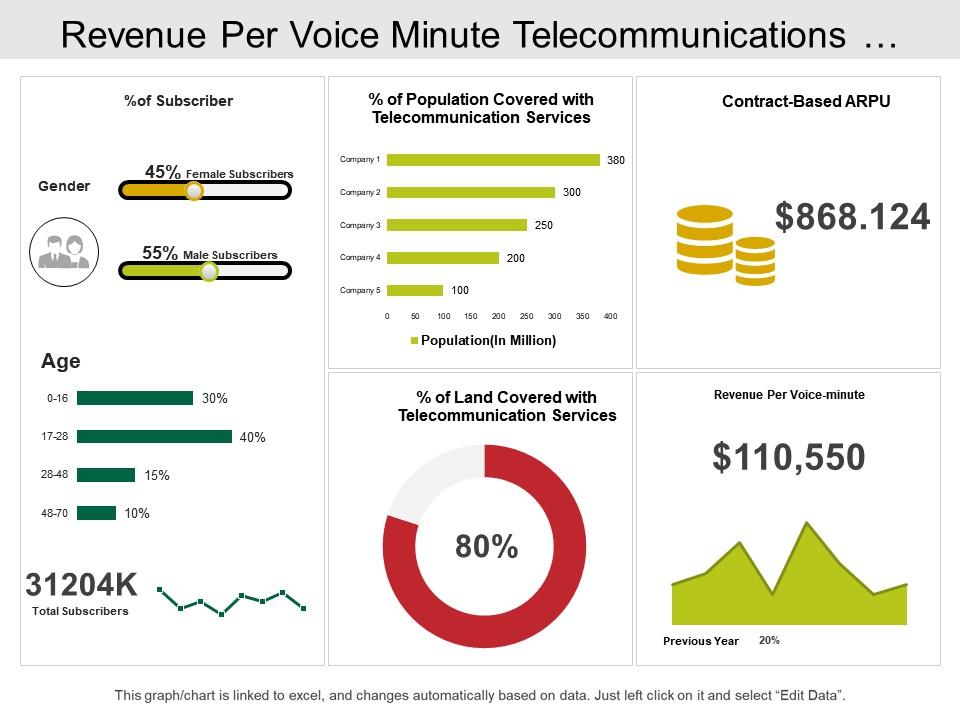
Revenue per voice minute telecommunications dashboard
Try Before you Buy Download Free Sample Product
Audience
Editable
of Time
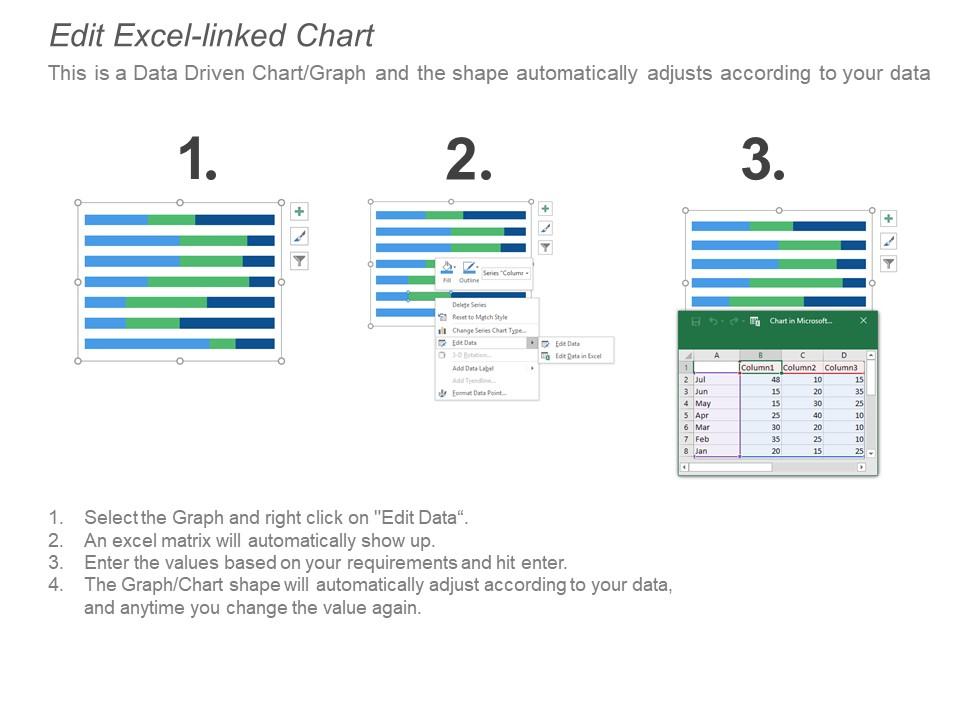
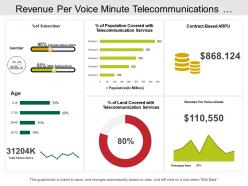
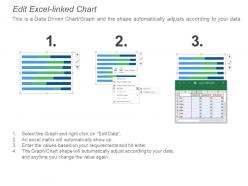
Have you been asked to create the presentation on telecommunications? If yes, then you should download our revenue per voice minute telecommunications dashboard PPT slide. In this competitive world, it is quite important to evaluate and track the performance on regular intervals so that you can make changes in your strategy. Our PowerPoint template comes in excel format and enables you to present the data related to your business in the simple manner. When it comes to show the numbers then there is no better way to showcase them than using a dashboard. Analyzing each aspect of your work can only be possible when you present it in the dashboard style. Telecommunication companies can get the best value out of this presentation diagram as they can share the data with their business associates and shareholders easily and make them understand the revenue generated per minute. Besides this, the PowerPoint graphic can also be used by other businesses as it is completely amendable, and any changes are possible with it. Encourage folks to give clever inputs with our Revenue Per Voice Minute Telecommunications Dashboard. Always appreciate intelligent ideas.
People who downloaded this PowerPoint presentation also viewed the following :
Revenue per voice minute telecommunications dashboard with all 6 slides:
Our Revenue Per Voice Minute Telecommunications Dashboard have an aura about them. Deliver your thoughts with great effect.
FAQs for Revenue per voice
**INPUT**: What factors influence the revenue per voice minute in telecommunications? **OUTPUT**: Revenue per voice minute in telecommunications is influenced by pricing strategies, network infrastructure costs, regulatory frameworks, market competition, and customer demand patterns. These factors work together by determining operational expenses, service quality levels, and competitive positioning, with many telecom providers finding that strategic network investments and dynamic pricing models ultimately deliver higher per-minute revenues and sustained market advantage. [Word count: 60 words]
Pricing strategies significantly impact revenue per voice minute through tiered plans, peak-hour pricing, bundled services, promotional rates, and dynamic pricing models. These approaches enable telecom operators to maximize revenue by segmenting customers based on usage patterns, optimizing network capacity utilization, and enhancing customer retention, ultimately delivering improved profitability and competitive positioning.
Call quality and customer satisfaction directly influence revenue per voice minute by driving customer retention, encouraging longer call durations, and enabling premium service pricing. High-quality voice services reduce churn rates and support higher usage volumes, while satisfied customers generate more consistent revenue streams, with many telecommunications providers finding that superior call experiences ultimately deliver competitive advantage and sustained profitability growth.
Companies leverage data analytics to optimize revenue per voice minute by analyzing call patterns, customer behavior, network utilization, and pricing strategies across different segments and time periods. Through predictive analytics and real-time monitoring, telecommunications providers can dynamically adjust routing, implement strategic pricing models, and enhance service quality, ultimately delivering improved profit margins and competitive positioning in an increasingly data-driven market landscape.
Regulatory changes significantly impact revenue per voice minute through interconnection rate adjustments, termination fee modifications, quality standards implementation, and competitive market requirements. These regulations often reduce operator margins while enhancing consumer protection, with many telecom companies finding that compliance costs initially decrease profitability but ultimately drive service innovation and operational efficiency improvements.
VoIP services significantly disrupt traditional revenue per voice minute models by reducing call costs, enabling unlimited calling plans, and shifting focus from usage-based to subscription-based pricing. Many telecommunications companies are adapting by bundling VoIP with data services, cloud communications, and unified platforms, ultimately delivering enhanced customer value while maintaining competitive advantage through service diversification.
Businesses can enhance revenue per voice minute through premium service tiers, value-added features like call recording or analytics, dynamic pricing models, strategic bundling with complementary services, and improved call quality technologies. These strategies enable telecommunications providers and contact centers to differentiate offerings, reduce churn, and maximize customer lifetime value, ultimately delivering higher margins and competitive advantage.
Marketing campaigns significantly influence customer usage patterns by promoting value-added services, encouraging plan upgrades, and driving higher call volumes through targeted messaging and promotional offers. These strategic initiatives enhance revenue per voice minute by shifting customers toward premium services, increasing overall usage frequency, and optimizing customer lifetime value, with telecommunications companies finding that personalized campaigns deliver measurably improved engagement and profitability outcomes.
Revenue per voice minute typically correlates inversely with customer churn rates, as higher per-minute charges often drive customers to seek more affordable alternatives or reduce usage significantly. However, telecommunications providers increasingly find that transparent pricing strategies, combined with value-added services and competitive bundling, can maintain healthy revenue margins while minimizing churn through enhanced customer satisfaction and loyalty.
5G technology affects revenue per voice minute by enabling higher-quality voice services, supporting massive device connectivity, and facilitating new revenue streams through enhanced mobile services. Through improved network efficiency and reduced latency, telecommunications providers can optimize voice traffic management, deliver premium voice experiences, and integrate voice services with data-intensive applications, ultimately creating competitive differentiation in increasingly saturated markets.
Competitive dynamics significantly impact revenue per voice minute through pricing pressure, market saturation, and service differentiation strategies. In saturated markets like Europe and North America, intense competition forces operators to reduce voice rates while investing in value-added services, with many telecom providers finding that bundling voice with data and digital services helps maintain profitability despite declining per-minute revenues.
Best practices for tracking revenue per voice minute include implementing real-time analytics systems, establishing standardized reporting intervals, segmenting data by customer tiers and service types, and integrating billing systems with performance dashboards. These approaches enable telecommunications providers to monitor pricing effectiveness, identify revenue optimization opportunities, and benchmark against industry standards, ultimately delivering enhanced profitability insights and strategic decision-making capabilities.
Bundles and packages enhance revenue per voice minute by increasing average revenue per user, encouraging higher usage through value perception, and reducing customer churn through comprehensive service offerings. Through strategic bundling of voice, data, and digital services, telecom providers streamline customer acquisition costs, maximize wallet share, and ultimately deliver improved profit margins while enhancing customer loyalty in an increasingly competitive telecommunications landscape.
Successful case studies reveal that optimizing revenue per voice minute requires strategic pricing models, enhanced service quality, targeted customer segmentation, and efficient network utilization. Companies like Verizon and AT&T demonstrate that premium service tiers, value-added features, and data bundling strategies significantly increase per-minute profitability, while advanced analytics help identify high-value customer segments and optimize capacity allocation.
The shift towards mobile-first platforms significantly reduces revenue per voice minute through increased competition from VoIP services, messaging apps, and data-based calling solutions. Traditional telecom providers face pressure as customers migrate to WhatsApp, Skype, and Teams, forcing operators to restructure pricing models, bundle services with data plans, and focus on value-added offerings to maintain profitability.
No Reviews