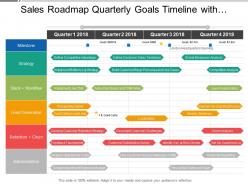
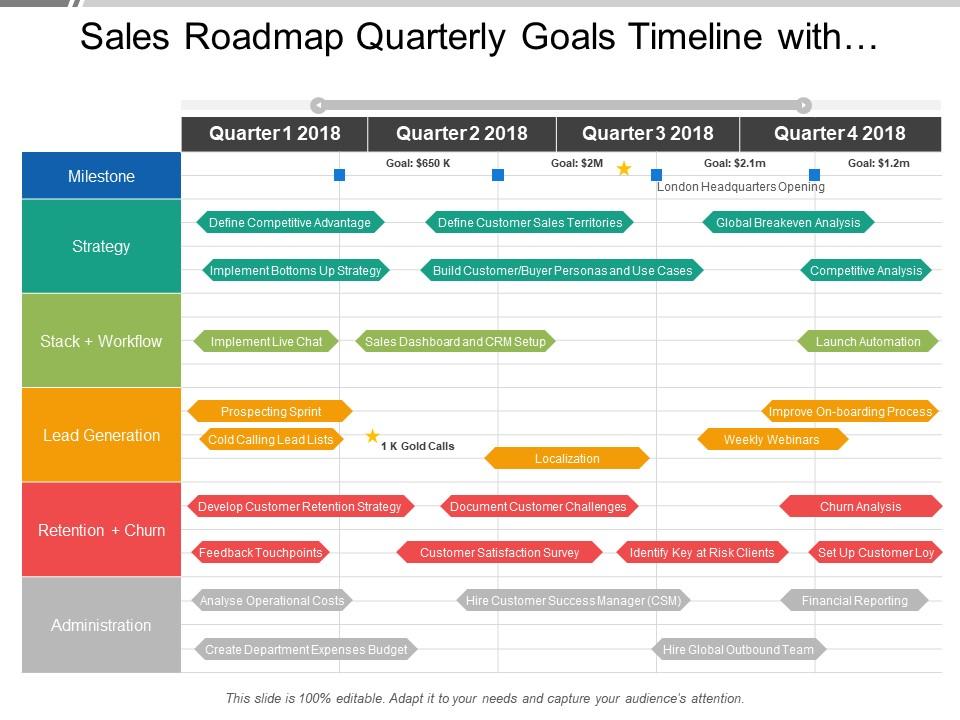
Sales roadmap quarterly goals timeline with competitive advantage sales territories and financial reporting
Try Before you Buy Download Free Sample Product
Audience
Editable
of Time
Be appropriate in any culture with our Sales Roadmap Quarterly Goals Timeline With Competitive Advantage Sales Territories And Financial Reporting. They assure you global endorsement.
People who downloaded this PowerPoint presentation also viewed the following :
Sales roadmap quarterly goals timeline with competitive advantage sales territories and financial reporting with all 5 slides:
Dissuade folks from distributing false information with our Sales Roadmap Quarterly Goals Timeline With Competitive Advantage Sales Territories And Financial Reporting. Handle attempts at instigation.
FAQs for Sales roadmap quarterly goals timeline with competitive advantage sales territories
So you'll want to nail down four key pieces. Start with your revenue targets - break those down quarterly so they're not just some scary annual number. Map out who you're actually selling to (ideal customer profiles). Then figure out which channels and tactics will reach those people. Milestones with real deadlines are crucial too. Here's the thing though - half the roadmaps I see crash because nobody thought about team capacity. Like, cool plan but who's actually doing all this work? Work backwards from your annual goal. Makes the whole thing less overwhelming. Oh, and have a backup plan ready because sales never goes exactly as expected.
Dude, you gotta make sure your sales team isn't going rogue and doing their own thing while the company heads somewhere else. Map your current sales goals against whatever strategic stuff leadership's pushing - enterprise clients, new markets, whatever. Look for gaps where you're totally off track. Honestly, this whole alignment thing makes budget season way less painful because execs can actually see how your sales initiatives connect to revenue. Oh, and it helps with getting resources too - like if the business wants enterprise clients, your roadmap should focus on enterprise-ready processes. Performance improves because everyone's rowing the same direction instead of against each other.
Look, market research is your sales roadmap foundation - shows you exactly where to put your energy. You'll identify target segments, understand what's actually bugging buyers, and nail messaging that hits. Skip this step? You're basically throwing darts blindfolded at the wrong prospects. Research also reveals trends and competitive gaps you can jump on. This data drives everything - lead scoring, territories, even your pitch content. Honestly, most teams have more research sitting around than they realize. Start by checking what you've got, then fill the gaps that're blocking your biggest strategy decisions.
Honestly, just start with your company's big revenue targets - that's what actually matters at the end of the day. Look back at your pipeline data to see what you can realistically hit. Focus on the stuff that'll bring in the most money first, even if it's tougher. Don't go after enterprise deals if your team isn't ready for that kind of complexity though - learned that one the hard way. Map out what depends on what, then tackle the foundational goals before jumping into anything fancy. Oh, and keep it to like 3-5 priorities max or you'll spread yourself too thin.
Honestly, you need both the short-term and long-term stuff to really know what's happening. Track your pipeline velocity, conversion rates at each funnel stage, deal sizes, and how long sales cycles actually take. Revenue numbers are obvious but activity metrics like calls and demos? Those predict everything. I always check quota performance by rep and territory too - shows you exactly where things are breaking down. Set up a weekly dashboard that shows trends over time, not just this week's numbers. Way easier to catch problems before they blow up your whole quarter.
Quarterly minimum, but monthly is way better if you're in a crazy fast market. Seriously, stuff changes overnight - competitors, what customers actually want, even your team's bandwidth. Those big quarterly reviews are for major pivots, but monthly check-ins? That's where you catch the small stuff before it snowballs. Oh, and definitely loop in your key people for these reviews - don't try to do it solo. Set up a recurring meeting now or you'll totally forget (guilty of this myself). Trust me, those little course corrections add up.
Honestly, just pick a few channels your team actually checks and hammer them consistently. Kick things off with a big presentation to get everyone aligned first. Then maybe send weekly email updates about milestones - nothing fancy. Visual dashboards are clutch if people will actually look at them (big if, I know). Also weave updates into your existing team meetings so it doesn't feel like extra work. Don't overthink it though. Better to nail 2-3 communication methods than half-ass a bunch of different ones.
So basically, tech handles all the grunt work for your sales roadmap. Your CRM tracks pipeline stuff, sales platforms push the right content when you need it, and analytics show what's actually moving the needle (not just what feels like it's working). Honestly? Managing this manually is torture - like trying to use a flip phone today. Just pick tools that play nice together so you're not constantly switching between apps. I'd start by figuring out your current workflow, then grab whatever kills your biggest time-wasters first. That's usually where you'll see the most impact anyway.
Ugh, where do I even start? Your team will probably hate any changes you make - people just don't like being told things are different now. Plus timelines are always crazy unrealistic, and don't get me started on budgets that magically shrink. Market shifts will mess everything up too. Here's what actually works though: get everyone involved from the beginning so they don't feel steamrolled. Build in wiggle room everywhere you can. I do quarterly reviews to see what's working and what isn't. Having a Plan B (or C) saved my butt more times than I can count. Oh, and explain WHY you're changing things - makes people way less cranky about it.
Honestly, most teams completely miss this but you gotta bake customer feedback right into your roadmap sessions. Get your sales people to actually write down the objections and requests they're hearing - like, make it part of their process. Then every quarter, sit down with product and marketing to go through all that stuff. The trick is being systematic about it instead of just winging it. Create some simple place where everyone dumps customer insights (we use a basic spreadsheet, nothing fancy). Those patterns will show you which sales initiatives are actually worth your time. Way better than guessing what customers want, you know?
Look, segmentation is what makes your sales strategy actually work instead of being a total mess. You can't just blast the same pitch at everyone - I learned that the hard way. Break your market into chunks: company size, industry, what keeps them up at night, how they buy stuff. Then your enterprise deals get handled totally different than small business ones. Your messaging actually lands because it speaks to their specific problems. Honestly, most people skip this step and wonder why their conversion sucks. Start with your top 3-4 customer types and build separate game plans for each.
Honestly, you've got to update your sales roadmap every quarter - seasonal stuff can make or break your numbers. Dig into your past data to find those patterns, like how Q4 always goes crazy for retail. Then plan your team size and marketing budget around it. Economic changes are harder to predict but they mess with everything. High inflation? Buyers get scared and drag their feet on decisions. I saw this big time in 2022, ugh. Set up different scenarios with both safe and optimistic targets. Oh, and always have backup plans ready because things change fast.
Don't make it too rigid - seriously, markets shift overnight and you'll need room to pivot. Pick 3-5 key things max because trying to juggle 20 priorities is a recipe for chaos. Leadership always wants crazy aggressive timelines, but unrealistic deadlines just crush team morale when everyone inevitably falls behind. Get sales, marketing, and customer success involved early or you'll miss something obvious. Plan your first quarter in detail, then keep everything else high-level until you're closer. Oh, and build in some buffer time - stuff always takes longer than you think it will.
Honestly, sales forecasting is a game changer for roadmap planning. You're basically swapping out guesswork for real data - way smarter move. Pull your last 12 months of sales and hunt for patterns. Maybe Q3 always tanks, or December goes crazy. That stuff should totally shape your roadmap timelines. Think of it like having GPS vs wandering around lost. Historical trends and pipeline data help you set realistic milestones instead of just crossing your fingers. You'll catch potential problems early too. I always tell people to look at seasonal dips first - saves you from planning a big launch right when sales historically suck.
Dude, training is make-or-break for sales roadmaps. I've watched so many fail because leadership thinks people will just magically adapt to new systems and processes. Spoiler alert: they won't. Figure out your biggest knowledge gaps first. Then build training around those specific holes - proper onboarding for new tools, documentation people can actually use, ongoing coaching. The brilliant strategy means nothing if your team's fumbling around confused. Short version? Don't assume anyone will "figure it out" on their own.
-
Commendable slides with attractive designs. Extremely pleased with the fact that they are easy to modify. Great work!
-
Helpful product design for delivering presentation.