


Sales Strategy To Boost Top Line Revenue Growth And Increase Profitability Icons Slide Ppt Inspiration
A Sales Strategy is a business or individual plan on how to sell and increase profits and products and services. Sales strategies are typically developed by the management of a company, along with its managers of sales, marketing, and advertising. Developing an effective Sales Strategy is a very important aspect of the business as it helps to drive sales, increases engagement, shorten the sales cycle, improve client loyalty, create a competitive edge etc. Hence the company must formulate an effective sales strategy to achieve the Sales Goals. A well-defined sales strategy presentation helps the company to make real quantifiable profits. The current scenario is that the existing Sales Strategy of the company is not fruitful and is not delivering the desired results. Hence, the company must find out new sales strategies to implement in the business that would deliver higher results, increased sales and reduce costs along with high customer engagement and retention. The performance indicators that will be used to measure the effectiveness of new sales strategy are sales growth, sales force turnover rate, average sales cycle length, customer churn rate, profit margin etc. This presentation provides some information and details on consumer goods company business overview, need for an effective sales strategy, sales key performance indicators, sales team of the company, strategic components of an effective sales strategy, steps involved in building an effective sales strategy, market segmentation analysis, types of sales strategies, customer referral programs to enhance sales, social media advertising platform to enhance sales, strategic action timeline and digital tools for enhancing sales strategy effectiveness, estimated sales revenue of the company after sales strategy implementation, estimated future statistics after effective sales strategy implementation etc. After evaluating the benefits, outcomes and costs of the various Sales Strategies, the company will choose the best approach and strategy to enhance Sales Figures in the company and increase overall profitability and overall company’s performance.






















-

- Google Slides is a new FREE Presentation software from Google.
- All our content is 100% compatible with Google Slides.
- Just download our designs, and upload them to Google Slides and they will work automatically.
- Amaze your audience with SlideTeam and Google Slides.
-

Want Changes to This PPT Slide? Check out our Presentation Design Services
-

- WideScreen Aspect ratio is becoming a very popular format. When you download this product, the downloaded ZIP will contain this product in both standard and widescreen format.
-

- Some older products that we have may only be in standard format, but they can easily be converted to widescreen.
- To do this, please open the SlideTeam product in Powerpoint, and go to
- Design ( On the top bar) -> Page Setup -> and select "On-screen Show (16:9)” in the drop down for "Slides Sized for".
- The slide or theme will change to widescreen, and all graphics will adjust automatically. You can similarly convert our content to any other desired screen aspect ratio.
Compatible With Google Slides

Get This In WideScreen
You must be logged in to download this presentation.


Do you want to remove this product from your favourites?
PowerPoint presentation slides
Presenting our Sales Strategy To Boost Top Line Revenue Growth And Increase Profitability Complete Deck. This is a 100% editable and adaptable PPT slide. You can save it in different formats like PDF, JPG, and PNG. It can be edited with different colors, fonts, font sizes, and font types of the template as per your requirements. This template supports the standard (4:3) and widescreen (16:9) format. It is also compatible with Google Slides.

People who downloaded this PowerPoint presentation also viewed the following :
Content of this Powerpoint Presentation
Slide 1: This is the cover slide for Top Line Revenue Growth & Increase Profitability PowerPoint presentation.
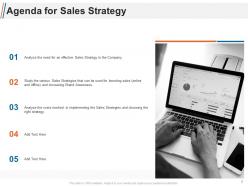
Slide 2: This is an Agenda for Sales Strategy PowerPoint template.
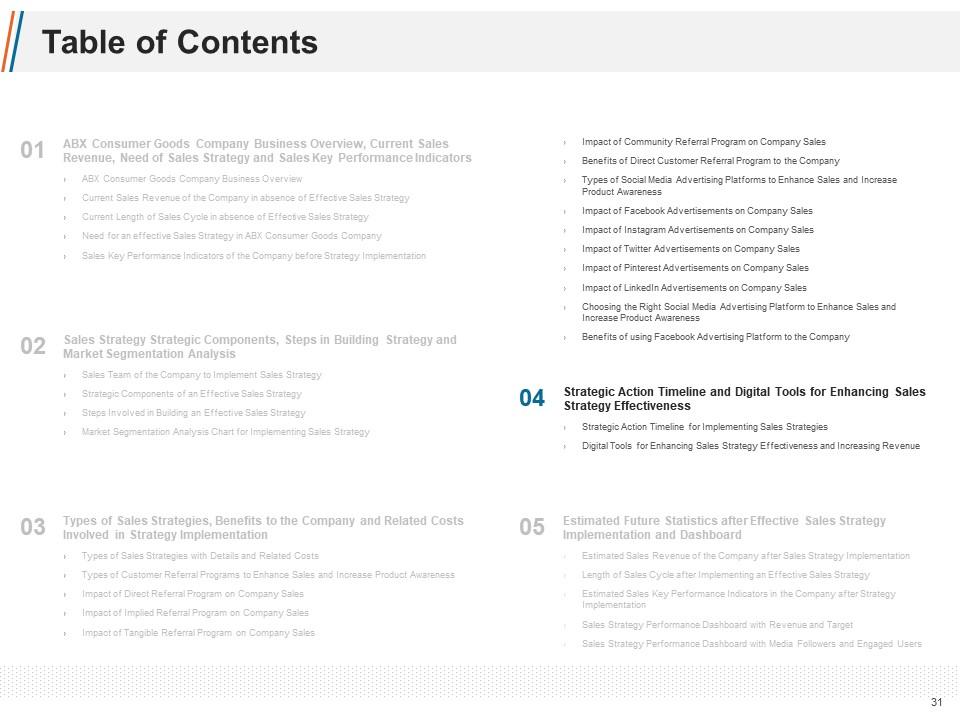
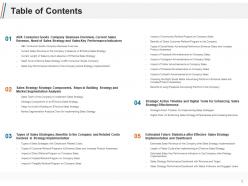
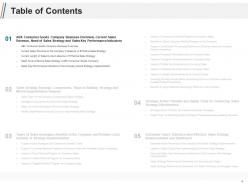
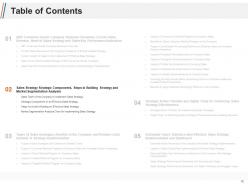
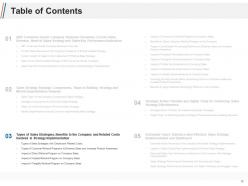
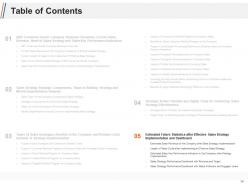
Slide 3: This is Table of Contents slide that lists out all the essential elements covered in the deck.
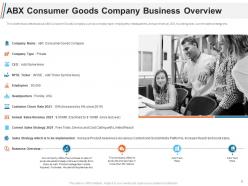
Slide 4: This slide shows Company Business Overview.
Slide 5: This slide shows details about ABX Consumer Goods Company such as company type, employees, headquarters, annual revenue, CEO, founding year, current sales strategy etc.
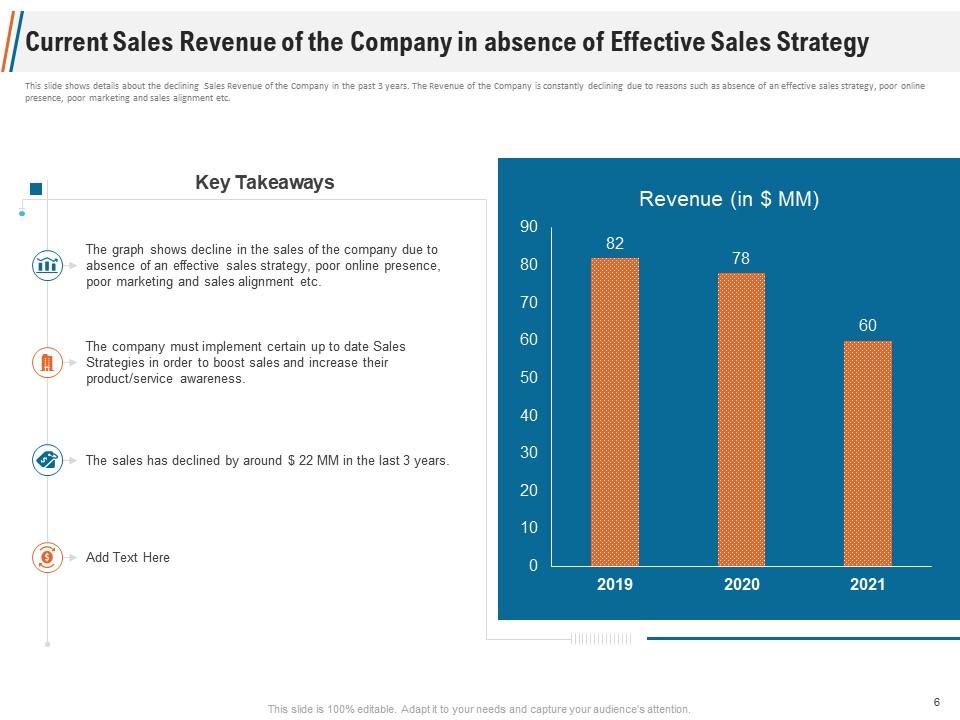
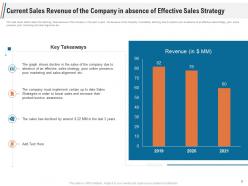
Slide 6: This slide shows details about the declining Sales Revenue of the Company in the past 3 years. The Revenue of the Company is constantly declining due to reasons such as absence of an effective sales strategy, poor online presence, poor marketing and sales alignment etc.
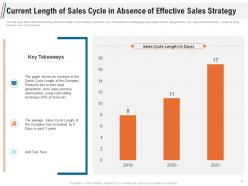
Slide 7: This slide shows details about the increasing Sales Cycle Length of the Company in the past 3 years. The reasons for increasing Sales cycle Length are poor lead generation, poor sales process optimization, using cold calling technique most of the times etc.
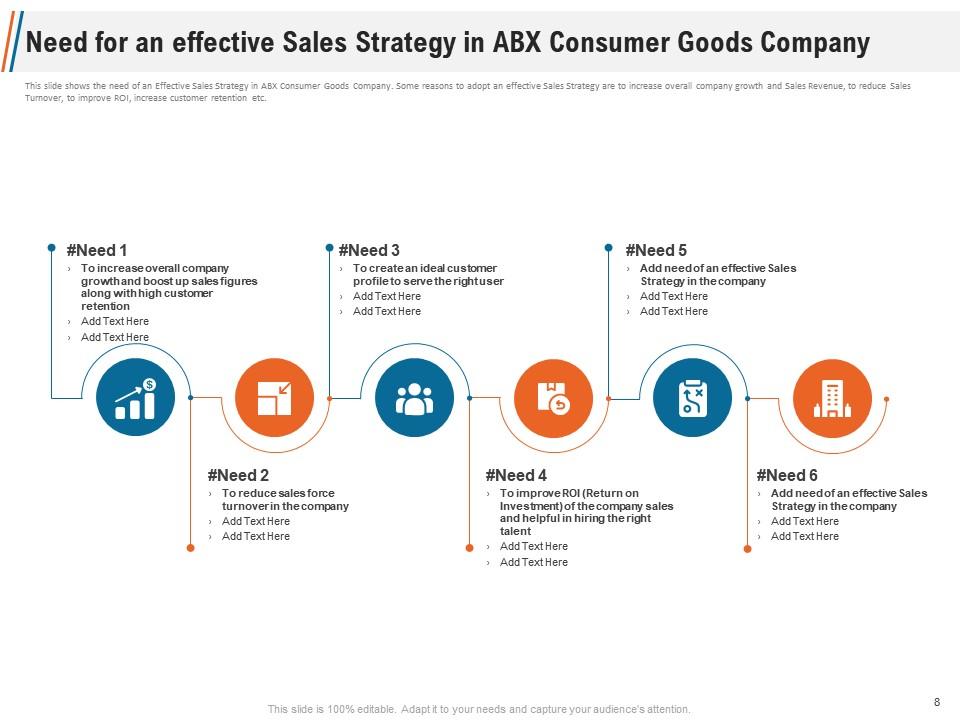
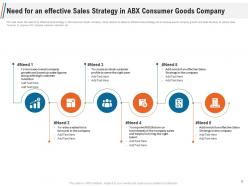
Slide 8: This slide shows the need of an Effective Sales Strategy in ABX Consumer Goods Company. Some reasons to adopt an effective Sales Strategy are to increase overall company growth and Sales Revenue, to reduce Sales Turnover, to improve ROI, increase customer retention etc.
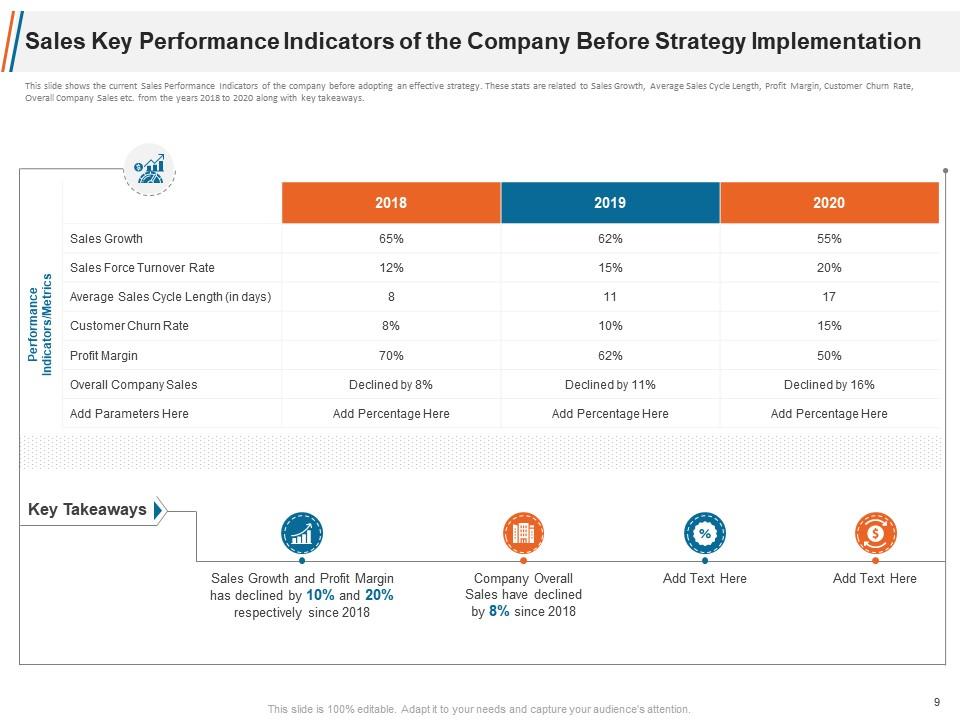
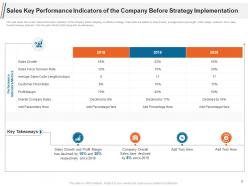
Slide 9: This slide shows the current Sales Performance Indicators of the company before adopting an effective strategy. These stats are related to Sales Growth, Average Sales Cycle Length, Profit Margin, Customer Churn Rate, Overall Company Sales etc. from the years 2018 to 2020 along with key takeaways.
Slide 10: This slide shows sales strategy strategic components.
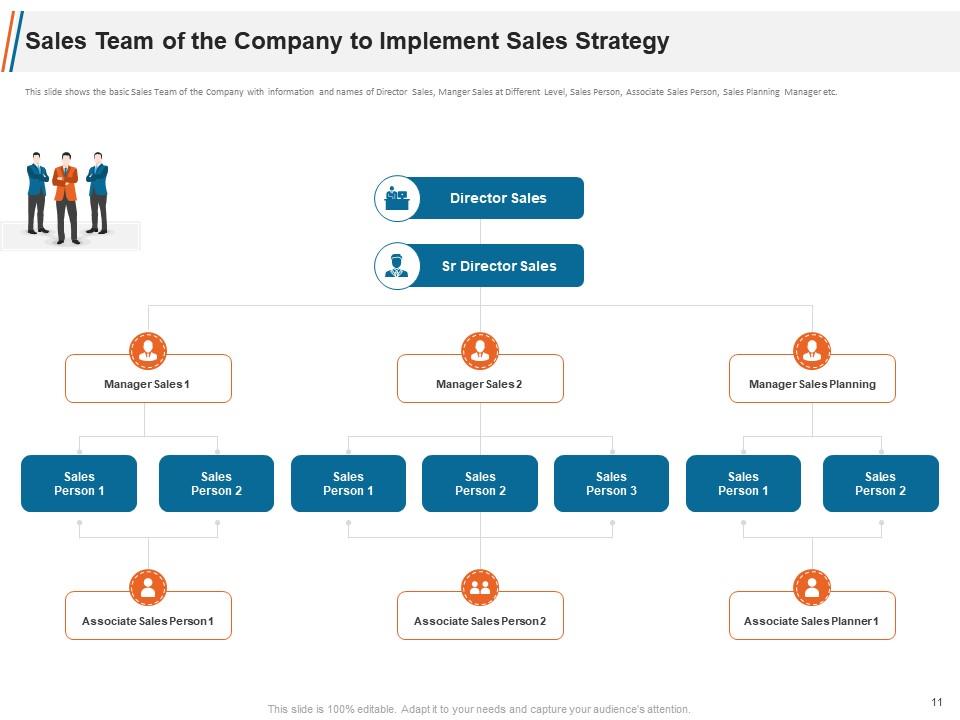
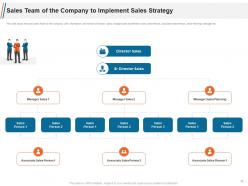
Slide 11: This slide shows the basic Sales Team of the Company with information and names of Director Sales, Manger Sales at Different Level, Sales Person, Associate Sales Person, Sales Planning Manager etc.
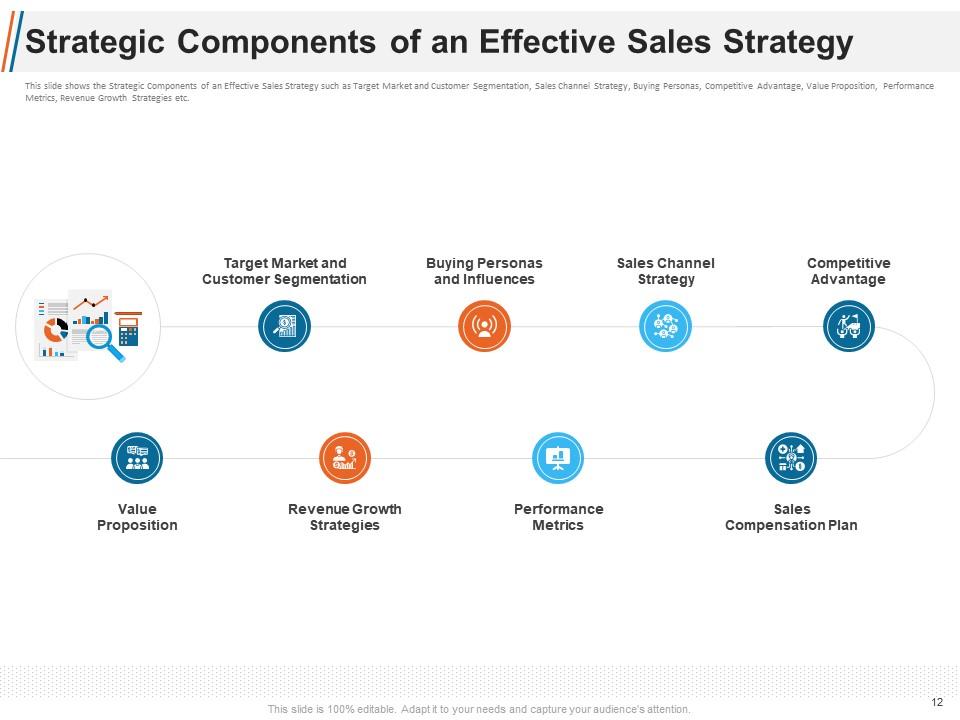
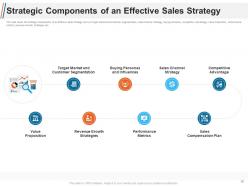
Slide 12: This slide shows the Strategic Components of an Effective Sales Strategy such as Target Market and Customer Segmentation, Sales Channel Strategy, Buying Personas, Competitive Advantage, Value Proposition, Performance Metrics, Revenue Growth Strategies etc.
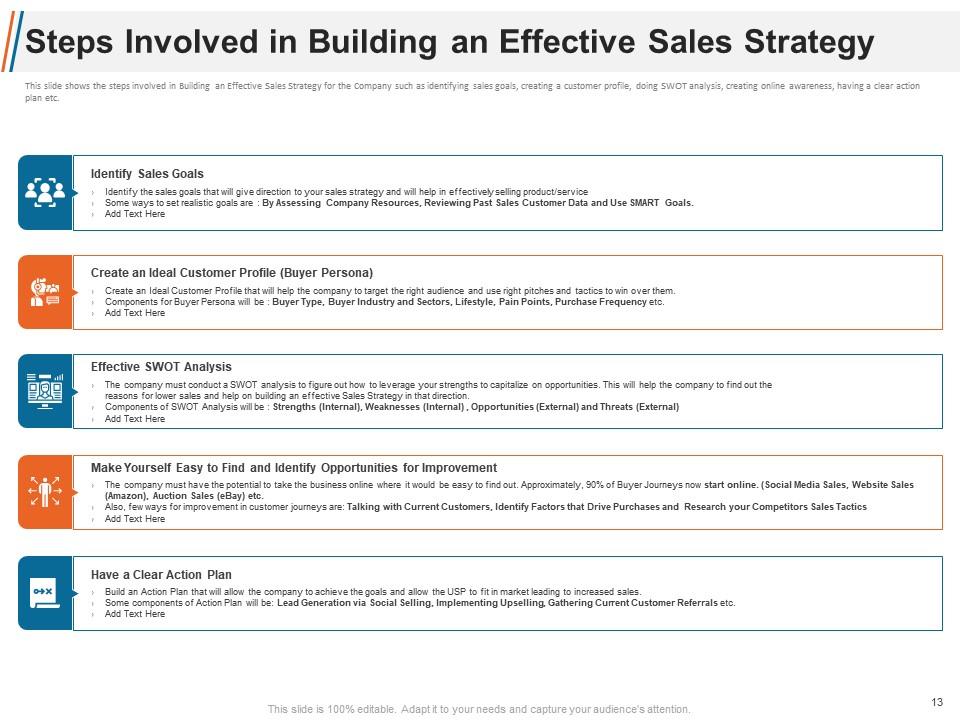
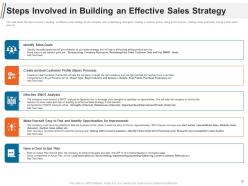
Slide 13: This slide shows the steps involved in Building an Effective Sales Strategy for the Company such as identifying sales goals, creating a customer profile, doing SWOT analysis, creating online awareness, having a clear action plan etc.
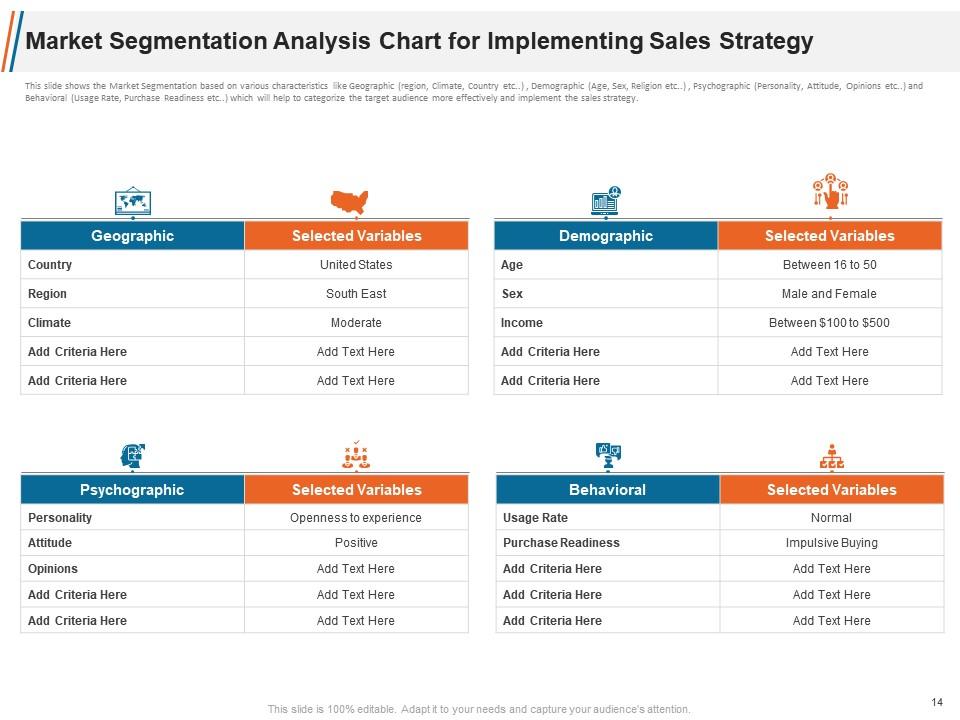
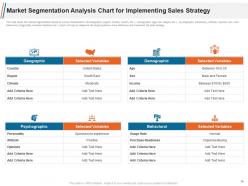
Slide 14: This slide shows the Market Segmentation based on various characteristics like Geographic (region, Climate, Country etc..) , Demographic (Age, Sex, Religion etc..) , Psychographic (Personality, Attitude, Opinions etc..) and Behavioral (Usage Rate, Purchase Readiness etc..) which will help to categorize the target audience more effectively and implement the sales strategy.
Slide 15: This slide shows types of sales strategies.
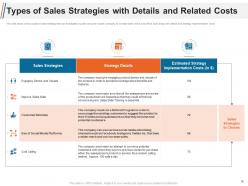
Slide 16: This slide shows various types of Sales Strategy that can be adopted by ABX Consumer Goods Company to increase both online and offline sales along with details and strategy implementation Costs
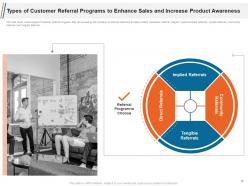
Slide 17: This slide shows various types of Customer Referral Programs that can be used by the Company to Enhance Sales and Increase Product Awareness. Referral Program Types are Direct Referrals, Implied Referrals, Community Referrals and Tangible Referrals.
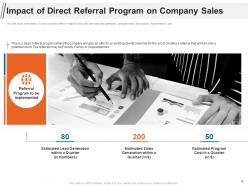
Slide 18: This slide shows some details of Direct Customer Referral Program along with estimated lead generation, sales generation and program implementation cost.
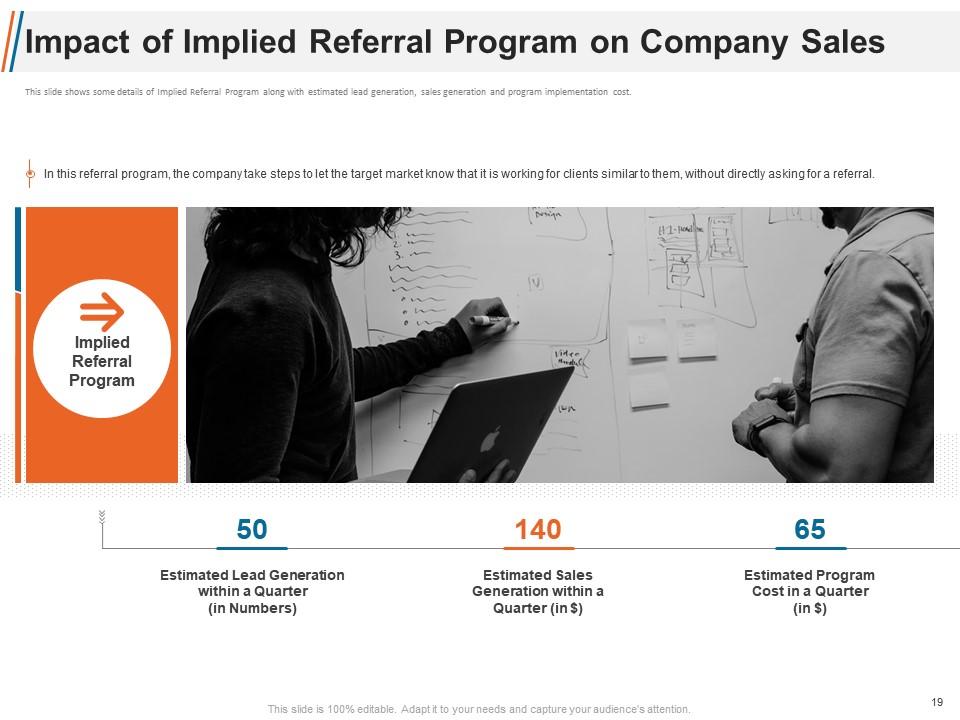
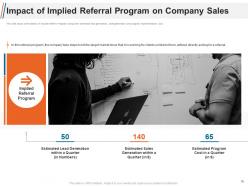
Slide 19: This slide shows some details of Implied Referral Program along with estimated lead generation, sales generation and program implementation cost.
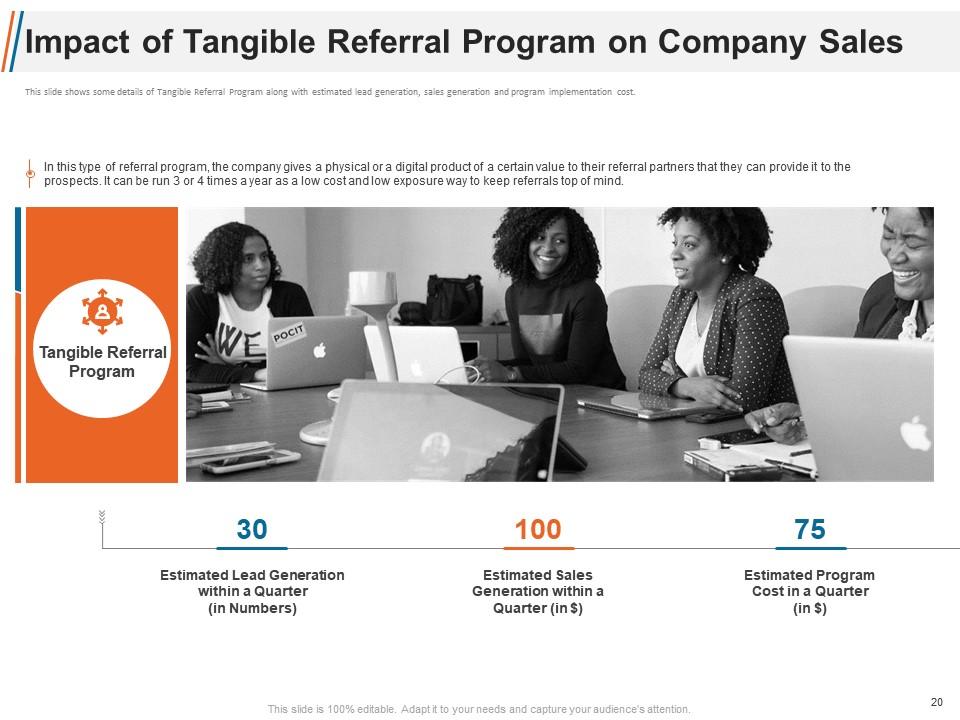
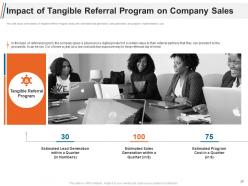
Slide 20: This slide shows some details of Tangible Referral Program along with estimated lead generation, sales generation and program implementation cost.
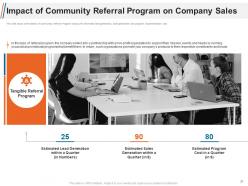
Slide 21: This slide shows some details of Community Referral Program along with estimated lead generation, sales generation and program implementation cost.
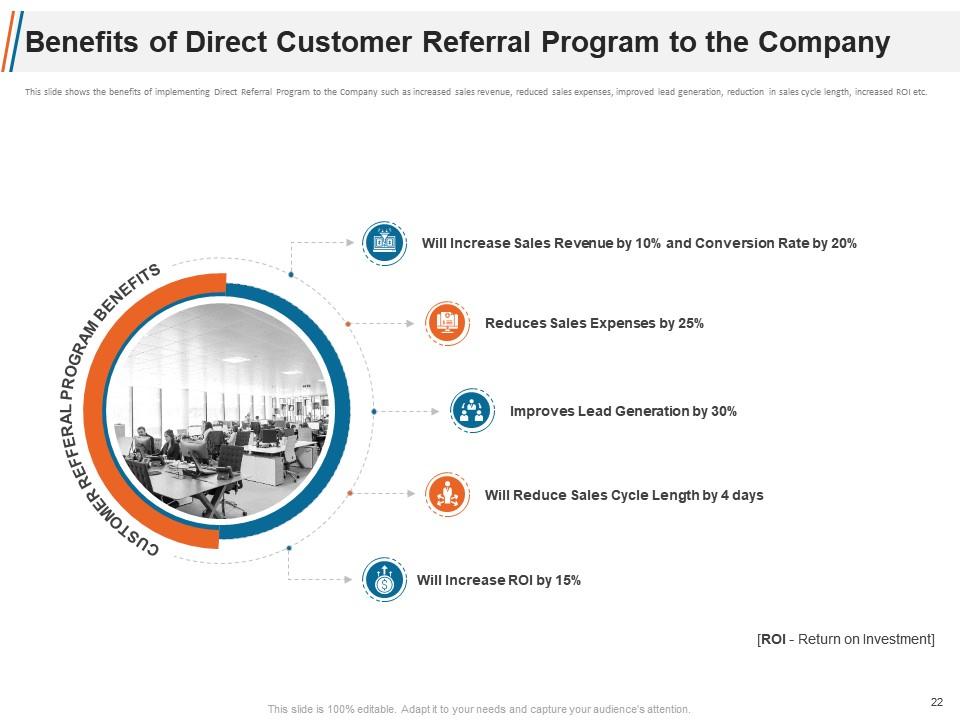
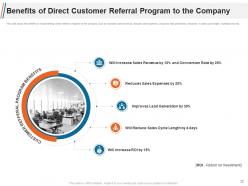
Slide 22: This slide shows the benefits of implementing Direct Referral Program to the Company such as increased sales revenue, reduced sales expenses, improved lead generation, reduction in sales cycle length, increased ROI etc.
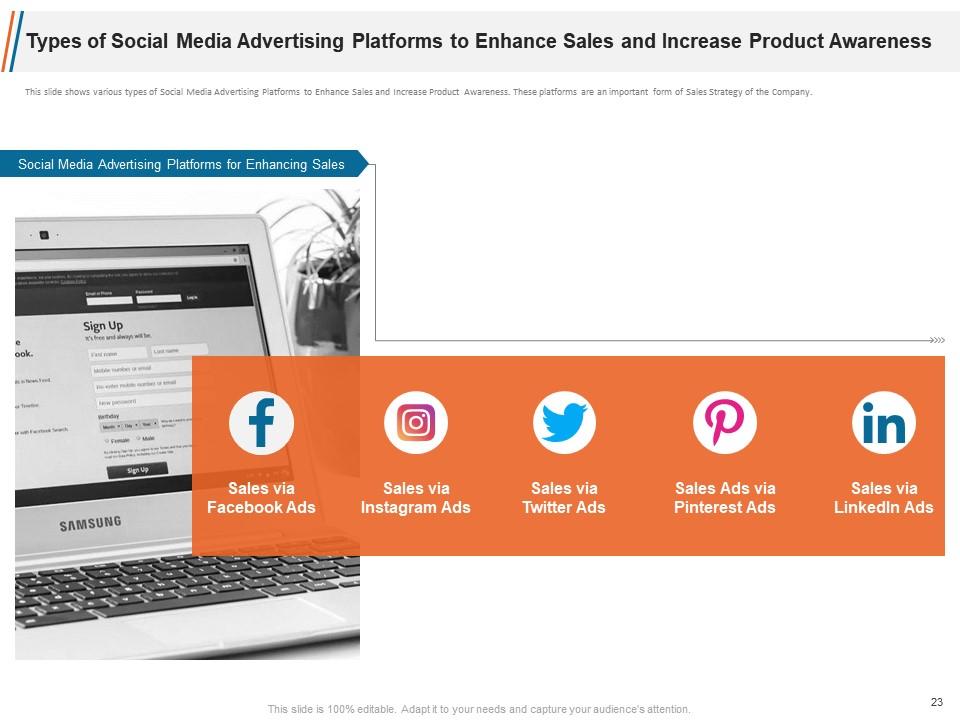
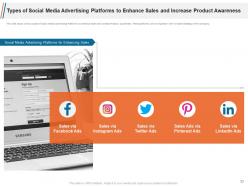
Slide 23: This slide shows various types of Social Media Advertising Platforms to Enhance Sales and Increase Product Awareness. These platforms are an important form of Sales Strategy of the Company.
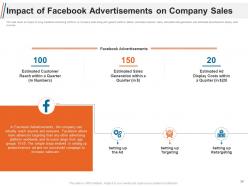
Slide 24: This slide shows an impact of using Facebook Advertising Platform on Company Sales along with general platform details, estimated customer reach, estimated sales generation and estimated advertisement display costs involved.
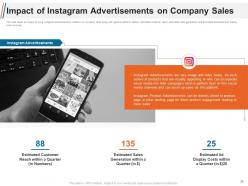
Slide 25: This slide shows an impact of using Instagram Advertisements Platform on Company Sales along with general platform details, estimated customer reach, estimated sales generation and estimated advertisement display costs involved.
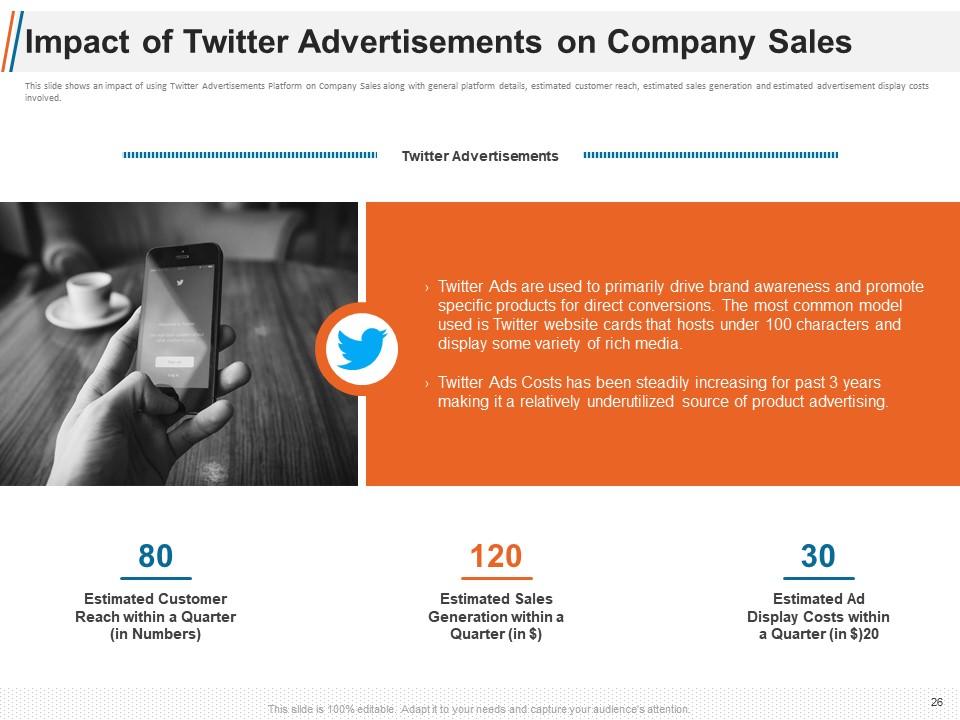
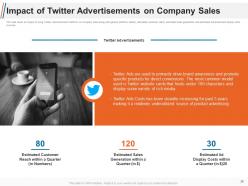
Slide 26: ' This slide shows an impact of using Twitter Advertisements Platform on Company Sales along with general platform details, estimated customer reach, estimated sales generation and estimated advertisement display costs involved.
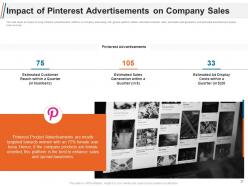
Slide 27: This slide shows an impact of using Pinterest Advertisements Platform on Company Sales along with general platform details, estimated customer reach, estimated sales generation and estimated advertisement display costs involved.
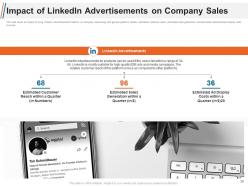
Slide 28: This slide shows an impact of using LinkedIn Advertisements Platform on Company Sales along with general platform details, estimated customer reach, estimated sales generation and estimated advertisement display costs involved.
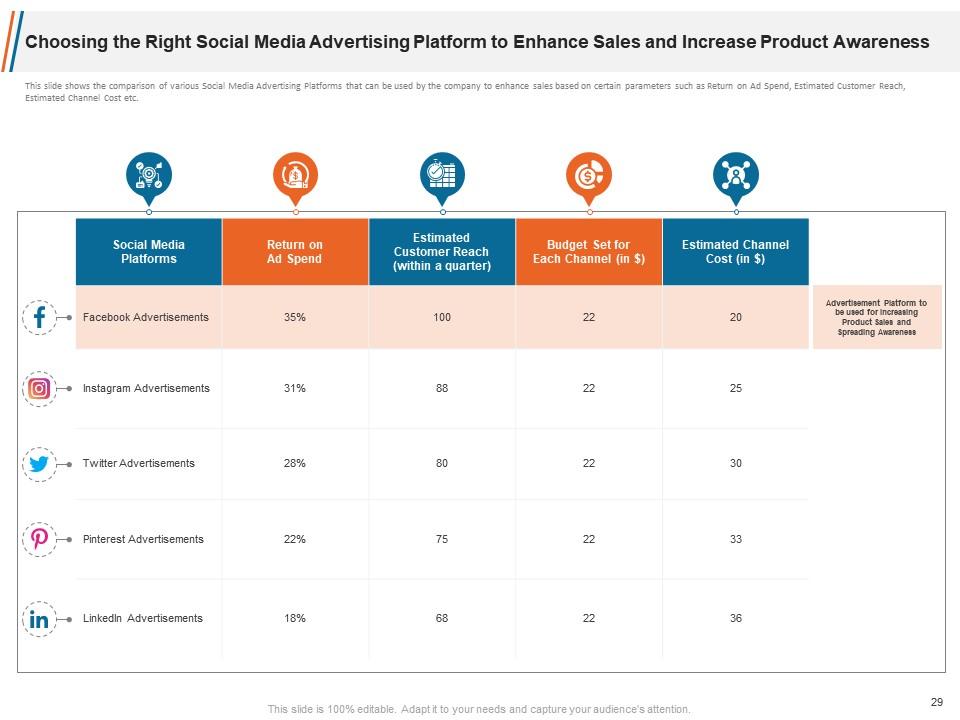
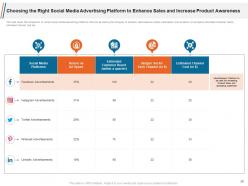
Slide 29: This slide shows the comparison of various Social Media Advertising Platforms that can be used by the company to enhance sales based on certain parameters such as Return on Ad Spend, Estimated Customer Reach, Estimated Channel Cost etc.
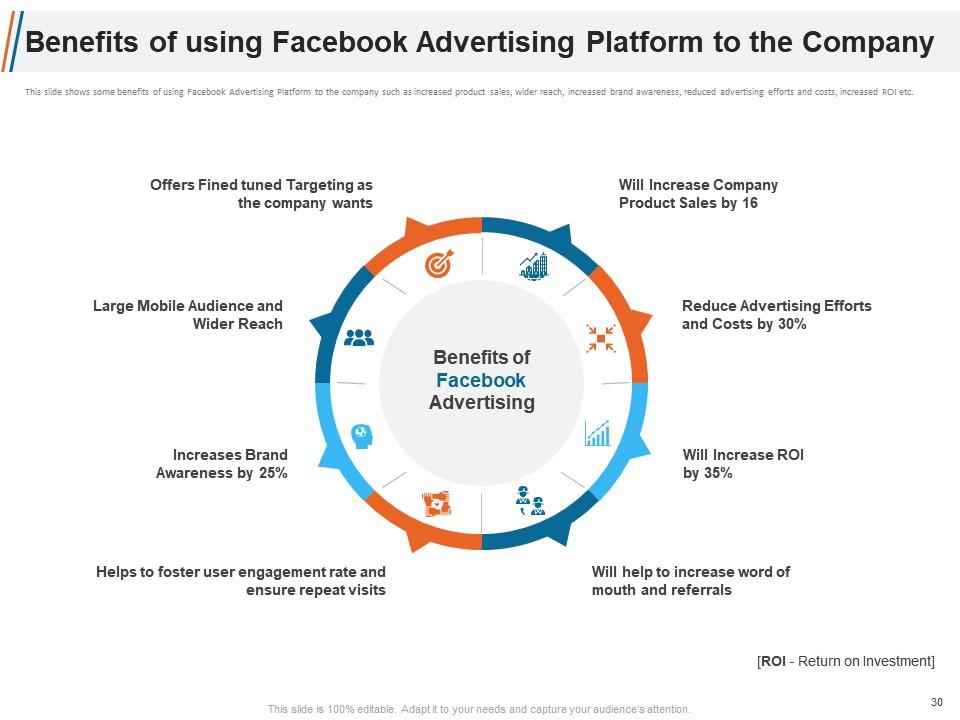
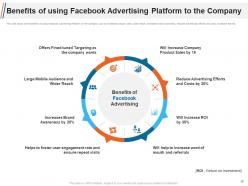
Slide 30: This slide shows some benefits of using Facebook Advertising Platform to the company such as increased product sales, wider reach, increased brand awareness, reduced advertising efforts and costs, increased ROI etc.
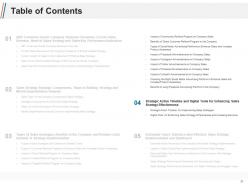
Slide 31: This slide shows strategic action timeline and digital tools for enhancing sales strategy effectiveness.
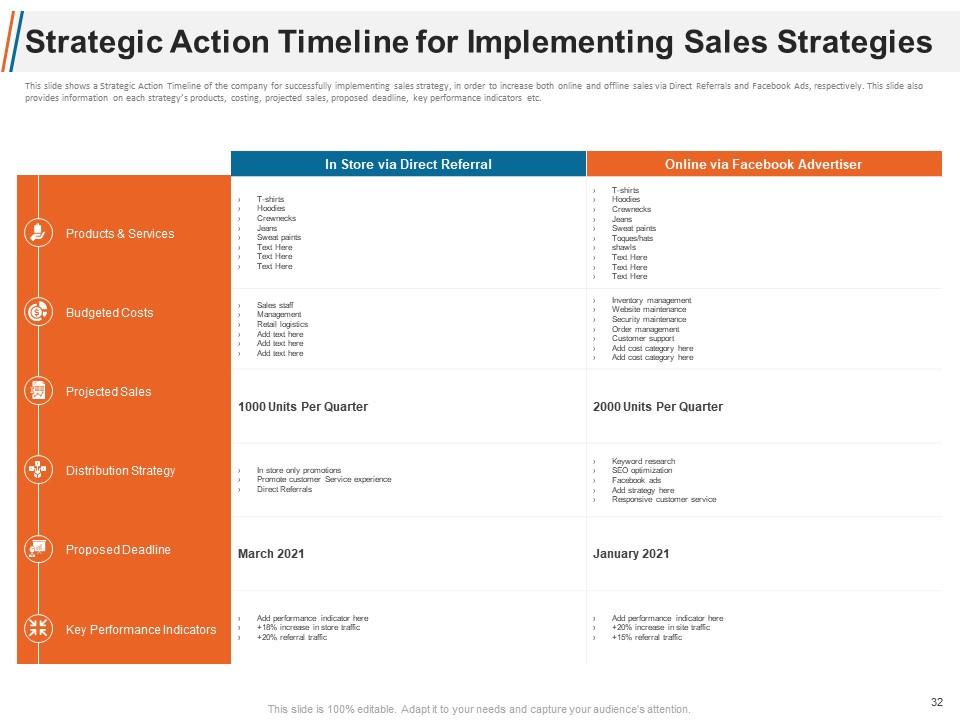
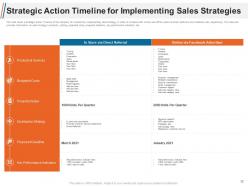
Slide 32: This slide shows a Strategic Action Timeline of the company for successfully implementing sales strategy, in order to increase both online and offline sales via Direct Referrals and Facebook Ads, respectively. This slide also provides information on each strategy’s products, costing, projected sales, proposed deadline, key performance indicators etc.
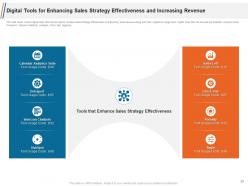
Slide 33: This slide shows various digital tools that can be used to increase Sales Strategy Effectiveness and Boosting Sales Revenue along with their respective usage costs. Digital Tools that can be used are Calendar Analytics Suite, Ontraport, Intercom Chatbots, HubSpot, Clinch Pad, Regie etc.
Slide 34: This slide shows estimated future statistics after effective sales strategy implementation and dashboard.
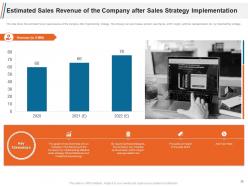
Slide 35: This slide shows the estimated future Sales Revenue of the Company after implementing strategy. The company can also increase product sales figures, profit margin, optimize lead generation etc. by implementing strategy.
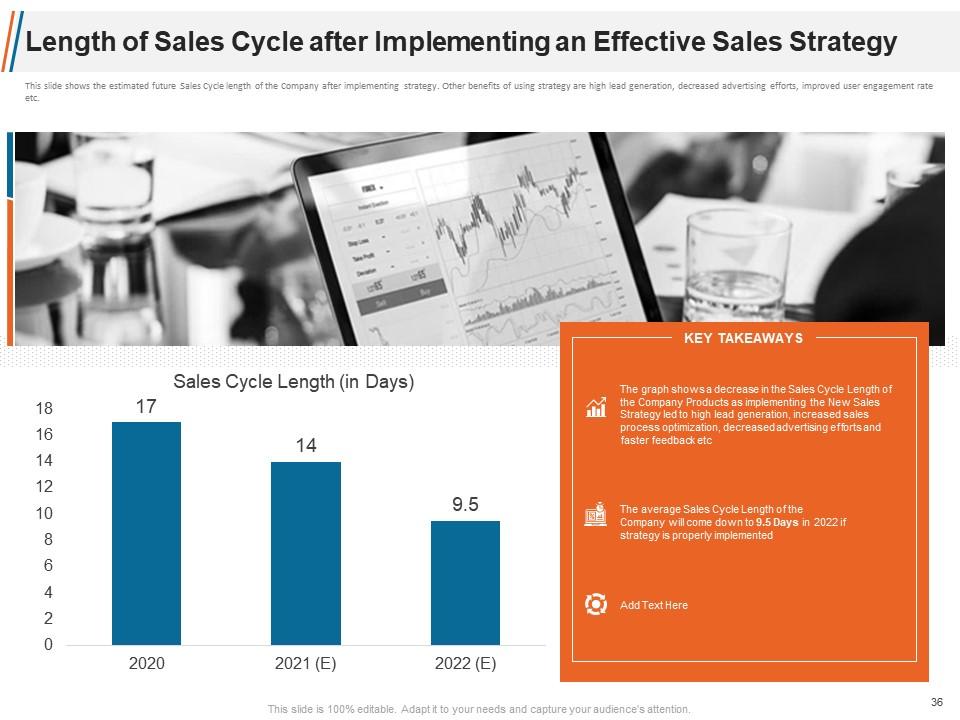
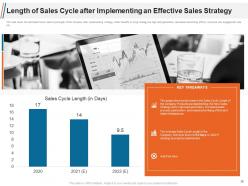
Slide 36: This slide shows the estimated future Sales Cycle length of the Company after implementing strategy. Other benefits of using strategy are high lead generation, decreased advertising efforts, improved user engagement rate etc.
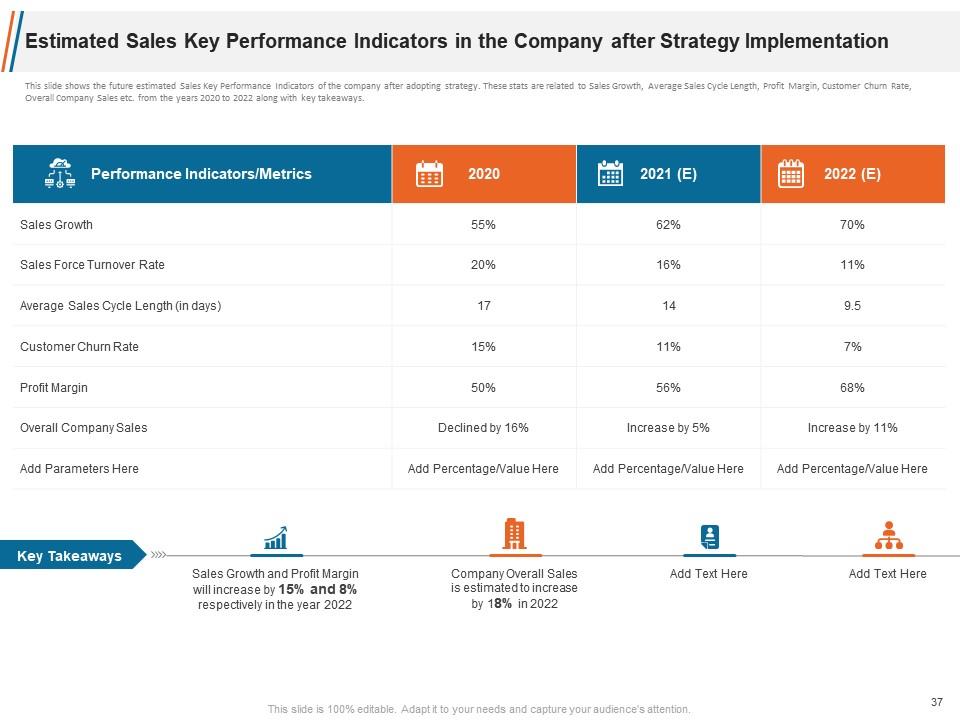
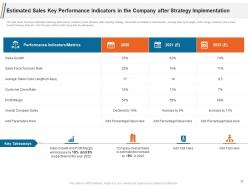
Slide 37: This slide shows the future estimated Sales Key Performance Indicators of the company after adopting strategy. These stats are related to Sales Growth, Average Sales Cycle Length, Profit Margin, Customer Churn Rate, Overall Company Sales etc. from the years 2020 to 2022 along with key takeaways.
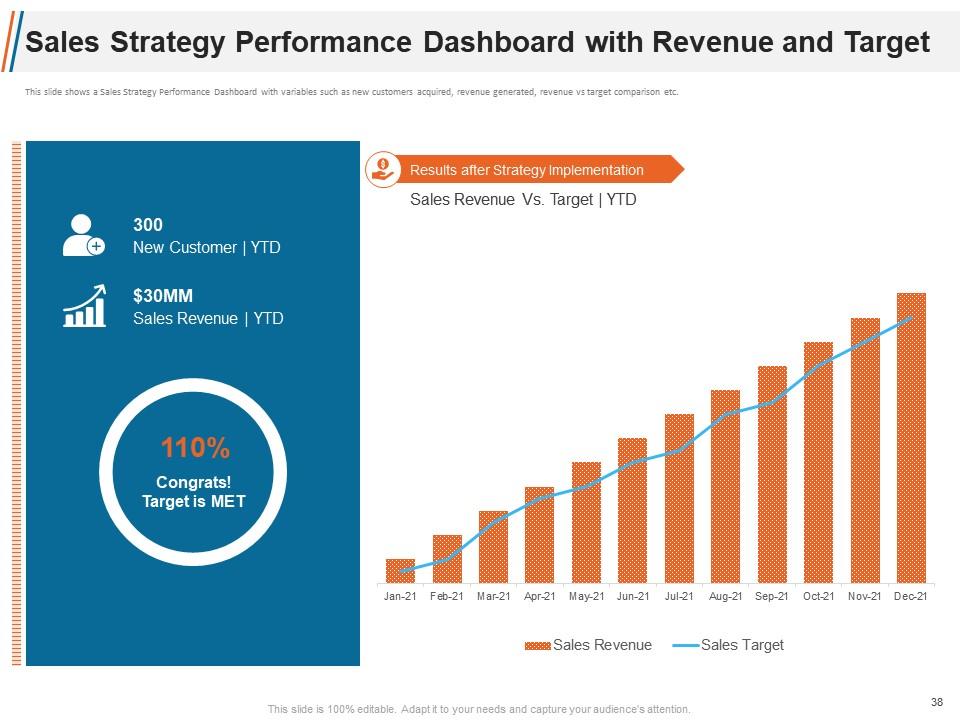
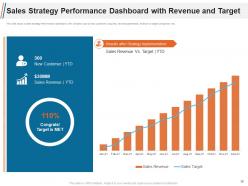
Slide 38: This slide shows a Sales Strategy Performance Dashboard with variables such as new customers acquired, revenue generated, revenue vs target comparison etc.
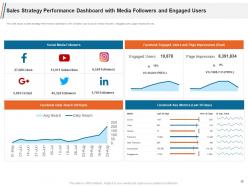
Slide 39: This slide shows a Sales Strategy Performance Dashboard with variables such as social media followers, engaged users, page impressions etc.
Slide 40: This is an Icon slide. Use it as per your needs.
Slide 41: This is an Additional Slide.
Slide 42: This is an About Us slide that can be used to give a brief overview of the company.
Slide 43: This is Our Mission Our vision slide that can be used to state your company's mission and vision.
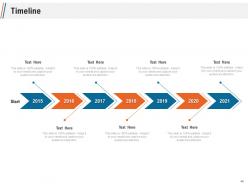
Slide 44: This is a Timeline slide that can be used to present chronological sequence of events.
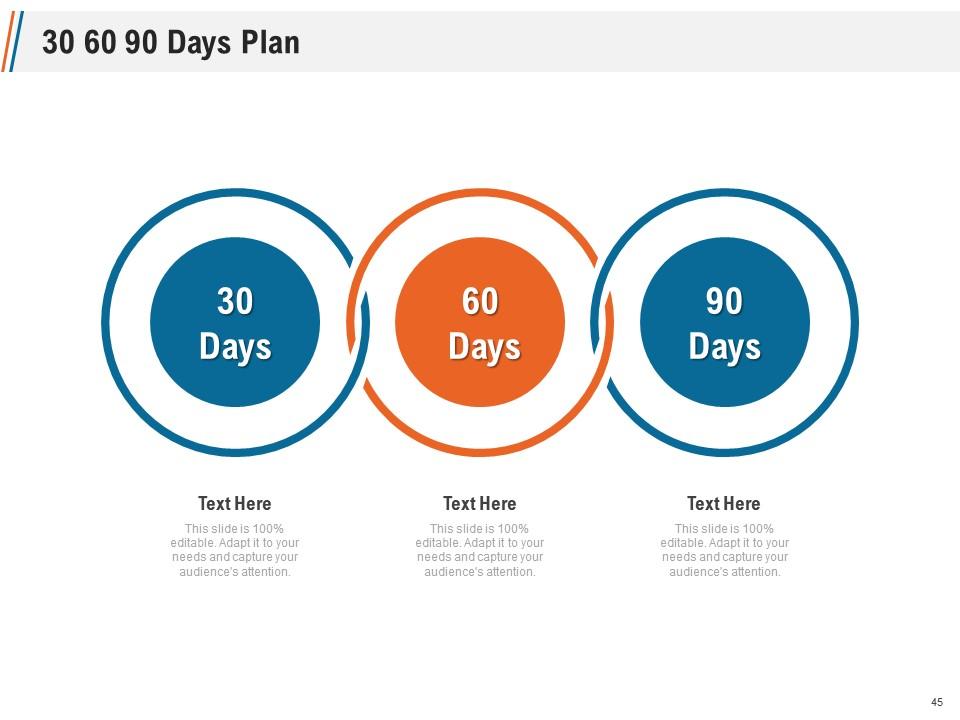
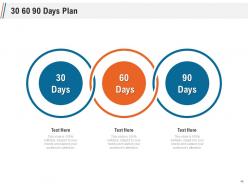
Slide 45: This is a 30 60 90 Days Plan slide to create robust plans.
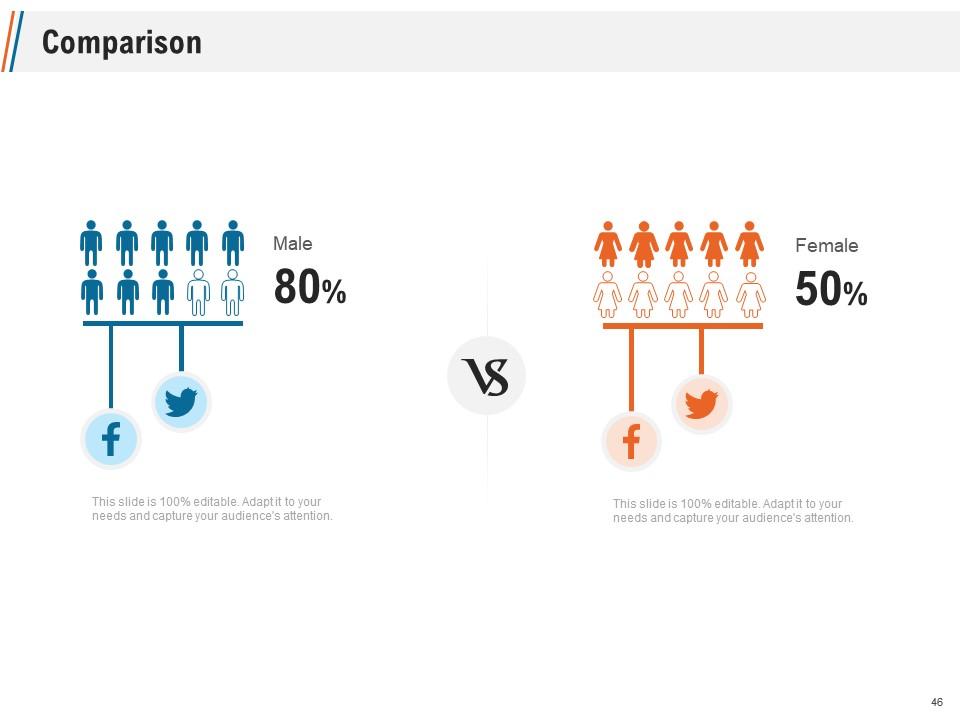
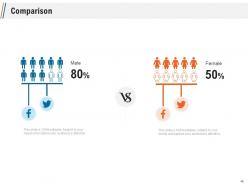
Slide 46: This is a Comparison slide that can be used to conduct comparative analysis.
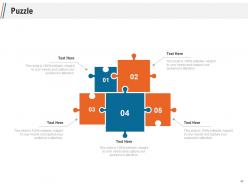
Slide 47: This is a creative Puzzle image slide to state information, specifications etc.
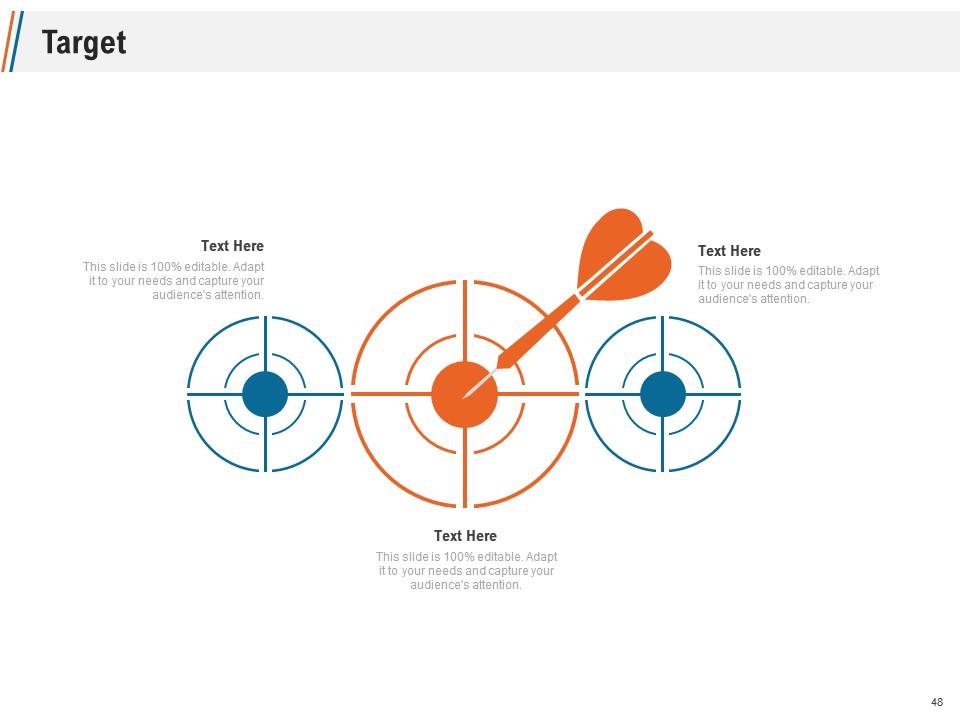
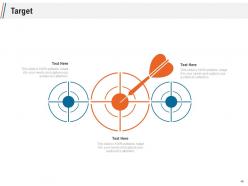
Slide 48: This is Target image slide to present product/ entity, information etc.
Slide 49: This is a Thank You slide for acknowledgment. You can share your contact details here.
Sales Strategy To Boost Top Line Revenue Growth And Increase Profitability Icons Slide Ppt Inspiration with all 49 slides:
Use our Sales Strategy To Boost Top Line Revenue Growth And Increase Profitability Icons Slide Ppt Inspiration to effectively help you save your valuable time. They are readymade to fit into any presentation structure.
-
Designs have enough space to add content.
-
Great product with highly impressive and engaging designs.
-
It saves your time and decrease your efforts in half.
-
The content is very helpful from business point of view.
-
The content is very helpful from business point of view.
-
Perfect template with attractive color combination.
-
Use of icon with content is very relateable, informative and appealing.
