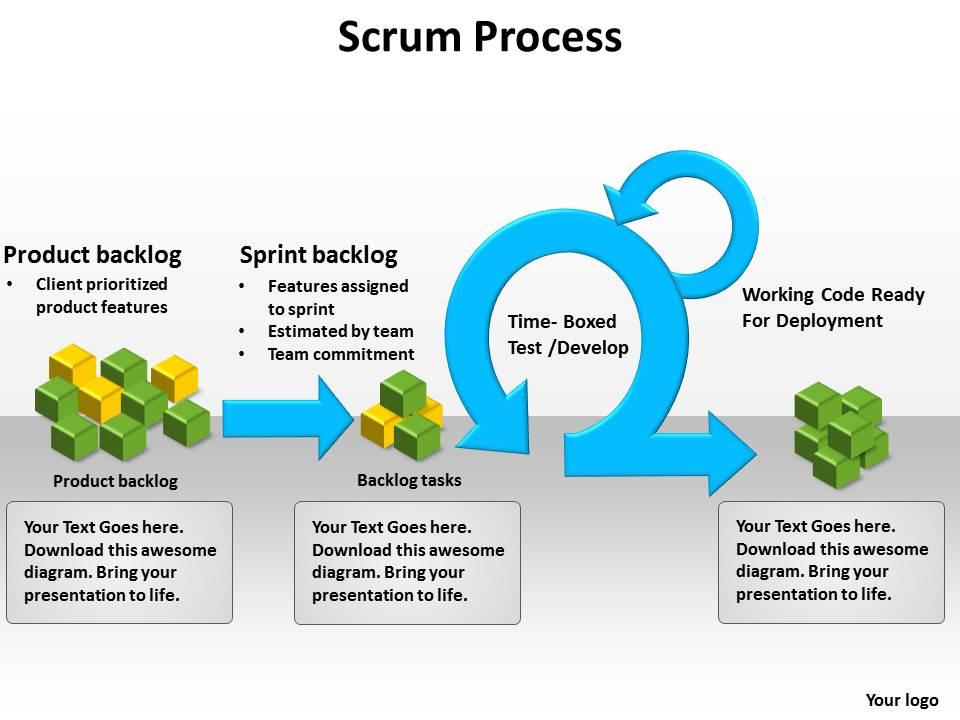
Scrum business process powerpoint templates ppt presentation slides 0812
Try Before you Buy Download Free Sample Product
Audience
Editable
of Time
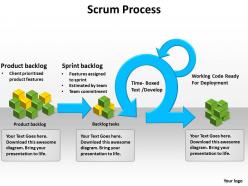
Pull out your A game for the next big presentation. Our Scrum Business Process Powerpoint templates ppt presentation slides 0812 are ready to make your next project flawless.
People who downloaded this PowerPoint presentation also viewed the following :
Scrum business process powerpoint templates ppt presentation slides 0812 with all 5 slides:
Let our Scrum Business Process Powerpoint templates ppt presentation slides 0812 be the cue. They will pot the deal for you.
FAQs for Scrum business process powerpoint templates ppt
Scrum defines three key roles: Product Owner, Scrum Master, and Development Team members, each with distinct responsibilities for product success. The Product Owner prioritizes requirements and defines value, the Scrum Master facilitates processes and removes impediments, while Development Team members deliver working increments, with these roles collaborating through daily standups, sprint planning, and reviews to ensure streamlined delivery and continuous improvement.
Scrum facilitates effective project management by organizing work into structured sprints, establishing clear roles like Product Owner and Scrum Master, and implementing regular ceremonies including daily standups and retrospectives. Through iterative development cycles, organizations streamline delivery timelines, enhance team collaboration, and maintain continuous feedback loops, with many software development teams and financial services companies finding that this framework ultimately delivers faster product releases and improved stakeholder satisfaction.
The Scrum Daily Standup maintains team alignment and identifies impediments through brief, focused communication where each member shares yesterday's progress, today's plans, and current blockers. This 15-minute ritual enhances transparency, accelerates problem-solving, and streamlines collaboration, with many development teams finding that consistent standups ultimately deliver faster sprint completion and improved project visibility.
Scrum sprints are time-boxed iterations, typically 1-4 weeks, where teams select prioritized backlog items, plan deliverables through sprint planning sessions, conduct daily standups, and conclude with sprint reviews and retrospectives. Best practices include maintaining realistic velocity estimates, ensuring clear definition of done criteria, fostering cross-functional collaboration, and conducting thorough retrospectives, with many software development teams finding that consistent sprint cadence and stakeholder engagement ultimately deliver faster product releases and enhanced team productivity.
Scrum ceremonies include Sprint Planning, Daily Standups, Sprint Reviews, Sprint Retrospectives, and Backlog Refinement sessions. These structured meetings enhance team collaboration by ensuring regular communication, identifying blockers early, and maintaining project transparency, with many development teams finding that consistent ceremony practices streamline workflows, accelerate delivery timelines, and ultimately deliver higher-quality products while fostering stronger cross-functional teamwork.
Scrum adapts to remote teams through enhanced digital communication, structured virtual ceremonies, and robust collaboration platforms that maintain team cohesion and transparency. Tools like Jira, Trello, and Azure DevOps streamline sprint planning and backlog management, while Zoom, Slack, and Microsoft Teams facilitate daily standups and retrospectives, ultimately delivering improved project visibility and sustained productivity across distributed workforces.
Common Scrum metrics include velocity, burndown charts, sprint burnout, cycle time, and lead time. These measurements enable teams to track progress, identify bottlenecks, and optimize delivery cycles, with many organizations finding that combining velocity tracking with burndown analysis delivers enhanced predictability and improved sprint planning accuracy.
Common Scrum adoption challenges include resistance to change, inadequate training, unclear roles, inconsistent sprint planning, and lack of stakeholder engagement. These obstacles can be overcome through comprehensive team education, clear role definitions, regular retrospectives for continuous improvement, and strong Product Owner involvement, with many organizations finding that gradual implementation and consistent coaching ultimately delivers improved collaboration and faster delivery cycles.
The Product Backlog functions as a prioritized, dynamic list of features, user stories, and requirements that guides development work, with the Product Owner responsible for continuously refining, prioritizing, and updating items based on stakeholder feedback and business value. Best practices include maintaining clear acceptance criteria, regular backlog grooming sessions, stakeholder collaboration, and ensuring items are properly sized and estimated, with many organizations finding that transparent prioritization and frequent refinement ultimately delivers faster time-to-market and enhanced customer satisfaction.
The Scrum Master facilitates conflict resolution through active listening, mediation techniques, and fostering open communication, while ensuring teams follow sprint ceremonies, maintain proper backlogs, and uphold Scrum principles. Through coaching and servant leadership, Scrum Masters enable smoother collaboration, faster decision-making, and improved team dynamics, with many organizations finding that effective Scrum Masters ultimately deliver higher productivity and stronger project outcomes.
Scrum integrates with other methodologies through hybrid approaches like Scrumban, which combines Scrum's sprint structure with Kanban's continuous flow visualization, or through phased integration where Waterfall handles initial planning while Scrum manages iterative development cycles. Many organizations find that this strategic combination enables greater flexibility, enhanced visibility, and improved resource allocation across diverse project types, ultimately delivering both structured governance and agile responsiveness in increasingly complex business environments.
User stories are crucial in Scrum because they translate complex requirements into user-focused narratives, facilitate clear communication between stakeholders and development teams, and provide measurable acceptance criteria for sprint planning. They should be crafted using the "As a [user], I want [goal] so that [benefit]" format, remain concise yet specific, and include detailed acceptance criteria, with many agile teams finding that well-structured stories significantly enhance development velocity and customer satisfaction.
Feedback loops in Scrum improve product quality through continuous testing, sprint reviews, retrospectives, and daily standups that identify defects early and align development with user needs. These mechanisms enhance team dynamics by fostering open communication, collaborative problem-solving, and shared accountability, with many development teams finding that regular feedback cycles ultimately deliver higher customer satisfaction and stronger team cohesion.
The Definition of Done establishes clear, shared quality criteria that every deliverable must meet before completion, ensuring consistent standards across sprints, reducing defects, and eliminating ambiguity about work completion. This framework enables teams to deliver higher-quality products by incorporating testing, documentation, and review requirements upfront, with many software development organizations finding that well-defined completion criteria significantly reduce post-release issues and enhance customer satisfaction.
Common pitfalls include inadequate training, resistance to cultural change, insufficient Product Owner engagement, unrealistic sprint planning, and lack of management support. Organizations frequently struggle when they implement Scrum ceremonies without embracing agile principles, skip retrospectives, or maintain traditional hierarchical decision-making, with many companies finding that gradual adoption and comprehensive team education ultimately delivers better outcomes than rapid transformation.
-
Good research work and creative work done on every template.
-
Good research work and creative work done on every template.