Scrum In SDLC Agile Software Development Lifecycle Ppt Guidelines

Rating:
90%
Scrum In SDLC Agile Software Development Lifecycle Ppt Guidelines
Slide 1 of 6
Favourites Favourites

Try Before you Buy Download Free Sample Product

Audience Impress Your
Audience
Editable 100%
Editable
Time Save Hours
of Time
The Biggest Sale is ending soon in
0
0
:
0
0
:
0
0
Rating:
90%
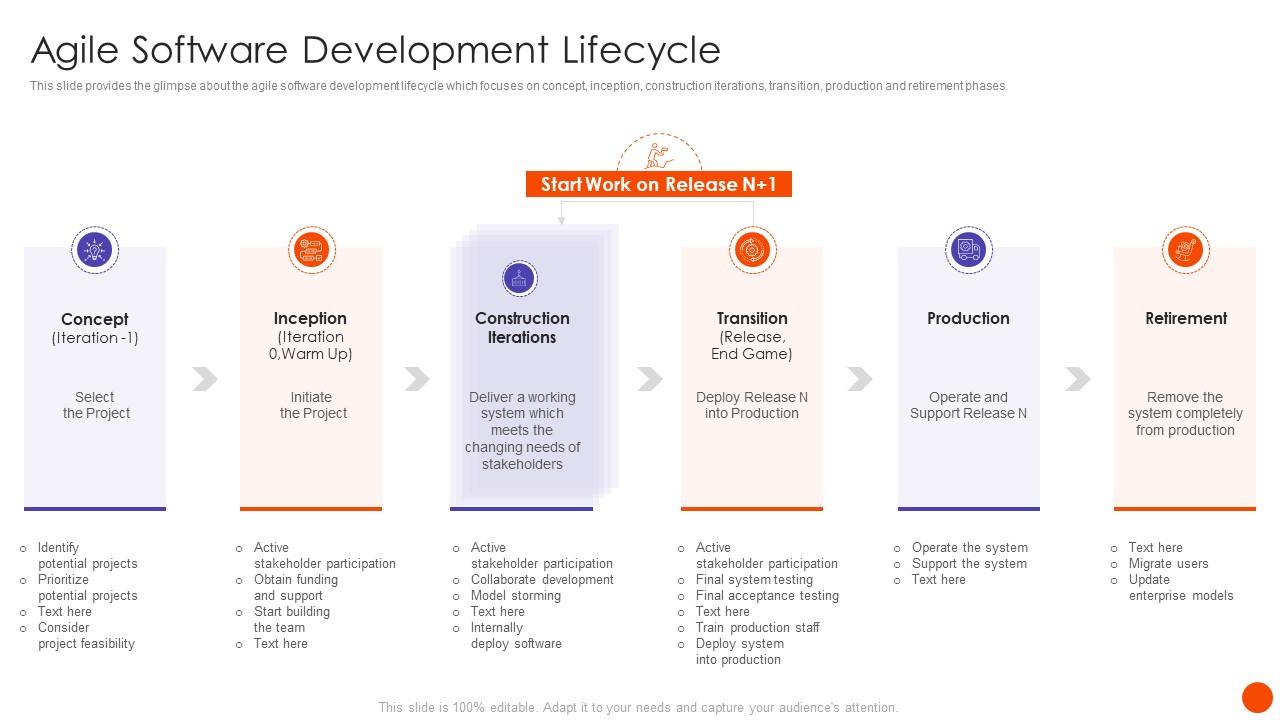
This slide provides the glimpse about the agile software development lifecycle which focuses on concept, inception, construction iterations, transition, production and retirement phases. Increase audience engagement and knowledge by dispensing information using Scrum In SDLC Agile Software Development Lifecycle Ppt Guidelines. This template helps you present information on six stages. You can also present information on Agile Software Development Lifecycle using this PPT design. This layout is completely editable so personaize it now to meet your audiences expectations.

FAQs for Scrum In SDLC Agile Software Development

The key phases of the Scrum lifecycle include Sprint Planning, Daily Standups, Sprint Development, Sprint Review, and Sprint Retrospective. These iterative phases streamline project delivery by enhancing team collaboration, maintaining continuous feedback loops, and enabling rapid adaptations, with many organizations finding that this structured approach ultimately delivers faster time-to-market and improved product quality.

Scrum ensures flexibility through iterative sprints, regular retrospectives, daily standups, and continuous stakeholder feedback that allows teams to pivot quickly based on changing requirements. This framework enables organizations across software development, manufacturing, and financial services to respond rapidly to market shifts, reduce project risks, and deliver value incrementally, ultimately enhancing competitive advantage through faster adaptation cycles.

Scrum events provide structured touchpoints that guide teams through iterative development cycles, including Sprint Planning, Daily Standups, Sprint Reviews, and Retrospectives. These ceremonies streamline communication, enhance transparency, and enable continuous improvement by facilitating regular feedback loops, ultimately delivering faster product iterations and improved team collaboration across development lifecycles.

Scrum artifacts enhance transparency by providing clear visibility into work progress, team capacity, and project status through the product backlog, sprint backlog, and increment deliverables. These tools enable stakeholders to track development velocity, identify bottlenecks, and make informed decisions, with many organizations finding that structured artifact management streamlines communication and accelerates delivery timelines.

Scrum team roles provide essential structure and accountability throughout the lifecycle, with Product Owner defining requirements and priorities, Scrum Master facilitating processes and removing impediments, and Development Team delivering working increments. These clearly defined responsibilities enable streamlined communication, faster decision-making, and consistent value delivery, with many organizations finding that this collaborative framework significantly enhances project transparency and reduces development cycles.

The Definition of Done establishes clear completion criteria that impacts every Scrum ceremony and artifact, ensuring consistent quality standards across sprints, sprint planning, daily standups, and retrospectives. This shared understanding streamlines product increment delivery by eliminating ambiguity around task completion, reducing technical debt, and enabling faster sprint reviews, with many development teams finding that well-defined criteria ultimately accelerates release cycles while maintaining quality.

Stakeholders engage with Scrum teams primarily through Sprint Reviews, daily collaboration with Product Owners, and feedback sessions during Sprint Planning and Retrospectives. This continuous engagement enables organizations to maintain alignment between business objectives and development priorities, while stakeholders in sectors like financial services and healthcare find that regular touchpoints deliver faster course corrections, improved product-market fit, and ultimately enhanced customer satisfaction.

Common challenges teams face during the Scrum lifecycle include unclear requirements, scope creep, inadequate stakeholder communication, resistance to change, and insufficient Sprint planning. These obstacles can significantly impact project delivery, with many organizations finding that addressing communication gaps, establishing clear Definition of Done criteria, and fostering cross-functional collaboration ultimately streamlines development processes and enhances team productivity.

Customer feedback is integrated through Sprint Reviews, Product Backlog refinement, stakeholder collaboration, and user acceptance testing throughout each iteration. Through direct stakeholder participation in reviews and continuous backlog prioritization, development teams incorporate real-time insights, adjust features based on user needs, and deliver products that align with customer expectations, ultimately ensuring market relevance and competitive advantage.

Scrum project success metrics include sprint burndown charts, velocity tracking, cycle time measurement, defect rates, and customer satisfaction scores. These measurements enhance project transparency by monitoring team productivity, delivery predictability, and quality outcomes, with many development organizations finding that consistent metric tracking ultimately delivers improved sprint planning, faster feature delivery, and enhanced stakeholder confidence.

Continuous improvement manifests through Sprint Retrospectives, daily standups, sprint reviews, and regular backlog refinement sessions. Teams systematically identify bottlenecks, process inefficiencies, and collaboration gaps, then implement targeted solutions in subsequent sprints, with many organizations finding that this iterative refinement ultimately delivers faster delivery cycles and enhanced product quality.

Popular Scrum tools include Jira, Azure DevOps, Trello, Asana, and Monday.com, which streamline sprint planning, backlog management, and team collaboration. These platforms enhance workflow visibility by automating task tracking, facilitating daily standups, and generating burndown charts, with many organizations finding that integrated toolsets significantly reduce administrative overhead while improving team productivity and project transparency.

Scrum promotes collaboration through daily stand-ups, sprint planning sessions, retrospectives, cross-functional team structures, and shared accountability for deliverables. These frameworks enhance communication by eliminating silos, encouraging knowledge sharing, and creating transparent workflows, with many development teams finding that regular touchpoints ultimately deliver faster problem resolution and improved product quality.

Teams effectively manage scope changes during a Sprint by implementing change control protocols, maintaining transparent communication with stakeholders, and prioritizing items through the Product Owner's guidance. While mid-Sprint changes are generally discouraged in Scrum methodology, successful teams establish clear escalation procedures and impact assessment frameworks, ultimately protecting Sprint goals while remaining adaptable to critical business needs.

The Scrum lifecycle significantly enhances product quality through iterative testing, continuous feedback loops, and regular sprint reviews that identify issues early, while accelerating delivery timelines by breaking projects into manageable sprints with clear deliverables. This structured approach enables development teams to deliver working software incrementments faster, respond to stakeholder feedback more effectively, and maintain higher quality standards, with many technology companies finding that Scrum reduces time-to-market while improving customer satisfaction.

Ratings and Reviews

90% of 100
Review Form
Write a review
Most Relevant Reviews
  1. 100%

    by Chi Ward

    Requested a complete pitch deck. Delivered immediately and with high quality well researched content.
  2. 80%

    by Donald Peters

    Much better than the original! Thanks for the quick turnaround.

2 Item(s)

per page: