Set Up And Maintenance Cost Summary For Installation Of Industrial Robots

Rating:
100%
Set Up And Maintenance Cost Summary For Installation Of Industrial Robots Set Up And Maintenance Cost Summary For Installation Of Industrial Robots
Slide 1 of 6

or

Favourites Favourites

Try Before you Buy Download Free Sample Product

Audience Impress Your
Audience
Editable 100%
Editable
Time Save Hours
of Time
The Biggest Sale is ending soon in
0
0
:
0
0
:
0
0
Rating:
100%
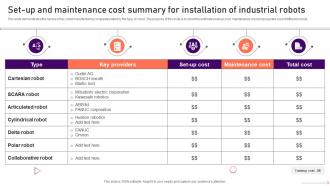
This slide demonstrates the names of key robot manufacturing companies listed by the type of robot. The purpose of this slide is to show the estimated set up cost, maintenance cost and projected cost of different robots. Deliver an outstanding presentation on the topic using this Set Up And Maintenance Cost Summary For Installation Of Industrial Robots. Dispense information and present a thorough explanation of Cartesian Robot, Scara Robot, Delta Robot using the slides given. This template can be altered and personalized to fit your needs. It is also available for immediate download. So grab it now.

People who downloaded this PowerPoint presentation also viewed the following :

FAQs for Set Up And Maintenance Cost Summary For Installation

Key factors influencing industrial robot installation costs include robot type and complexity, facility modifications, integration with existing systems, programming and customization requirements, and ongoing maintenance contracts. These considerations vary significantly across manufacturing sectors, with automotive and electronics industries often requiring specialized configurations, ultimately determining total investment ranging from basic automation to comprehensive production line transformations.

Complex automation tasks significantly increase installation expenses through specialized equipment requirements, extended programming time, advanced safety systems, and comprehensive operator training needs. Manufacturing facilities implementing intricate assembly processes or precision welding operations often find installation costs 40-60% higher than basic applications, while ultimately delivering enhanced productivity and competitive advantages that justify the strategic investment.

Industrial robot installation costs typically range from $50,000 to $500,000, depending on robot complexity, application requirements, integration needs, and facility modifications. This investment includes hardware, software, safety systems, and training, with many manufacturing facilities finding that automated production lines deliver significant labor cost reductions and enhanced operational efficiency within 18-24 months.

Yes, companies often encounter hidden costs including facility modifications, specialized electrical upgrades, safety system installations, employee training programs, and ongoing maintenance contracts. While initial robot pricing seems straightforward, these additional expenses can increase total project costs by 30-50%, with many manufacturers finding that comprehensive upfront planning and phased implementation strategies help minimize surprises and deliver better ROI.

Robot type significantly influences installation costs, with articulated robots requiring complex mounting systems and safety barriers ($50,000-$100,000), while collaborative robots need minimal infrastructure modifications ($10,000-$30,000). SCARA robots fall between these extremes, and collaborative models streamline deployment by reducing safety requirements, facility modifications, and programming complexity, ultimately delivering faster ROI for manufacturers.

Facility infrastructure significantly influences industrial robot installation costs through electrical capacity requirements, floor reinforcement needs, safety system upgrades, workspace modifications, and integration with existing production lines. Manufacturing facilities often require substantial electrical upgrades, structural reinforcements, and safety barrier installations, with many companies finding that infrastructure preparation can represent 30-40% of total implementation costs.

Companies estimate ROI from robot installation by calculating labor cost savings, productivity gains, quality improvements, and reduced waste against total implementation expenses including hardware, installation, programming, and training costs. Through comprehensive analysis spanning 3-5 years, manufacturers typically find that robots deliver 15-25% annual returns while reducing operational costs, minimizing errors, and ultimately enhancing competitive positioning in increasingly automated markets.

Industrial robot installation labor costs typically range from $15,000 to $75,000, depending on system complexity, customization requirements, programming needs, technician expertise levels, and project duration. These costs vary significantly across sectors, with automotive and aerospace installations requiring specialized skills and extended timelines, while simpler manufacturing applications streamline labor requirements, ultimately delivering faster deployment and reduced operational expenses.

Maintenance and operational costs significantly impact long-term robot budgets through regular servicing, software updates, energy consumption, and staff training requirements. Manufacturing facilities typically allocate 10-15% of initial investment annually for these expenses, with predictive maintenance programs and energy-efficient models ultimately delivering reduced downtime and operational costs, enhancing overall ROI.

Recommended practices include thorough pre-installation planning, standardizing equipment specifications, leveraging modular designs, partnering with experienced integrators, and conducting comprehensive staff training programs. These approaches streamline deployment by reducing customization requirements, minimizing downtime, and preventing costly rework, with many manufacturing facilities finding that strategic upfront investment in planning and training ultimately delivers faster ROI and enhanced operational efficiency.

Yes, various financing options exist for industrial robot investments, including equipment leasing, bank loans, government grants, manufacturer financing programs, and robotics-as-a-service models. Many businesses find that leasing arrangements and flexible payment plans make automation more accessible, while government incentives for manufacturing modernization help offset initial costs, ultimately enabling companies to implement robotic solutions without significant upfront capital investment.

Geographical location significantly influences robot installation costs through varying labor rates, material availability, and regulatory requirements across regions. While developed markets like North America and Europe typically present higher labor costs, they offer experienced technicians and streamlined logistics, whereas emerging markets may provide cost savings but require additional training investments, ultimately affecting project timelines and total implementation expenses.

**INPUT**: What training costs should businesses anticipate for personnel involved in robot operation and maintenance? **OUTPUT**: Training costs for robot personnel typically range from $2,000-$15,000 per employee, encompassing basic operation, programming fundamentals, safety protocols, preventive maintenance, and troubleshooting procedures. These investments deliver significant returns through reduced downtime, enhanced operational efficiency, and improved safety compliance, with many manufacturing facilities finding that comprehensive training programs ultimately minimize long-term operational costs while maximizing productivity. **Word count: 60 words**

Software and integration requirements significantly impact installation costs by demanding specialized programming, system compatibility assessments, and custom interface development. These technical components often require dedicated engineering resources, extensive testing phases, and ongoing support protocols, with many manufacturing facilities finding that integration complexity can represent 30-40% of total implementation expenses, ultimately determining long-term operational efficiency.

Common pitfalls include inadequate site preparation, insufficient employee training, poor integration planning with existing systems, underestimating safety requirements, and inadequate infrastructure upgrades. These challenges often result from rushed timelines, limited stakeholder consultation, and insufficient technical assessments, with many manufacturers finding that thorough pre-installation planning ultimately reduces overall costs and accelerates return on investment.

Ratings and Reviews

100% of 100
Review Form
Write a review
Most Relevant Reviews
  1. 100%

    by Colin Barnes

    The service is fast, and I could access any presentation after buying the subscription. I don’t think I’ll ever have to worry about a presentation in my life.
  2. 100%

    by Edmundo Watkins

    The ease of modifying templates is just superb! Also, the vast collection offers plenty of options to choose from.

2 Item(s)

per page: