Six months roadmap to creating successful blog

Six months roadmap to creating successful blog
Slide 1 of 2
Favourites Favourites

Try Before you Buy Download Free Sample Product

Audience Impress Your
Audience
Editable 100%
Editable
Time Save Hours
of Time
The Biggest Sale is ending soon in
0
0
:
0
0
:
0
0
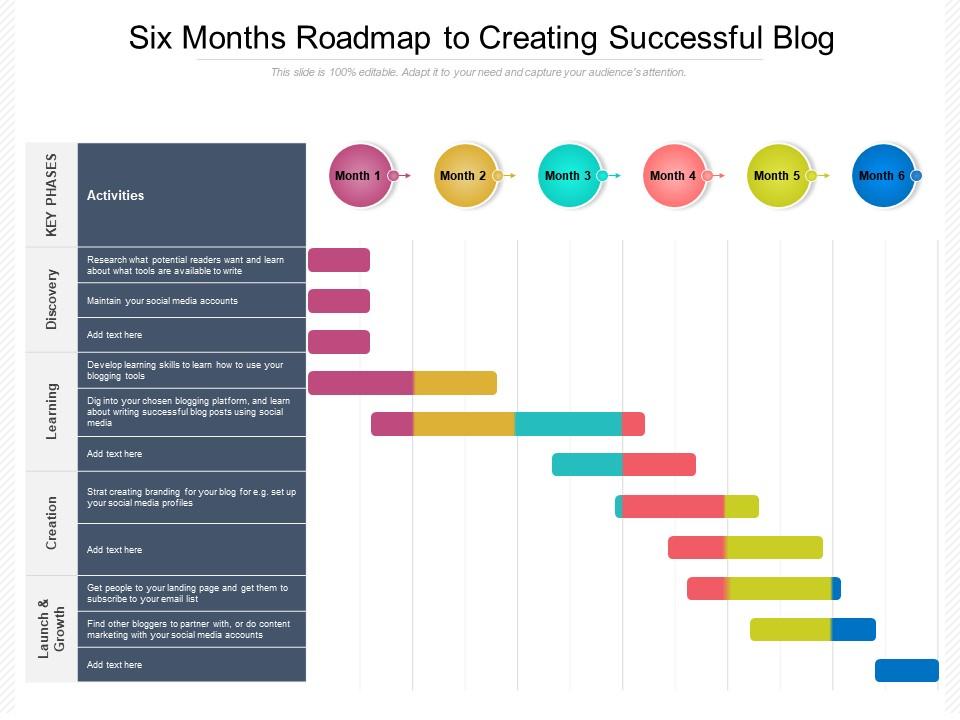
Presenting Six Months Roadmap To Creating Successful Blog PowerPoint slide. This PPT presentation is Google Slides compatible hence it is easily accessible. This PPT theme is available in both 4,3 and 16,9 aspect ratios. This PowerPoint template is customizable so you can modify the font size, font type, color, and shapes as per your requirements. You can download and save this PowerPoint layout in different formats like PDF, PNG, and JPG.

People who downloaded this PowerPoint presentation also viewed the following :

FAQs for Six months roadmap to

A successful blogging roadmap includes content strategy development, audience research and persona mapping, keyword planning, editorial calendar creation, and performance measurement frameworks. These elements work together by ensuring consistent publishing schedules, targeted content creation, and data-driven optimization, with many organizations finding that systematic planning ultimately delivers enhanced audience engagement and measurable business growth.

A content calendar enhances blogging roadmap effectiveness by providing structured scheduling, strategic content distribution, and consistent audience engagement across multiple platforms. Through organized planning, businesses streamline editorial workflows, optimize publishing frequency, and align content with marketing campaigns, ultimately delivering improved brand visibility and reader retention, with many organizations finding that systematic scheduling increases content quality while reducing production stress.

Effective audience identification strategies include analyzing competitor readership, conducting surveys and interviews, creating detailed buyer personas, utilizing social media analytics, and examining website traffic data. These research methods enable bloggers to understand demographics, preferences, pain points, and content consumption patterns, ultimately delivering more targeted content that resonates with readers and drives higher engagement across platforms.

SEO principles integrate into blogging roadmaps through keyword research, content optimization, technical site structure, and performance monitoring across publishing schedules. These strategies streamline content planning by targeting search intent, optimizing meta descriptions and headers, and building topical authority, with many content teams finding that consistent SEO integration ultimately delivers higher organic traffic and sustainable audience growth.

Key blog success metrics include organic traffic growth, engagement rates, conversion tracking, lead generation numbers, and search engine rankings. These measurements enable content strategists to optimize performance by identifying high-performing topics, refining audience targeting, and adjusting publishing frequency, with many organizations finding that consistent metric analysis delivers improved ROI and stronger competitive positioning.

Consistency in posting frequency can be established through editorial calendars, batch content creation, automated scheduling tools, and realistic goal-setting based on available resources. Many successful bloggers find that starting with a manageable schedule, like weekly posts, then gradually scaling up works better than overcommitting initially, ultimately building sustainable momentum and audience expectations while maintaining quality standards.

Social media serves as a critical distribution channel, audience engagement platform, and traffic driver within a blogging roadmap, enabling content amplification across multiple networks like LinkedIn, Twitter, and Facebook. These platforms streamline audience building by fostering community interactions, expanding reach through shares and comments, and driving consistent referral traffic, ultimately delivering enhanced visibility and stronger reader relationships for sustainable blog growth.

Visual branding and design significantly impact blog effectiveness by establishing credibility, enhancing user experience, improving content readability, and creating memorable brand recognition. Through consistent color schemes, typography, and layout design, blogs deliver higher engagement rates, reduced bounce rates, and increased social sharing, with many content marketers finding that strategic visual branding ultimately drives stronger audience retention and conversion outcomes.

**INPUT**: What are the best practices for crafting compelling blog topics that resonate with readers? **OUTPUT**: Best practices for crafting compelling blog topics include addressing specific audience pain points, incorporating trending keywords, leveraging seasonal relevance, analyzing competitor gaps, and focusing on actionable solutions. These strategies enhance content discoverability and engagement by delivering targeted value, solving real problems, and positioning your brand as a trusted resource, ultimately driving higher traffic and stronger reader loyalty across diverse industries.

User feedback can be incorporated into blogging roadmap through regular surveys, comment analysis, social media monitoring, and content performance metrics. These insights enable content creators to identify trending topics, address knowledge gaps, and refine editorial calendars, with many organizations finding that feedback-driven strategies ultimately deliver higher engagement rates and more targeted audience experiences.

Recommended blogging roadmap management tools include Trello, Asana, Notion, CoSchedule, and Airtable, along with editorial calendar plugins like EditFlow. These platforms streamline content planning by enabling collaborative scheduling, deadline tracking, and performance analytics, with many content teams finding that integrated workflow management ultimately delivers consistent publishing schedules and improved content quality across multiple channels.

Guest blogging enhances broader strategies by expanding reach, building industry authority, generating quality backlinks, and accessing new audiences through established platforms. Through strategic partnerships with relevant publications, businesses accelerate brand recognition, drive targeted traffic, and establish thought leadership, while simultaneously strengthening their own content ecosystem and competitive positioning.

Repurposing content within a blogging roadmap maximizes resource efficiency, extends content lifespan, improves SEO through strategic interlinking, enhances audience reach across multiple platforms, and reduces content creation costs. This strategic approach enables businesses to transform single blog posts into social media content, email newsletters, and video scripts, ultimately delivering consistent messaging while significantly reducing time-to-market for new content initiatives.

Blogs can be monetized through affiliate marketing, sponsored content, digital products, subscription models, and advertising placements while maintaining strategic content alignment. Following a structured roadmap ensures monetization efforts complement content goals, with many successful bloggers finding that authentic product recommendations, premium content offerings, and strategic partnerships ultimately deliver sustainable revenue streams without compromising audience trust.

Common blogging roadmap pitfalls include setting unrealistic publishing schedules, neglecting audience research, lacking content variety, ignoring SEO planning, and failing to establish measurable goals. These oversights can derail content strategies by creating unsustainable workflows, missing target demographics, and reducing engagement, with many organizations finding that balanced planning and flexible timelines ultimately deliver consistent traffic growth and stronger brand authority.

Ratings and Reviews

0% of 100
Write a review
Most Relevant Reviews

No Reviews