Stakeholder Register For Project Communication Management Strategic Plan For Project Lifecycle

Rating:
90%
Stakeholder Register For Project Communication Management Strategic Plan For Project Lifecycle
Slide 1 of 6

or

Favourites Favourites

Try Before you Buy Download Free Sample Product

Audience Impress Your
Audience
Editable 100%
Editable
Time Save Hours
of Time
The Biggest Sale is ending soon in
0
0
:
0
0
:
0
0
Rating:
90%
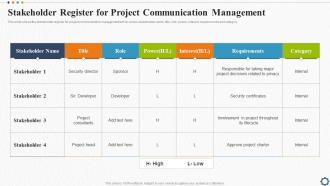
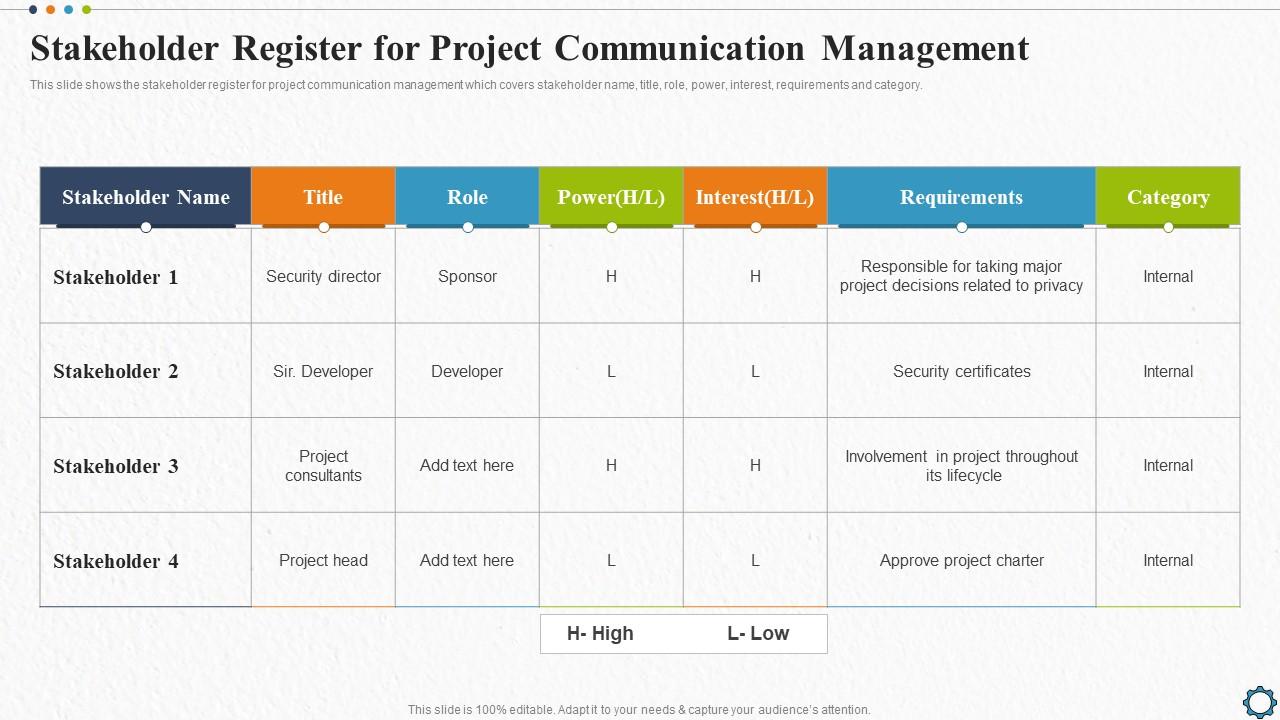
This slide shows the stakeholder register for project communication management which covers stakeholder name, title, role, power, interest, requirements and category. Present the topic in a bit more detail with this Stakeholder Register For Project Communication Management Strategic Plan For Project Lifecycle. Use it as a tool for discussion and navigation on Stakeholder, Role, Requirements. This template is free to edit as deemed fit for your organization. Therefore download it now.
People who downloaded this PowerPoint presentation also viewed the following :

FAQs for Stakeholder Register For Project Communication Management Strategic Plan

Start with the basics - names, roles, contact info, and how much influence each person has. I'd throw in their expectations and any concerns they might have too. Communication preferences are huge (some people hate email, others live in Slack). Honestly, the categorizing by influence thing is super helpful when you're juggling priorities. Document relationships between stakeholders because office politics are real. Keep updating it as you go since people's roles shift. A simple spreadsheet works fine - just make sure your whole team can actually access the damn thing.

Honestly, think of your stakeholder register like early warning radar for project disasters. Map out everyone's influence and interests first - that high-power person who doesn't buy into your project? Yeah, that's trouble brewing. You'll catch communication gaps and conflicting expectations before they explode into real problems. Short sentences work. Also helps you figure out which people are actually on your team so you can gang up on risks together (in a good way). Update it weekly though - people's influence shifts constantly and you don't want to be working with outdated intel.

So basically, your stakeholder register is like having a really detailed contact list that actually helps you get shit done. It tracks who has power, who cares about your project, and how they like to be contacted. Super useful for figuring out who might help you and who could cause problems later. I always update mine as things change - and trust me, they will change constantly. Without one, you're just randomly emailing people and crossing your fingers. Smart approach is tailoring how you talk to each person based on what you've logged about them.

Honestly, treat that stakeholder register like it's alive - update it whenever anything changes. People join projects, others bail, and power dynamics get weird. I learned this the hard way when some VP suddenly appeared at a meeting and torpedoed half our plans because nobody told me he cared about the project. Review it at major milestones for sure, but also just glance through it during regular check-ins. Don't wait for formal reviews if you spot new players or notice someone's attitude shifting. It's way easier to keep updating than scrambling to figure out who matters when things go sideways.

Start with the obvious people - project sponsor, key users, budget approvers. Then ask yourself "who else gets impacted?" Departments that even barely touch your project count too. I always grab a couple teammates for a quick brainstorming session because they'll catch people you totally missed. Oh, and don't forget external folks if they matter - vendors, customers, maybe regulatory people. Honestly, I'd rather invite too many people upfront than realize I forgot someone crucial when we're already deep into things. You can always trim the list later, but scrambling to loop someone in mid-project? That's the worst.

It's pretty straightforward actually - just split them into internal vs external. Internal means anyone inside your company (employees, managers, other departments). External covers everyone else - customers, vendors, regulators, community groups, whatever. Most templates have a column where you mark which category each person falls into. I've seen people try to get all fancy with subcategories but honestly? That usually just makes things messier. Keep it simple and stay consistent so you can filter groups later when you're figuring out how to engage with them. Way easier than overthinking it.

Honestly? Start with Excel or Google Sheets - everyone knows how to use them and they're super easy to share. If you need something fancier later, check out Asana or Monday.com since they let you track engagement and set reminders. Salesforce works too if you're already stuck with it, but that's probably overkill. I've literally watched teams spend weeks debating the "perfect" tool when a basic spreadsheet would've worked fine. My advice is don't overthink it. Begin with whatever your team already uses, then upgrade if you actually need the extra bells and whistles.

So here's what I'd do - focus on influence and impact first. High influence + high impact people? Those are your VIPs, give them tons of attention. After that, handle the high influence/low impact crowd by keeping them happy, then the high impact/low influence group just needs updates. Oh and the corporate "matrix" approach actually isn't terrible once you get used to it. Low/low people can basically be ignored unless something major happens. Start with your top tier stakeholders and work down from there when you've got time. It's way less overwhelming than trying to manage everyone equally.

So basically, it's like having everyone on the same page about who to talk to and how. You'll know who wants detailed updates vs just the highlights, plus their preferred communication style. No more awkward moments where you accidentally loop in someone who didn't need to be there (ugh, hate when that happens). It helps spot communication gaps before they become problems too. Oh, and make sure your whole team actually uses the thing - I've seen so many just sit there collecting digital dust. Keep it current though, or it becomes useless pretty fast.

Honestly, finding all the right people is brutal - stakeholders pop up in the weirdest places you'd never think to look. Getting contact info that actually works is another headache, and good luck keeping it current. People's influence shifts constantly during projects, which makes categorizing them tricky. Some folks straight up don't want to be on your list for political reasons too. The updating part though? Total pain. Roles change, people leave, new players show up. I always start with the obvious ones first, then branch out. Just accept you'll be refreshing this thing every couple weeks.

So basically, a stakeholder register is like your roadmap for figuring out who actually matters on your project. You'll see who has real influence vs. who just talks a lot. Before making any big decisions, you can check who needs to weigh in first and who might push back. Honestly, it saves you from stepping on the wrong toes. Keep updating it though - people's roles shift and suddenly someone who seemed unimportant becomes your biggest blocker. It's way better than guessing who to involve when crunch time hits.

Your stakeholder register? Think of it as your cheat sheet for when things go sideways. Shows you who cares about what and how they like to talk - super helpful for finding middle ground. You'll know who actually has the power to make decisions too. Can't tell you how many useless meetings I've sat through because someone forgot to invite the person who could actually say yes! Oh, and track their communication styles. Some people hate emails, others won't pick up the phone. Document this stuff early before drama starts.

Your stakeholder register is just names and titles - that's the bare minimum. Analysis is where you actually figure people out. What drives them? Who do they influence behind the scenes? I'd start mapping their real power levels and how much they care about your project. Honestly, the relationship stuff between stakeholders matters way more than most PMs realize. Once you see those patterns, you can prioritize who needs your attention first. Just add some columns to your existing register - influence, interest, potential drama they could cause. That's your roadmap right there.

So I'd start by tracking how often stakeholders actually engage with you - like response times and meeting participation. That stuff shows who's really invested vs just going through the motions. Survey them regularly for satisfaction scores, and watch how fast decisions get approved (especially with your VIPs since they can totally derail timelines). Also keep tabs on any scope or budget changes that come from their feedback. Honestly, the trick is setting up some basic scoring system from day one - makes it way easier to catch problems before they blow up your whole project.

Keep updating that stakeholder register as you go - it's not a set-it-and-forget-it thing. New people will pop up, others become irrelevant, and power dynamics shift constantly. I learned this the hard way when some random finance guy I'd barely noticed suddenly controlled our entire budget approval! Check it monthly and definitely revisit during major milestones. Also update it right away when you spot new players or notice relationships changing. People's influence and interest levels are way more fluid than you'd think, especially as the project moves through different phases.

Ratings and Reviews

90% of 100
Review Form
Write a review
Most Relevant Reviews
  1. 100%

    by Colin Barnes

    “Excellent information with easy access.”
  2. 80%

    by O'Kelly Phillips

    SlideTeam’s readymade presentations have landed my unique images with my bosses in the past and it continues to reward me.

2 Item(s)

per page: