Strategic house with business relationship management

Rating:
95%
Strategic house with business relationship management
Slide 1 of 9
Favourites Favourites

Try Before you Buy Download Free Sample Product

Audience Impress Your
Audience
Editable 100%
Editable
Time Save Hours
of Time
The Biggest Sale is ending soon in
0
0
:
0
0
:
0
0
Rating:
95%
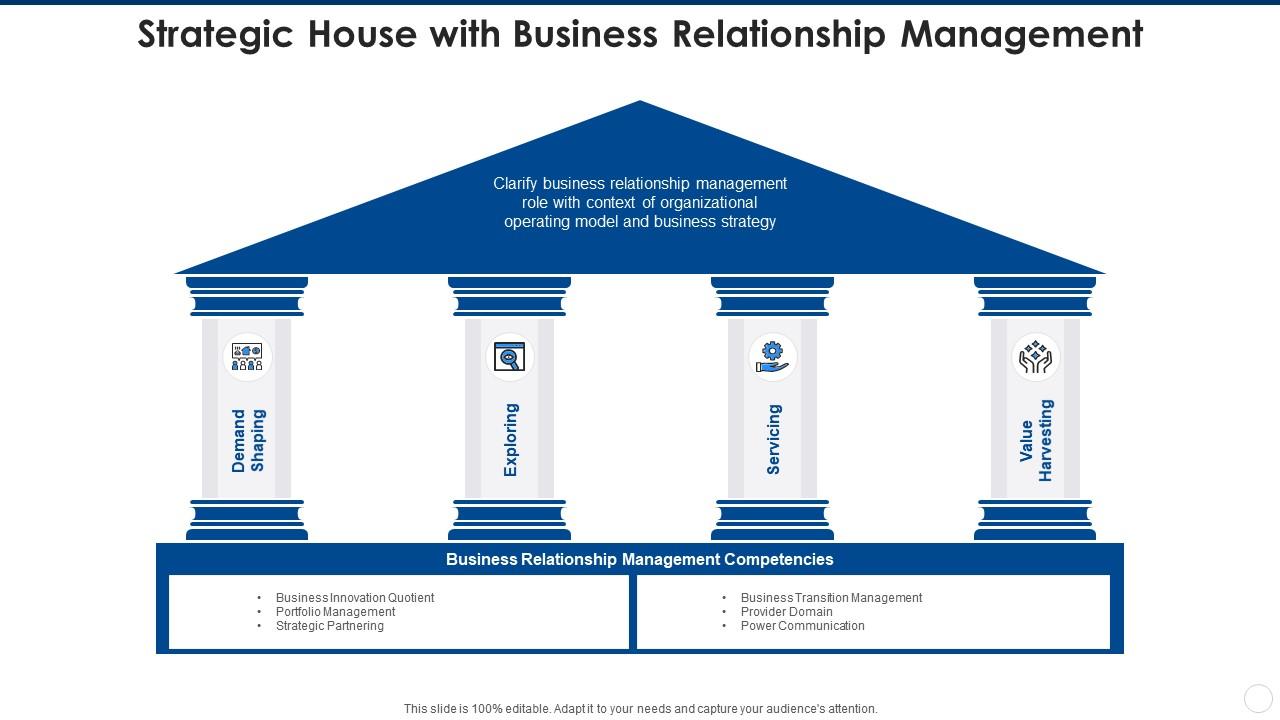
Presenting our set of slides with Strategic House With Business Relationship Management. This exhibits information on four stages of the process. This is an easy to edit and innovatively designed PowerPoint template. So download immediately and highlight information on Portfolio Management, Strategic Partnering, Power Communication.

FAQs for Strategic house with

Honestly, start with mapping out who your key business partners are - that's your foundation. Don't wait for disasters to strike before you talk to them (learned that one the hard way). Set up monthly check-ins instead of just crisis calls. Really dig into what keeps them up at night and what their goals actually are. Here's the thing though - you've got to speak their language, not tech jargon. When you nail a technical project, translate that win into dollars or efficiency gains they'll get excited about. Pick maybe 2-3 relationships that matter most and focus there first. Success looks different to everyone.

Look, your BRM thing has to actually tie back to what your company's trying to achieve. Map out which relationships help hit your top 3 business goals - revenue, customer happiness, whatever matters most. I learned this the hard way after spending months "building connections" that went nowhere. Short version: every relationship should either make money, cut risk, or create new opportunities. Don't just network for networking's sake. Focus on the stakeholders who can actually move things forward. Trust me, you'll waste way less time this way and your boss will actually see the point.

Honestly, stakeholder engagement is everything - without it you're basically flying blind. First thing? Map out who actually makes decisions around here (not just who thinks they do). Figure out what keeps them up at night and how your work connects to fixing those problems. I learned this the hard way when I spent months on something nobody cared about. Keep those relationships alive with regular check-ins. Maybe start with your top 5 people and just grab coffee or schedule quick calls to see what's on their radar right now.

Honestly, I'd focus on two main things - how your relationships are doing and actual business results. Survey people regularly about satisfaction and trust levels. Track if projects are moving faster or if there's less drama between teams. My favorite metric? How quickly issues get resolved - it really shows if your relationships are working. Also pay attention to whether business leaders are coming to you first instead of you always hunting them down (that's a great sign). Keep it simple though. Maybe 5 key metrics max on a dashboard, then review quarterly with stakeholders.

Honestly, start with a decent CRM - Salesforce or HubSpot work great for tracking all your relationship stuff and outcomes. Project management tools like Asana help coordinate everything across teams. Slack's pretty clutch for those random conversations that actually matter more than formal meetings sometimes. Half this job is just being around and easy to reach, which sounds obvious but... Analytics dashboards are huge too since you need to prove relationship health somehow. Oh, and don't try to set up everything at once - CRM first. Without tracking relationships systematically, you're just winging it based on whatever you remember from last week.

Look, your BRM strategy can't be set in stone - markets change too fast for that. I'd do quarterly check-ins with leadership instead of sticking to some rigid annual plan (honestly, I've watched way too many BRMs crash and burn doing that). Pay attention to what's happening around you. Tech disruption hits? Focus more on your digital partners. Supply chain goes crazy? Those relationships suddenly matter way more. Stay close to stakeholders so you catch shifts early. Don't be scared to move resources around when the data shows different relationships becoming critical. The whole point is being able to pivot fast.

Honestly, the worst thing you can do is copy-paste whatever worked at your old job. Every company's totally different - different politics, different priorities, you know? Also skip the super formal IT approach or people will just ignore you completely. Get the business folks on board early, otherwise you're dead in the water. Don't build processes just to have processes either - that's pointless busy work. Pick like 2-3 relationships that actually matter, nail those first, then expand. Oh and focus on real results, not just checking boxes on activity reports.

Look, BRM strategy is basically just mapping out your business relationships so you're not flying blind. Figure out which customers actually matter most - sounds harsh but it's true. You'll catch communication gaps before they become problems and create touchpoints that don't feel forced. Honestly beats scrambling to put out fires all the time. High-value accounts get the attention they deserve while smaller ones still stay in the loop. Oh, and start by just listing your current customers and ranking them by importance. That alone will show you where you've been wasting time versus where you should double down.

Dude, cultural stuff will totally make or break your BRM strategy. You've gotta switch up how you communicate and build relationships depending on where you're working. Direct feedback? Some places love it, others think you're being a complete jerk. Decision-making is wild too - certain cultures want everyone's input before moving forward, while others just want you to pick something fast. Oh, and stakeholder meetings... yeah, those timelines are gonna be all over the place. I learned this the hard way honestly. Just spend time figuring out the local business vibe first.

Track relationship stuff like satisfaction scores and how often people actually come to you first with problems - that's huge. Business metrics matter too though: project success rates, faster delivery times, cost savings. Honestly, the relationship side is frustrating because it takes forever to see results. What I'd do is quarterly check-ins where you can show how better relationships led to real outcomes your company cares about. Don't expect immediate wins on the relationship front - it's just not how it works.

Honestly, you've gotta build feedback loops that you'll actually use - not just set up and forget. Do regular retrospectives with your business partners and internal team to figure out what's broken. Track stuff like relationship scores and project success rates because numbers don't lie (unlike that feeling in your gut). Make sure your BRMs can speak up about challenges without getting their heads bitten off. Oh, and here's the thing that drives me nuts - people collect all this feedback then let it rot in Excel. Actually do something with it! Tell stakeholders what you're changing and keep tweaking from there.

Look, BRM stops you from just dumping technology on people and hoping it works out. Map your key business relationships first - trust me on this one. You'll get way better buy-in because you actually understand what stakeholders need instead of guessing. Most digital projects crash and burn because they ignore relationship dynamics until everything's already gone sideways. With BRM, you can prioritize the right stuff, handle change without everyone freaking out, and measure success based on actual business relationships rather than just tech numbers. It's honestly a game-changer if you do it right.

Honestly, cross-department collaboration is what makes or breaks your BRM strategy. Those silos everyone complains about? They're initiative killers. Regular team communication fixes that mess fast. Finance spots cost issues, operations knows the workflow headaches, IT gets what's actually doable - you need all those voices in the room. Otherwise you're just guessing at solutions. Your BRM work hits different when everyone's on the same page about priorities. My advice? Start simple with monthly cross-functional check-ins where people can share what's going on in their corner of the world. You'll be surprised how much alignment happens naturally once people start talking.

Dude, analytics is like having a crystal ball for your BRM stuff. Track which relationships actually move the needle vs ones that just *seem* important. I made this mistake for years - went with my gut instead of looking at the numbers first. Now I monitor engagement patterns and can spot trouble before it hits. The data tells you where to spend your time and helps prove ROI when leadership asks (and they always ask). Oh, and don't go crazy measuring everything - pick 2-3 metrics you'll actually check regularly. Game changer.

Build this stuff right into your regular BRM meetings. Monthly surveys with stakeholders work great. Do quarterly relationship check-ins too - basically ask "how are we doing as partners?" Post-project retrospectives are perfect for this. Don't just wait for things to blow up before asking for feedback (though yeah, that'll happen sometimes). Regular check-ins help you catch problems early and spot new opportunities. A simple feedback dashboard tracks trends over time, which is honestly pretty satisfying to watch. My advice? Start with one consistent method and build from there.

Ratings and Reviews

95% of 100
Review Form
Write a review
Most Relevant Reviews
  1. 100%

    by Dorian Armstrong

    Best Representation of topics, really appreciable.
  2. 80%

    by Dominick Pierce

    Unique research projects to present in meeting.
  3. 100%

    by Edwardo Wheeler

    Unique and attractive product design.
  4. 100%

    by O'Kelly Phillips

    Innovative and attractive designs.

4 Item(s)

per page: