Strategic partnership showing collaboration teamwork plan and strategy

Rating:
90%
Strategic partnership showing collaboration teamwork plan and strategy
Slide 1 of 5
Favourites Favourites

Try Before you Buy Download Free Sample Product

Audience Impress Your
Audience
Editable 100%
Editable
Time Save Hours
of Time
The Biggest Sale is ending soon in
0
0
:
0
0
:
0
0
Rating:
90%
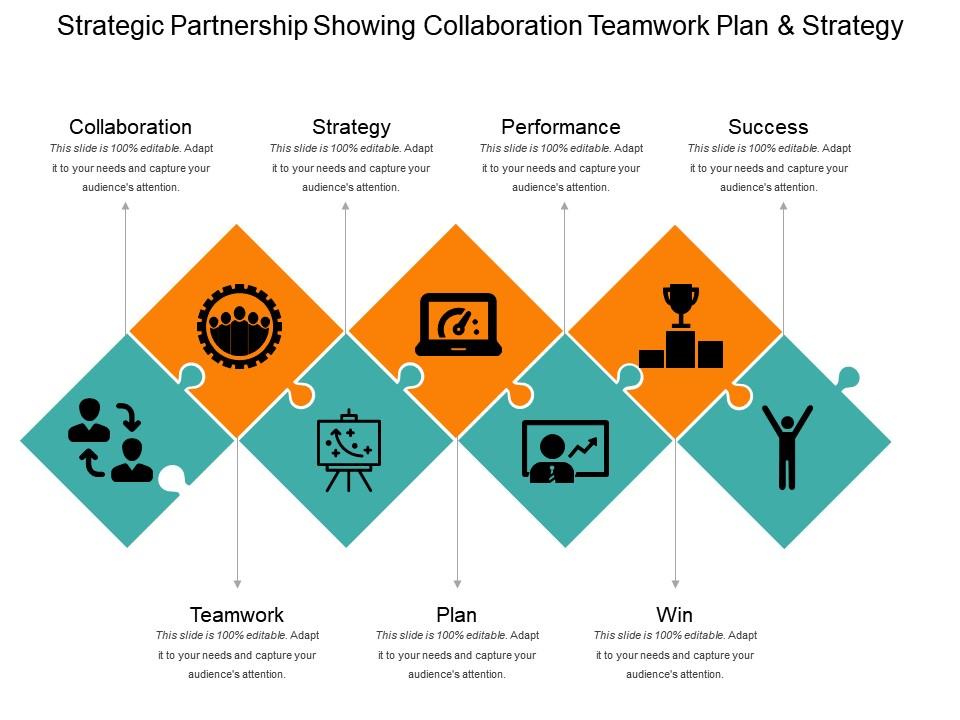
Presenting this set of slides with name - Strategic Partnership Showing Collaboration Teamwork Plan And Strategy. This is a seven stage process. The stages in this process are Strategic Partnership, Strategic Alliance, Legal Partnership.

People who downloaded this PowerPoint presentation also viewed the following :

FAQs for Strategic partnership showing collaboration teamwork

Honestly, it all comes down to whether both sides actually want this to work - not just doing it for show. You need clear goals that make sense for everyone, plus someone needs to own specific pieces (otherwise nothing gets done). Communication is obvious but people still mess it up constantly. Trust matters a ton since you're sharing stuff you normally wouldn't. Get the executives bought in early or you're screwed when things get tough. Oh, and create check-ins that aren't just status updates - make them actually useful. Start by figuring out what winning looks like for both of you, then build backwards from there.

First figure out what you're actually missing - capabilities, markets, whatever. Then hunt for companies that fill those gaps without competing directly with you. Conferences are honestly your best bet for this kind of thing. Look at who's already partnering well in similar industries, check your supply chain for obvious candidates. Don't sleep on universities or scrappy startups either - they bring cool innovation. The whole point is matching their strong suits with what you need. Make a list and just start chatting informally before you pitch anything serious.

Dude, you absolutely have to nail the communication piece or your alliance is toast. I've watched so many partnerships blow up because people think they're aligned when they're really not. Set up regular check-ins from day one - don't just rely on the big bosses shaking hands and calling it good. You want multiple people talking at different levels. Clear escalation paths are huge too. Honestly, most of this stuff seems obvious but you'd be shocked how often teams skip the basics. Get your communication rhythm down early and you'll dodge so many unnecessary fires later.

First thing - figure out what success actually looks like before you start. Revenue targets, cost cuts, whatever makes sense for your situation. Track the obvious stuff like ROI, but honestly? The relationship metrics matter just as much, even though they're way harder to nail down. Knowledge sharing, trust levels - that kind of thing will make or break you long-term. Schedule regular check-ins to see how you're doing against your benchmarks. Oh, and document where you're starting from now, otherwise you'll have nothing to compare progress to later. Don't be rigid about it though - adjust as things change.

Honestly, partnerships fall apart because nobody can agree on what they're actually trying to do. Communication gets messy fast - like that game of telephone we played as kids. Cultural differences between companies make everything worse, plus everyone's paranoid about getting screwed over. Start with baby steps and pilot projects first. Set up real communication channels (not those pointless Monday meetings). You need someone whose actual job is babysitting the relationship daily. Be crazy transparent about what you expect from each other. Those regular check-ins save your butt when things go sideways early.

Honestly, good tech makes all the difference for working with other companies. Cloud platforms let you share docs instantly, video calls keep everyone on the same page, and project management tools track everything. APIs are game-changers too - your systems can actually talk to theirs without someone manually passing stuff back and forth. Just don't pick something overly complicated that'll make people want to avoid using it. The tools need to play nice with what you're already using, or you'll waste more time troubleshooting than actually getting work done. Been there.

Oh man, cultural stuff can totally derail partnerships if you're not careful. Some cultures are super direct while others hint around everything - leads to crazy misunderstandings about deadlines and priorities. Decision-making's another minefield. Hierarchical vs consensus-based approaches don't mix well, trust me. I've watched entire projects just... stop because teams had zero clue about these differences. Risk tolerance varies wildly too, plus how people actually build relationships. My advice? Have that awkward conversation upfront about working styles. Way better than dealing with confusion later when everyone's stressed.

Honestly, just be super upfront from the start. Share info openly and don't make promises you can't keep - I've seen so many partnerships crash because someone overpromised on week one. Do regular check-ins so small problems don't turn into massive blowups later. Take time to really get what drives each partner, not just what they bring to the table. Oh, and definitely start with smaller, less risky stuff first to build some wins together. Trust isn't something you just have - you've got to keep working at it or it falls apart pretty quickly.

First thing - get solid NDAs and IP agreements locked down before you do anything else. I learned this the hard way watching friends get screwed over. Make sure you're crystal clear on who owns what, especially any new stuff you create together. Only share the bare minimum info needed to make the partnership work. Set up separate workspaces for your most sensitive projects if you can. Oh, and document everything obsessively - I know it's annoying but you'll thank yourself later. Regular check-ins on what information is going where helps too.

Yeah, collaborations totally speed up innovation. You're mixing different expertise and perspectives that your team just doesn't have on its own. When diverse skill sets come together, you get way more creative solutions. It's honestly wild - some of our biggest breakthroughs happened because of partnerships like this. Different thinking styles push everyone out of their usual problem-solving ruts. Oh, and here's the key thing I learned the hard way: find partners whose strengths fill your gaps, not ones who just do what you already do well. That overlap thing is pretty useless.

Get everyone together ASAP - doesn't matter if it's Zoom or in person - and literally draw out what winning looks like for each person. I've watched so many projects crash because people thought they were on the same page but weren't even reading the same book, you know? Make each team spell out their actual goals, then figure out where stuff overlaps and where it'll clash. Throw it all in a doc everyone can see. Here's the thing though - you've got to circle back on this weekly because priorities change constantly. Catch the drift before everything goes sideways.

Look, the real magic happens when these partnerships start building on each other over time. You get access to markets and tech that would be crazy expensive to build yourself. When random opportunities come up, you already have people to call - makes everything so much smoother. I've seen companies move way faster on big deals just because they had the right connections already in place. It becomes this unfair advantage honestly. Don't waste time on partnerships that just solve today's problems though. Map out which ones could actually change your whole game in 2-3 years.

Dude, get your legal stuff sorted from the start - trust me on this one. You need contracts that spell out who does what, who owns the IP, and what happens when shit hits the fan (and it will sometimes). Data sharing agreements are massive, especially with sensitive info floating around. Hash out liability and exit clauses early so nobody gets screwed later. Oh, and bring your legal team in NOW, not when you're already drowning in negotiations. I've seen too many partnerships go south because people skipped this step.

Check out the Alliance Development Framework and Partnership Canvas - they're both really good for this stuff. So the Framework gives you step-by-step guidance on picking partners, negotiating deals, setting up governance. Partnership Canvas is more visual (kinda like those business model things but actually useful lol). It maps out value props, resources, shared goals between orgs. Both stress having clear success metrics from day one and regular check-ins. Honestly? I'd go with the Canvas first since it's more collaborative and literally gets everyone looking at the same thing during planning meetings.

Honestly, your industry totally dictates how partnerships play out. Tech moves crazy fast, so you need partners who can pivot on a dime. Manufacturing? Completely different - they want stability and long-term planning. Regulations mess with everything too (remember when GDPR flipped tech collaborations upside down?). Some sectors are just naturally more partnership-friendly. Biotech companies practically live off R&D partnerships. My advice? Study how companies in your space actually work together and when they typically partner up. What crushes it in one industry can be a disaster in another.

Ratings and Reviews

90% of 100
Review Form
Write a review
Most Relevant Reviews
  1. 100%

    by Darren Olson

    Innovative and attractive designs.
  2. 80%

    by Williams Nelson

    Designs have enough space to add content.

2 Item(s)

per page: