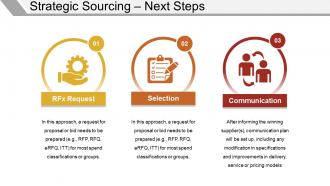
Strategic sourcing next steps ppt design templates

Rating:
100%
Slide 1 of 5
Favourites Favourites

Try Before you Buy Download Free Sample Product

Audience Impress Your
Audience
Editable 100%
Editable
Time Save Hours
of Time
The Biggest Sale is ending soon in
0
0
:
0
0
:
0
0
Rating:
100%
Presenting Strategic Sourcing Next Steps PPT Design Templates which is fully editable. The template is adaptable with Google Slides which makes it easily accessible at once. It can be converted into various formats like PDF, JPG and PNG. Freely access this template in both 4:3 and 16:9 aspect ratio. Customize the color, font, font size and font type as per your requirements.

FAQs for Strategic sourcing next steps

So basically, traditional purchasing is just "we need stuff, who's cheapest?" Strategic sourcing actually looks at the big picture - your supplier relationships, market trends, total costs over time. Way more planning upfront, but you get better quality and innovation down the road. It's about building partnerships instead of just buying transactions. Honestly, most companies still do the reactive thing because it's easier. But if you map out your key suppliers and think about what else they could bring to the table beyond just products, you'll probably see better results long-term.

First thing - figure out exactly what you need and make a scorecard covering cost, quality, delivery times, financial health, all that stuff. Don't just stick with your usual vendors either, there's probably better options you haven't found yet. Send out RFPs to get the details, then actually visit the promising ones and check their references. I know it sounds boring but trust me, being systematic beats going with your gut every time. Also make sure they align with where you're headed long-term, not just what works today. A standard evaluation sheet helps you compare everyone fairly.

Honestly, analytics changed everything for my sourcing decisions - no more flying blind with gut feelings. Track your supplier performance and cost patterns, then you can actually predict when stuff's about to go sideways. Start small though - pick 3 or 4 metrics you'll actually use consistently. The forecasting gets scary accurate once you have enough data. You'll spot negotiation openings and cost savings that you'd totally miss otherwise. Plus benchmarking suppliers becomes way less subjective when you've got numbers backing you up. Trust me, it's like getting superpowers for your supply chain.

Here's the thing about strategic sourcing - it's basically about getting smarter with your supplier relationships. Instead of working with tons of different vendors, consolidate your spending with fewer ones. This gives you way more negotiating power and better volume discounts. Your procurement gets cleaner too, which honestly saves more time than you'd think. Map out where your money's currently going first - that'll show you the biggest consolidation opportunities. Don't just compare sticker prices though. Look at the whole picture: quality, delivery times, how reliable they actually are. Sometimes you'll find inefficiencies hiding in plain sight once you start digging into performance data.

Look, most people mess this up by jumping straight to finding suppliers, but you really need to analyze your current spending first. Map out what you're buying and where the opportunities are hiding. Then figure out which suppliers actually matter strategically - not all vendors are created equal, trust me. Do some market research on supplier capabilities before you even think about bidding. Develop your sourcing strategy (including whether to make or buy), run your competitive process, pick your suppliers, then manage those contracts ongoing. Start with your biggest spend categories since that's where the money is. Oh, and treat this like an ongoing thing, not some one-and-done project.

Honestly, you've gotta build compliance checks into your sourcing from the start. Vet suppliers hard - certifications, audits, all that regulatory stuff. Trust me, I almost got burned by a "cheap" supplier once and it would've cost us way more in fines. Make your contracts spell out compliance requirements with regular check-ins. Oh, and don't put all your eggs in one basket - spread across multiple suppliers so you're not screwed if one goes sideways. Compliance should weigh just as much as price when you're picking partners, even though finance always pushes back on that.

Honestly, the key is bringing everyone to the table from day one. Figure out who's got a stake - procurement, finance, ops, end users, legal, the whole crew. Kick things off with alignment sessions on goals and metrics. Then do regular check-ins because people hate being blindsided later (learned that one the hard way). Set up clear communication and give everyone specific roles so there's no confusion. Here's the thing though - definitely include them in supplier evaluations and decisions. When people help build the strategy, they'll actually back it instead of fighting you every step.

Honestly, market shifts totally flip your sourcing strategy upside down. Inflation? You're scrambling for longer contracts or hunting suppliers in cheaper regions. We all got schooled on supply chain chaos recently - now everyone's diversifying instead of putting all eggs in one basket. Economic downturns aren't all bad though; suddenly suppliers want your business way more, so you can negotiate better deals. Currency swings will either save you a fortune or completely wreck your budget overseas. The trick is building wiggle room into contracts and - this sounds obvious but people forget - always have backup suppliers lined up before you need them.

Honestly, AI can completely change how you do supplier evaluation - makes it way faster and actually data-driven for once. You can analyze supplier performance patterns, predict risks, even automate boring stuff like purchase orders. The predictive analytics are pretty cool though - they'll flag potential supply chain issues before they blow up. Your team gets freed up from all that paperwork to focus on relationship building, which is where the real magic happens anyway. I'd say start small, maybe try an AI spend analysis tool first to see what kind of impact you get.

Track your cost savings and contract compliance - that's the bread and butter stuff executives care about. But honestly, the softer metrics matter just as much. How are your supplier relationships? Procurement cycle times getting shorter? Risk management improving? Those tell the real story. Oh, and if sustainability's a thing at your company, definitely measure that too. Set up a monthly dashboard so you can catch problems before they blow up. The qualitative stuff is harder to measure but it's where you'll see the biggest long-term wins.

Ugh, supplier resistance is the worst - they hate changing how they work with you. Internal teams will fight new processes too, and those data silos? Nightmare for tracking spending. Politics get messy fast, honestly. Start by showing clear ROI numbers to get people on board early. Get key stakeholders involved when you're picking suppliers - makes them feel heard. Build relationships with procurement folks across departments (coffee meetings help). Good spend analytics tools are worth the investment, trust me. Run small pilots first to prove it works before going company-wide.

So sustainability isn't just a nice-to-have anymore - it's literally make-or-break for vendor selection. Companies are now looking at environmental practices, labor standards, carbon footprint, all that stuff right alongside cost and quality. Honestly, it's gotten so much more complicated than like 5 years ago. Most places I know are setting actual sustainability targets and won't even consider suppliers who can't hit them. The trick is baking those metrics into your RFP right from the start. Otherwise you're just comparing random stuff and making decisions based on incomplete info.

SRM is huge for strategic sourcing - they're totally connected. Building solid relationships with key suppliers gets you better prices, innovation ideas, and they'll prioritize you when things get crazy. It's like dating but for business lol (couldn't resist). You want to move past just picking whoever's cheapest. Real partnerships mean suppliers actually help with cost cuts and share market info. Honestly, most companies mess this up by spreading themselves too thin. Start with your top suppliers - probably like 20% of them make up most of your spend anyway. Focus there first.

Look, each region has its own weird quirks - regulations, business customs, how their supply chains actually work. Map out suppliers first and figure out their compliance stuff, payment terms, quality standards. Currency swings will mess with your budget, so you'll want some hedging strategy (honestly such a headache but necessary). Time zones matter more than you'd think for calls and emails. Don't forget local holidays that'll delay shipments. Really though, find good regional partners who get the local scene. They're worth their weight in gold. Then standardize your main processes but stay flexible for regional differences.

So agile sourcing is all about speed and flexibility with your suppliers - super important when everything's changing constantly. Keep contracts shorter, have backup suppliers ready, and cut through the bureaucratic BS for faster decisions. Yeah, it costs more since you're sacrificing some efficiency, but honestly? Worth it when you can pivot fast or your main supplier bails on you. I'd start by figuring out which supplier categories actually need this flexibility versus the ones where traditional sourcing works fine. Don't overthink it - just map out your critical suppliers first.

Ratings and Reviews

100% of 100
Review Form
Write a review
Most Relevant Reviews
  1. 100%

    by Alexander Ramirez

    Illustrative design with editable content. Exceptional value for money. Highly pleased with the product.
  2. 100%

    by Dalton Aguilar

    Professional and unique presentations.

2 Item(s)

per page: