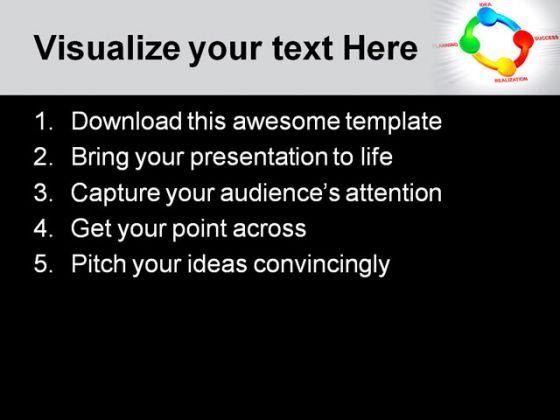
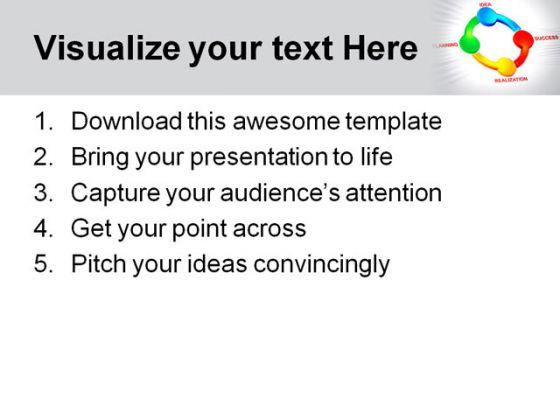
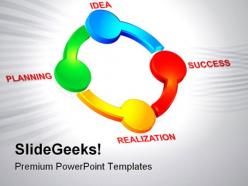
Successful planning business powerpoint templates and powerpoint backgrounds 0511
Try Before you Buy Download Free Sample Product
Audience
Editable
of Time
Our Successful Planning Business PowerPoint Templates And PowerPoint Backgrounds 0511 are a revelation. Open up a whole new exciting world for your audience.
People who downloaded this PowerPoint presentation also viewed the following :
Successful planning business powerpoint templates and powerpoint backgrounds 0511 with all 3 slides:
Display your thoughts on our Successful Planning Business PowerPoint Templates And PowerPoint Backgrounds 0511. They will take the world by storm.
FAQs for Successful planning business powerpoint templates and
Every effective business planning template should include executive summary, market analysis, competitive landscape, financial projections, operational strategy, marketing plan, and risk assessment sections. These comprehensive components enable organizations to systematically evaluate opportunities, allocate resources strategically, and present compelling cases to investors, with many businesses finding that structured templates streamline planning processes while ensuring critical elements aren't overlooked.
Different industries influence business plan template structure by requiring specialized financial models, regulatory compliance sections, and industry-specific risk assessments, operational frameworks, and market analysis components. Financial services emphasize capital requirements and regulatory adherence, while manufacturing focuses on supply chain logistics and production capacity, with healthcare organizations prioritizing compliance documentation and patient outcome metrics, ultimately delivering targeted strategic frameworks.
Financial projections serve as the quantitative backbone of business planning templates, encompassing revenue forecasts, expense budgets, cash flow analysis, profit margins, and break-even calculations. These projections enable stakeholders to assess viability, secure funding, and make strategic decisions, with many investors and lenders finding that detailed financial modeling ultimately delivers credibility and demonstrates thorough market understanding.
Visual aids enhance business plan effectiveness by simplifying complex financial data, highlighting key metrics, creating memorable investor experiences, and demonstrating market opportunities through charts, graphs, and infographics. These presentation elements streamline information absorption, reduce cognitive load during pitch sessions, and ultimately deliver stronger stakeholder engagement, with many entrepreneurs finding that visual storytelling significantly improves funding success rates.
Common pitfalls include over-relying on generic sections without customization, failing to update financial projections regularly, neglecting market research validation, and treating templates as final products rather than starting points. While templates streamline the planning process, businesses must adapt content to their specific industry, validate assumptions through real market data, and continuously refine projections, ultimately ensuring their plans remain relevant and actionable.
Businesses can customize templates by incorporating their brand colors, logos, fonts, and visual elements while adapting content sections to reflect their unique value propositions, market positioning, and strategic messaging. Through strategic modifications like replacing generic language with company-specific terminology, adjusting layouts to match brand aesthetics, and tailoring sections to industry requirements, organizations create cohesive presentations that reinforce brand identity and enhance stakeholder engagement.
Best practices for collaborating on business plans using templates include establishing clear roles and responsibilities, using cloud-based platforms for real-time editing, maintaining version control protocols, and setting regular review milestones. These collaborative approaches streamline the planning process by enabling simultaneous input from multiple stakeholders, reducing revision cycles, and ensuring consistent formatting, with many organizations finding that structured template collaboration accelerates plan completion while improving strategic alignment.
Businesses should update their planning templates quarterly for financial components and annually for strategic elements, with market-driven industries requiring more frequent revisions. Through regular template updates, organizations enhance forecasting accuracy, maintain competitive positioning, and adapt to regulatory changes, with many companies finding that systematic template maintenance ultimately delivers improved decision-making capabilities and operational agility.
Digital business planning templates offer real-time collaboration, automatic calculations, cloud storage, and easy updates, while printable templates provide offline accessibility, tangible note-taking, and distraction-free planning. Many organizations find that digital versions streamline team coordination and financial modeling, ultimately delivering faster plan iterations and enhanced collaborative efficiency in increasingly remote business environments.
A business planning template helps secure investor funding by ensuring comprehensive coverage of key elements like market analysis, financial projections, competitive positioning, revenue models, and growth strategies that investors scrutinize. These structured frameworks enable entrepreneurs to present compelling narratives with clear data, demonstrate market understanding and scalability potential, while addressing investor concerns systematically, ultimately delivering professional presentations that build confidence and trust.
Effective business planning templates should include comprehensive financial projections, clear market analysis sections, strategic goal frameworks, implementation timelines, and risk assessment components. These criteria ensure templates deliver actionable insights across industries, with many organizations finding that well-structured templates streamline planning processes, enhance strategic clarity, and ultimately accelerate decision-making while reducing planning cycle times.
Successful startups utilize business planning templates by focusing heavily on market validation, pivot flexibility, and investor presentation, while established companies emphasize operational optimization, resource allocation, and strategic expansion. Startups typically adapt templates for rapid iteration and funding rounds, whereas established organizations leverage them for departmental alignment, performance tracking, and long-term strategic planning, ultimately delivering different competitive advantages based on their growth stage.
**INPUT**: What tools or software are recommended for creating and modifying business planning templates? **OUTPUT**: Recommended tools include Microsoft PowerPoint, Google Slides, Canva, Adobe Creative Suite, and specialized platforms like LivePlan or Bizplan. These applications streamline template creation by offering customizable frameworks, collaborative editing features, and professional design elements, with many organizations finding that PowerPoint and Google Slides deliver the flexibility and accessibility needed for comprehensive business planning workflows. [Word count: 58 words]
Case studies can be integrated into business planning templates through dedicated sections showcasing market validation, competitor analysis benchmarks, implementation roadmaps, and ROI demonstrations from similar businesses. These real-world examples enhance credibility by providing tangible proof of concept, with many investors and stakeholders finding that documented success stories from comparable industries significantly strengthen funding proposals and strategic decision-making processes.
Market analysis sections provide critical insights into target demographics, competitive landscape, industry trends, market size, and growth opportunities within comprehensive business planning templates. These components enable businesses to make data-driven decisions, identify strategic positioning opportunities, and validate market demand, with many organizations finding that thorough market analysis significantly enhances their competitive advantage and operational success.
-
Designs have enough space to add content.
-
Appreciate the research and its presentable format.