Summary of accomplishments powerpoint presentation slides

Rating:
100%
Summary of accomplishments powerpoint presentation slides
Slide 1 of 20

or

Favourites Favourites

Try Before you Buy Download Free Sample Product

Audience Impress Your
Audience
Editable 100%
Editable
Time Save Hours
of Time
The Biggest Sale is ending soon in
0
0
:
0
0
:
0
0
Rating:
100%
This exclusive deck with twenty slides is here to help you to strategize, plan, analyze, or segment the topic with clear understanding and apprehension. This template is adaptable with Google Slides, which makes it easily accessible at once. It is easily available in both 4:3 and 16:9 aspect ratio. You can modify the colors, fonts, font size, and font type of the slide as per your business needs. Can be changed into various formats like PDF, JPG, and PNG.

Content of this Powerpoint Presentation


Slide 1: This slide introduces Summary of Accomplishments. State Your Company Name and begin.
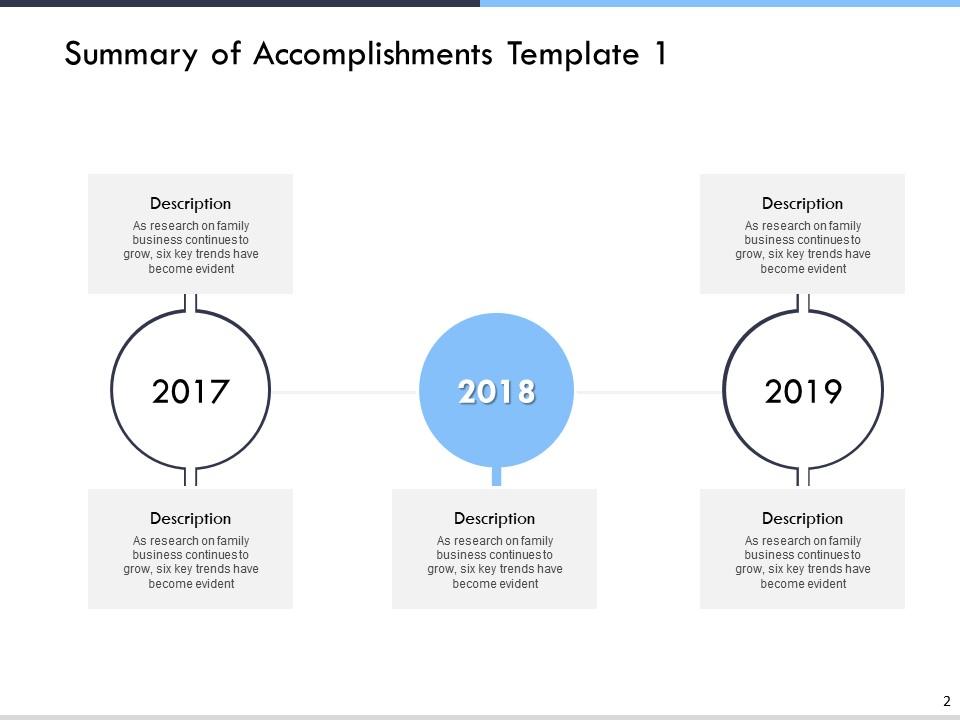
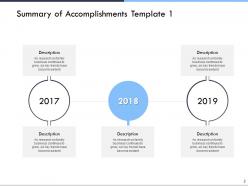
Slide 2: This slide shows Summary of Accomplishments Template 1. Add data as per requirements.
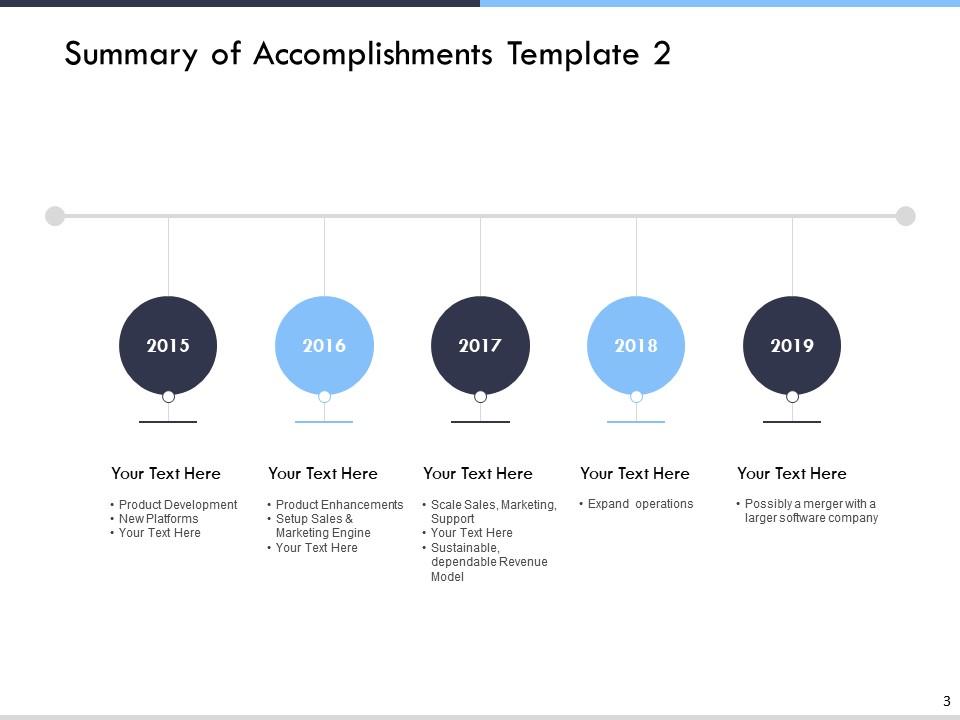
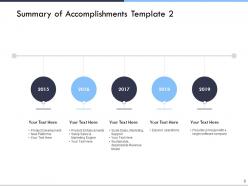
Slide 3: This slide presents Summary of Accomplishments Template 2.
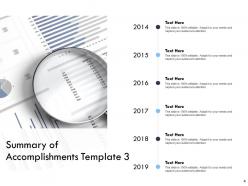
Slide 4: This slide displays Summary of Accomplishments Template 3 in timeline form.
Slide 5: This slide represents Summary of Accomplishments Template 4 with related icons.
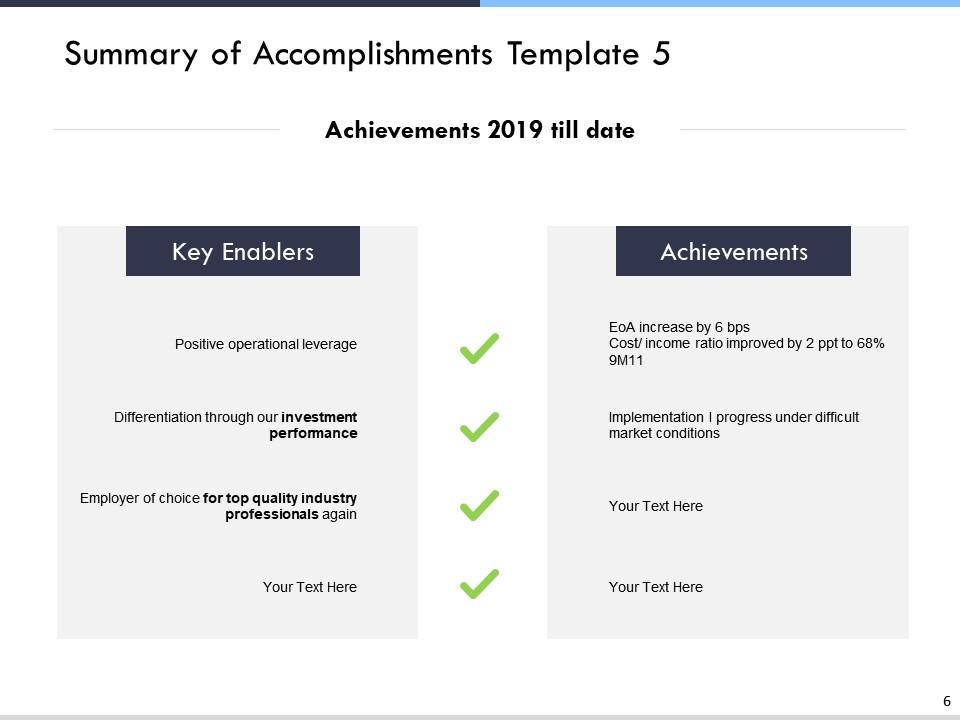
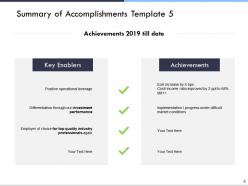
Slide 6: This slide showcases Summary of Accomplishments Template 5 describing- Key Enablers and Achievements.
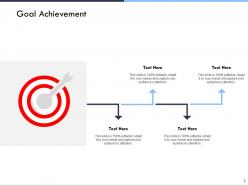
Slide 7: This slide shows Goal Achievement with related imagery and text.
Slide 8: This slide displays Summary of Accomplishment Icons.
Slide 9: This slide is titled as Additional Slides for moving forward.
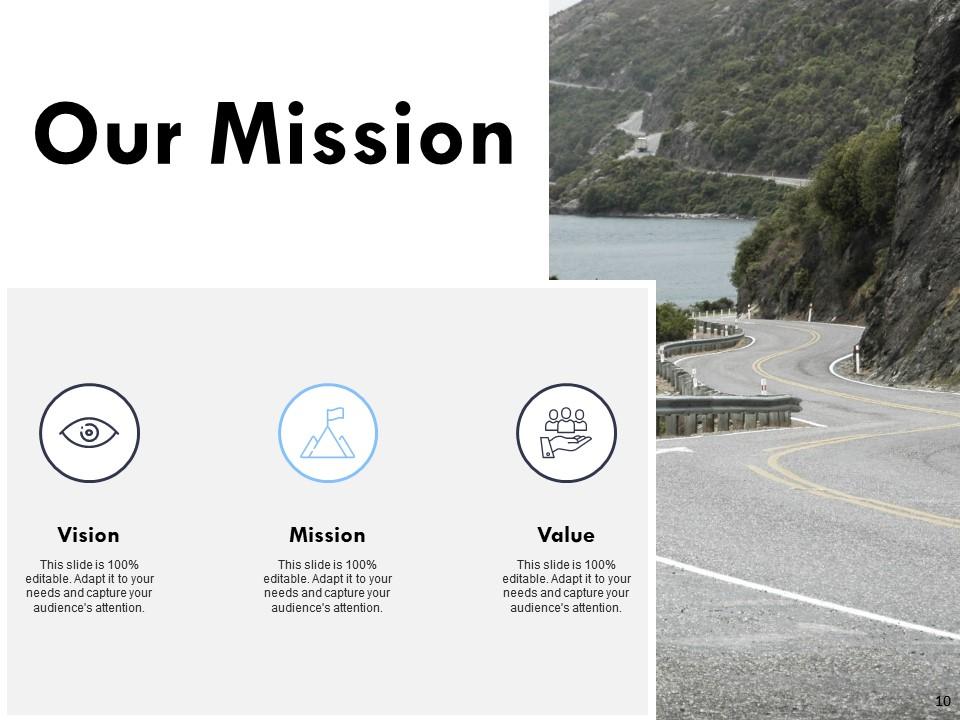
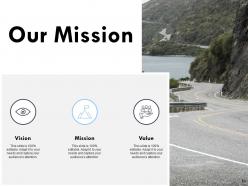
Slide 10: This is Our Mission slide with related imagery.
Slide 11: This is Our Team slide with names and designation.
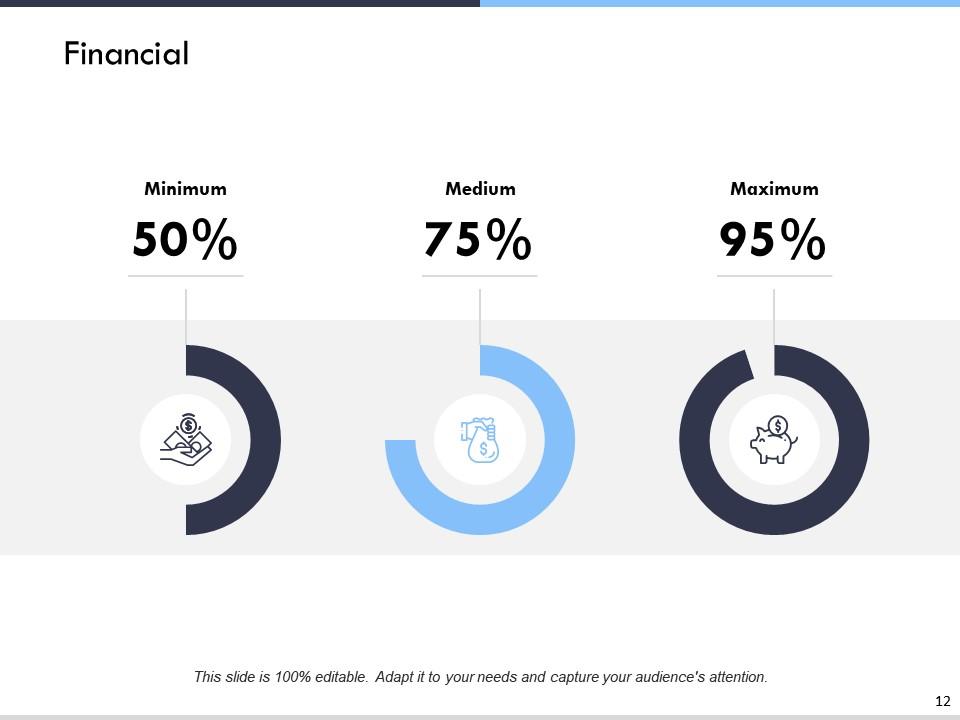
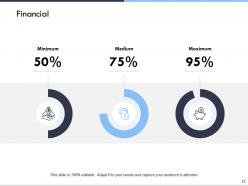
Slide 12: This is a Financial slide. Show your finance related stuff here.
Slide 13: This is an Idea Generation slide to state a new idea or highlight information, specifications etc.
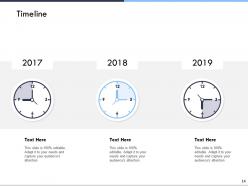
Slide 14: This is a Timeline slide to show information related with time period.
Slide 15: This is Our Target slide. State your targets here.
Slide 16: This slide is titled as Post It Notes. Post your important notes here.
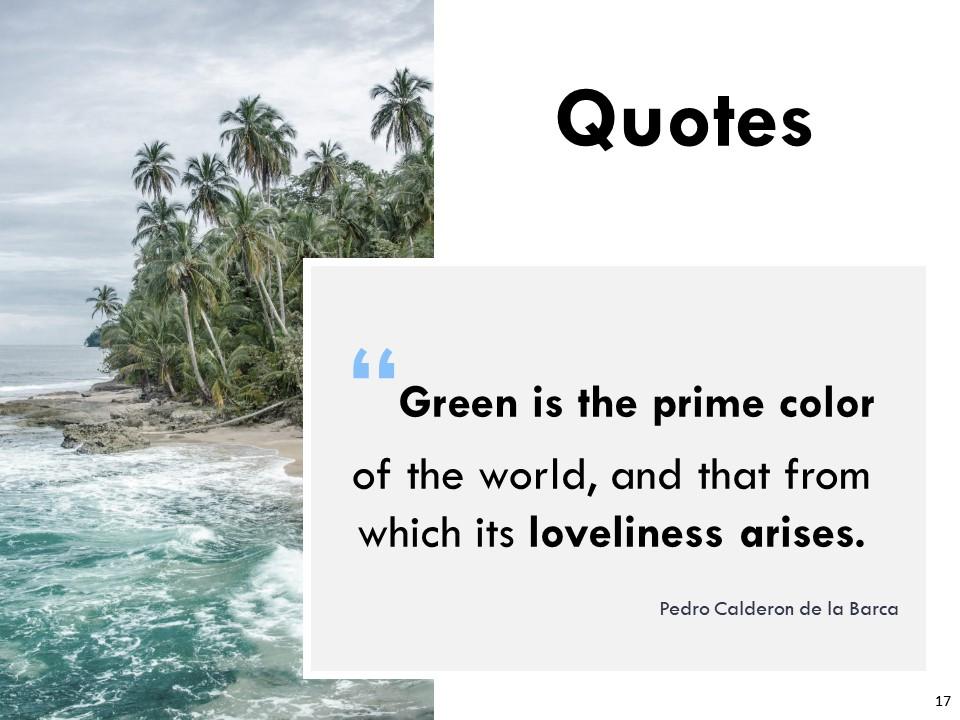
Slide 17: This is a Quotes slide to convey message, beliefs etc.
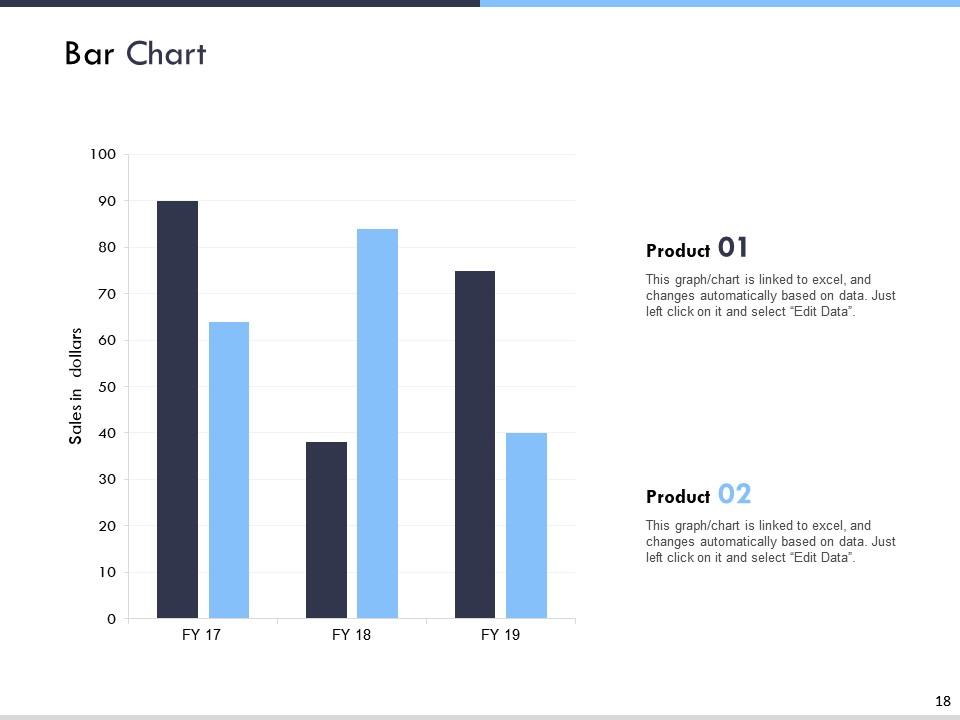
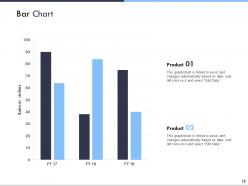
Slide 18: This slide shows Bar Chart with two products comparison.
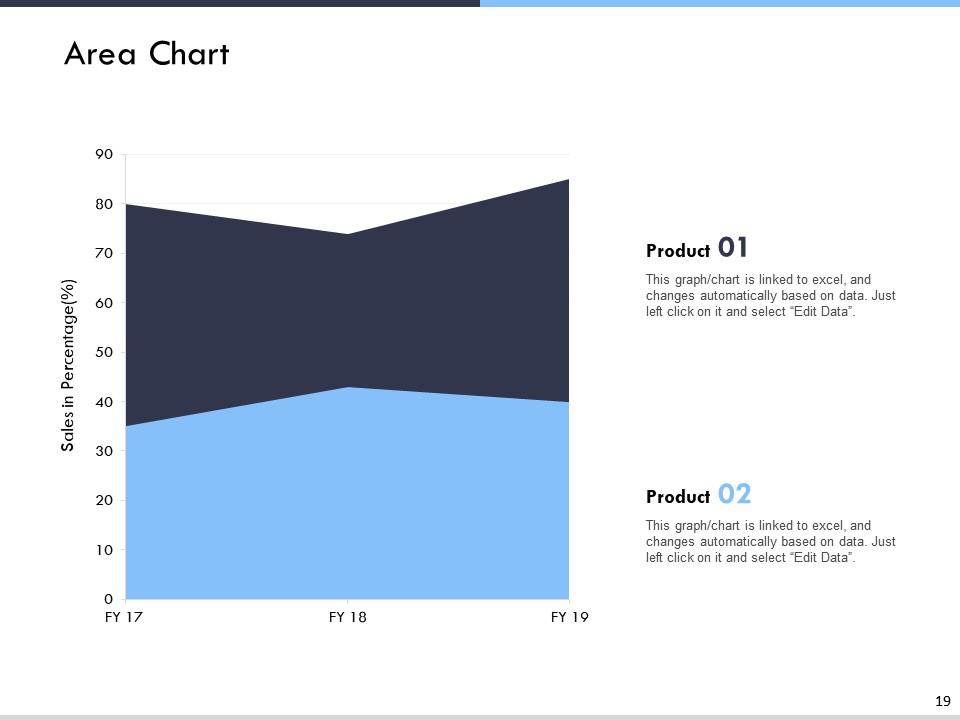
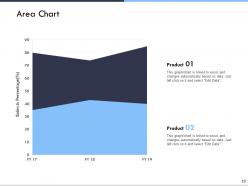
Slide 19: This slide displays Area Chart with two products comparison.
Slide 20: This is a Thank You slide with address, contact numbers and email address.

FAQs for Summary of accomplishments

Focus on three things: specific wins with numbers, how those wins actually helped your team/company, and what skills you used. Numbers are everything here - they make you sound legit. So instead of "managed social media," try "boosted engagement 40% with better content strategy." Each bullet should highlight one major accomplishment. Action verbs are your friend. Honestly, I'd start by brainstorming your biggest wins from this past year first - that's usually where the good stuff is. Don't just list tasks. Show why what you did mattered.

Starting with your wins upfront gives you instant credibility - honestly, it's way better than hoping people remember your expertise by the end. Your audience gets why they should listen to you right from slide one. Works great for pitches or client meetings where you need buy-in fast. Plus it boosts your confidence since you've already reminded everyone (including yourself) that you know what you're talking about. I always throw 3-4 relevant wins at the beginning now. Makes such a difference in how engaged people are - though obviously pick ones that actually relate to what you're presenting about.

Look, when you nail your accomplishments section, interviewers stop wondering if you can do the job - they start thinking about when you can start. Don't just list what you did. Show them the actual results with real numbers. Most people bore them to death with job duties, so you'll stick out right away. Your wins become perfect stories for the interview too. Oh, and put your best 3-5 achievements right at the top where they'll see them first. Trust me on this one.

Here's the thing - you've gotta speak their language. Tech companies get excited about innovation metrics and efficiency gains. Finance? They're all about risk management and cost savings. Healthcare wants patient outcomes and safety improvements - stuff that shows you actually understand their world. Do some homework on what each industry obsesses over first. Manufacturing loves operational efficiency numbers. Consulting firms want client satisfaction scores. I mean, it sounds obvious but most people just copy-paste the same accomplishments everywhere. Always throw in real numbers that'll make sense to them. Makes a huge difference.

Focus on hard numbers that show your actual impact - revenue you brought in, money saved, time cut down, that kind of stuff. Percentages are solid too, like "boosted conversion rates 15%" or "cut processing time by 30%." Even small numbers usually look way better than you'd expect once you give them context. Show the before/after when you can - "grew team from 3 to 12 people" or "managed $500K budget up from $200K." I mean, anyone can say they're "results-driven" but actual data? That's what gets attention. Being specific beats vague fluff every single time.

Dude, stories beat boring bullet points every time. Your brain actually remembers narratives way better than random stats - it's crazy how that works. So instead of "boosted sales 20%," walk them through how you spotted the issue, your game plan, and what happened next. Keep it tight though - beginning, middle, boom, results. I always think the mini-story approach makes you sound way more real than just rattling off numbers. Try flipping one of your current bullet points into story mode and you'll see what I mean. Makes such a difference.

Honestly, visuals are a game-changer for making your accomplishments actually pop instead of looking like every other boring slide deck. Charts work great for showing growth over time. Before/after pics are perfect if you've got tangible results to show off. I always throw in some icons or infographics too - breaks up all that text nicely. Bar charts are clutch for comparisons, and callout boxes make your biggest wins stand out. Oh, and use colors smartly so people can spot your key stuff right away. Nobody wants to sit through someone just reading numbers off slides!

Think of it like your personal brag sheet for performance reviews. Honestly, I can barely remember what I had for lunch yesterday, let alone what I accomplished six months ago. Having everything written down gives you solid examples when you're doing self-evaluations. Your manager will love you for it too - makes their job way easier when they're fighting for your promotion or raise. Just don't be like me and wait until the last minute to update it. I learned that lesson the hard way trying to remember stuff from January while sitting in my car before the meeting.

For entry-level, focus on school stuff - your GPA, relevant classes, any internships or club leadership roles. Part-time jobs and volunteer work count too since they show transferable skills. Basically anything that proves you're not completely clueless. Executive summaries are totally different though. Those need hard numbers - revenue you brought in, how many people you managed, big strategic projects you led. Years of experience matter here. It's all about showing concrete results that actually moved the company forward. The whole point? Entry-level is about potential, executive is about what you've already delivered.
Ugh, biggest mistake I see? People just list their job duties instead of actual wins. Like seriously, nobody cares that you "managed social media" - tell me you boosted engagement 40%! Also don't be vague with stuff like "improved sales." By how much? Pick your top 3-5 accomplishments that actually moved things forward. Oh and stop underselling yourself with "helped with" - you DID the thing, so own it. Use bullet points so it's easy to scan, and definitely tailor it to what they're looking for.

Don't just list soft skills like "great communicator" - that's what everyone does and it's boring. Show them through your results instead. Like "Led cross-functional meetings that cut project delays by 30%" or "Mentored 5 junior devs, which sped up code reviews by 40%." See the difference? You're proving you can communicate AND showing the actual impact. Honestly, most people just dump buzzwords on their resume and wonder why they don't get calls back. Connect your people skills to real numbers that hiring managers can picture. That's what gets you noticed.

Honestly, you don't have to stick with boring bullet points. Visual timelines work really well - show your progress over like 6 months or whatever. Before/after comparisons are solid too, especially if you made a big impact somewhere. Charts and graphs make your numbers way more interesting to look at. Some people do a "top 3 wins" thing which is pretty clean, though maybe a bit basic? You could also group stuff by themes - process improvements, money you saved, team stuff. Pick whatever makes your accomplishments easiest to remember when they're skimming through.

Dude, monthly is the way to go - maybe quarterly if you're super busy. But seriously, don't wait longer than that. I learned this the hard way when I completely blanked on a huge project during my review last year... so embarrassing. Put a reminder in your phone for the last Friday of each month. Just spend like 15 minutes writing down your wins and any good feedback you got. I know it feels tedious, but when review time comes around you'll actually have stuff to talk about instead of sitting there going "umm, I did things?"

Keep it short - like 2-3 minutes tops. That's maybe 3-5 bullet points max. Nobody wants to sit through a 10-minute victory lap, trust me on that one. Pick your biggest wins that actually relate to what you're going for now. Each one needs context, what you actually did, and real numbers if possible. Impact beats quantity every time. Oh, and definitely practice the timing beforehand! I learned that the hard way when I rushed through mine like an auctioneer. You'll feel way more confident when you're not scrambling to remember what comes next.

Okay so peer feedback is honestly a game-changer for this stuff. You're way too close to your own work to catch the confusing parts. Fresh eyes will spot when your metrics make zero sense or when you're using jargon that sounds smart but means nothing. I learned this the hard way - wish someone told me sooner! Get 2-3 people to read through it. They'll catch when you're being too humble or too vague. Ask them straight up what confused them or where they wanted more details. Trust me, they'll find gaps you totally missed.

Ratings and Reviews

100% of 100
Review Form
Write a review
Most Relevant Reviews
  1. 100%

    by Clay Castillo

    Commendable slides with attractive designs. Extremely pleased with the fact that they are easy to modify. Great work!
  2. 100%

    by John Walker

    Innovative and attractive designs.
  3. 100%

    by Deon Warren

    Great quality slides in rapid time.

3 Item(s)

per page: