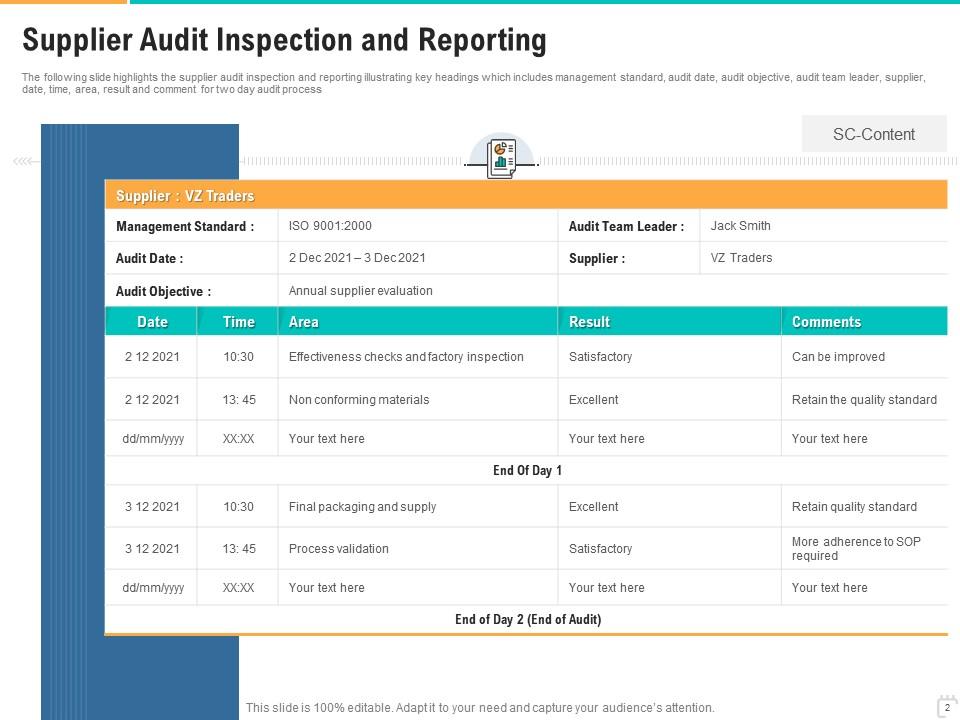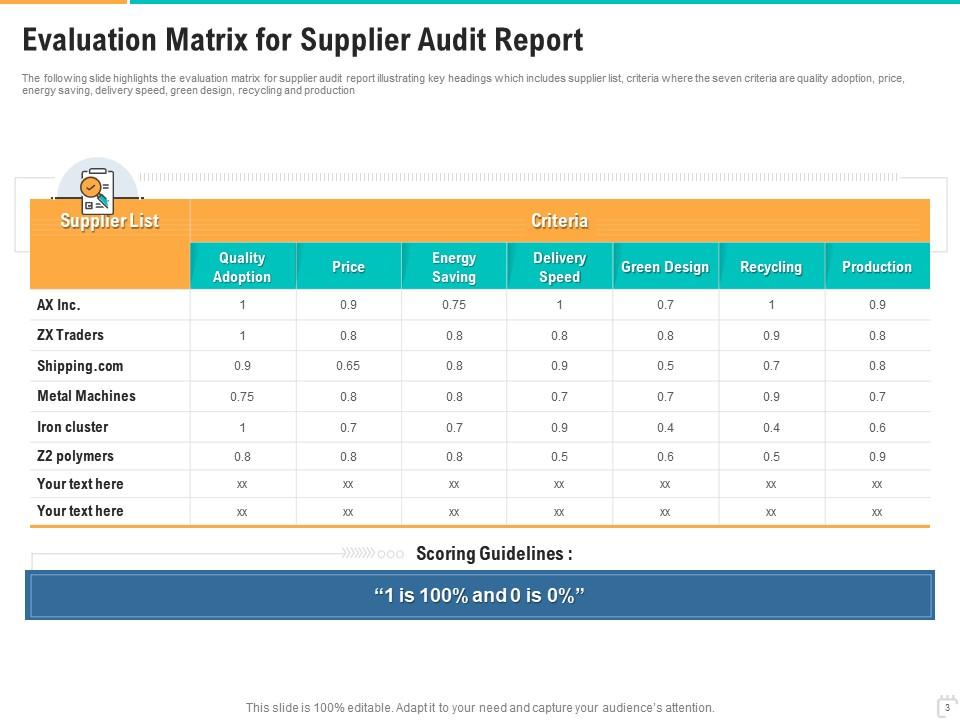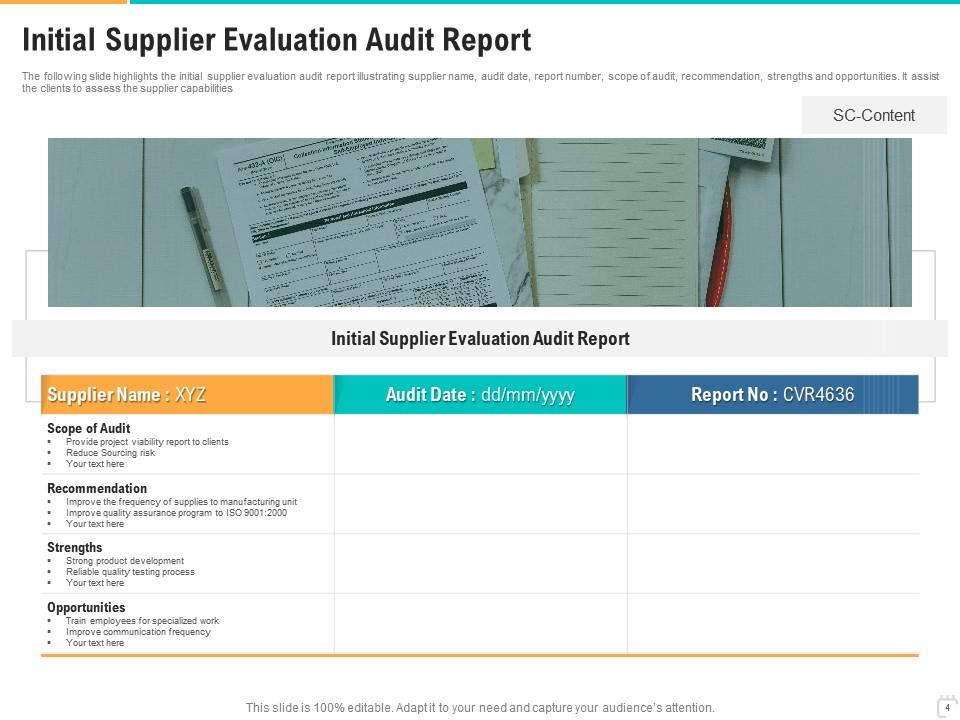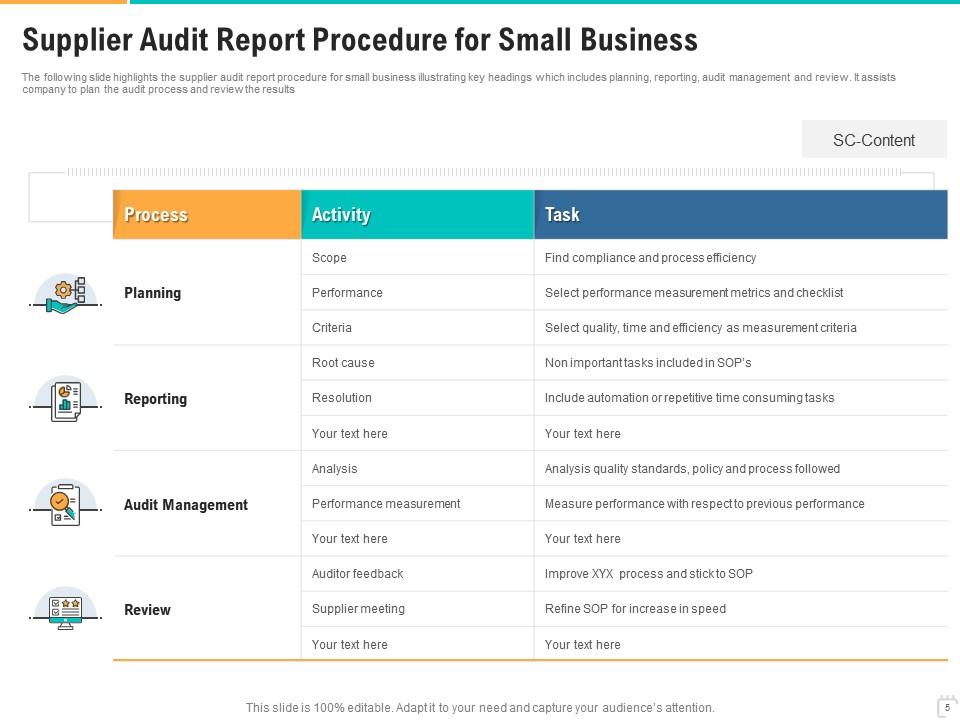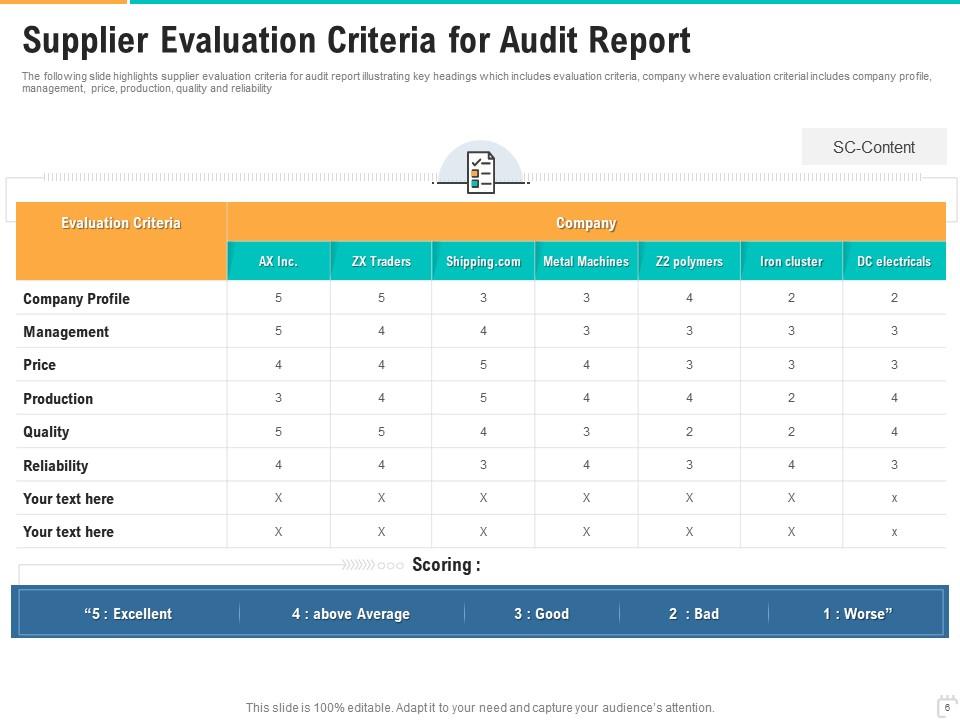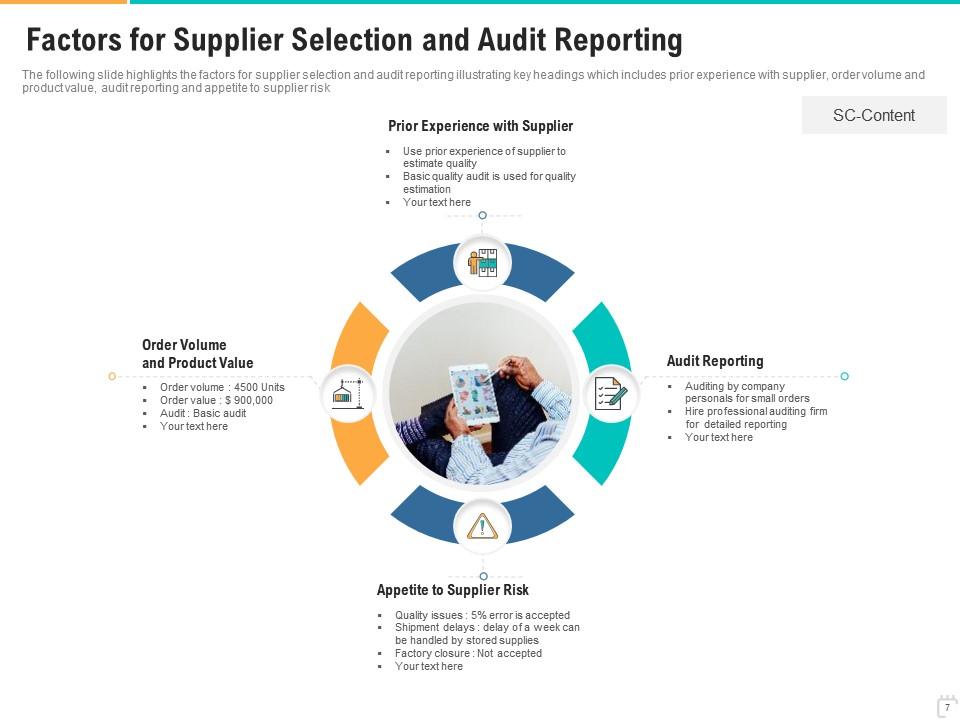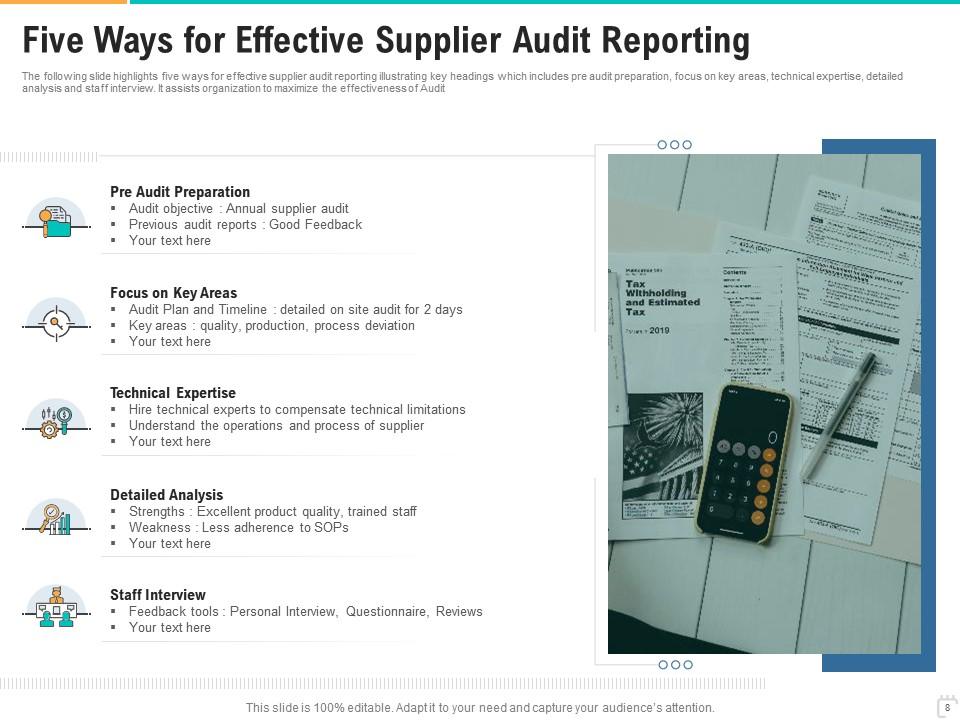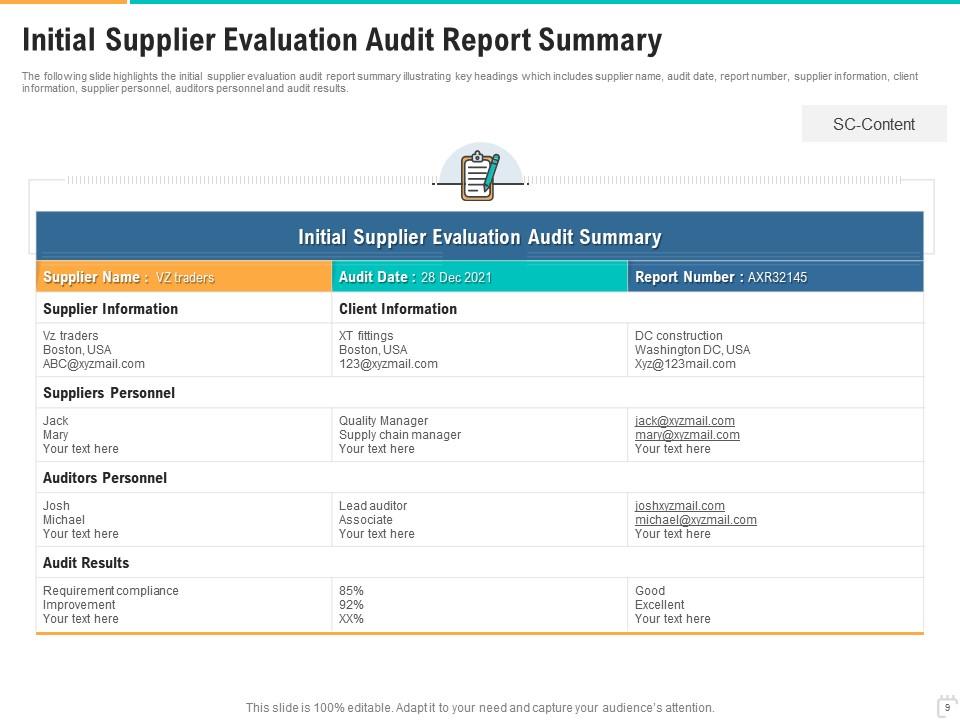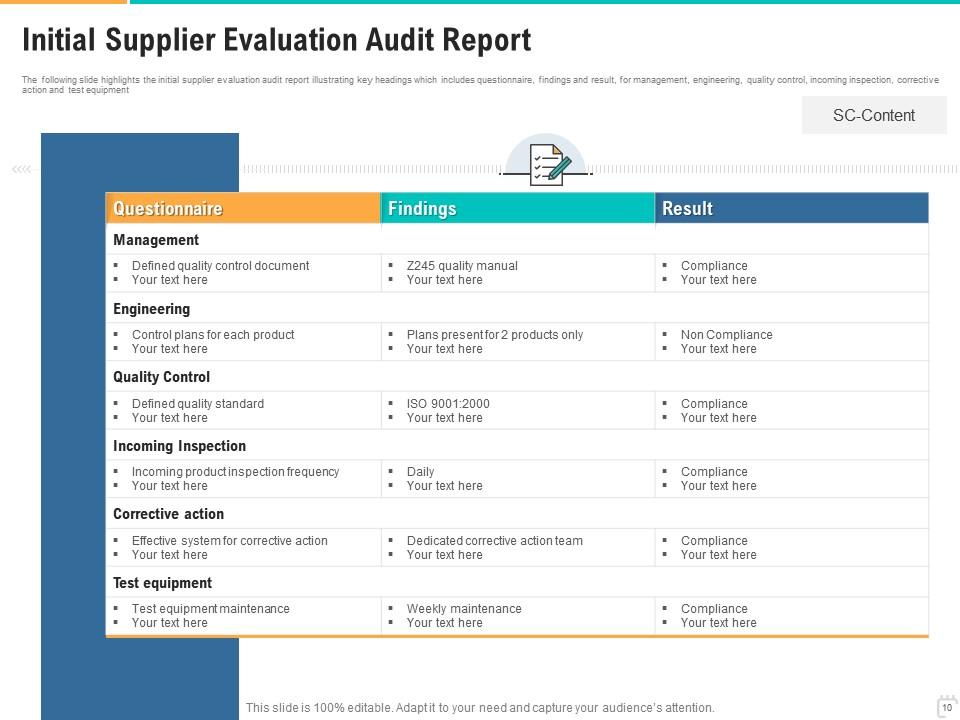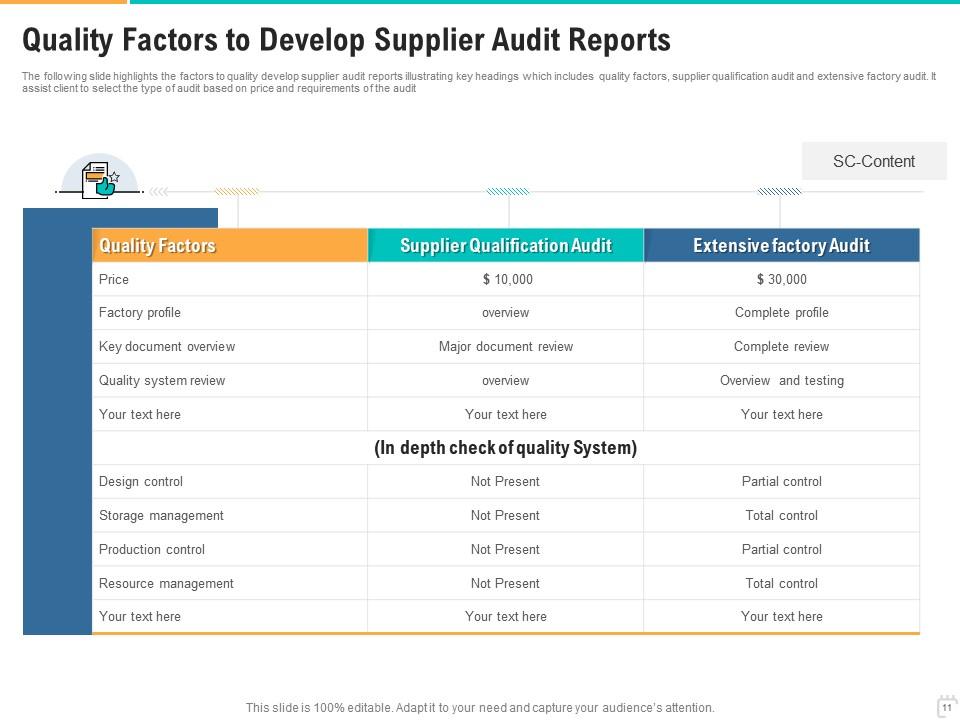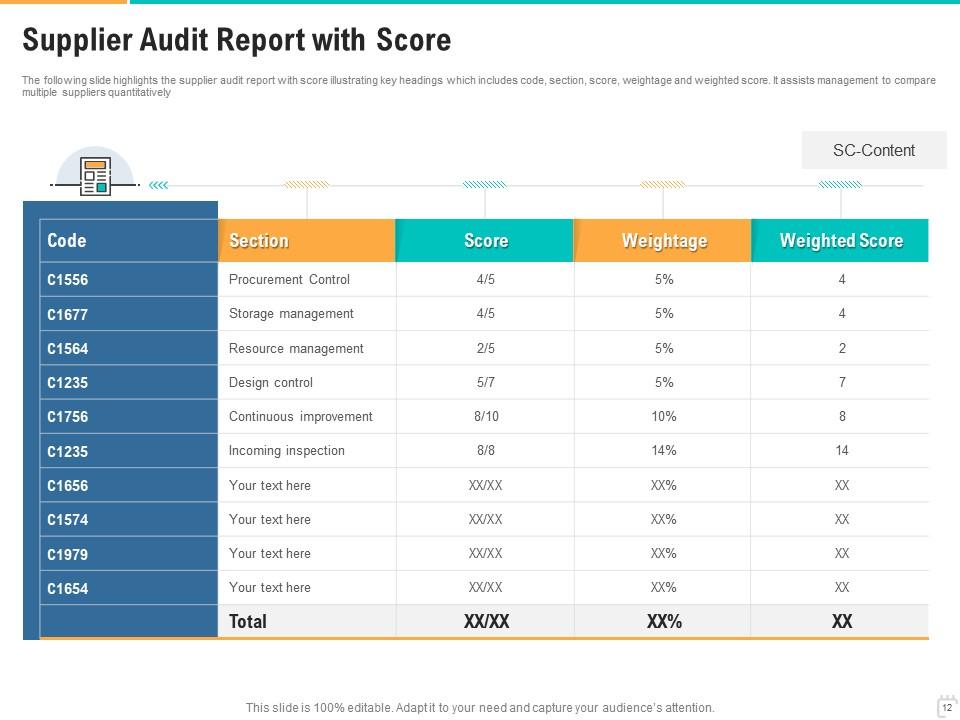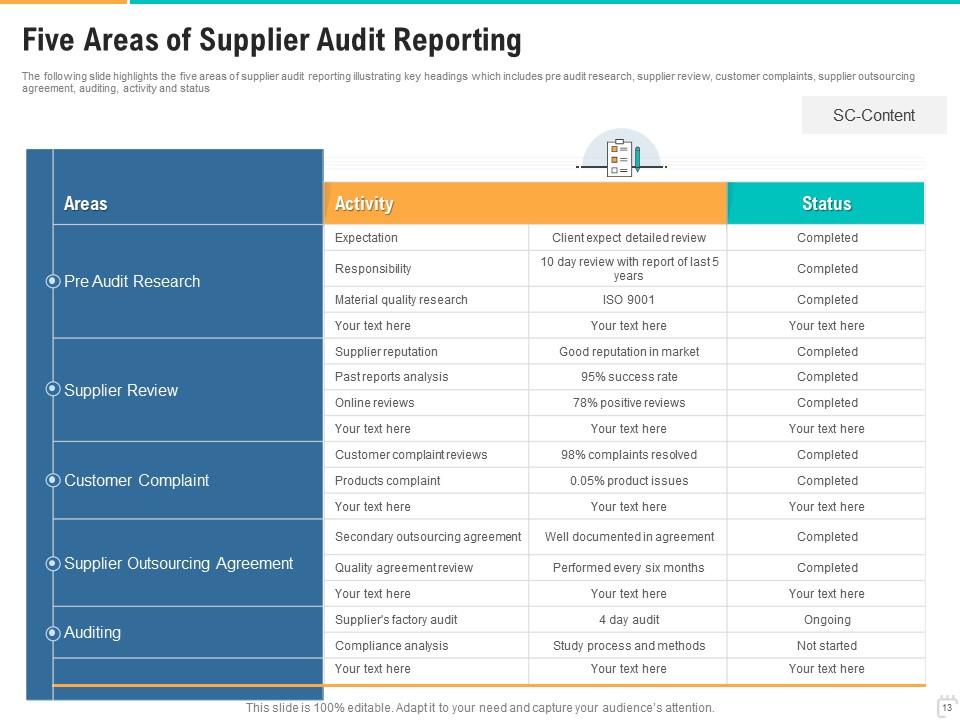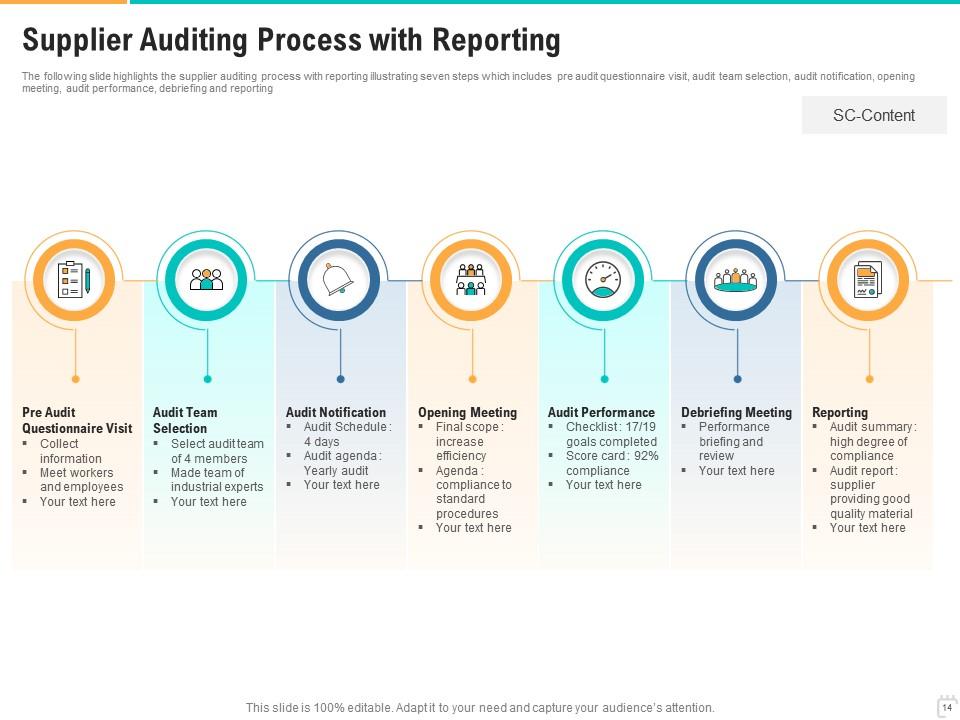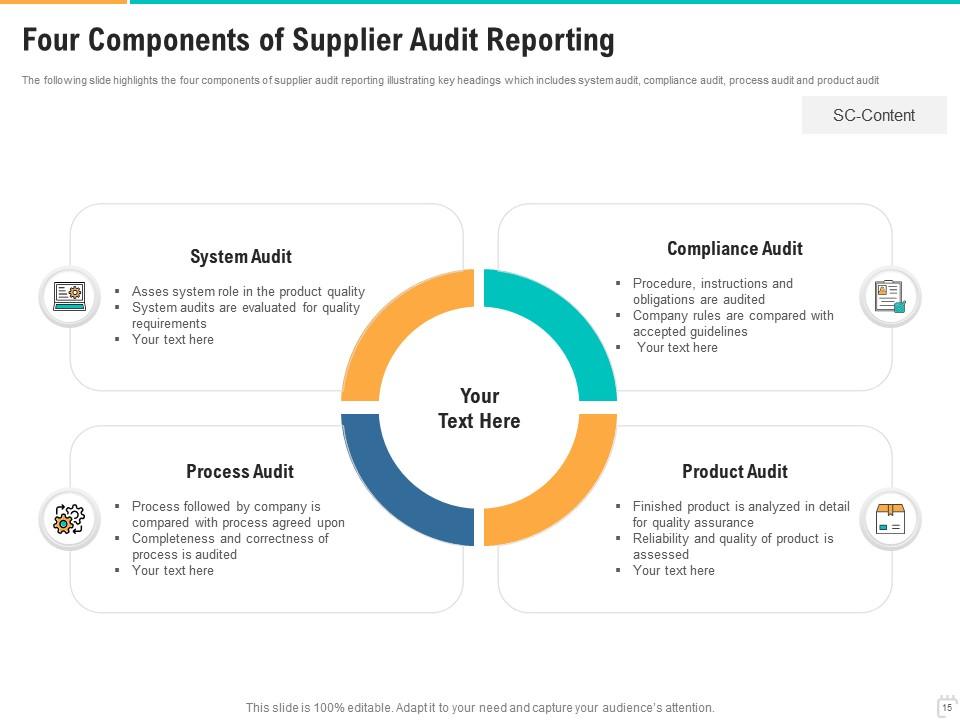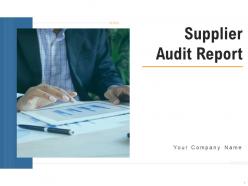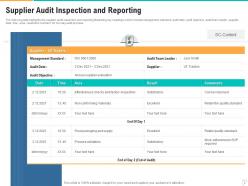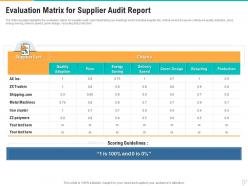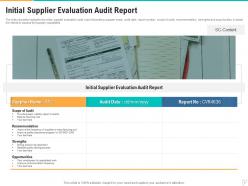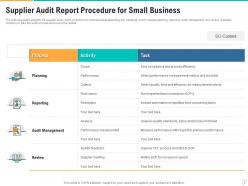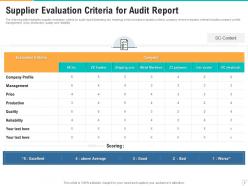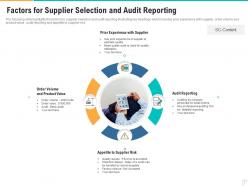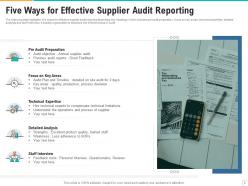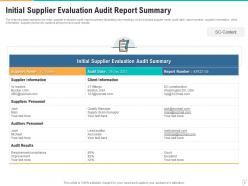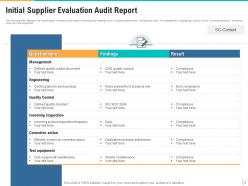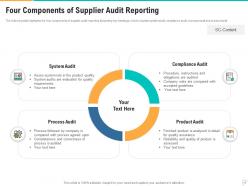
Supplier audit report powerpoint ppt template bundles
Try Before you Buy Download Free Sample Product
Audience
Editable
of Time
Our Supplier Audit Report Powerpoint PPT Template Bundles are topically designed to provide an attractive backdrop to any subject. Use them to look like a presentation pro.
People who downloaded this PowerPoint presentation also viewed the following :
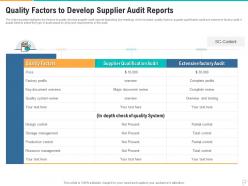
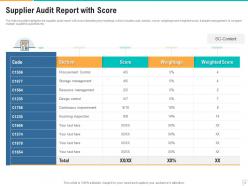
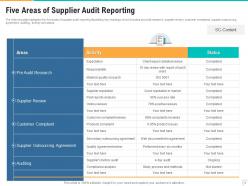
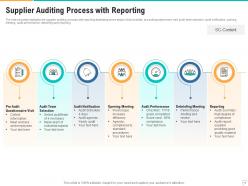
Supplier audit report powerpoint ppt template bundles with all 19 slides:
Use our Supplier Audit Report Powerpoint PPT Template Bundles to effectively help you save your valuable time. They are readymade to fit into any presentation structure.
FAQs for Supplier audit report powerpoint
Okay so for your supplier audit report, you'll want five main pieces. Executive summary first - hit the big issues and overall risk right up front. Next, break down your detailed findings by category like quality, compliance, financials, that kind of thing. Photos are your friend here, seriously saves so much back-and-forth later when people try to argue about what you found. Then do your risk ratings and spell out who's fixing what by when. Oh and don't forget follow-up dates for checking their progress. Bottom line - make it so clear that anyone can read it and know exactly what's broken and the timeline for fixes.
Look, you've gotta set clear expectations before the audit even happens - send suppliers detailed checklists covering all your regulatory stuff and company policies. I learned this the hard way when an audit completely fell apart because nobody knew what we were actually looking for. Document everything as you go and jump on any issues right away. Short deadlines work better than long ones, trust me. Don't just call out problems though - actually help suppliers fix them. Schedule your follow-ups before you leave. Being thorough doesn't mean being a jerk about it.
Honestly, I'd stick to 5-7 metrics that actually move the needle for your business. On-time delivery and quality scores are obvious ones - defect rates, returns, that stuff. Cost performance matters too, but here's what people miss: response time when things go wrong. That can make or break you way more than a slightly cheaper price. Financial stability of your suppliers is huge if you're in it for the long haul. Sustainability metrics too, depending on your industry. The key thing? Don't track everything just because you can. Start with what directly hits your customers and work backwards. I learned that the hard way - used to have spreadsheets tracking like 15 different things and it was just noise.
Honestly, most suppliers need audits once a year, but it totally depends on how risky they are. New guys always get checked within 6 months - that's non-negotiable. Your problem suppliers? Hit them every 3-6 months until they get their act together. The ones you've worked with forever and trust completely can probably go 18-24 months between audits. Critical suppliers stay annual no matter what though. Build yourself a risk matrix to figure out who goes where - way better than winging it every time. Oh, and anything supporting essential ops stays on that yearly schedule regardless.
Honestly, the access thing is brutal - suppliers just don't want to let you in or share their data. Plus these audits eat up so much time and you need people who actually know what they're doing. Language barriers make everything harder, and coordinating across time zones? Forget about it. Your standards better be clear as day or you'll get wildly different results. I learned this the hard way, but seriously - start building relationships with suppliers way before you need them. Having a good framework set up first will save you major headaches down the road.
Honestly, tech makes supplier audits way less painful. Mobile apps let your auditors snap photos and take notes right on-site - bye bye lost paperwork! You can automate the boring stuff like data collection and risk scoring. AI will actually flag sketchy suppliers by spotting patterns you might miss. The real game-changer though? Having automated workflows handle follow-ups and keep everything organized in one system. My friend's company saved like 40% of their admin time this way. Instead of drowning in paperwork, you'll actually have time to analyze what matters and make better decisions about your suppliers.
Honestly, risk assessment is like the foundation of your whole supplier audit - it's what decides who gets the deep dive treatment. You're using it to spot the sketchy stuff: shaky finances, compliance red flags, operational weak spots that could mess up your supply chain. Think of it as triage for suppliers. High-risk ones get the full interrogation while the stable guys get a lighter touch. Document your methodology clearly though, because you'll need to explain to management why you're spending three weeks auditing Bob's Widget Company instead of just checking their paperwork. It drives everything - your scope, testing procedures, the works.
So I always structure my audit reports with the usual suspects - critical, major, minor non-conformances. Photos are your best friend here, plus specific evidence for each finding. Don't forget timelines and corrective actions for everything. Here's what works: run the draft by your audit team first because they'll catch stuff you totally missed. Then do a quick executive summary for stakeholders before hitting them with the full report. The supplier gets their copy with a formal CAP request - usually give them like 30 days or whatever you agreed on. Oh, and definitely follow up later to see if they actually did anything about it.
Don't just dump problems on them - turn it into a team effort. I always start with a debrief meeting covering what they're doing right AND what needs work. Then we build action plans together with dates that actually make sense. Monthly check-ins are huge for keeping momentum going. Most suppliers really do want the help, which surprised me at first! Share resources or connect them with other suppliers who've been there. Oh, and definitely celebrate when they hit their goals - that stuff matters more than you think. Makes them feel like partners instead of just another vendor getting nitpicked.
Track your costs first - audit expenses vs. what you actually save. The savings come from catching issues early, avoiding penalties, better contract terms, that kind of stuff. Honestly, the hardest part is putting a dollar amount on prevented problems, but you can estimate what disasters you avoided. I'd look at supplier incidents dropping, quality scores improving, better compliance - give it 12-18 months to really see results. Document your baseline costs before you start auditing, then check quarterly. It's way easier to prove ROI when you've got those before/after numbers sitting there.
Figure out what industry your supplier's in first - that's gonna determine everything. FDA rules hit food and pharma companies hard. Manufacturing? They're dealing with ISO standards. Financial services have SOX breathing down their necks. Healthcare suppliers get slammed with HIPAA requirements (honestly, healthcare compliance is brutal). Automotive has TS 16949 - they really do love their acronyms, don't they? Chemical or waste handling means EPA standards too. Map this stuff out before you start auditing or you'll be playing catch-up the whole time. Build your checklist around their specific industry.
Oh man, cultural differences will totally throw you off if you're not ready for them. Some cultures are super indirect about problems - they'll hint around issues instead of just saying "hey, this is broken." Others are brutally honest, which can be jarring. You'll see different documentation styles, weird (to you) hierarchy stuff, and business practices that seem odd but aren't actually wrong. Honestly, the biggest game-changer is getting your team some cultural training first and bringing local interpreters when you can. Otherwise you'll flag normal cultural stuff as compliance issues and miss the real problems.
Start with the basics - audit methods, risk assessment, documentation stuff. Get trained in whatever industries you'll be auditing (manufacturing, food, whatever). Communication skills are honestly the hardest part because you're essentially investigating people while trying not to piss them off. Learn the regulatory side too - ISO standards and industry regs. Most places want certification through ASQ or similar programs. Oh, and definitely shadow someone experienced first if you can. I learned way more in a week doing that than from any training manual tbh.
Honestly, you need way more detail in those audit reports. Don't just tick compliance boxes - document the actual mess you find at supplier sites. Photos help tons, trust me. Be brutally honest about red flags, even if it's uncomfortable. Sugar-coating screws everyone over later. Get those findings to stakeholders beyond just procurement people so they see what's really happening upstream. Oh, and create some standard templates that capture both hard data and your gut observations. Start adding specific examples to your next report - it'll paint a much clearer picture than those useless generic ratings everyone ignores anyway.
Document everything that's wrong and send them a formal request to fix it. Give them 30-60 days depending on how bad the issues are. Companies love to freak out and immediately dump suppliers, but honestly that's way too dramatic unless there's some major compliance nightmare happening. Set up another audit after their deadline to see if they actually did anything. Still not up to standards? Then yeah, time to find someone new. Look, everyone deserves one real shot at getting their act together before you show them the door.
-
Innovative and attractive designs.
-
Visually stunning presentation, love the content.