


Supply Chain Planning And Management Strategies Powerpoint Presentation Slides
Supply planning is the main component of supply chain management that fulfills the changing demand requirements. The main focus is to create a balance between demand and supply. Grab our insightfully designed template on Supply Chain Planning and Management Strategies. It highlights the problems related to orders received, low order value, and late delivery, and it also talks about the companys operations and the areas that need improvement. This Module emphasizes the need for accurate supply planning in the organization. Going forward, it covers different supply chain planning models continuous flow model and custom configured model. The PPT mainly focuses on the planning of the supply chain for smooth functioning, including forecast demand planning, global distribution planning with activities, and the role of distribution centers. Shed some light on aggregate planning, SandOP, operations, time planning, return management, and real time planning for the supply chain by utilizing this professionally designed PowerPoint template. Moreover, this deck also covers the challenges and mitigation strategies while implementing the plan. The need for performance assessment is important, so we have covered supply planning performance assessment along with revenue and profit estimation. Lastly, it covers a dashboard that highlights the Compliance Stats, Procurement Time, and fleet status in the form of bar graphs and pie charts. Get access to our supply chain management ppt now.
Supply planning is the main component of supply chain management that fulfills the changing demand requirements. The main f..



















-

- Google Slides is a new FREE Presentation software from Google.
- All our content is 100% compatible with Google Slides.
- Just download our designs, and upload them to Google Slides and they will work automatically.
- Amaze your audience with SlideTeam and Google Slides.
-

Want Changes to This PPT Slide? Check out our Presentation Design Services
-

- WideScreen Aspect ratio is becoming a very popular format. When you download this product, the downloaded ZIP will contain this product in both standard and widescreen format.
-

- Some older products that we have may only be in standard format, but they can easily be converted to widescreen.
- To do this, please open the SlideTeam product in Powerpoint, and go to
- Design ( On the top bar) -> Page Setup -> and select "On-screen Show (16:9)” in the drop down for "Slides Sized for".
- The slide or theme will change to widescreen, and all graphics will adjust automatically. You can similarly convert our content to any other desired screen aspect ratio.
Compatible With Google Slides

Get This In WideScreen
You must be logged in to download this presentation.


Do you want to remove this product from your favourites?
PowerPoint presentation slides
Deliver this complete deck to your team members and other collaborators. Encompassed with stylized slides presenting various concepts, this Supply Chain Planning And Management Strategies Powerpoint Presentation Slides is the best tool you can utilize. Personalize its content and graphics to make it unique and thought-provoking. All the fifty eight slides are editable and modifiable, so feel free to adjust them to your business setting. The font, color, and other components also come in an editable format making this PPT design the best choice for your next presentation. So, download now.

People who downloaded this PowerPoint presentation also viewed the following :
Content of this Powerpoint Presentation
Slide 1: This slide displays the title Supply Chain Planning and Management Strategies.
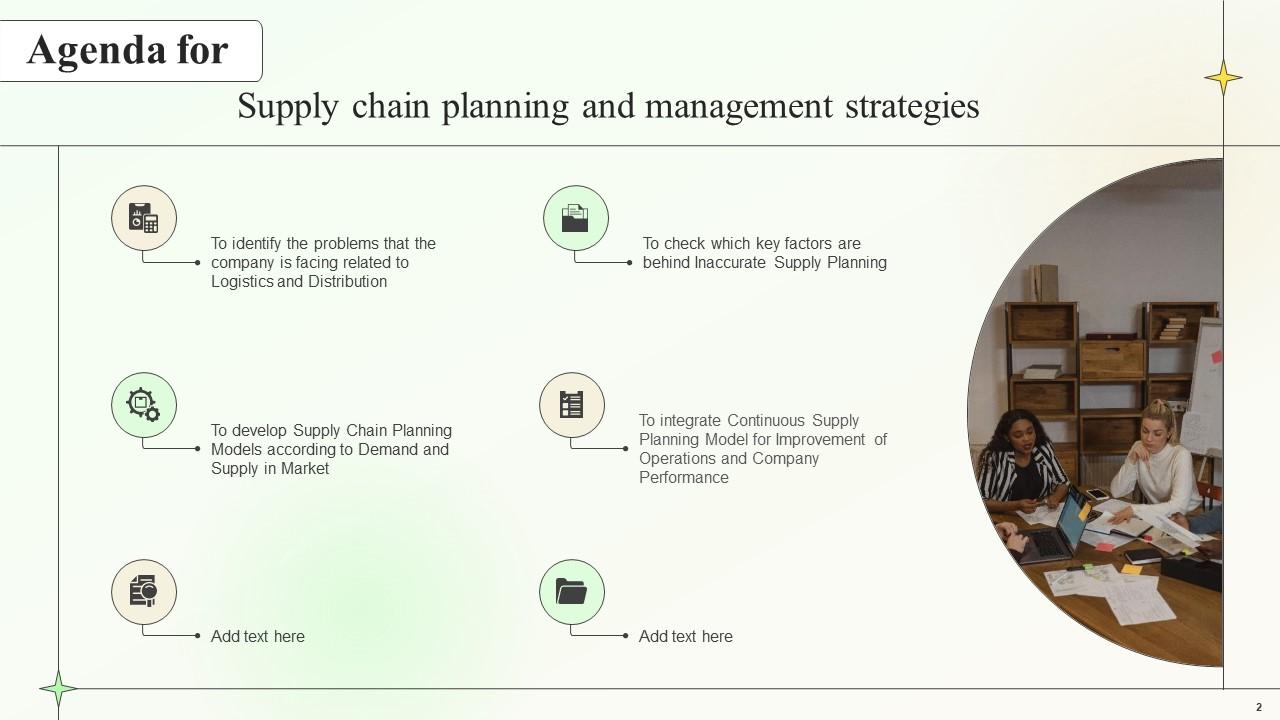
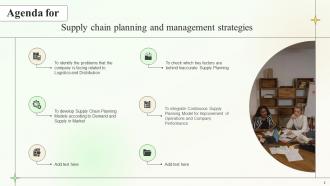
Slide 2: This slide displays the title Agenda.
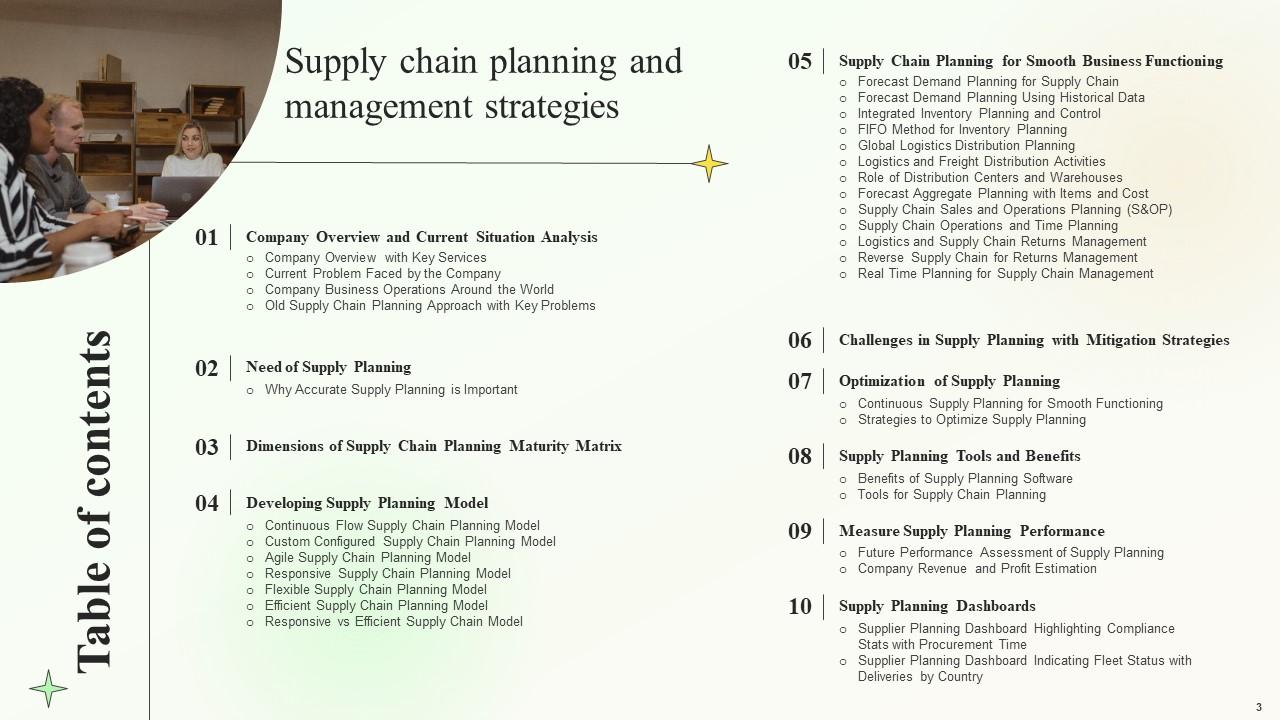
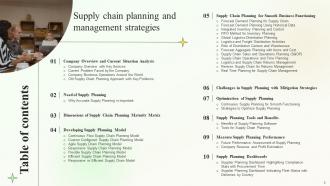
Slide 3: This slide exhibit table of content.
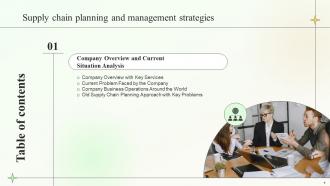
Slide 4: This slide exhibit table of content- Company Overview and Current Situation Analysis.
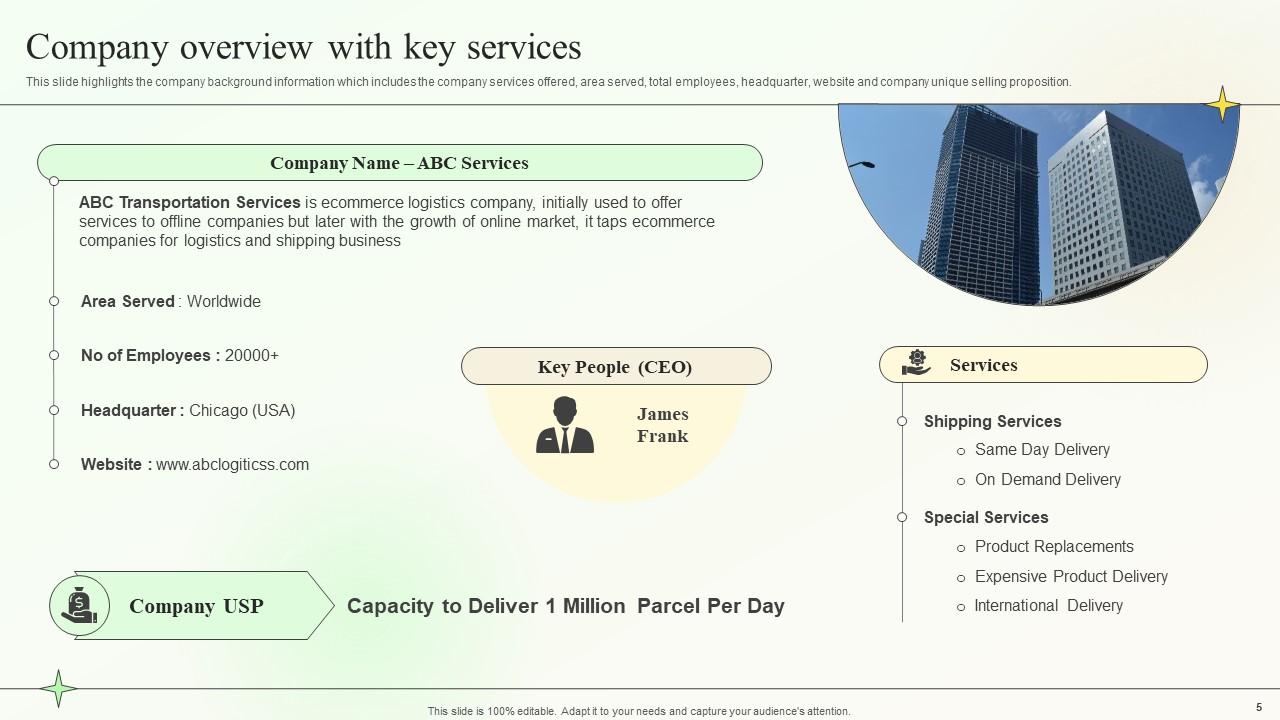
Slide 5: This slide highlights the company background information which includes the company services offered, area served, total employees, headquarter.
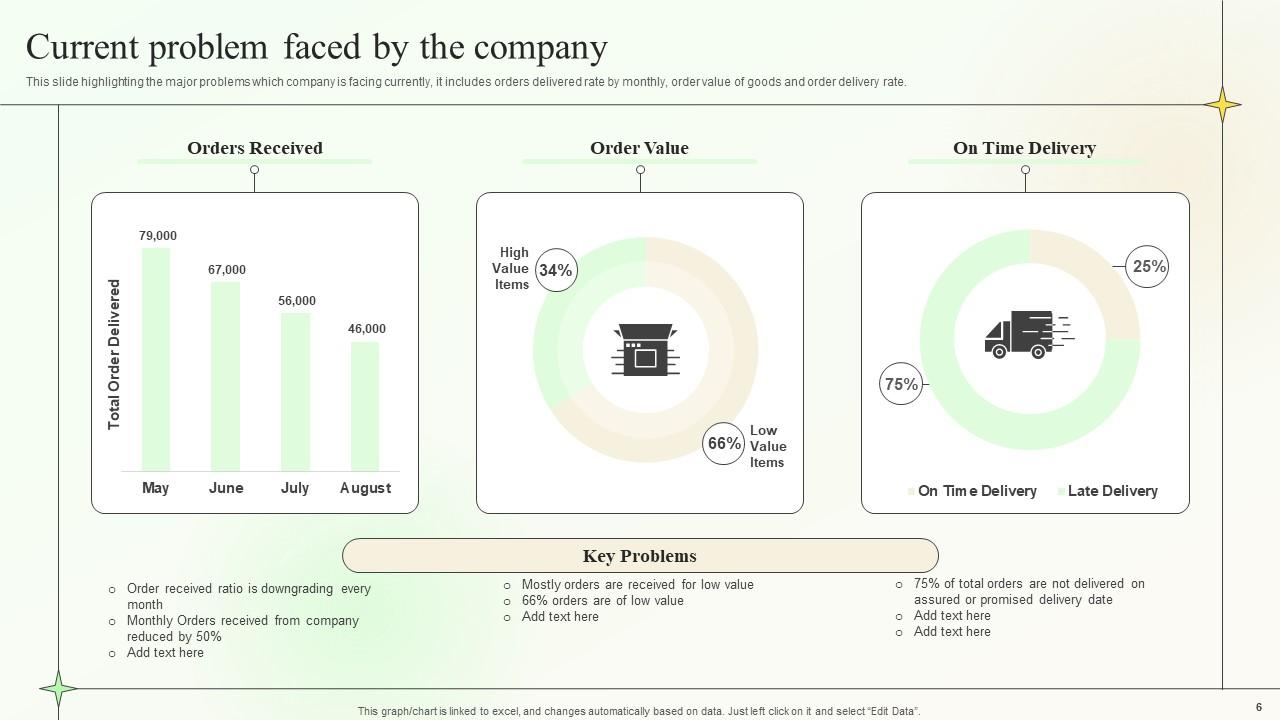
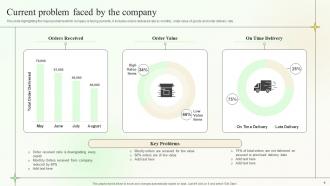
Slide 6: This slide highlighting the major problems which company is facing currently.
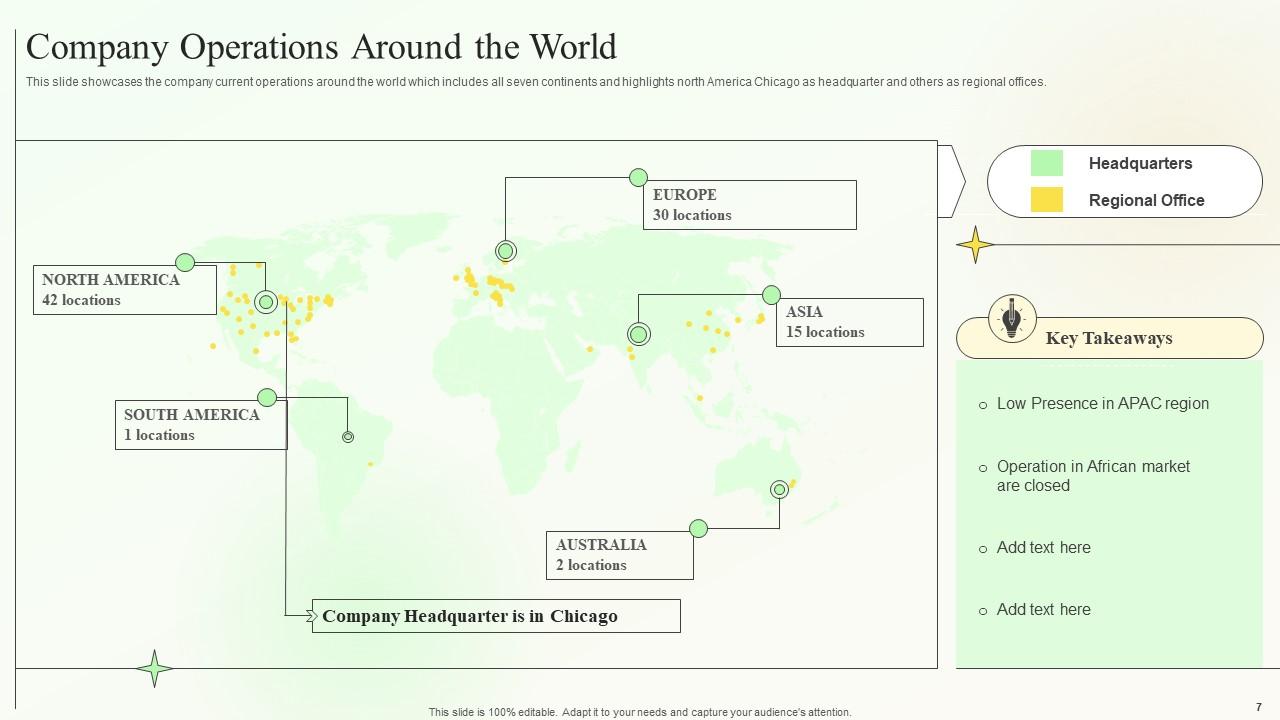
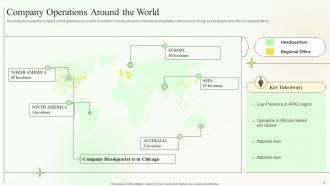
Slide 7: This slide showcases the company current operations around the world which includes all seven continents and highlights north America Chicago as headquarter.
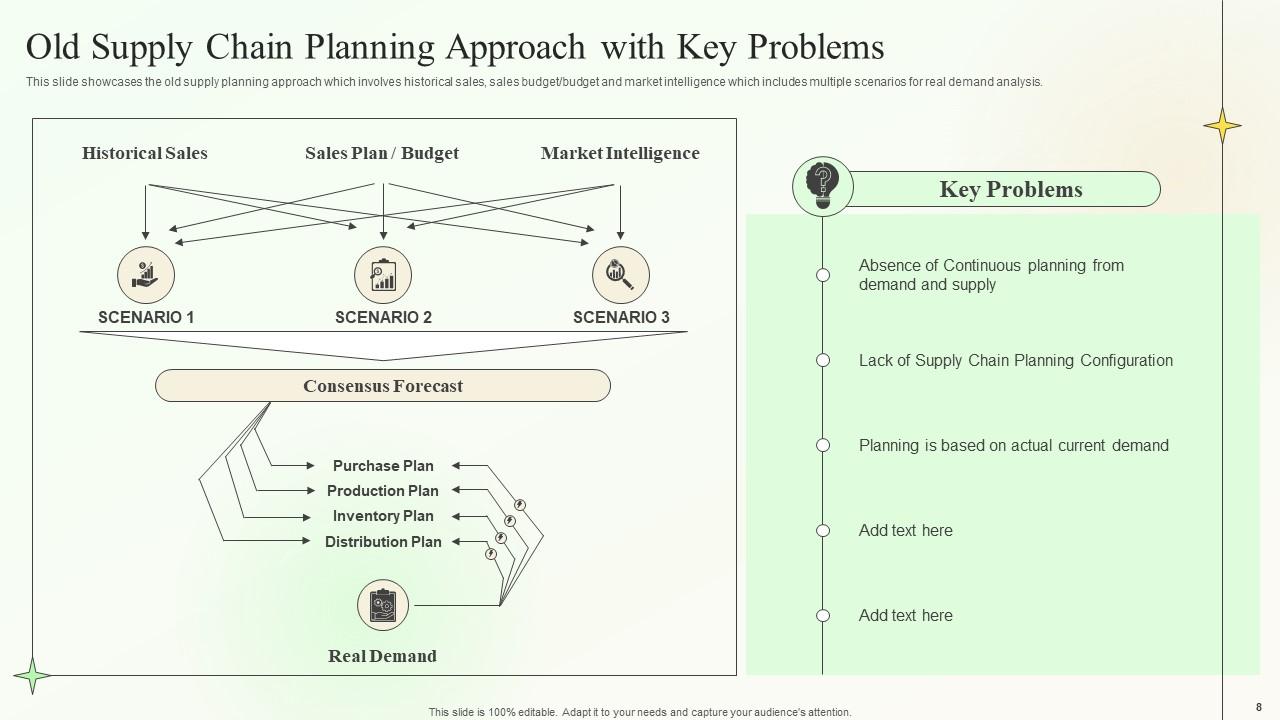
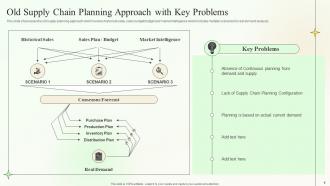
Slide 8: This slide showcases the old supply planning approach which involves historical sales, sales budget/budget and market intelligence.
Slide 9: This slide exhibit table of content- Need of Supply Planning.
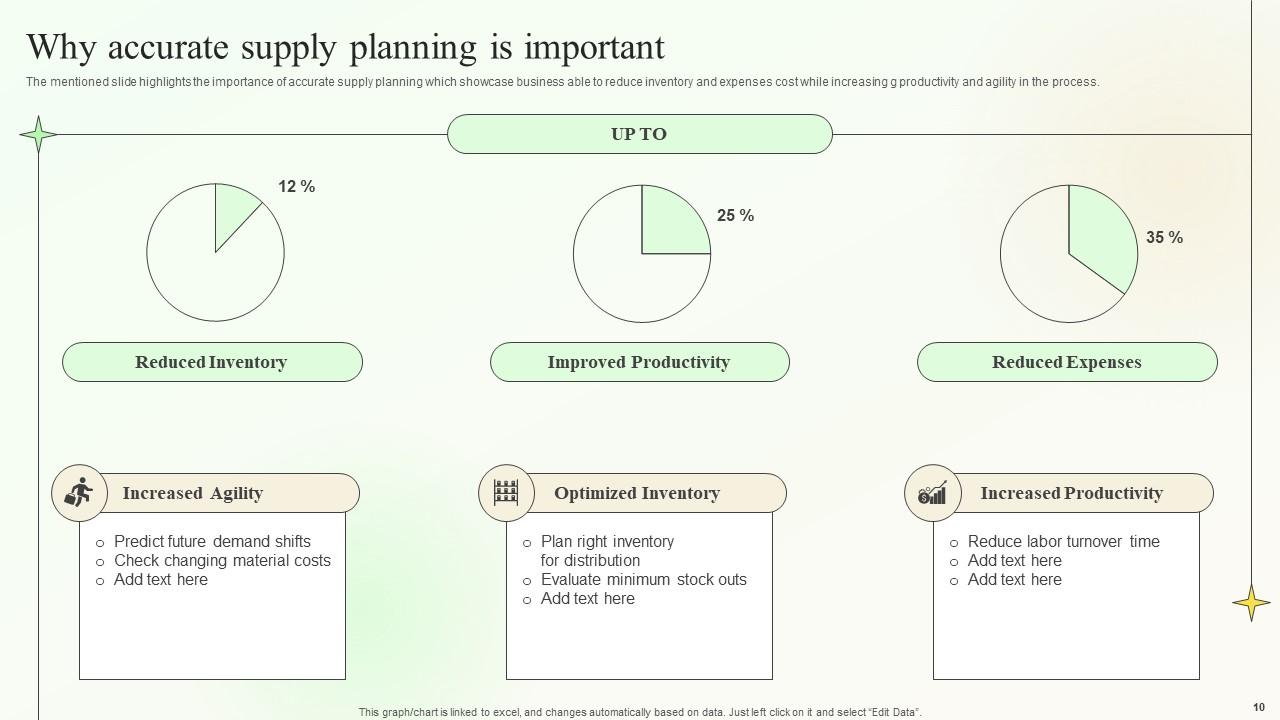
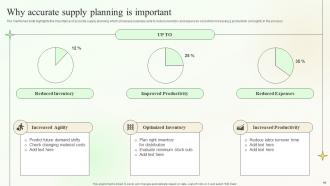
Slide 10: The mentioned slide highlights the importance of accurate supply planning which showcase business able to reduce inventory and expenses cost.
Slide 11: This slide exhibit table of content- Dimensions of Supply Chain Planning Maturity Matrix.
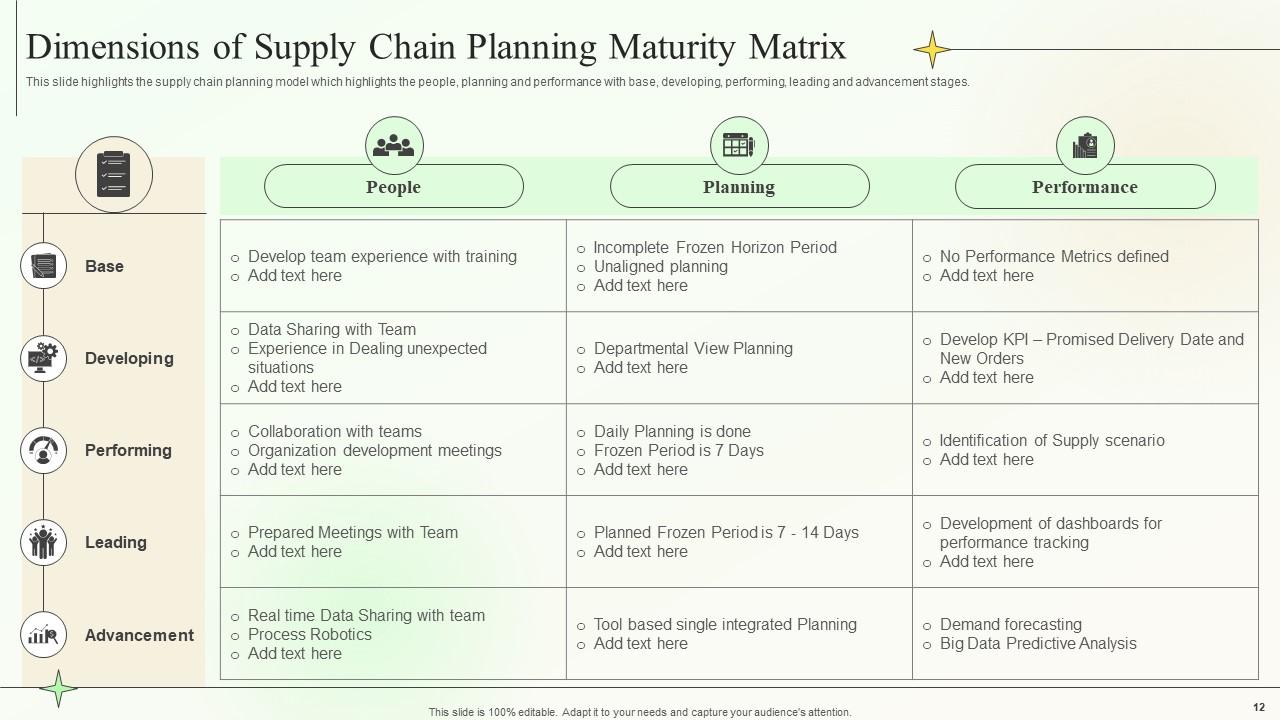
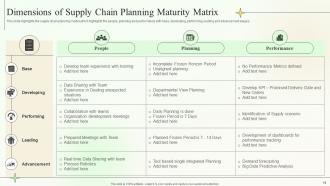
Slide 12: This slide highlights the supply chain planning model which highlights the people, planning and performance with base, developing, performing.
Slide 13: This slide exhibit table of content- Developing Supply Planning Model.
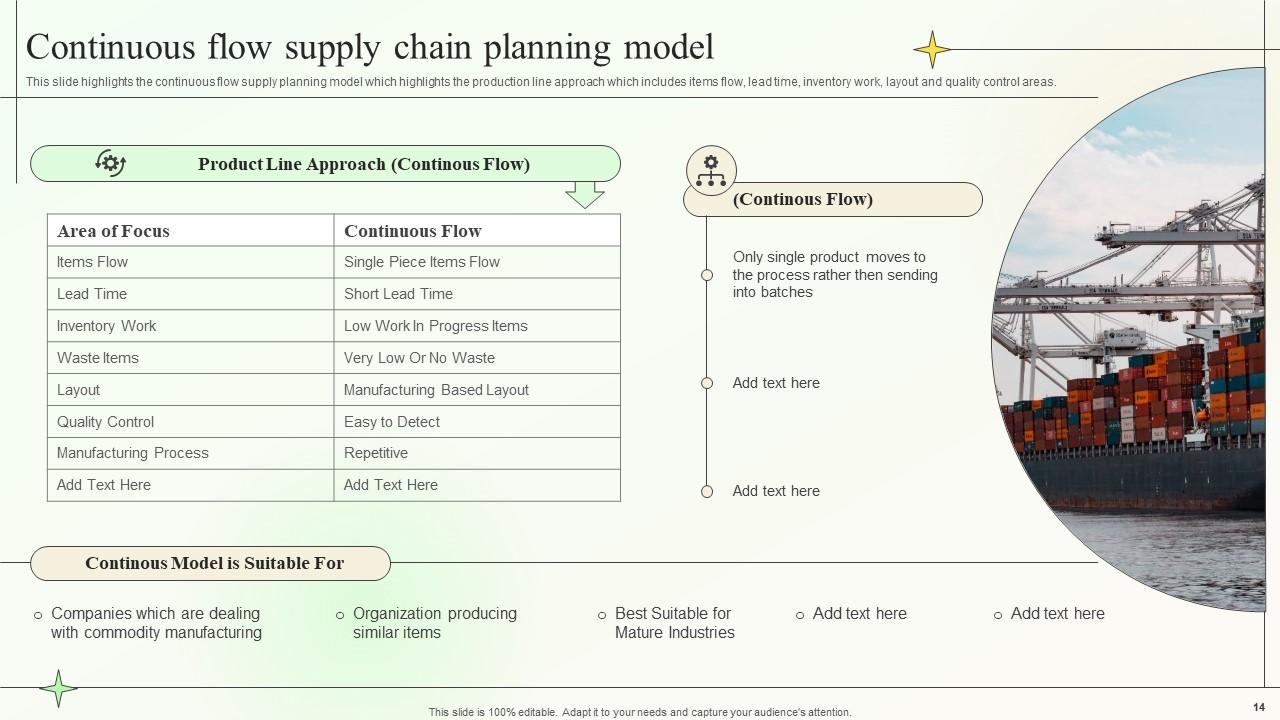
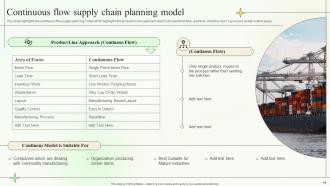
Slide 14: This slide highlights the continuous flow supply planning model which highlights the production line approach.
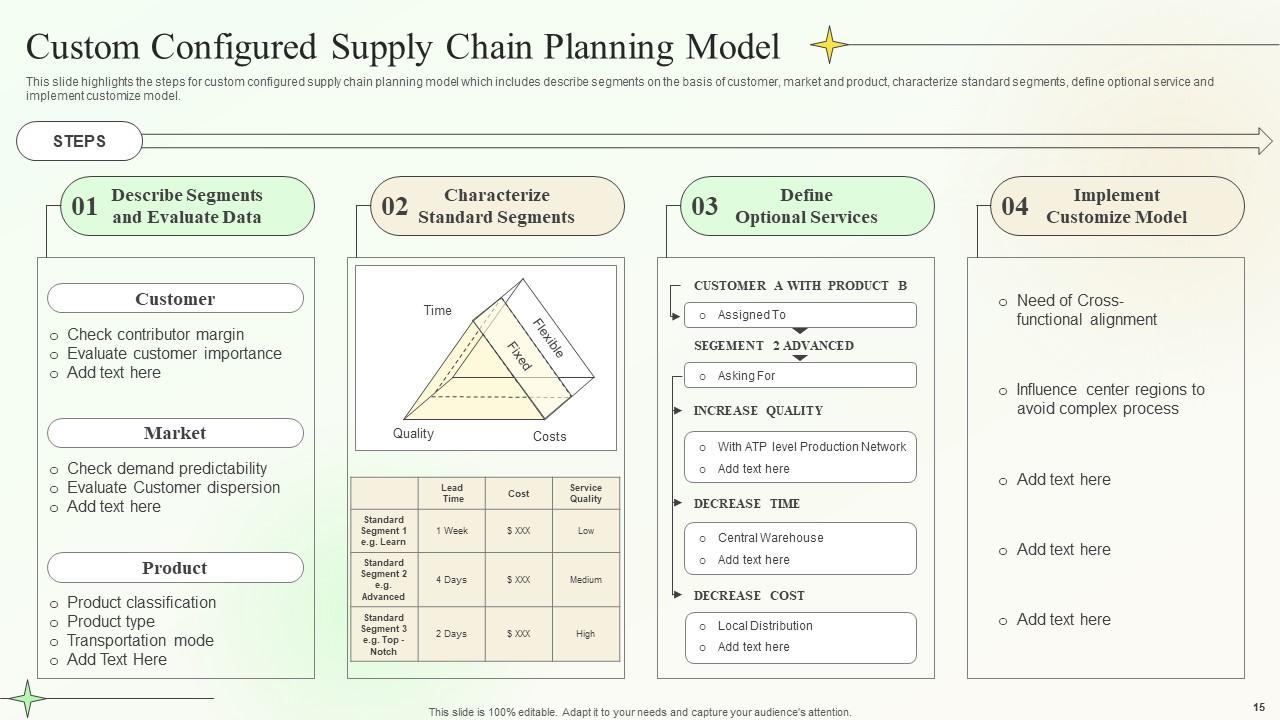
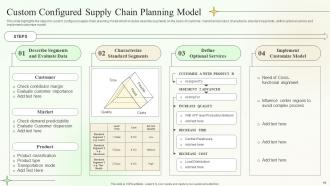
Slide 15: This slide highlights the steps for custom configured supply chain planning model.
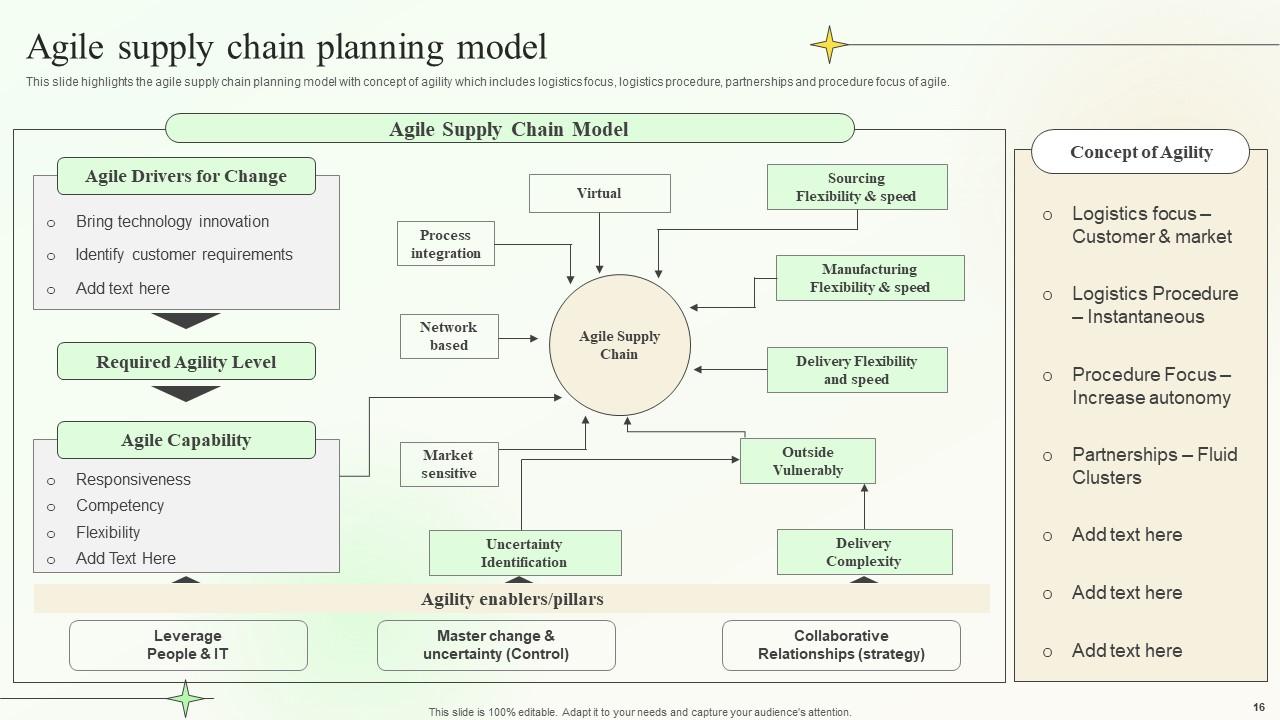
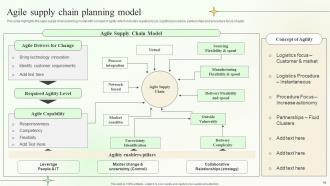
Slide 16: This slide highlights the agile supply chain planning model with concept of agility.
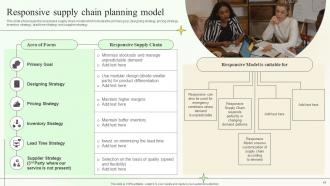
Slide 17: This slide showcases the responsive supply chain model which includes the primary goal, designing strategy, pricing strategy, inventory strategy.
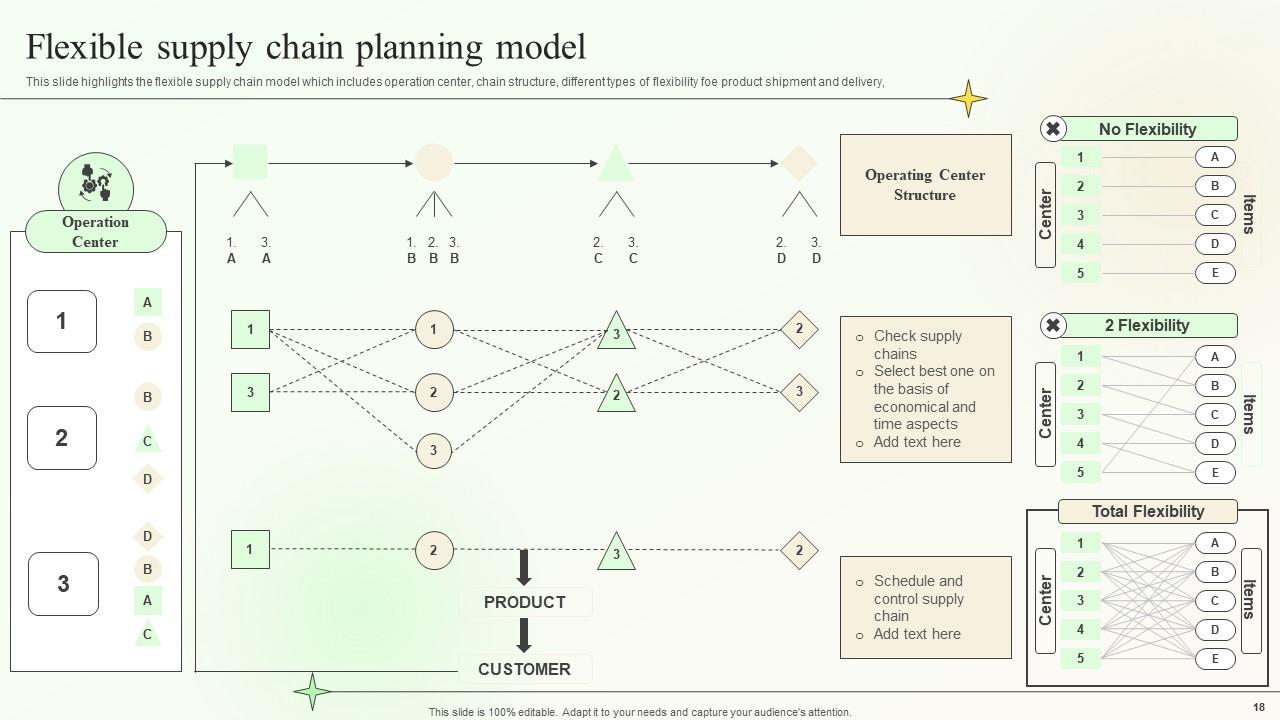
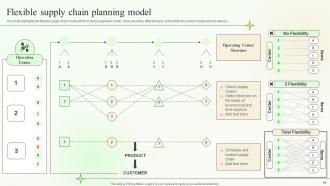
Slide 18: This slide highlights the flexible supply chain model which includes operation center, chain structure, different types of flexibility foe product shipment.
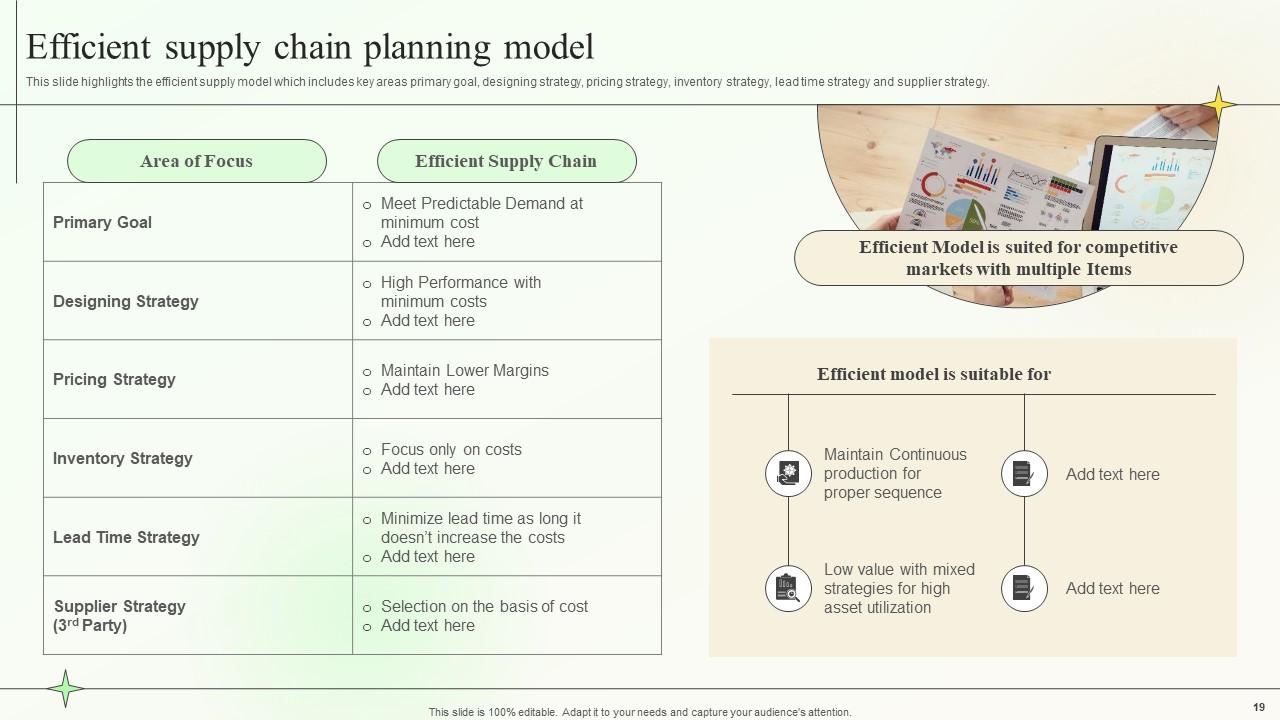
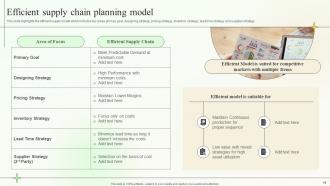
Slide 19: This slide highlights the efficient supply model which includes key areas primary goal, designing strategy, pricing strategy, inventory strategy.
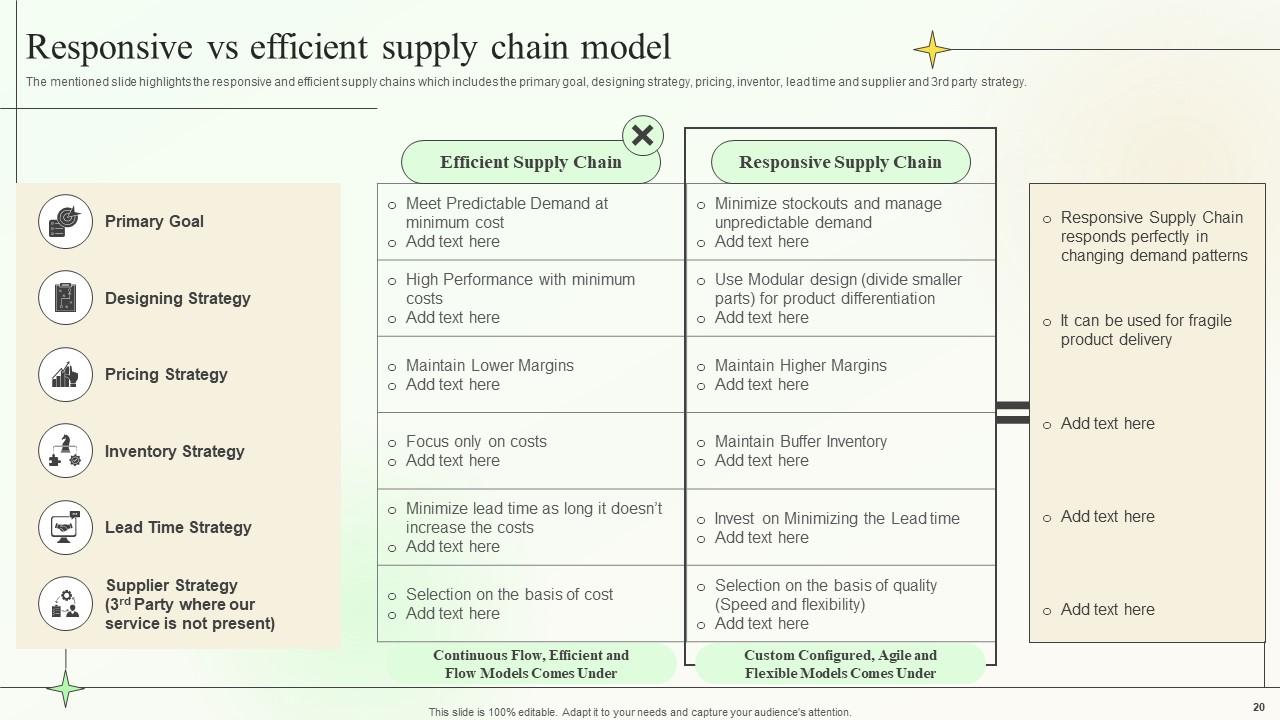
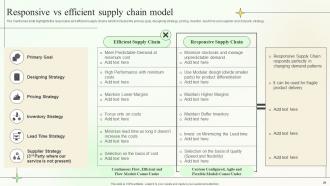
Slide 20: The mentioned slide highlights the responsive and efficient supply chains which includes the primary goal, designing strategy, pricing, inventor.
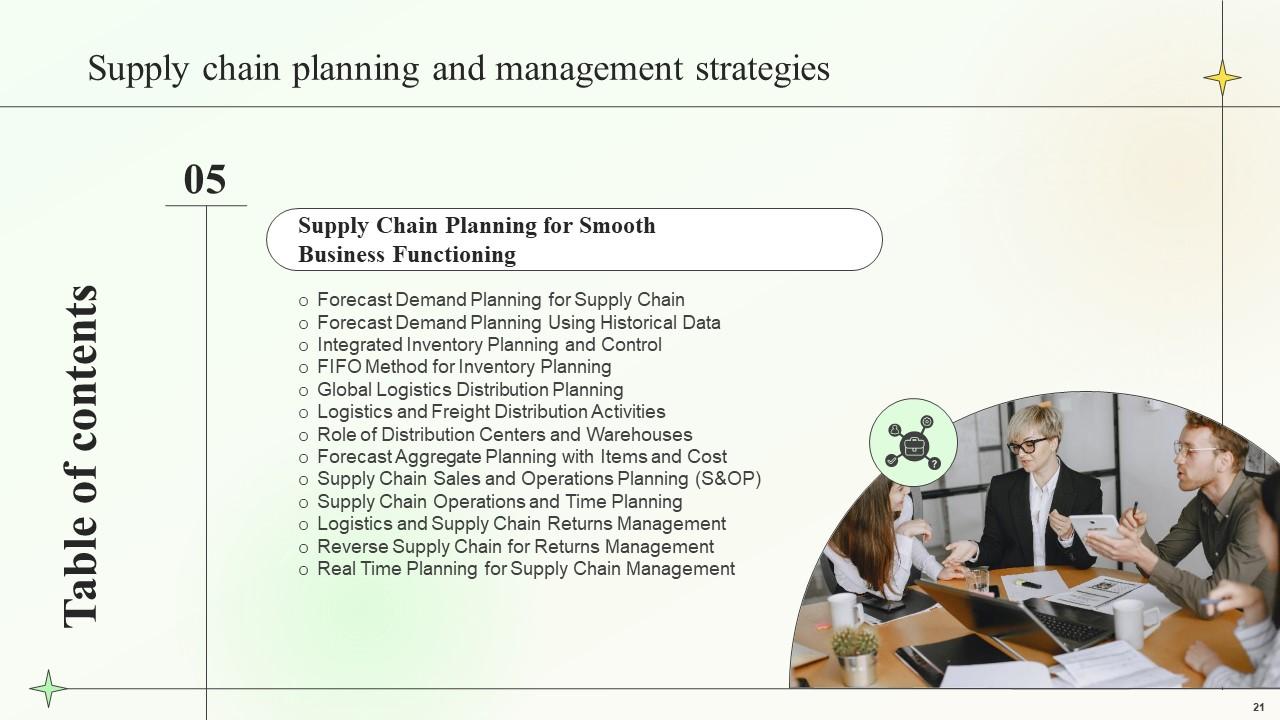
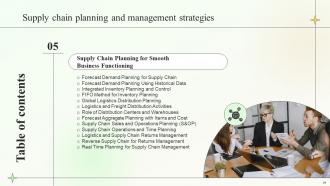
Slide 21: This slide exhibit table of content- Supply Chain Planning for Smooth Business Functioning.
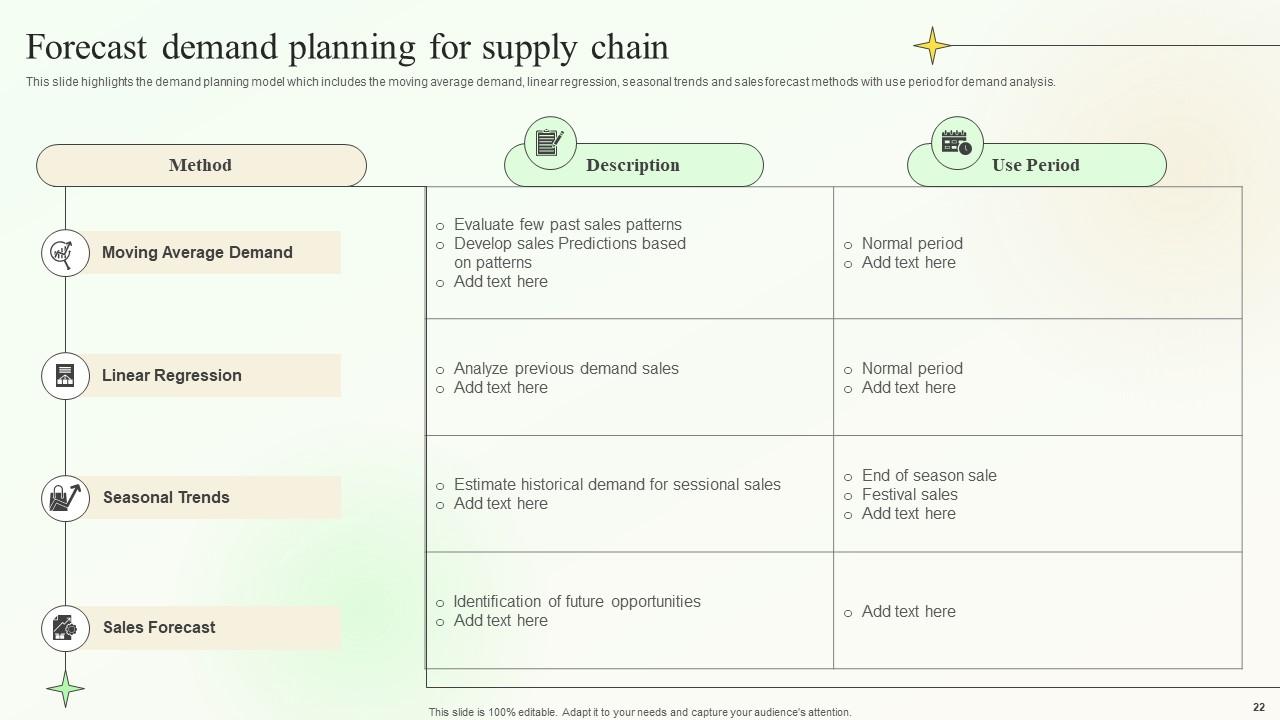
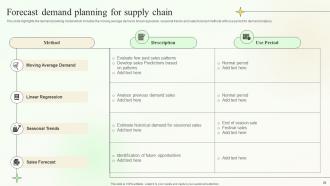
Slide 22: This slide highlights the demand planning model which includes the moving average demand, linear regression, seasonal trends and sales forecast methods.
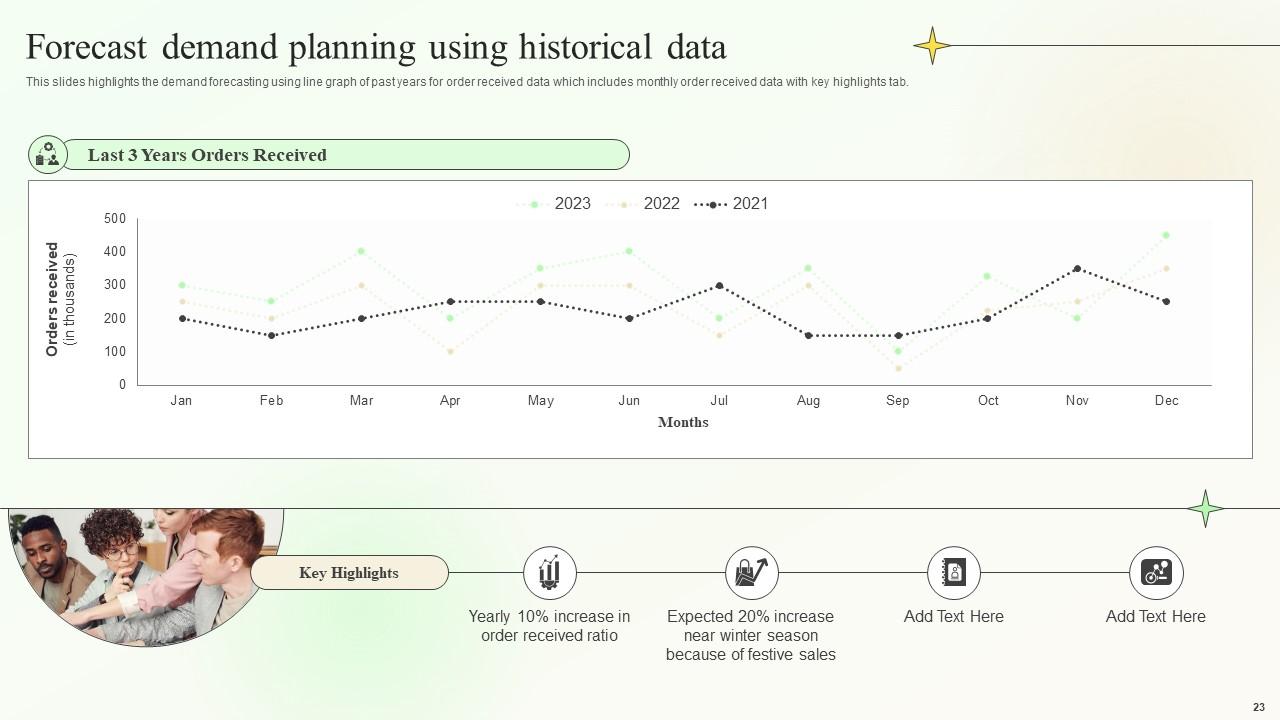
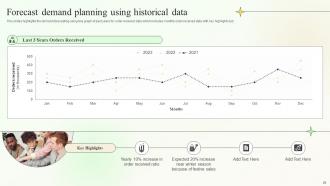
Slide 23: This slides highlights the demand forecasting using line graph of past years for order received data.
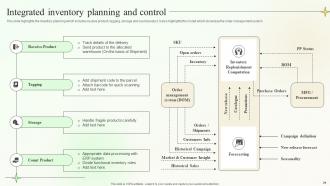
Slide 24: This slide highlights the inventory planning which includes receive product, tagging, storage and count product.
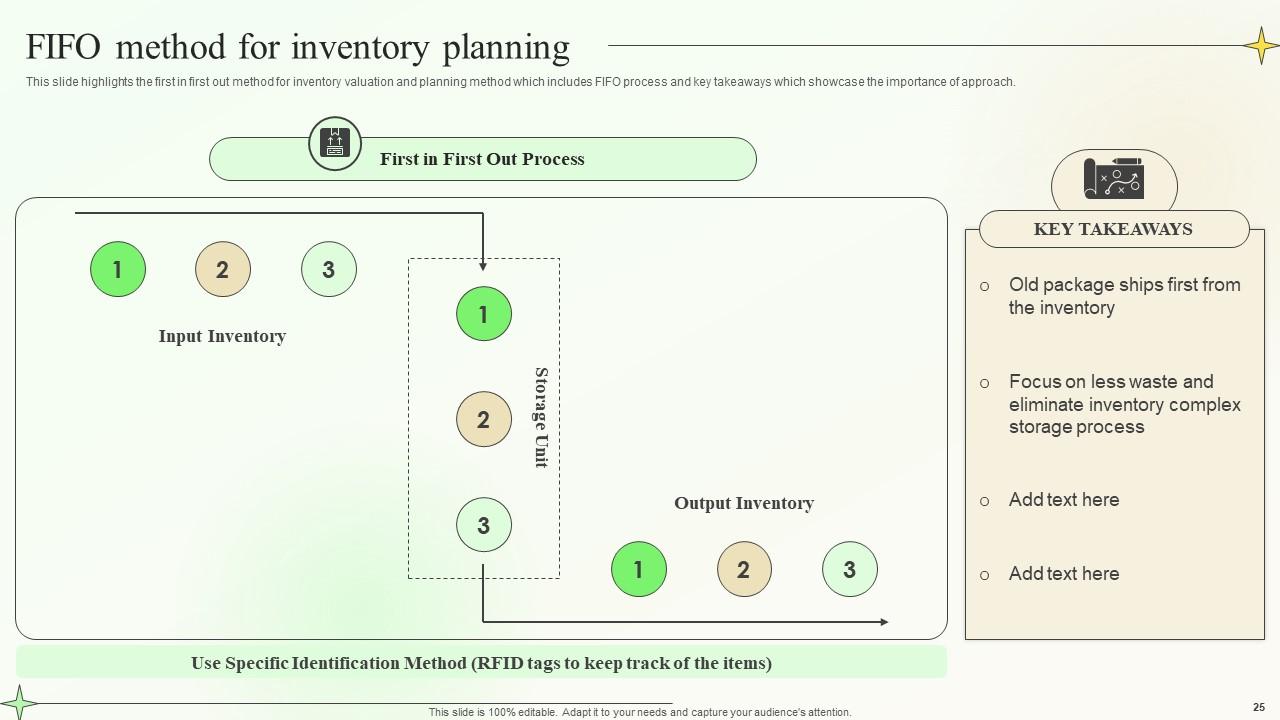
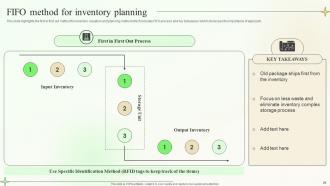
Slide 25: This slide highlights the first in first out method for inventory valuation and planning method.
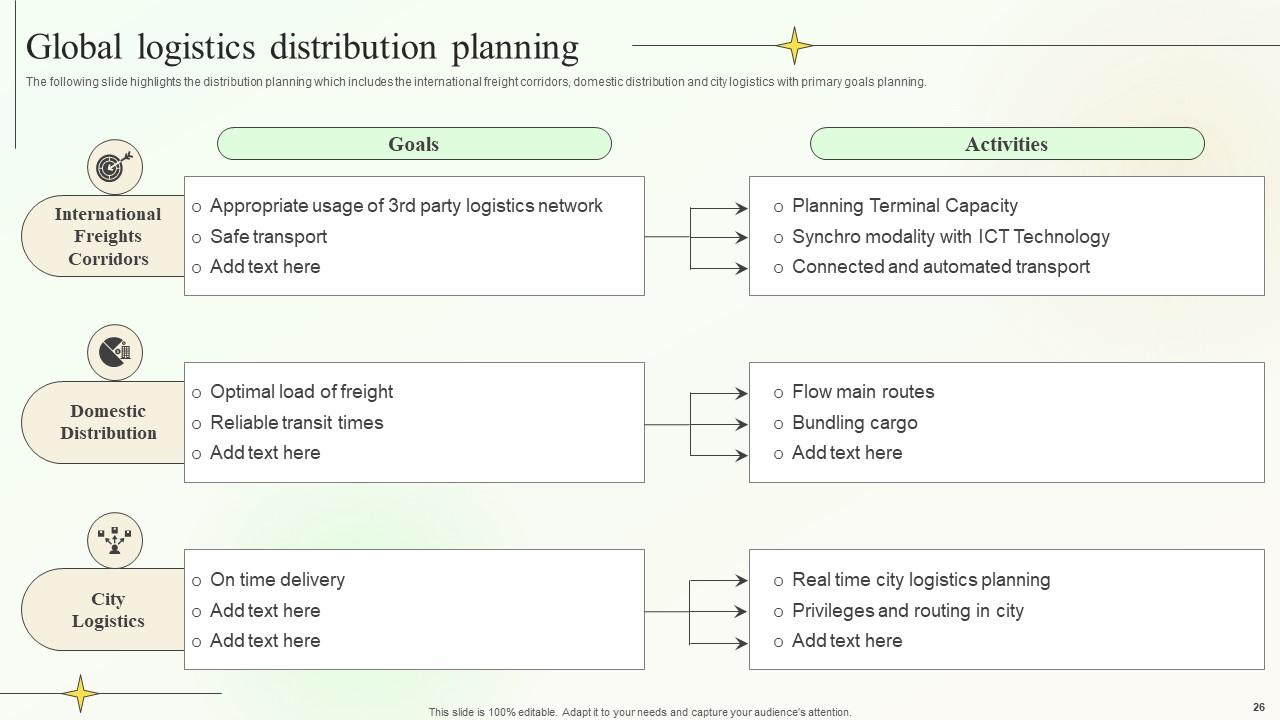
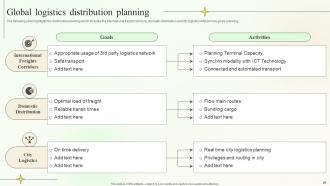
Slide 26: The following slide highlights the distribution planning which includes the international freight corridors, domestic distribution and city logistics.
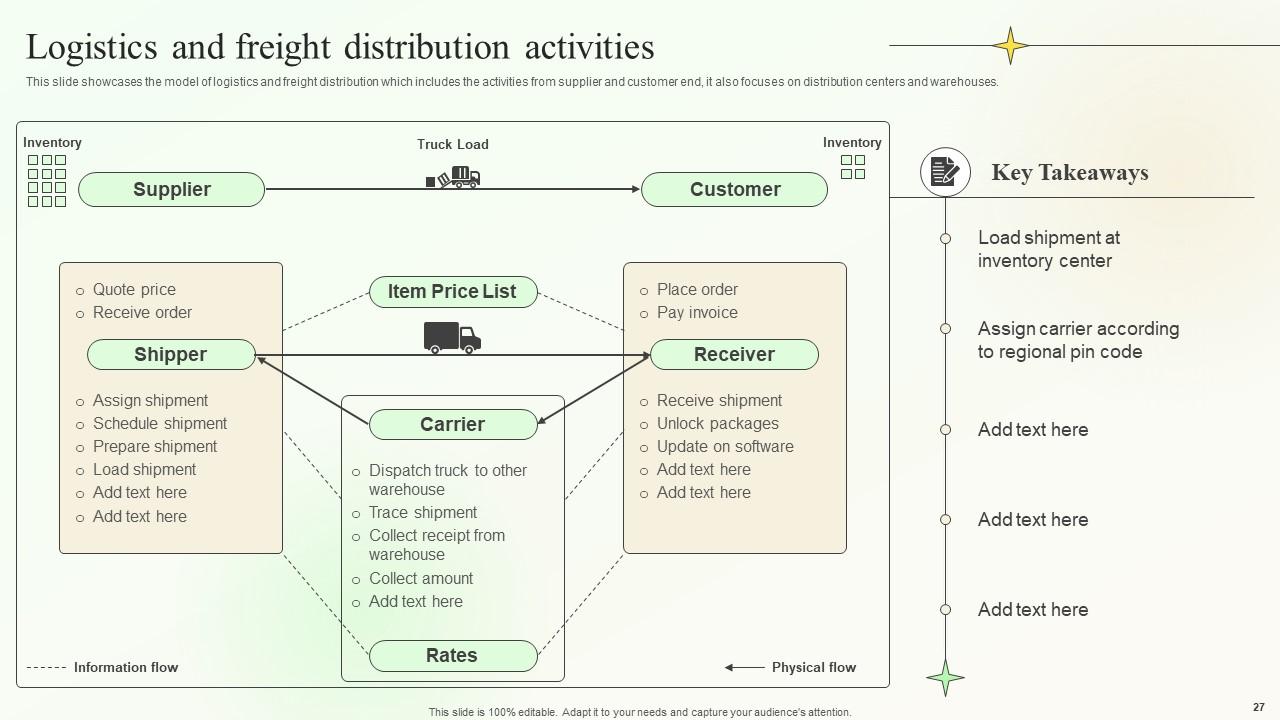
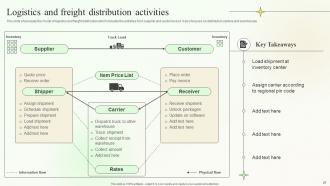
Slide 27: This slide showcases the model of logistics and freight distribution.
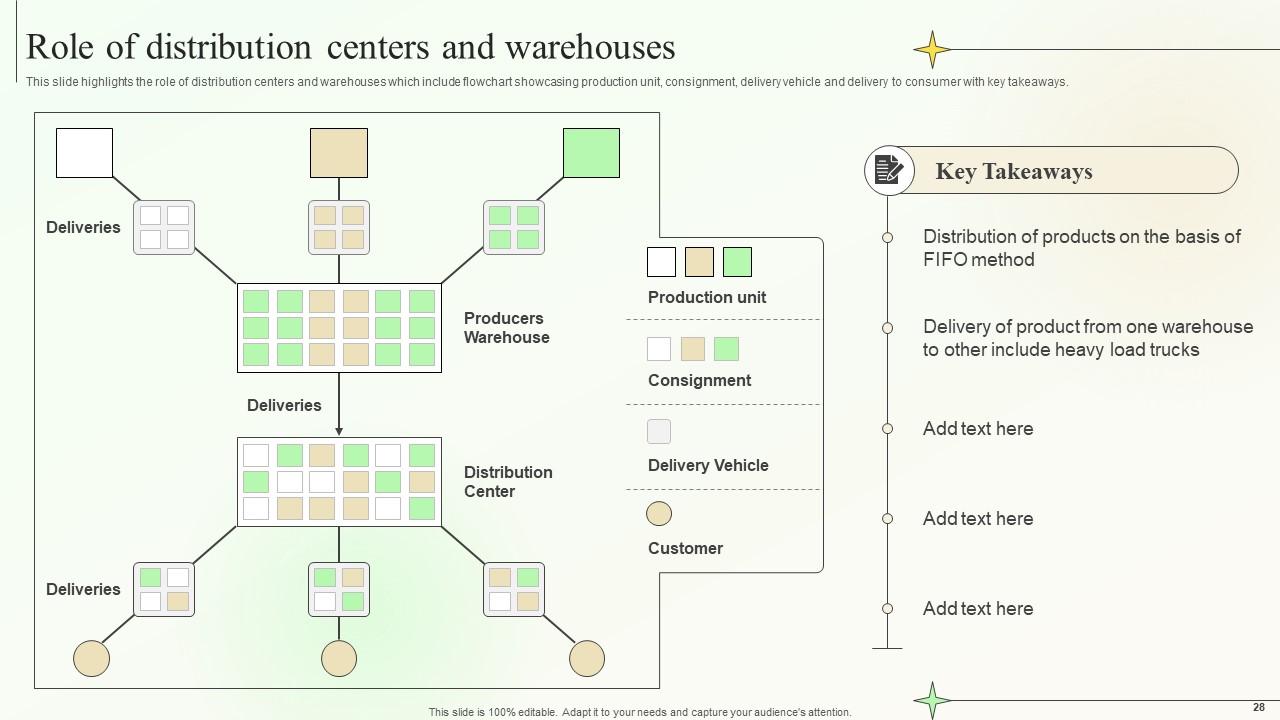
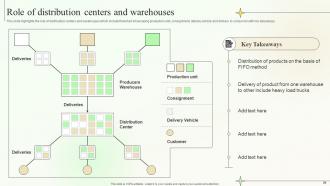
Slide 28: This slide highlights the role of distribution centers and warehouses which include flowchart showcasing production unit, consignment, delivery vehicle.
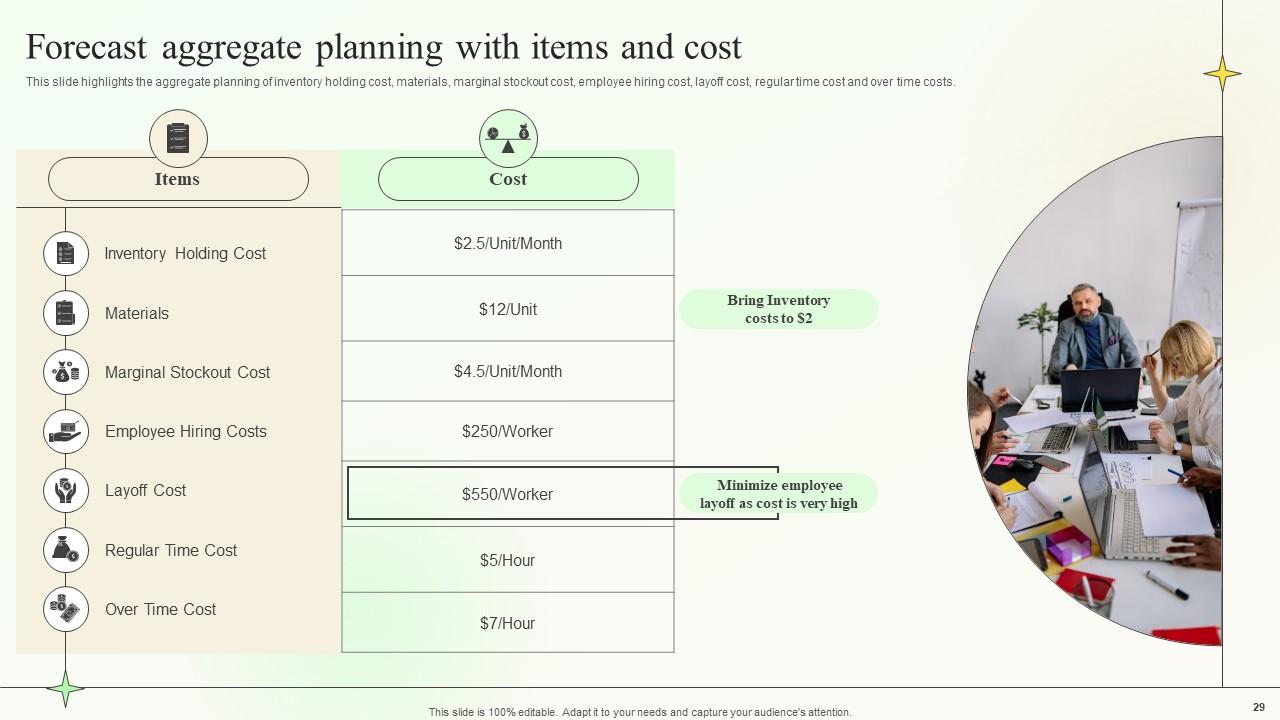
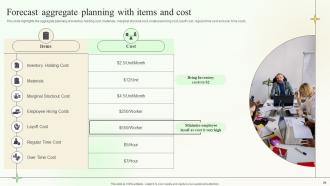
Slide 29: This slide highlights the aggregate planning of inventory holding cost, materials, marginal stockout cost, employee hiring cost, layoff cost, regular time cost.
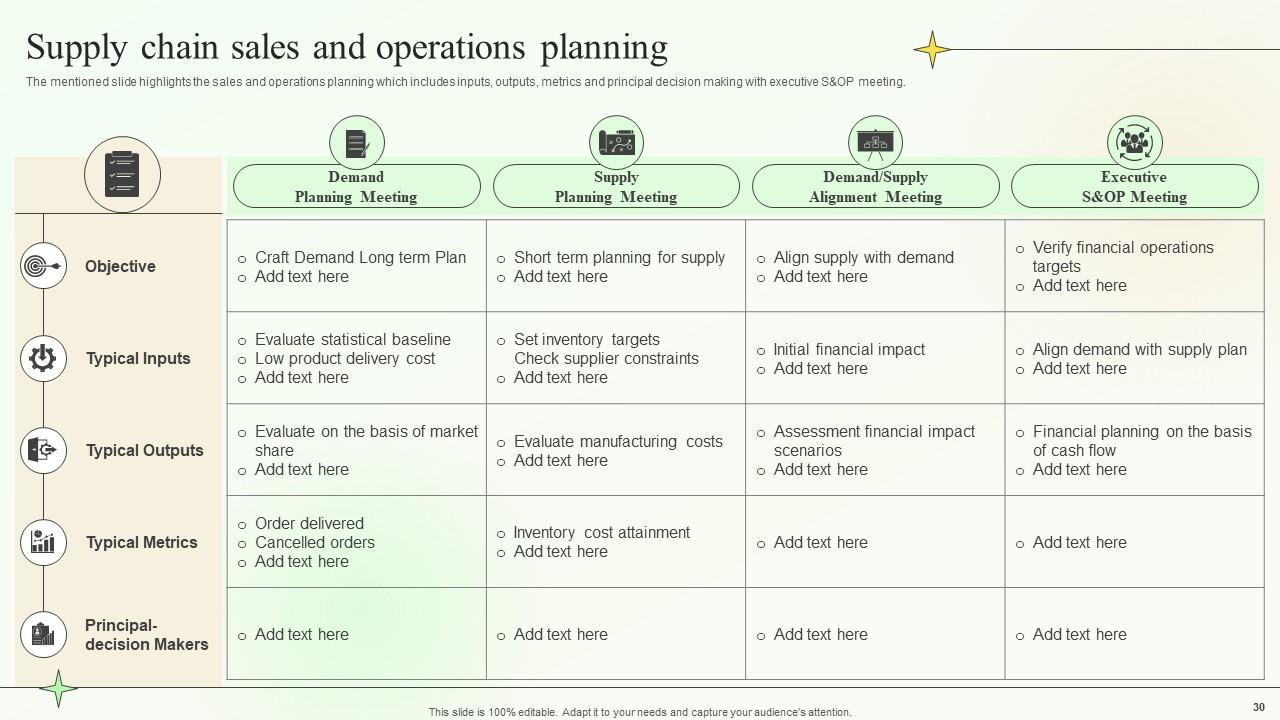
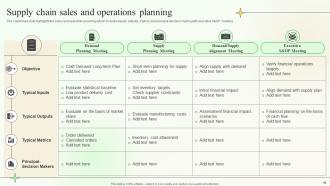
Slide 30: The mentioned slide highlights the sales and operations planning.
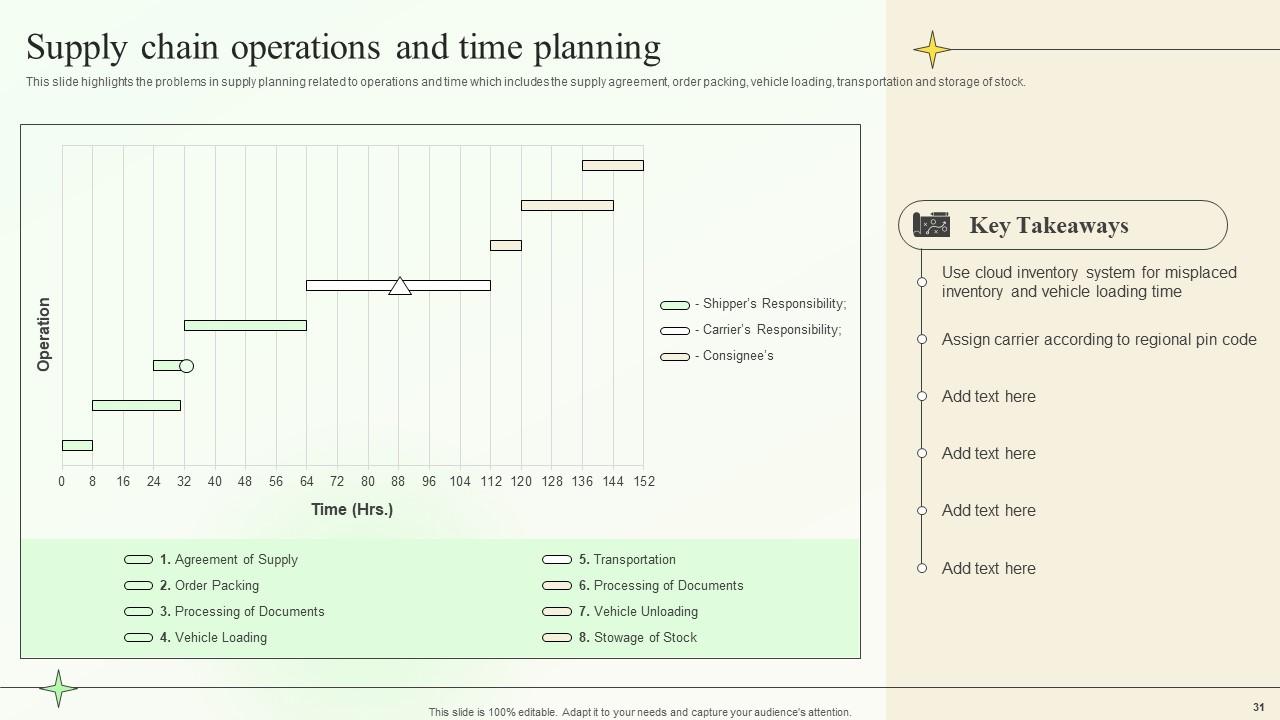
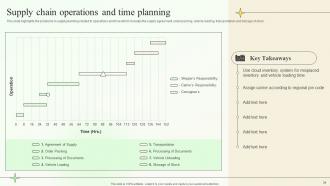
Slide 31: This slide highlights the problems in supply planning related to operations and time which includes the supply agreement, order packing, vehicle loading,
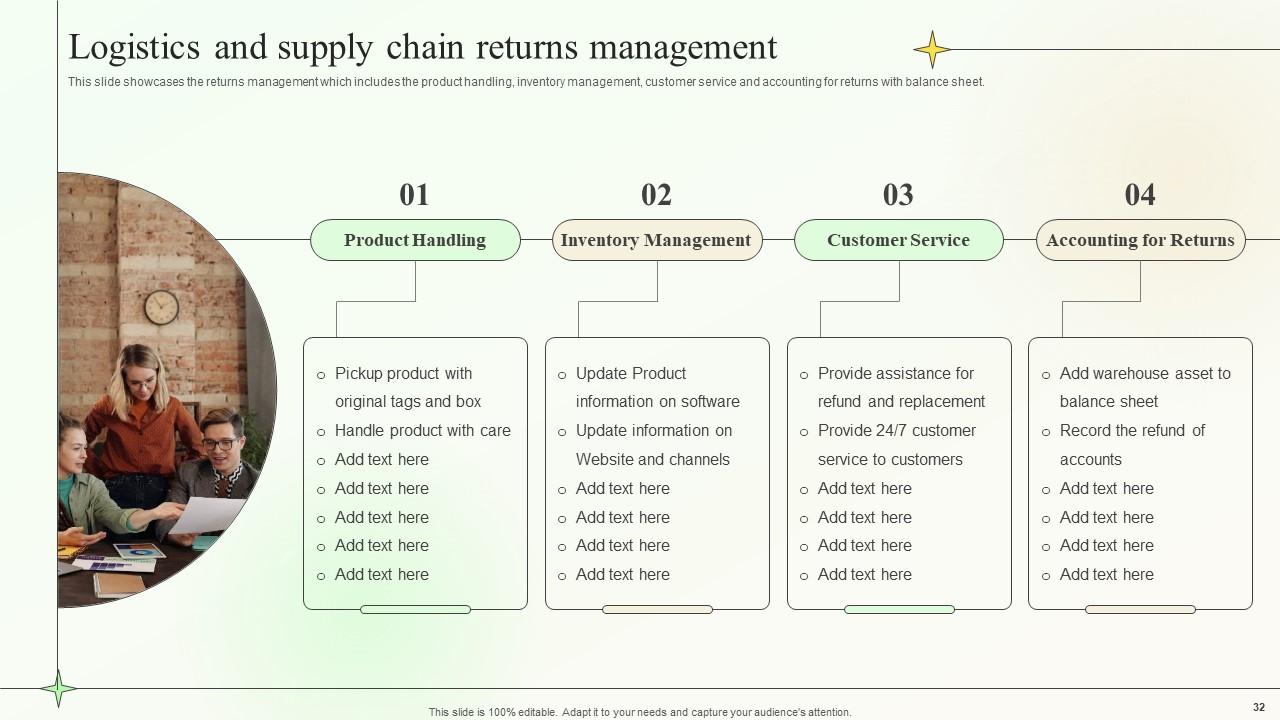
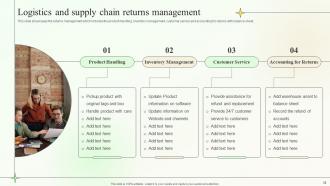
Slide 32: This slide showcases the returns management which includes the product handling, inventory management, customer service and accounting for returns with balance sheet.
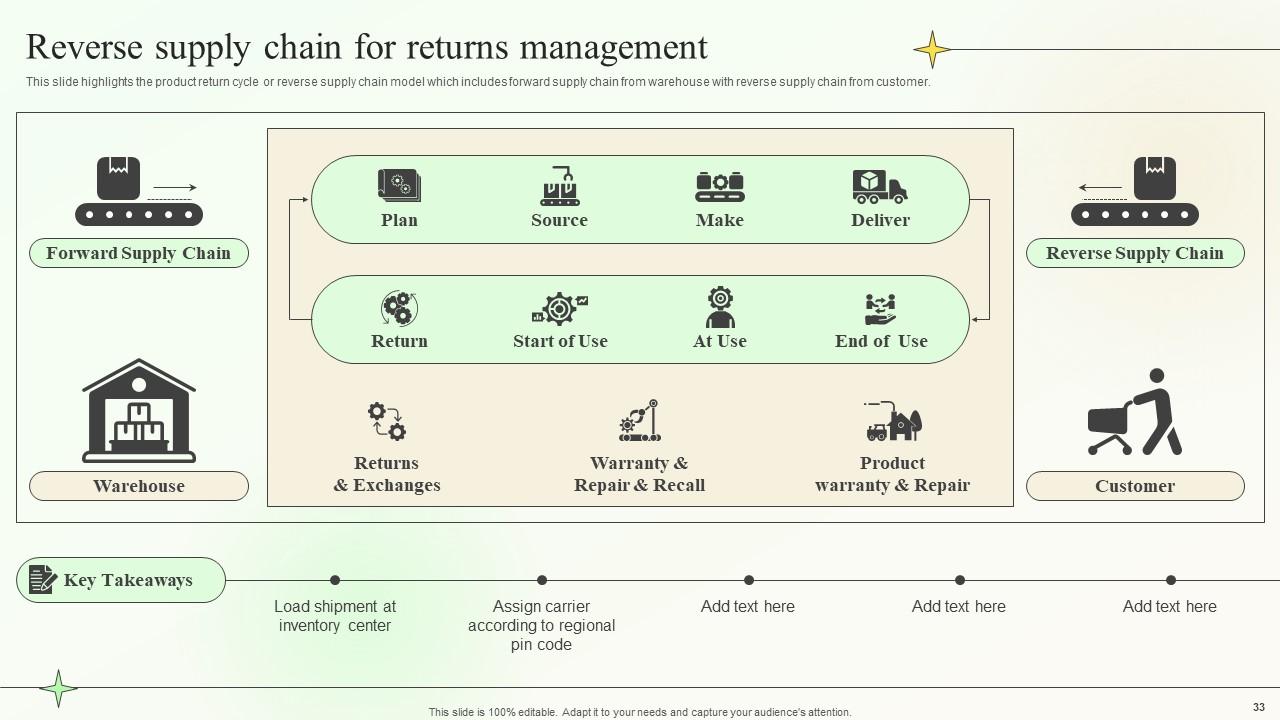
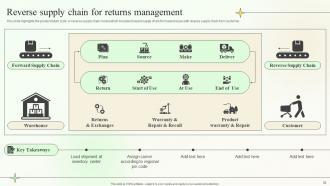
Slide 33: This slide highlights the product return cycle or reverse supply chain model.
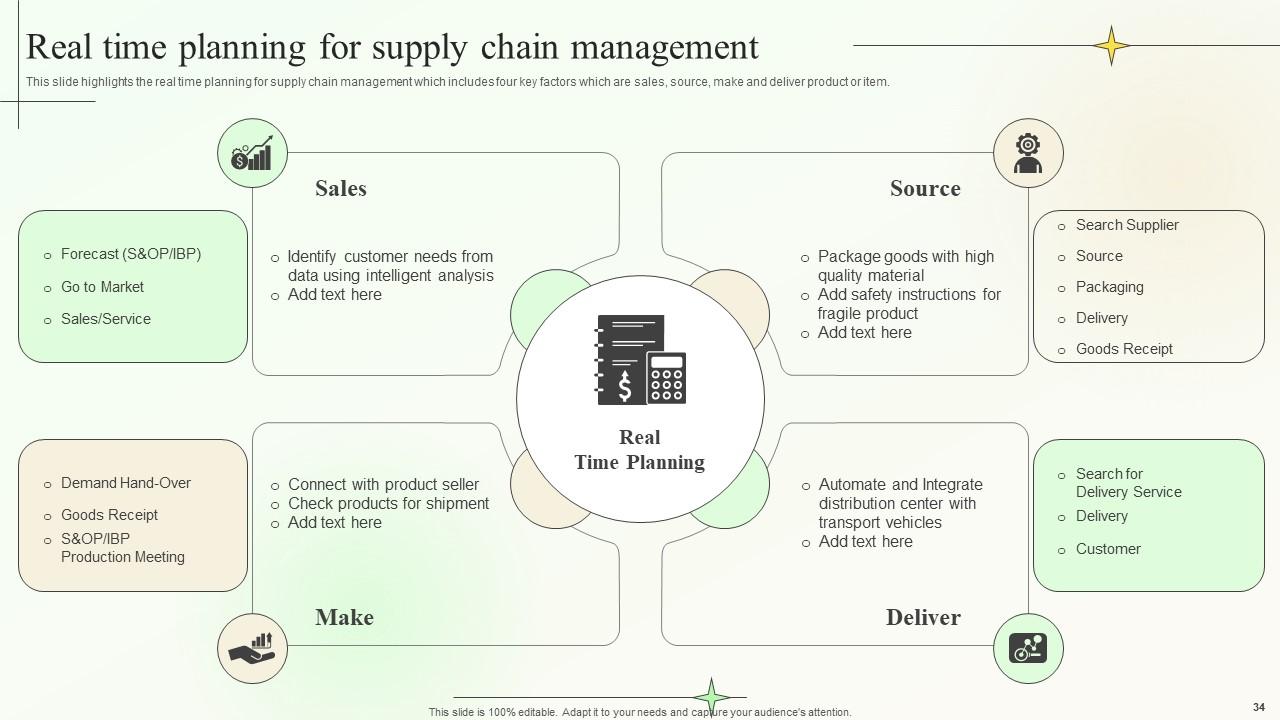
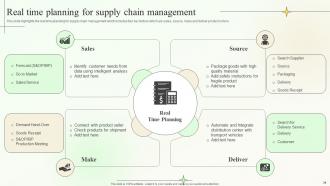
Slide 34: This slide highlights the real time planning for supply chain management which includes four key factors which are sales, source, make and deliver product or item.
Slide 35: This slide exhibit table of content- Challenges in Supply Planning with Mitigation Strategies.
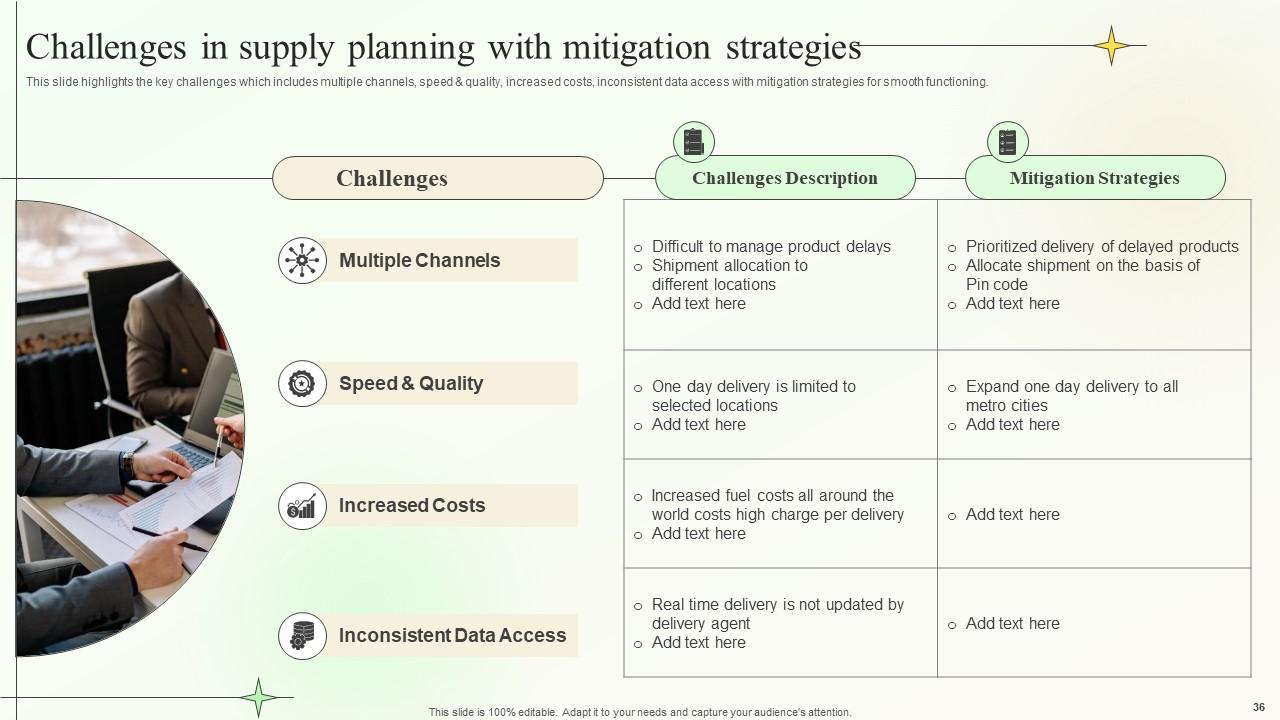
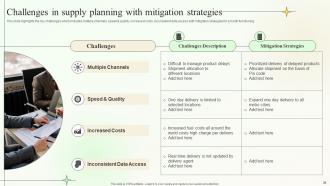
Slide 36: This slide highlights the key challenges which includes multiple channels, speed & quality, increased costs, inconsistent data access with mitigation strategies.
Slide 37: This slide exhibit table of content- Optimization of Supply Planning.
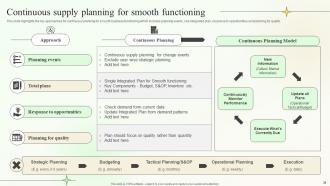
Slide 38: This slide highlights the key approaches for continuous planning for smooth business functioning.
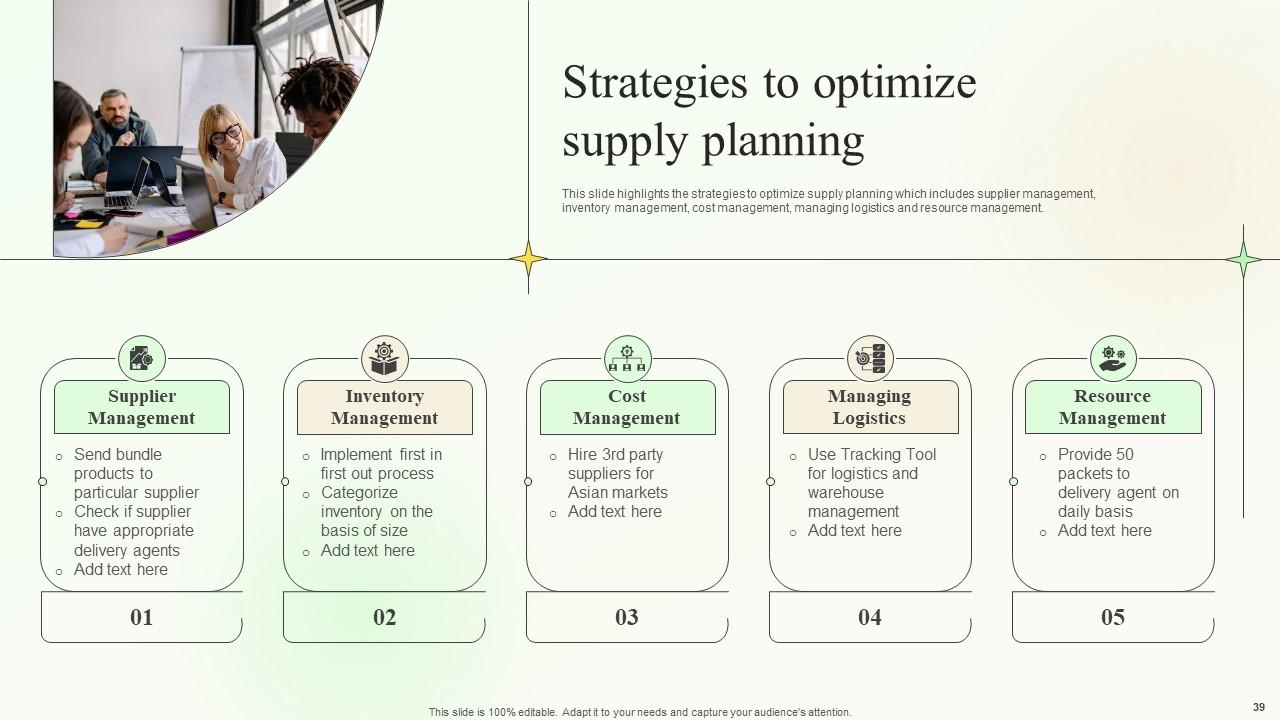
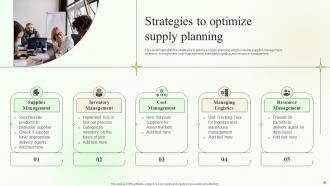
Slide 39: This slide highlights the strategies to optimize supply planning which includes supplier management, inventory management, cost management, managing logistics.
Slide 40: This slide exhibit table of content- Supply Planning Tools and Benefits.
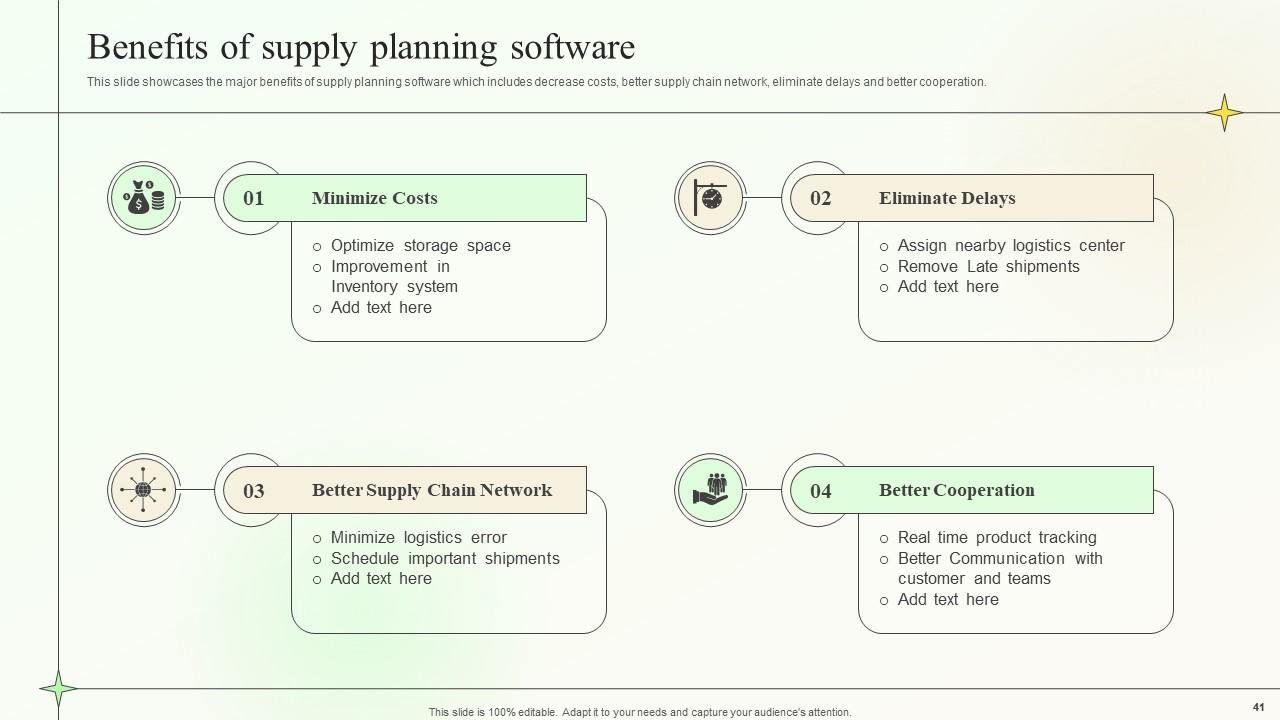
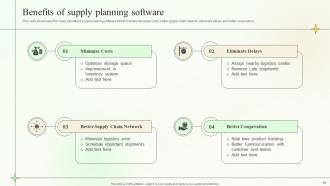
Slide 41: This slide showcases the major benefits of supply planning software which includes decrease costs, better supply chain network, eliminate delays.
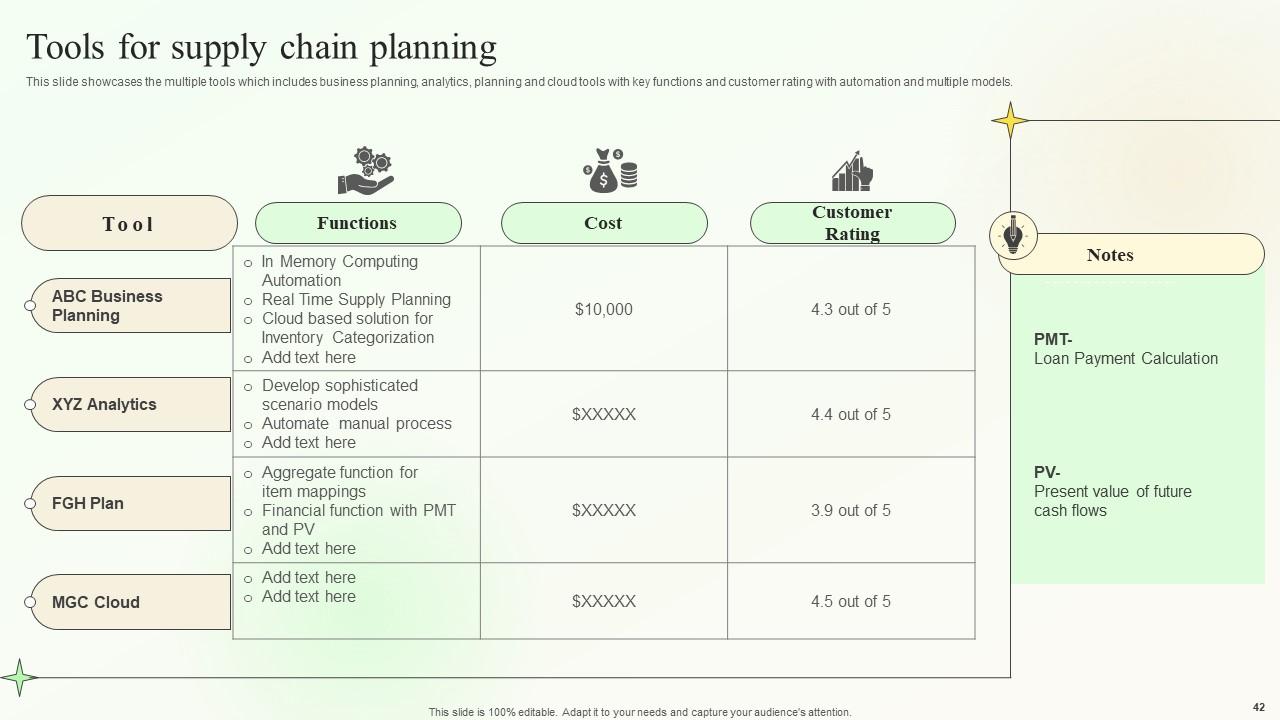
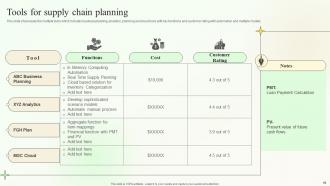
Slide 42: This slide showcases the multiple tools which includes business planning, analytics, planning and cloud tools with key functions and customer rating.
Slide 43: This slide exhibit table of content- Measure Supply Planning Performance.
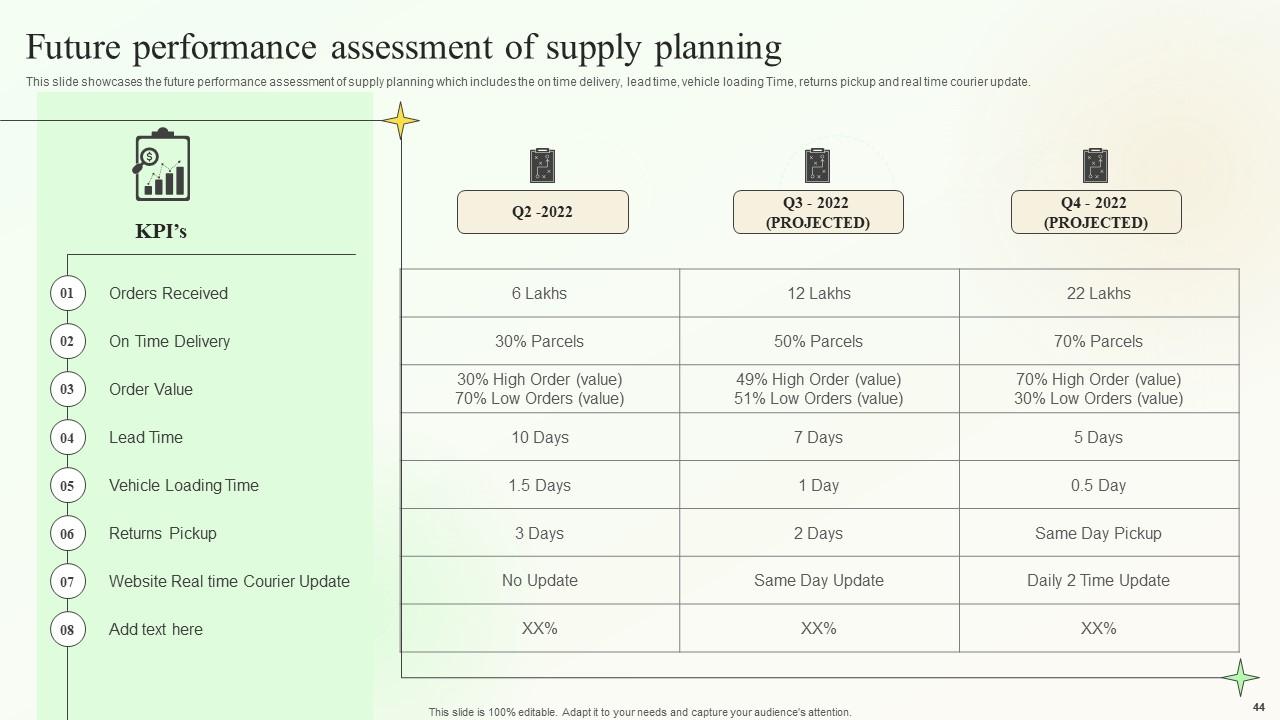
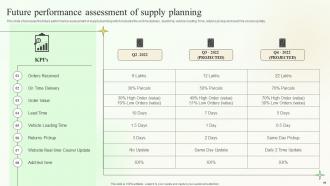
Slide 44: This slide showcases the future performance assessment of supply planning which includes the on time delivery, lead time, vehicle loading Time.
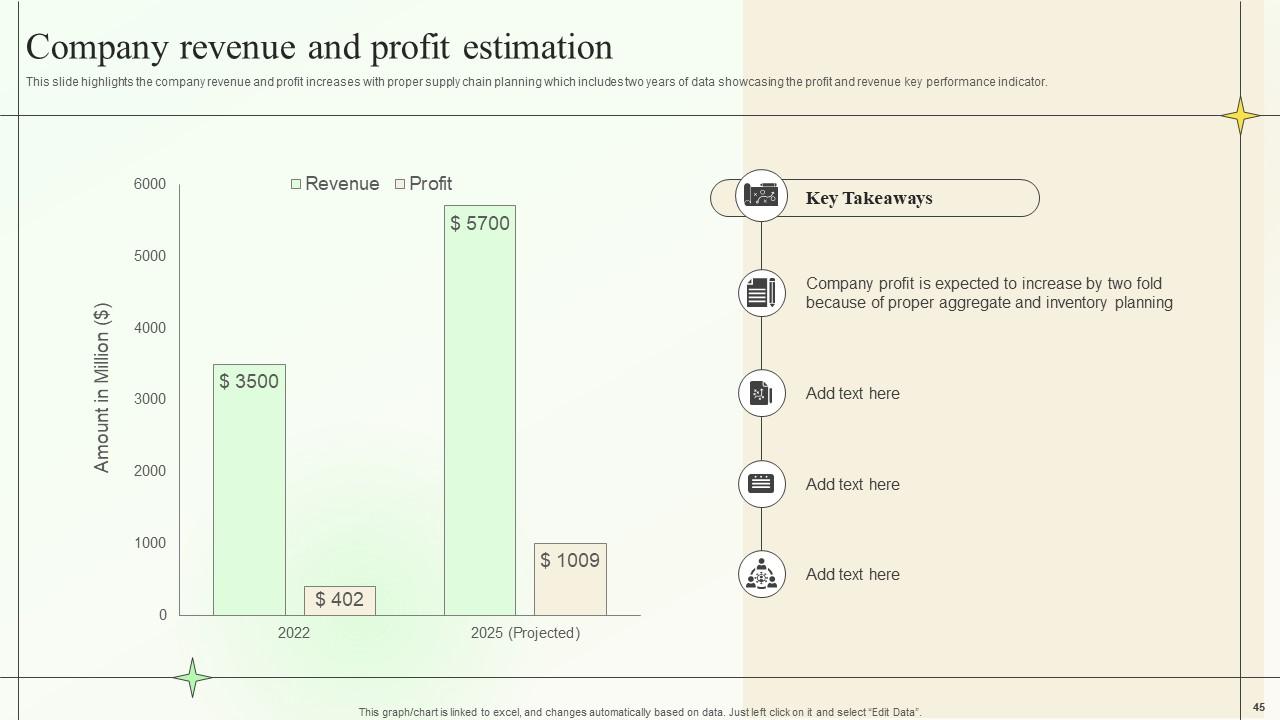
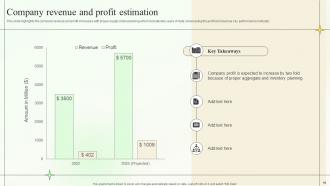
Slide 45: This slide highlights the company revenue and profit increases with proper supply chain planning.
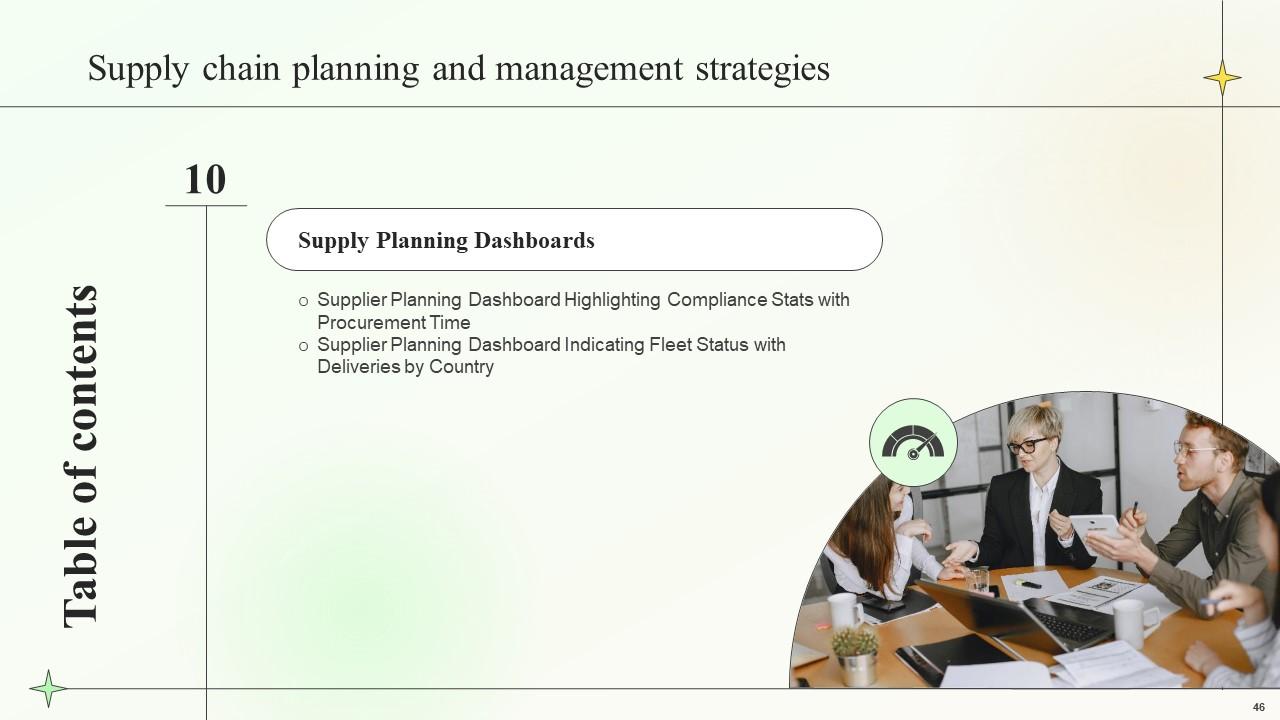
Slide 46: This slide exhibit table of content- Supply Planning Dashboards.
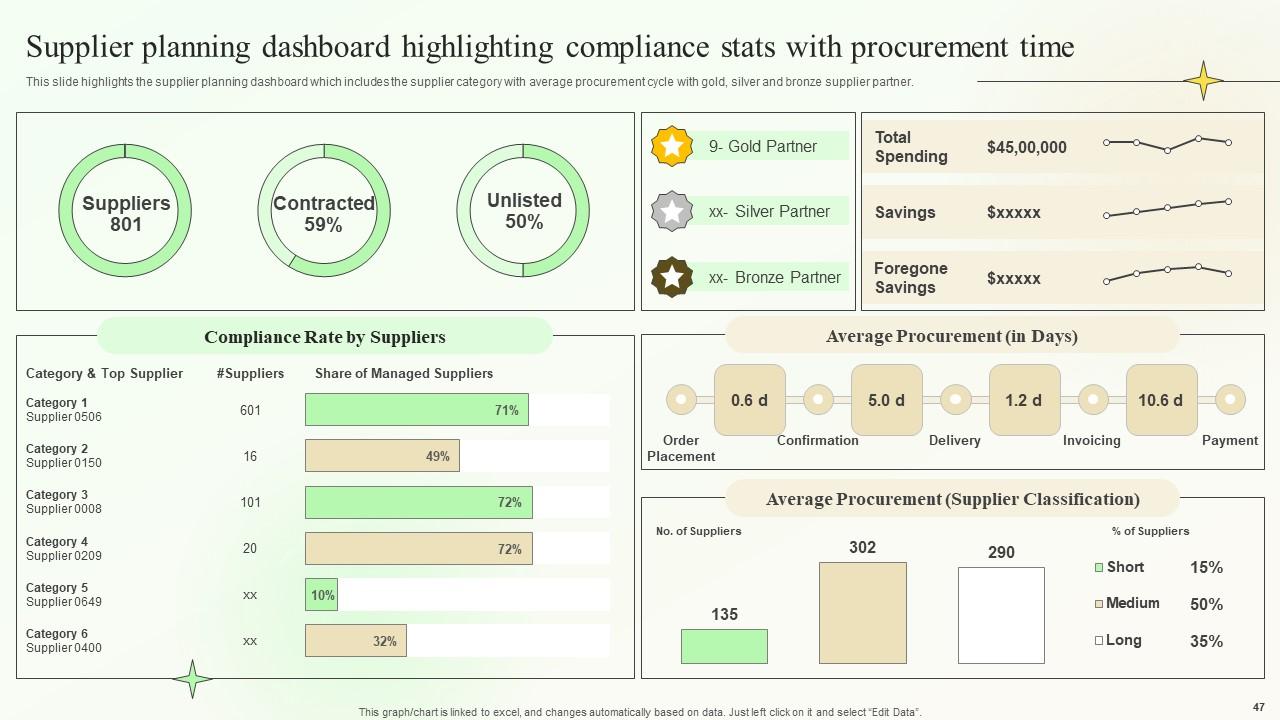
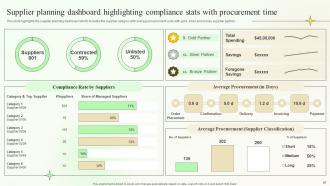
Slide 47: This slide highlights the supplier planning dashboard which includes the supplier category with average procurement cycle with gold, silver and bronze.
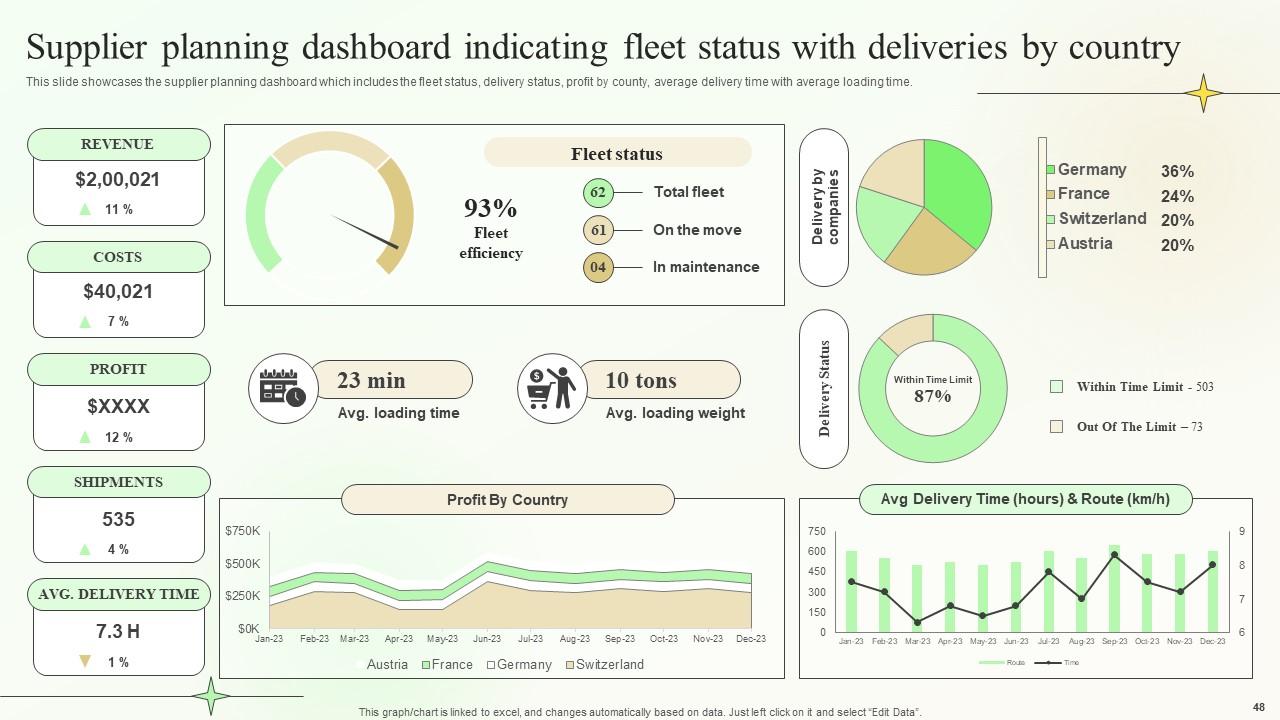
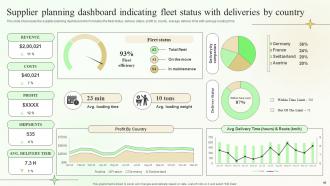
Slide 48: This slide showcases the supplier planning dashboard which includes the fleet status, delivery status, profit by county, average delivery time.
Slide 49: This is the icons slide.
Slide 50: This slide presents title for additional slides.
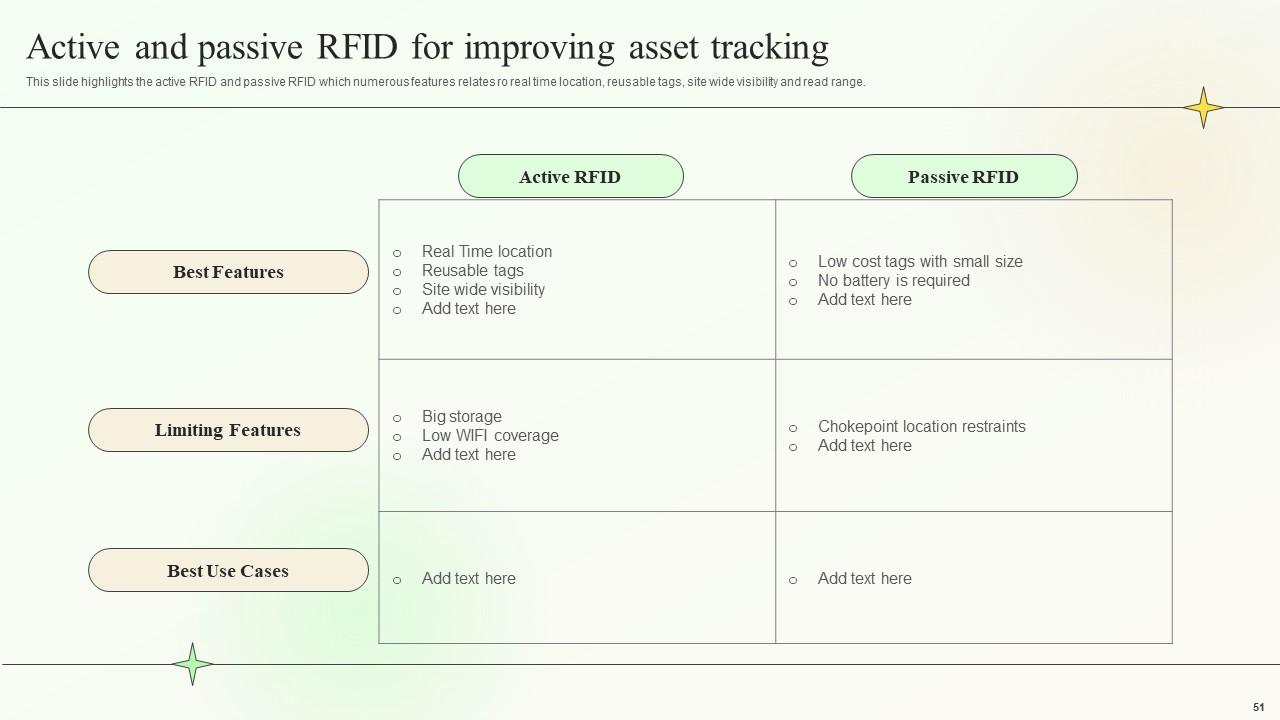
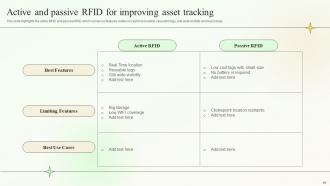
Slide 51: This slide highlights the active RFID and passive RFID which numerous features relates ro real time location, reusable tags, site wide visibility and read range.
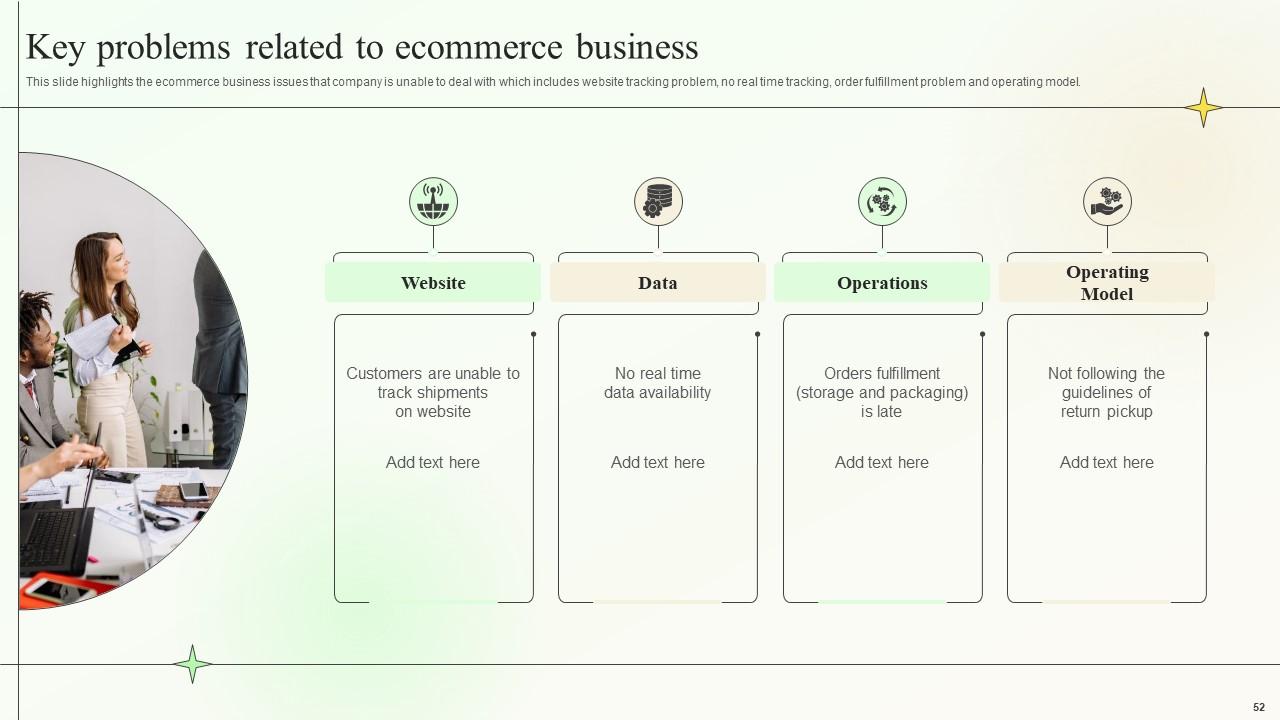
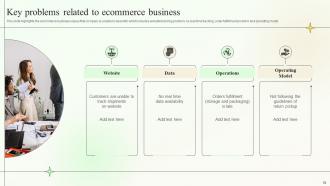
Slide 52: This slide highlights the ecommerce business issues that company is unable to deal with which includes website tracking problem, no real time tracking.
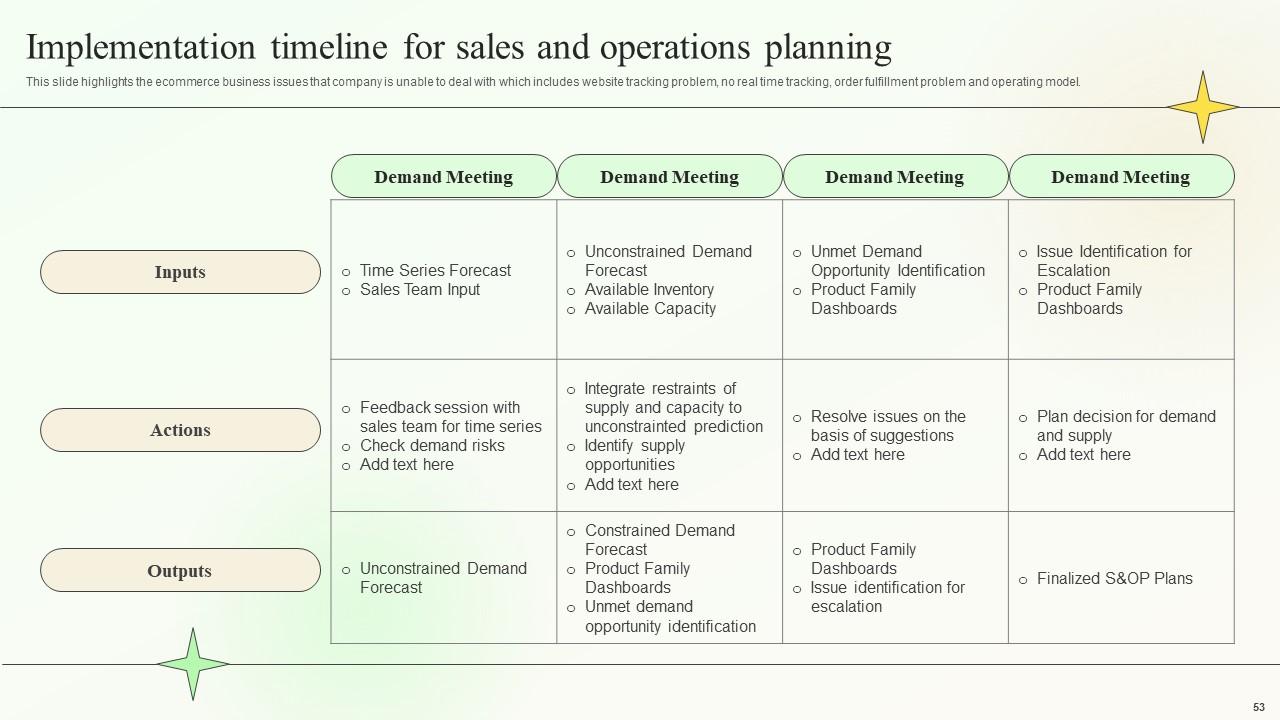
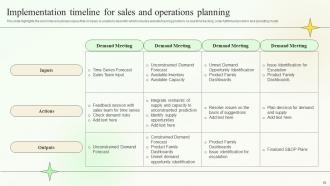
Slide 53: This slide highlights the ecommerce business issues that company is unable to deal with which includes website tracking problem, no real time tracking.
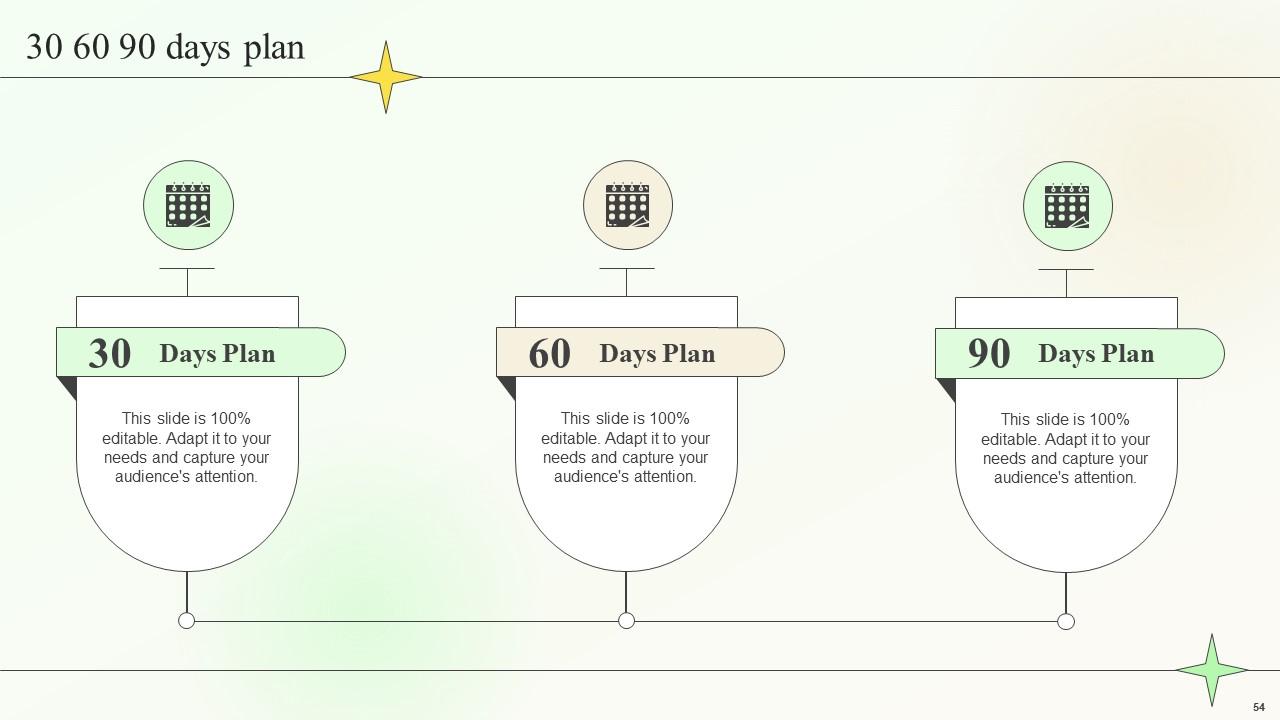
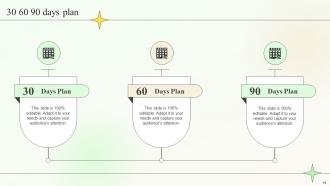
Slide 54: This slide depicts 30-60-90 days plan for projects.
Slide 55: This slide depicts posts for past experiences of clients.
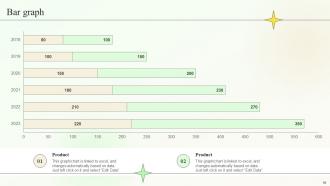
Slide 56: This slide displays yearly bar graph for different products.
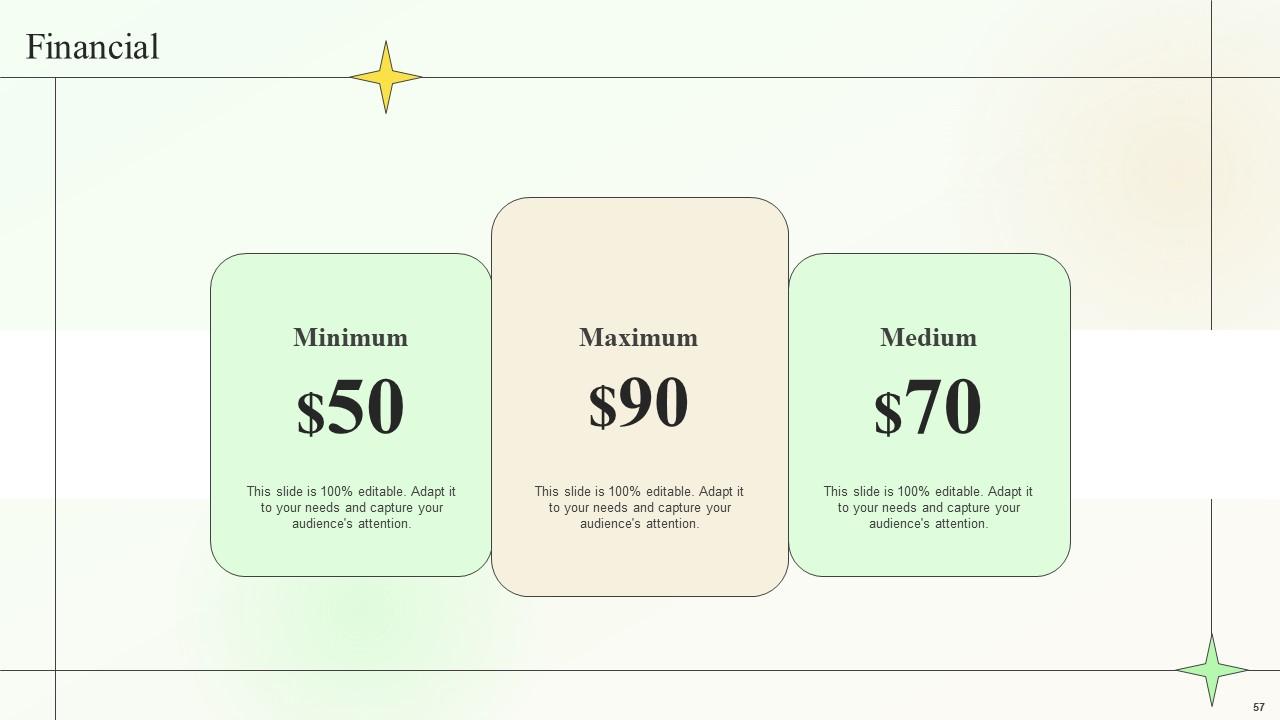
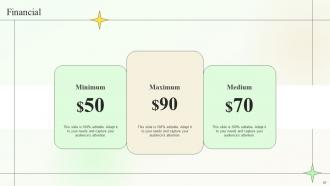
Slide 57: This slide showcases financials of company.
Slide 58: This is thank you slide & contains contact details of company like office address, phone no., etc.
Supply Chain Planning And Management Strategies Powerpoint Presentation Slides with all 63 slides:
Use our Supply Chain Planning And Management Strategies Powerpoint Presentation Slides to effectively help you save your valuable time. They are readymade to fit into any presentation structure.
-
“Thanks to SlideTeam. Now I can make smart presentations in a fraction of time without any hassle.”
-
Loved the templates on SlideTeam, I believe I have found the go to place for my presentation needs!
