System integration ppt design templates

Rating:
90%
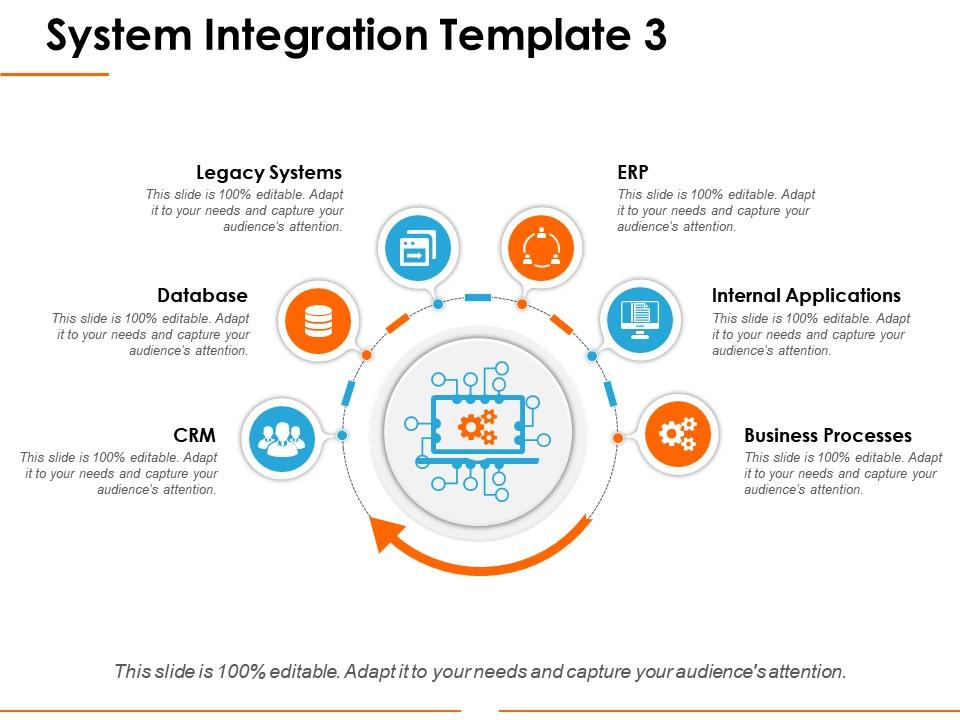
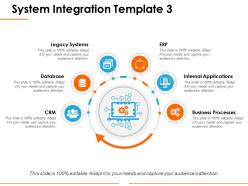
A circular diagram illustrating system integration with icons for Legacy Systems, ERP, Database, CRM, Internal Applications, and Business Processes
Slide 1 of 5

or

Favourites Favourites

Try Before you Buy Download Free Sample Product

Audience Impress Your
Audience
Editable 100%
Editable
Time Save Hours
of Time
The Biggest Sale is ending soon in
0
0
:
0
0
:
0
0
Rating:
90%
Presenting this set of slides with name - System Integration Ppt Design Templates. This is a six stage process. The stages in this process are Legacy Systems, Database, Internal Applications, Business Processes, Crm.

FAQs for System integration

Ok so first thing - map out everything you've got right now, all your systems and how they connect. Boring as hell but you'll thank me later. Set clear goals, plan how you're moving data around, and for the love of god have a backup plan when stuff breaks (because it will). Testing is huge, security too obviously. Honestly though? The tech part's easier than getting people on board. Best move is starting small - pick something that won't kill your business if it goes wrong and use that as your guinea pig first.

First thing - set up validation checks at every handoff point between your systems. Use data checksums and hash validations to catch corruption during transfers. I can't tell you how many times I've seen people skip this step and totally regret it. Map out all your data touchpoints first, then build validation rules for each one. Also get rollback procedures ready so you can revert fast if things go sideways. Real-time monitoring is clutch too - log everything and flag inconsistencies right away. Trust me, it's way easier to catch problems early than clean up the mess later.

So middleware is like having a translator between all your different systems. It handles the annoying stuff - data formatting, routing, security - so your apps don't have to talk directly to each other. Super handy because you can swap out backend systems without everything breaking. Think of it as that friend who's good at organizing group plans, honestly. The logging and error handling is automatic too. Just start by figuring out which systems need to communicate, then find middleware that supports those specific protocols. Way easier than trying to make everything connect manually.

Honestly, cloud integration is a game changer. Way faster than the old on-premise stuff we used to deal with. APIs and cloud connectors let you connect systems without wrestling with hardware - which was always a nightmare. Everything actually talks to each other now, plus you get automatic scaling when you need it. The catch? You're stuck if your internet goes down or the vendor has issues. But still worth it IMO. I'd look at what you're currently running and see what makes sense to move over first.

Oh man, data format mismatches will drive you absolutely insane - that's probably your biggest pain point right there. API compatibility issues are close behind. Then you've got performance problems when systems just can't handle the extra load. Security gaps always seem to appear at the worst possible moment too. Start by mapping out your data flows first, before touching any code. Use standard protocols when you can, build solid logging, and test everything in staging that actually looks like prod. Oh, and definitely have rollback plans ready because something's guaranteed to break at like 3 AM on a weekend.

Track both hard and soft savings - you'll need the complete picture for ROI. Hard stuff is easy: less operational costs, faster processing, cutting manual work hours. Soft benefits are trickier but honestly? They're usually way bigger than expected. Better data accuracy, happier customers, more productive employees. I'd compare total savings against integration costs over like 2-3 years since the benefits keep growing. Monthly dashboards help too - leadership loves seeing actual proof of value. Oh, and don't forget processing speed improvements can snowball into other efficiencies you didn't even plan for.

Throw an API gateway between your legacy stuff and new apps - basically acts like a translator. Don't connect everything directly though, legacy systems are moody and one crash can wreck everything else. Go slow with integration instead of trying to do it all at once. Oh and map out your data formats super carefully first - learned that the hard way on my last project. Budget way more time for testing than you think you need. Document as you build because you'll definitely forget the weird workarounds you had to do.

Think of API management as your mission control for all those connected systems. It gives you one place to handle security, rate limiting, and monitoring instead of dealing with a million different endpoints and auth methods. Version control becomes way easier too - future you will definitely appreciate this when updates don't break everything. Honestly, the best part is finally seeing what's actually happening between your systems. When stuff inevitably breaks, you can actually debug it instead of just throwing darts at a board and hoping something works.

Definitely encrypt everything - data moving around and data sitting still. API security is where most people mess up, so use secure protocols and validate inputs religiously to avoid injection attacks. Authentication between systems matters too. Honestly, access controls are probably your biggest win - just give each system the bare minimum permissions it needs to function. Also, log everything for audit trails. I know it sounds tedious but you'll be grateful when something goes sideways. First step though? Map out where your sensitive data actually flows between systems - those connection points are where hackers love to strike.

Oh man, data silos are the worst. Each department locks their stuff away in separate systems, so nothing talks to each other properly. You get duplicate info everywhere, weird formats that don't match up, and APIs that just refuse to cooperate. Honestly feels like everyone's speaking different languages. Your team ends up wasting hours doing manual transfers or building random connectors for every little thing. Plus you never see the full picture of what's actually happening in your business. I'd start by figuring out where everything lives, then focus on connecting your most important systems first.

Track both tech stuff and business impact - you need the full story. For technical metrics, watch data accuracy, uptime, response times, error rates. All the boring but crucial stuff. Business-wise, measure adoption rates, efficiency gains, cost savings, workflow completion times. User satisfaction is huge too. Honestly, I've seen perfect systems get scrapped because users couldn't stand them. Pick 3-5 metrics that match your goals first. You can always add more later, but don't overwhelm yourself right out the gate. Focus on what actually matters to your project's success.

Dude, start with whatever's driving your team crazy - like data transformations or running the same integration tests over and over. That stuff adds up fast. CI/CD tools are honestly game-changers here. Jenkins, GitHub Actions, whatever works for your setup. They'll handle deployments and testing automatically when code changes. API orchestration platforms are pretty sweet too since they'll retry failed calls and handle errors without you babysitting everything. I'd say pick one annoying process that's eating up hours each week and automate that first. Once you see how much time it saves, you'll probably get addicted to automating everything else.

Dude, companies that can share data instantly are crushing those stuck with yesterday's info. Your inventory, customer stuff, transactions - everything updates live across platforms. Honestly? It's not even optional anymore since people expect immediate responses. I mean, think about it - you're basically guessing while competitors use real-time insights to nail their pricing and supply chains. Flying blind vs. actually knowing what's happening right now. Start with whatever data matters most to your business first, then build from there.

Honestly, every industry approaches system integration totally differently. Healthcare moves at a snail's pace because of all the compliance stuff and patient privacy rules - which makes sense but can be frustrating. Manufacturing is all about keeping those machines running 24/7, so they need real-time data flowing perfectly. Banks? They're paranoid about getting every transaction right and staying on top of regulations. Retail cares most about making shopping smooth for customers and tracking inventory everywhere. My advice? Figure out what specific headaches your industry deals with first, then build your integration plan around those. Otherwise you'll be shooting in the dark.

Honestly, AI and machine learning are completely changing the game right now. They're automating data mapping and making integrations way smarter at handling errors. API-first is becoming the standard approach. Low-code platforms are letting non-technical people build integrations, which... I have mixed feelings about that one. Event-driven architectures are finally killing off those awful monolithic systems. Cloud-native tools and containers make everything scale better. You should probably start digging into this stuff soon. Your integration strategy's gonna need to adapt whether you want it to or not.

Ratings and Reviews

90% of 100
Review Form
Write a review
Most Relevant Reviews
  1. 80%

    by Dominique Vazquez

    Presentation Design is very nice, good work with the content as well.
  2. 100%

    by Deon Warren

    Enough space for editing and adding your own content.

2 Item(s)

per page: