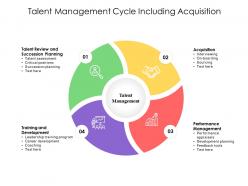
Talent management cycle including acquisition

Talent management cycle including acquisition
Slide 1 of 5
Favourites Favourites

Try Before you Buy Download Free Sample Product

Audience Impress Your
Audience
Editable 100%
Editable
Time Save Hours
of Time
The Biggest Sale is ending soon in
0
0
:
0
0
:
0
0
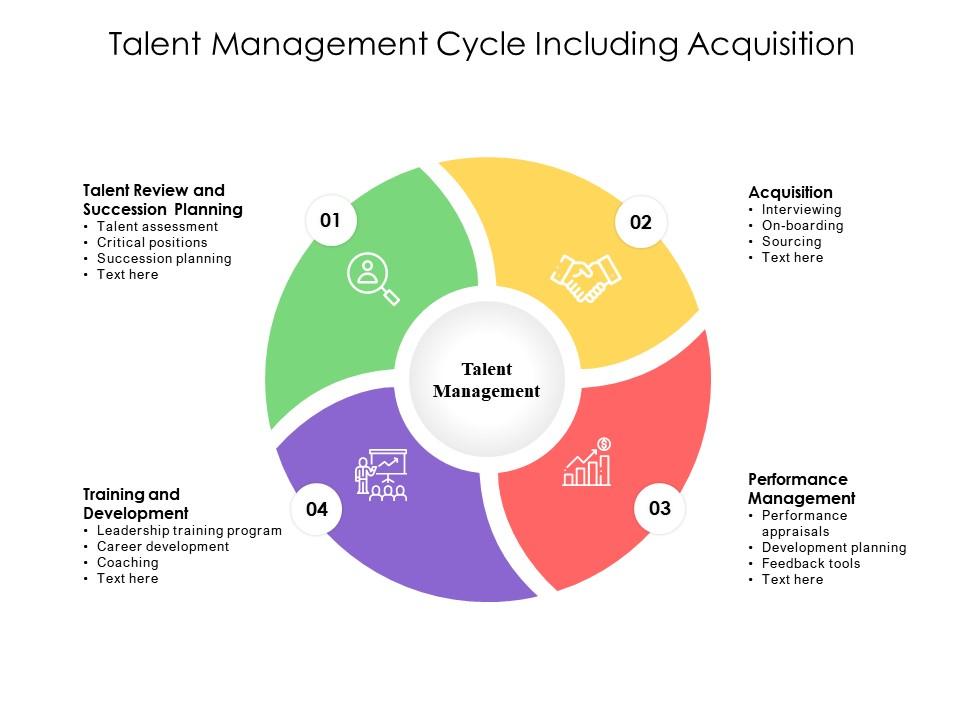
Presenting this set of slides with name Talent Management Cycle Including Acquisition. This is a four stage process. The stages in this process are Process Management, Circular Process, Talent Management Cycle. This is a completely editable PowerPoint presentation and is available for immediate download. Download now and impress your audience.

People who downloaded this PowerPoint presentation also viewed the following :

FAQs for Talent management

So talent management is basically five stages. First you attract people with good employer branding, then recruit and hire them properly. Onboarding comes next - seriously, this is where most places screw up big time. It's actually super critical but companies treat it like an afterthought. After that you're developing people, managing performance, keeping your good folks happy. Eventually people leave through retirement, moving up, or getting fired. The trick is viewing it as one continuous loop instead of random separate things. Makes way more sense that way.

Look, getting the right people in the right spots is literally what separates good companies from great ones. You'll see crazy improvements in productivity and innovation when your hiring, development, and retention actually work together. Most companies think they're doing this well but honestly? They're not. Engaged employees = happier customers = better adaptability when markets shift. Oh, and your bottom line will thank you too. I'd start by figuring out where your biggest talent gaps are right now - that's your priority one.

Dude, engagement is literally the foundation of everything else in talent management. Your people won't stick around if they're miserable, and good luck getting them to actually care about performance reviews or skill development when they're already checked out. Plus engaged employees refer their friends - which honestly saves you so much recruiting headache. I've seen companies throw money at retention programs while completely ignoring that their teams are burnt out. Makes no sense. If you're struggling with talent gaps, check engagement first. Everything else flows from there.

So here's what works - figure out exactly what skills you need based on where the business is actually going. New markets? Hire people who've done that before. Don't just post random job listings and hope for the best (I swear half the companies I know do this). All your hiring and training should connect back to real business goals, not just whatever HR thinks sounds good. Track metrics that matter - revenue impact, not how many people you interviewed. Honestly, most places treat talent like an expense instead of something that actually drives growth. Review it every quarter and tweak as needed.

Honestly, start with your employer brand - people are definitely stalking your company online before applying. Look at your actual data to see where good hires come from (I bet it's not LinkedIn lol). Speed beats perfection right now, so cut the endless interview rounds and get back to people fast. Don't ignore passive candidates either - they're usually the best ones. Oh, and time each step of your process to catch where you're losing people. That audit thing sounds boring but it actually helps a ton.

Honestly, tech can be a game-changer for talent management if you do it right. It handles all the boring stuff - resume screening, tracking performance, spotting skill gaps. There's even AI now that predicts who might quit (kind of creepy but useful). Learning platforms are great for upskilling too. Here's the thing though - don't go crazy buying every tool out there. They need to work together or you'll hate your life. I'd say pick whatever's driving you most insane right now and start there. Way less overwhelming.

Track the obvious stuff first - retention rates, how long it takes to fill roles, internal promotions. But honestly? Employee engagement scores are where you'll actually see if your strategy's working or just looks good on paper. Most places completely ignore this part, which is wild to me. Learning completion rates matter too, plus succession planning and whether you're developing high performers or watching them leave for your competitors. Don't go crazy though - pick like 5-7 metrics that actually tie to what your business needs. Then review them monthly instead of letting them sit there unused.

Look for people who crush their goals consistently - that's your first clue. 360 feedback helps too, but honestly the real stars are usually pretty obvious if you're actually watching. Give them stretch projects that'll challenge them, maybe some cross-functional work or pair them with good mentors. I'd avoid just promoting people right away though. Test them first with bigger responsibilities. Regular check-ins are clutch for tracking how they're doing. The whole point is pushing their limits while still having their back when things get messy. Most high-potential folks are hungry for growth anyway.

Honestly, start with just asking them what they actually want - career-wise, day-to-day stuff, whatever. Growth opportunities are huge. Clear paths up, interesting projects, you know? Recognition matters more than you'd think too. Not just money (though obviously pay them well), but actual acknowledgment of their work. Flexible work arrangements help a ton if you can swing it. Let them have some control over how they get stuff done. Oh, and this might sound obvious, but don't be a terrible manager - people really do quit bosses, not jobs. Regular check-ins work better than waiting for annual reviews. Once you know what motivates each person, you can actually tailor your approach instead of guessing.

Look, D&I can't just be a hiring thing you check off once. Build it into everything - sourcing, interviews, performance reviews, promotions, the whole pipeline. Honestly, most companies mess this up because they think it's way simpler than it actually is. Your managers need bias training (some will resist this, but whatever). Track your demographic data at each step so you can actually see what's happening. I'd start small though - maybe audit promotion rates first? Once you nail that piece, expand from there. It's a lot of work upfront but creates real pathways for everyone to advance.

Oh man, you're gonna hit some roadblocks for sure. Leadership usually doesn't buy in properly, and every department does their own thing differently - it's a mess. The worst part? Managers who just won't give real feedback or completely bail on talent reviews. Like, why even have the process then? Data integration between HR systems is another nightmare. Most places collect tons of talent data but never actually use it to make decisions (which honestly drives me crazy). Start with one solid process though. Get leadership actually committed, not just nodding along. Train your managers properly - give them tools that don't suck.

Start with hiring - look for people who actually want to grow, not just collect paychecks. Build learning goals right into performance reviews and connect them to real career paths. I've seen too many companies do random training sessions when someone gets restless, which is honestly backwards. Instead, map out what skills people need for their next role and make that part of succession planning. Check progress during your regular one-on-ones and pivot when business priorities shift. First step? Figure out where learning already happens in your process and spot the obvious gaps.

Think of performance management as your canary in the coal mine for retention. You'll catch disengaged people way before they start job hunting. Regular check-ins let you talk about growth, tackle problems, and actually celebrate wins. Money matters, sure, but most people quit when they feel stuck or invisible. These reviews give you real data on who might bail and create space for those development conversations that matter. Here's the thing though - don't make it some annual checkbox thing. Use it as a retention tool by listening and then actually doing something about what you hear.

Honestly, feedback is like having a crystal ball for managing people. You can spot your rockstars, figure out who needs help, and actually make smart decisions about promotions instead of just winging it. I've learned it's way better to collect it from everywhere - teammates, customers, whoever works with them. Annual reviews are pretty much useless though. Make it ongoing so you're not scrambling to remember what someone did six months ago. Use what you learn to build training plans and figure out succession stuff. Without regular feedback, you're basically playing talent management roulette.

Honestly, you've gotta go full digital but be way more intentional about it. Performance reviews, feedback, goal-setting - do it all over video calls instead of hiding behind emails. Set up virtual mentoring and use collaboration tools for projects. The hard part? Spotting your star performers when you can't see them grinding daily. More check-ins and solid metrics will save you there. Oh, and career development convos become crucial since people feel totally disconnected from growth opportunities otherwise. I'd start by figuring out what actually needs to happen face-to-face versus just communicating better remotely.

Ratings and Reviews

0% of 100
Write a review
Most Relevant Reviews

No Reviews