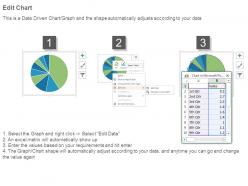
Target market share ppt sample presentations
Try Before you Buy Download Free Sample Product
Audience
Editable
of Time
Address dull and boring aspects. with our Target Market Share Ppt Sample Presentations. Don't allow folks to feel jaded.
People who downloaded this PowerPoint presentation also viewed the following :
Target market share ppt sample presentations with all 4 slides:
Introduce folks to innovative exercises with our Target Market Share Ppt Sample Presentations. Facilitate career change.
FAQs for Target market share
Businesses can calculate target market share using competitive analysis, market sizing studies, customer segmentation research, historical performance data, and industry benchmarking methodologies. These approaches enable organizations to assess market potential, competitor positioning, and growth opportunities across different segments, with many companies finding that combining multiple methodologies delivers more accurate forecasting and strategic market positioning insights.
Understanding customer segmentation enhances market share capture by enabling precise targeting, tailored messaging, optimized resource allocation, and strategic positioning against competitors. Through detailed demographic and behavioral analysis, companies like retailers and financial services firms deliver personalized experiences, streamline marketing investments, and ultimately achieve higher conversion rates, with many organizations finding that segmented approaches increase market penetration significantly.
Competitive analysis reveals market gaps, competitor weaknesses, pricing strategies, customer pain points, and positioning opportunities that directly inform market share expansion tactics. Through systematic competitor evaluation, businesses can identify underserved segments, develop differentiated offerings, and implement strategic pricing models, ultimately enabling them to capture competitor customers while strengthening their own market position.
Emerging consumer trends significantly reshape target market share dynamics by altering purchasing patterns, channel preferences, and brand loyalty expectations across demographics. Companies that quickly adapt to trends like sustainability focus, digital-first interactions, and personalized experiences often capture market share from slower competitors, with many retail and technology firms finding that trend-responsive strategies deliver substantial competitive advantages.
Digital marketing strategies influence target market share attainment through enhanced audience targeting, data-driven campaign optimization, multi-channel engagement, social media amplification, and real-time performance tracking. These approaches enable businesses to reach previously inaccessible customer segments more cost-effectively than traditional methods, with companies in retail, financial services, and healthcare finding that strategic digital campaigns significantly accelerate market penetration while delivering measurable competitive advantages.
Businesses leverage data analytics to optimize target market share through customer segmentation analysis, competitive intelligence gathering, pricing optimization models, and predictive demand forecasting. These analytical approaches enable companies to identify underserved market segments, adjust strategies based on competitor movements, and allocate resources more effectively, with many organizations finding that data-driven decisions ultimately deliver measurable share growth and sustained competitive advantage.
**INPUT**: What are the implications of having too narrow or too broad a target market on overall market share? **OUTPUT**: Too narrow targeting limits growth potential and market penetration, while overly broad approaches dilute resources and reduce competitive effectiveness across segments. Organizations like specialty retailers versus department stores demonstrate this balance, with many companies finding that strategic market segmentation enables focused resource allocation and stronger positioning, ultimately delivering sustainable competitive advantage.
Cultural and geographic factors significantly influence target market share by affecting consumer preferences, purchasing behaviors, regulatory environments, and competitive landscapes across regions. Companies must adapt their products, messaging, and distribution strategies to local customs, economic conditions, and market maturity levels, with many multinational organizations finding that localized approaches deliver higher penetration rates and sustainable competitive advantages.
Startups can penetrate competitive markets through differentiation strategies, niche targeting, strategic partnerships, competitive pricing, and exceptional customer experience delivery. These approaches enable emerging companies to establish footholds by serving underserved segments, leveraging agility advantages, and building loyal customer bases, with many startups finding that focused execution ultimately delivers sustainable growth and market position.
Companies should adjust product offerings by conducting thorough market analysis, diversifying their portfolio to capture different customer segments, enhancing value propositions through competitive pricing and superior features, and strategically positioning products against competitors. Through data-driven insights and customer feedback, organizations streamline their development processes, optimize resource allocation, and deliver targeted solutions that resonate with specific demographics, ultimately enabling sustainable market penetration and competitive advantage.
Customer feedback and engagement improve brand positioning by providing valuable insights into consumer preferences, identifying service gaps, and enabling strategic adjustments to meet market demands. Through active listening platforms and engagement strategies, companies enhance customer satisfaction, build stronger loyalty, and differentiate themselves from competitors, ultimately securing larger market share within their target segments.
Aggressive marketing campaigns present both significant opportunities and notable challenges, including increased brand visibility, faster customer acquisition, and competitive positioning, while requiring substantial resource investment and potentially diminishing returns. These strategies enable companies to capture market leadership quickly, streamline customer onboarding, and accelerate revenue growth, with many organizations finding that strategic timing and targeted execution ultimately deliver sustained competitive advantage despite initial investment risks.
Partnerships and collaborations assist in expanding target market share by providing access to new customer bases, leveraging complementary expertise, and sharing marketing resources across different channels. Through strategic alliances, companies can enter previously inaccessible markets, reduce expansion costs, and accelerate growth timelines, with many organizations finding that collaborative approaches deliver significantly faster market penetration than standalone efforts.
Businesses should track market share percentage, revenue growth rate, customer acquisition cost, competitive positioning metrics, and brand awareness levels. These measurements enable organizations to evaluate performance by monitoring sales velocity, customer retention rates, and market penetration depth, with many companies finding that consistent tracking ultimately delivers strategic insights and competitive advantages.
Social media influences perception and awareness by amplifying brand messaging, enabling direct customer engagement, facilitating viral content distribution, and providing real-time feedback mechanisms. Through strategic social campaigns, businesses enhance brand visibility, build customer loyalty, and capture competitor audiences, with many retailers and service providers finding that consistent social presence directly correlates with increased market penetration and competitive advantage.
-
Unique and attractive product design.
-
Much better than the original! Thanks for the quick turnaround.