


Targeting the mature market powerpoint presentation slides go to market
Conceptualizing a target market PPT sample is relatively easy, what is not easy is to design an engaging one. Don't worry bearing this in mind we have designed pre built targeting the mature market PowerPoint presentation. This slide presentation is ideal to share target market analysis especially when it has reached a state of equilibrium or no significant growth stage. Furthermore, using our PPT model you can share insights about the market segmentation or niche market so as to motivate employees for precise product positioning. Going further, this PowerPoint presentation show supports to brief employees about the mature market characteristics and examples for better comprehension of this strategic approach. Apart from this, you can also portray various other related concepts like marketplace, marketing mix, mass marketing, precision marketing etc. Above all, exclusive presentation templates like segmentation variables, operating variables, situational factors, purpose of market targeting, product positioning all are compiled here in one show. Now what's stopping you? Best of the best PPT example about target group is just a click away. Download and immediately get started. Our Targeting the Mature Market Complete PowerPoint presentation Slides are applicable in any forum. They can be employed anywhere.
Conceptualizing a target market PPT sample is relatively easy, what is not easy is to design an engaging one. Don't worry b..

















-

- Google Slides is a new FREE Presentation software from Google.
- All our content is 100% compatible with Google Slides.
- Just download our designs, and upload them to Google Slides and they will work automatically.
- Amaze your audience with SlideTeam and Google Slides.
-

Want Changes to This PPT Slide? Check out our Presentation Design Services
-

- WideScreen Aspect ratio is becoming a very popular format. When you download this product, the downloaded ZIP will contain this product in both standard and widescreen format.
-
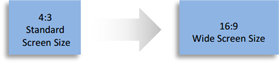
- Some older products that we have may only be in standard format, but they can easily be converted to widescreen.
- To do this, please open the SlideTeam product in Powerpoint, and go to
- Design ( On the top bar) -> Page Setup -> and select "On-screen Show (16:9)” in the drop down for "Slides Sized for".
- The slide or theme will change to widescreen, and all graphics will adjust automatically. You can similarly convert our content to any other desired screen aspect ratio.
Compatible With Google Slides

Get This In WideScreen
You must be logged in to download this presentation.


Do you want to remove this product from your favourites?
PowerPoint presentation slides
Best value for business planners, market analysts, sales and marketing professionals. Ideal presentation deck to make a formal business communication. Eye catching vibrant colored slide templates. High res to stand out against a background. Manual resizing and editing option to give any sort of finishing touch. Introduce company logo, name, trademark or animation for ultimate perfection. Simple downloading process that even beginners find easy to initiate.

People who downloaded this PowerPoint presentation also viewed the following :
Content of this Powerpoint Presentation
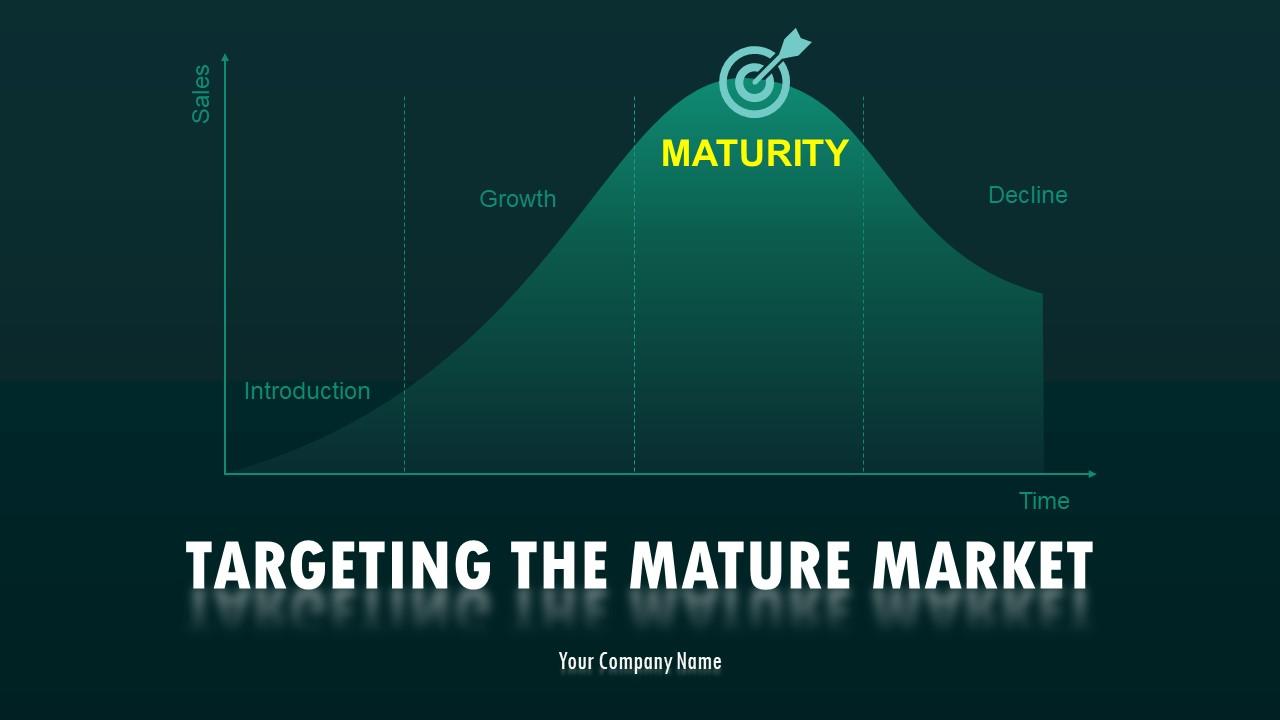
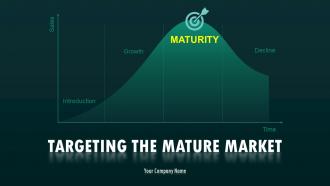
Slide 1: This is TARGETING THE MATURE MARKET slide. State your company name and begin.
Slide 2: This is an Agenda slide. State your agendas here.
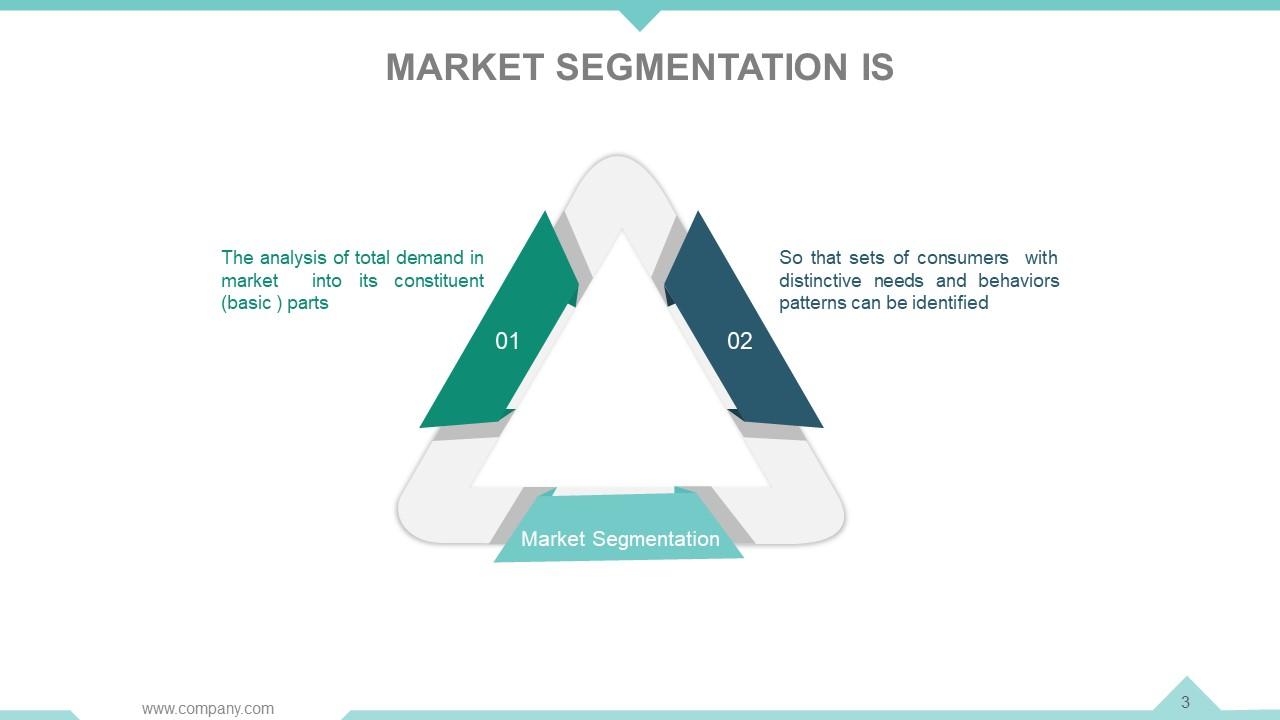
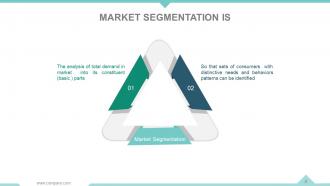
Slide 3: This slide showcases Market Segmentation Is- The analysis of total demand in market into its constituent (basic ) parts, So that sets of consumers with distinctive needs and behaviors patterns can be identified.
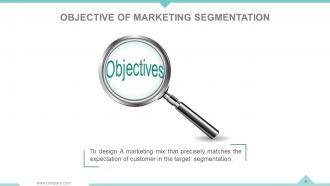
Slide 4: This slide states the Objective Of Marketing Segmentation with amgnifying glass imagery.
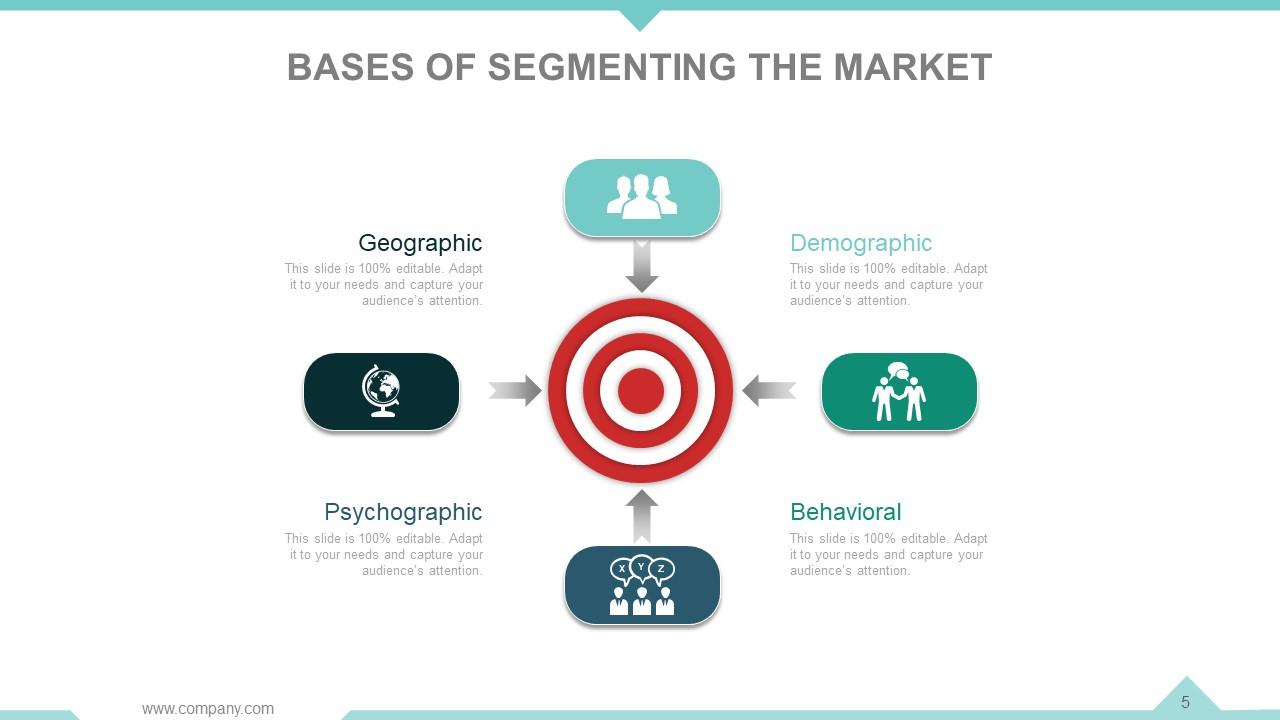
Slide 5: This slide shows the Bases Of Segmening The Market divided into the following categories- Demographic, Behavioral, Psychographic, Geographic.
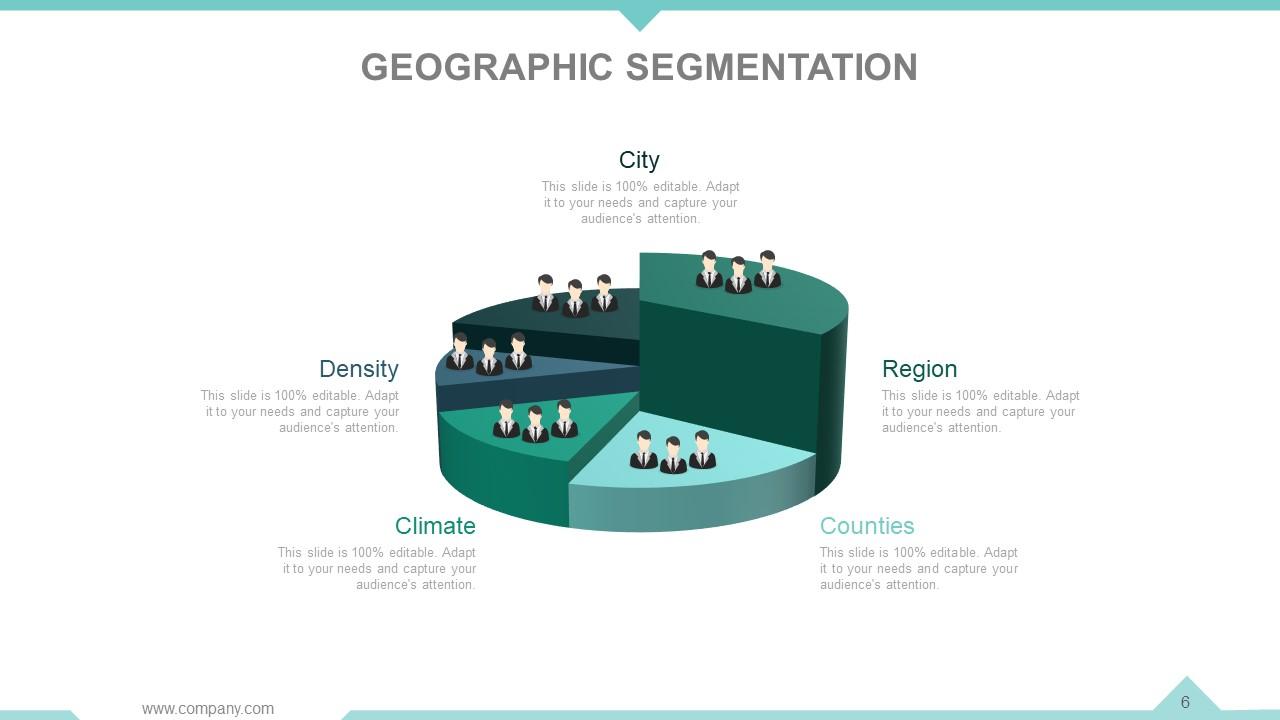
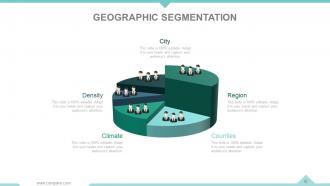
Slide 6: This slide shows Geographic Segmentation with- Region, City, Density, Climate, Counties.
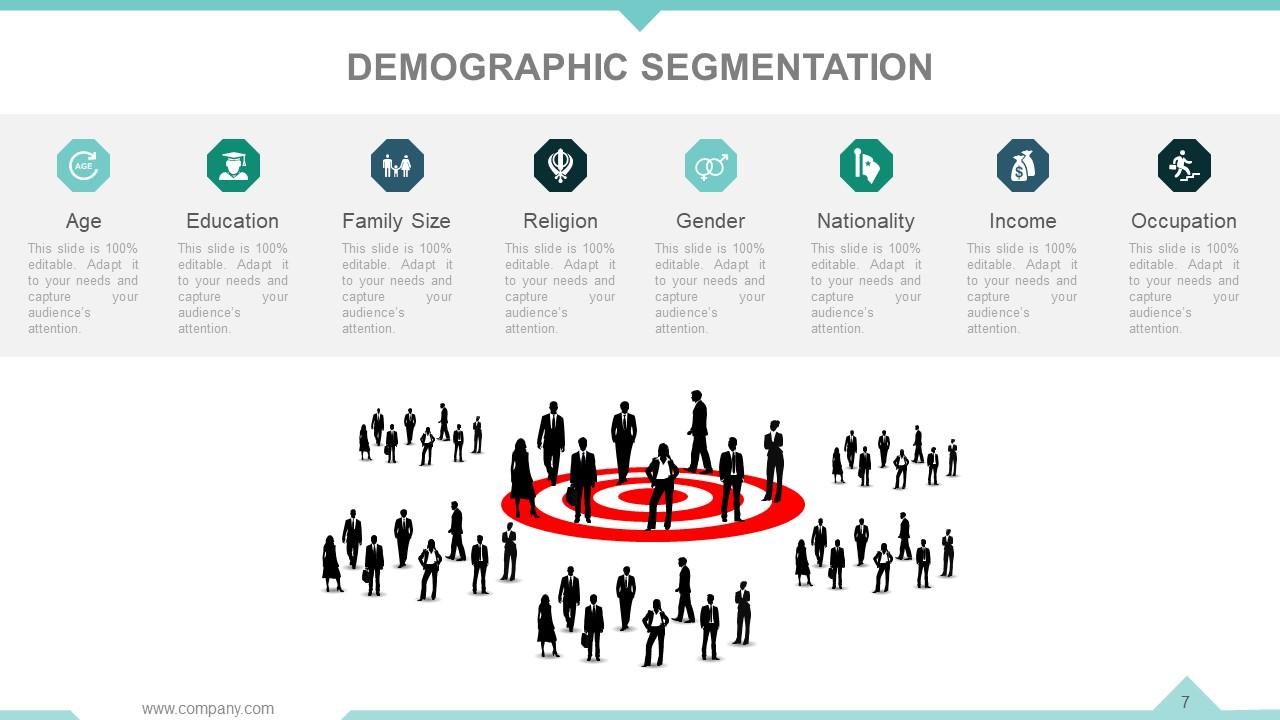
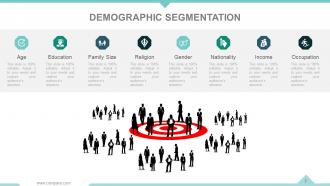
Slide 7: This slide showcases Demographic Segmentation with- Occupation, Income, Nationality, Gender, Religion, Family Size, Education, Age.
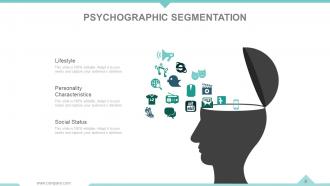
Slide 8: This slide showcases Psychographic Segmentation consisting of- Lifestyle, Personality Characteristics, Social Status.
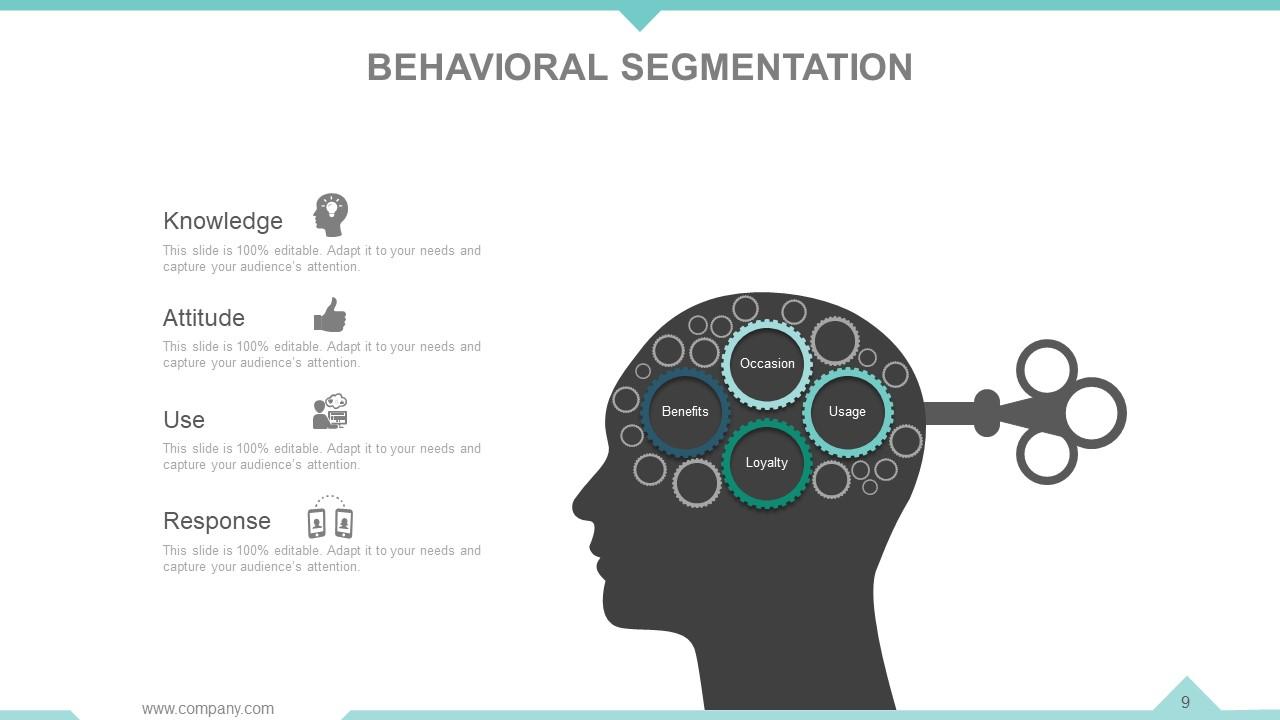
Slide 9: This slide showcases Behavioral Segmentation with- Usage, Occasion, Benefits, Loyalty, Knowledge, Attitude, Response, Use.
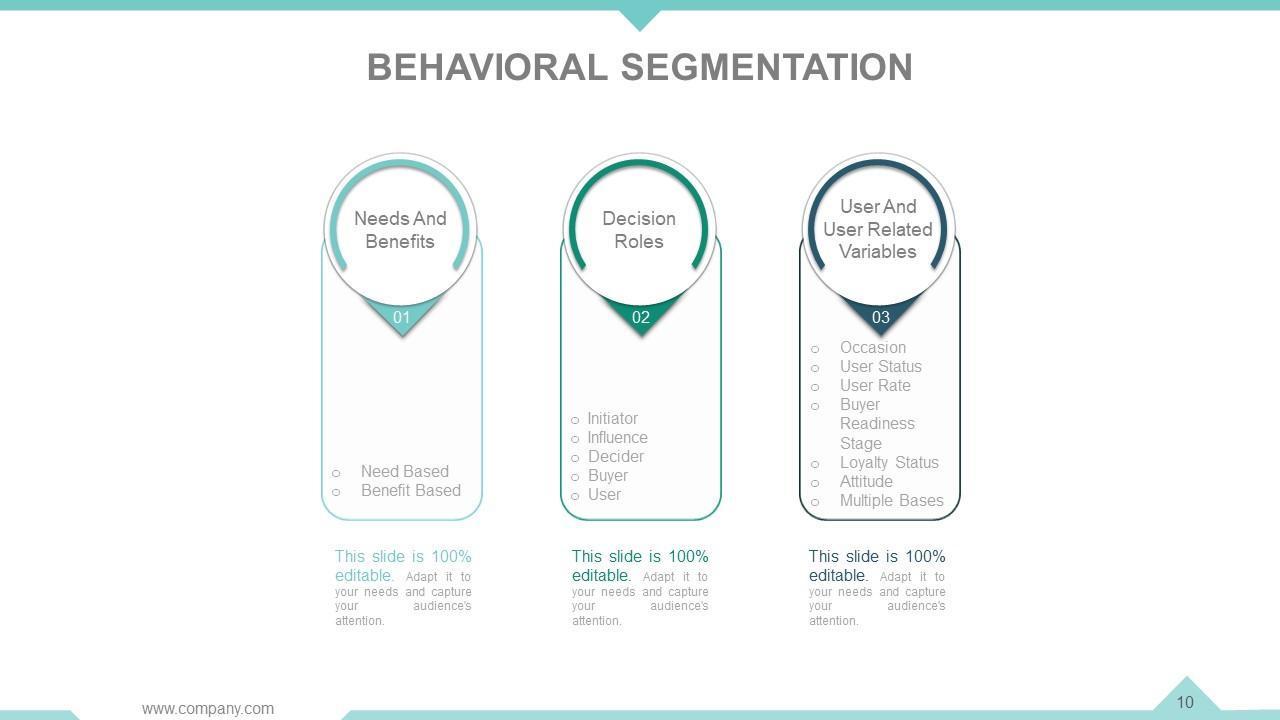
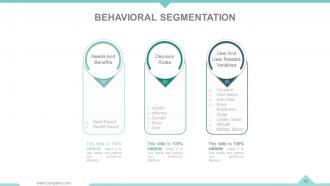
Slide 10: This is another slide showing Behavioral Segmentation with- Needs And Benefits Decision Roles User And User Related Variables
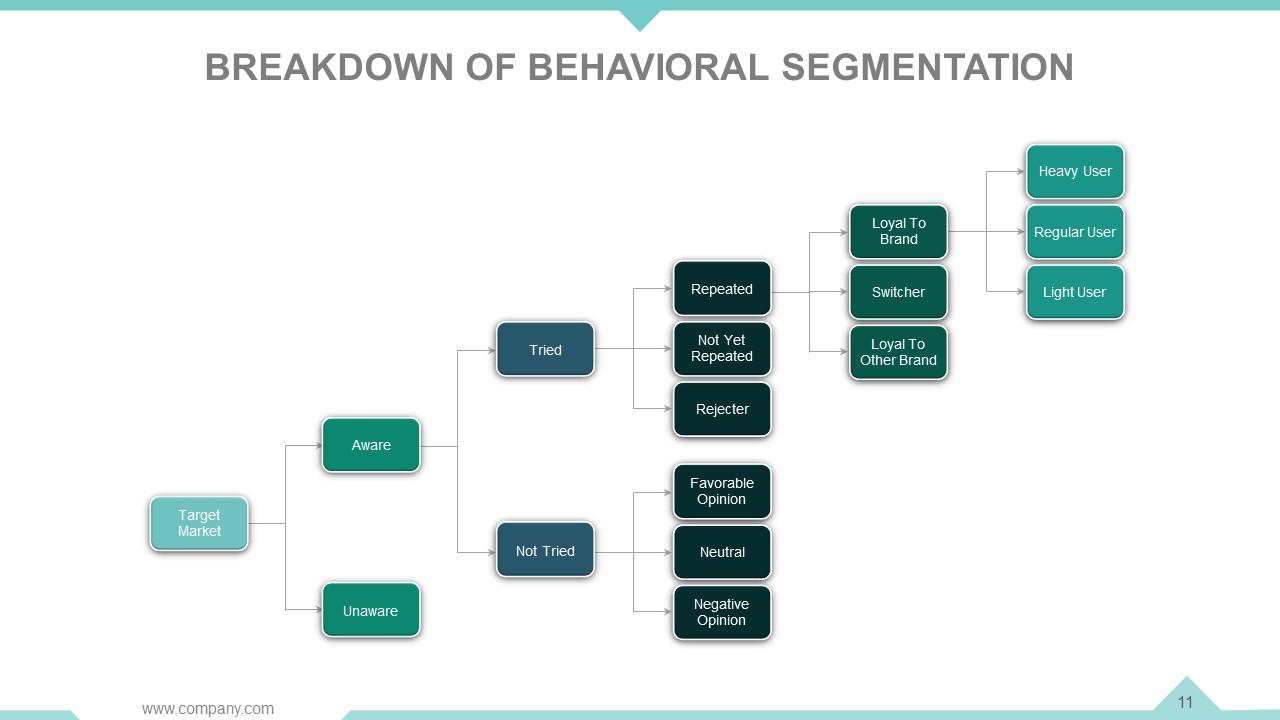
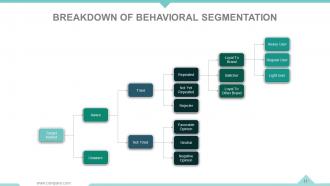
Slide 11: This slide showcases the Breakdown Of Behavioral Segmentation in a flow chart form.
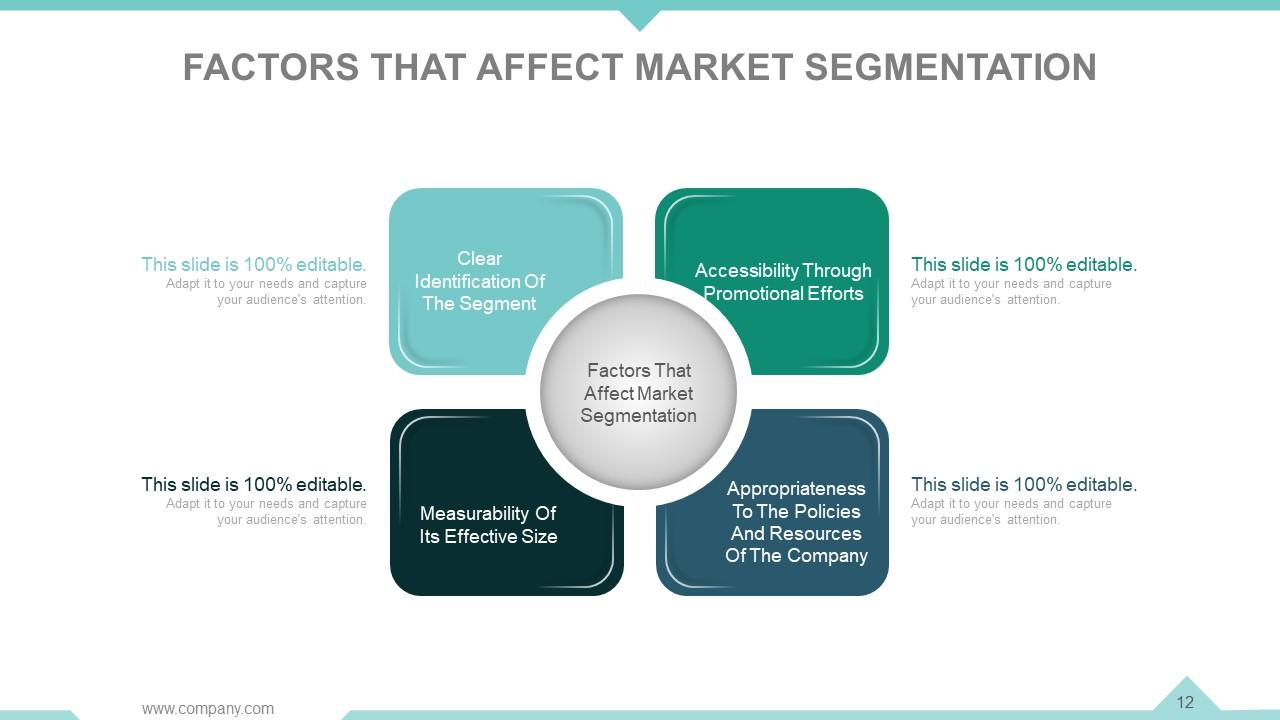
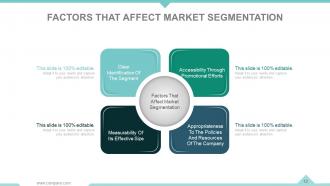
Slide 12: This slide states Factors That Affect Market Segmentation which include- Clear Identification Of The Segment, Accessibility Through Promotional Efforts, Appropriateness To The Policies And Resources Of The Company, Measurability Of Its Effective Size.
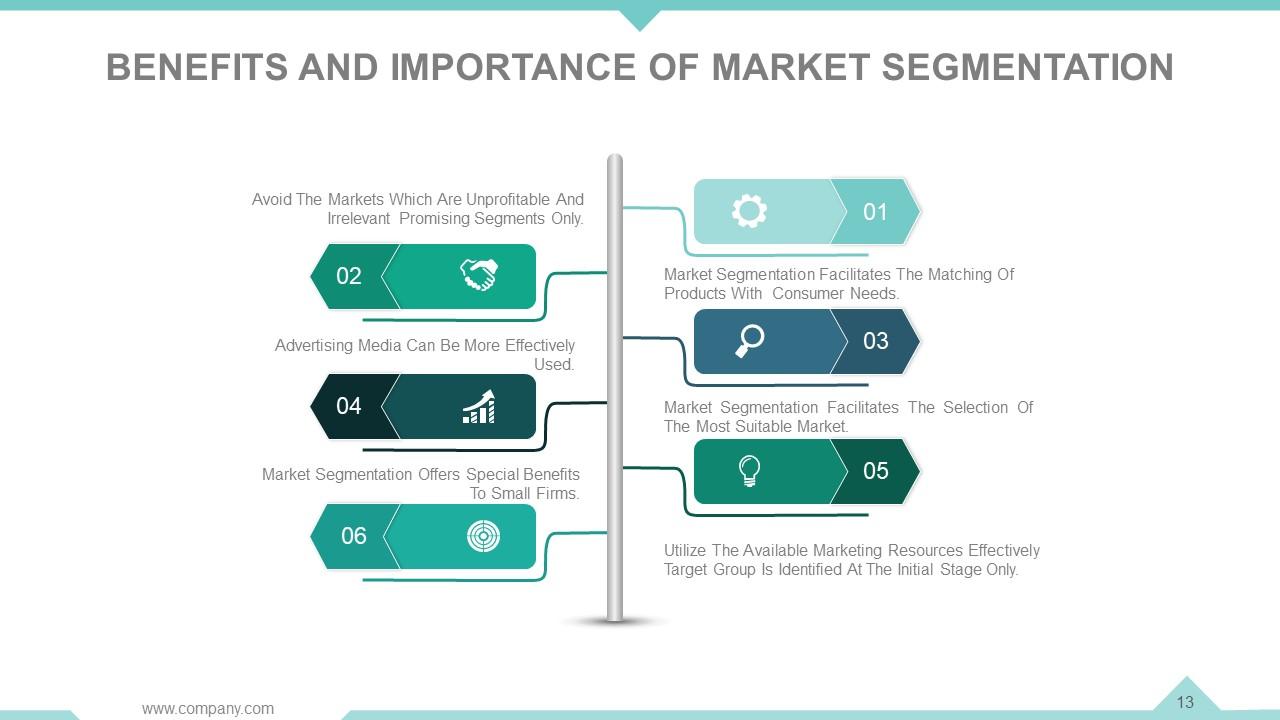
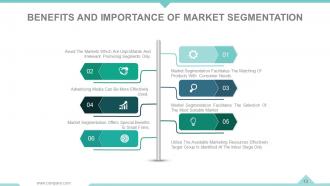
Slide 13: This slide states the Benefits And Importance Of Market Segmentation. Some of them are- Market Segmentation Facilitates The Matching Of Products With Consumer Needs, Market Segmentation Facilitates The Selection Of The Most Suitable Market, Utilize The Available Marketing Resources Effectively Target Group Is Identified At The Initial Stage Only, Avoid The Markets Which Are Unprofitable And Irrelevant Promising Segments Only, Advertising Media Can Be More Effectively Used, Market Segmentation Offers Special Benefits To Small Firms.
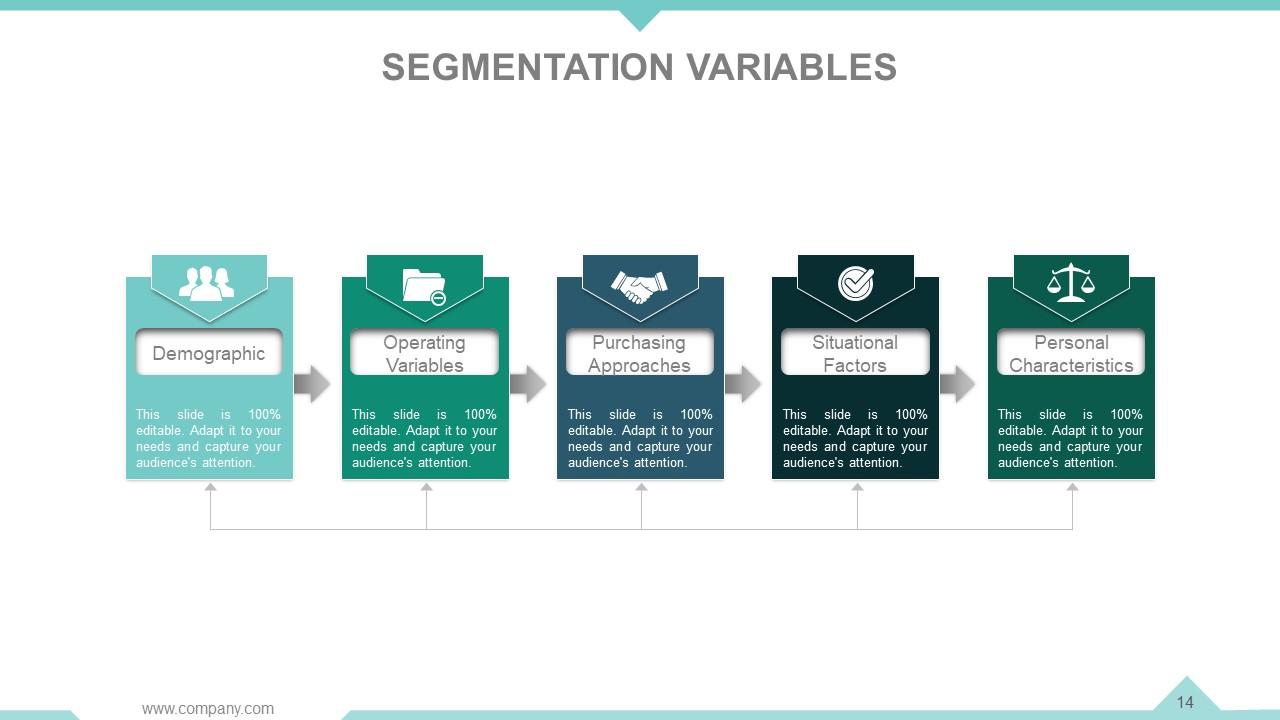
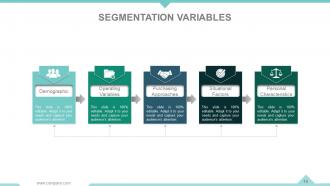
Slide 14: This slide shows Segmentation Variables listed as- Demographic, Operating Variables, Purchasing Approaches, Situational Factors, Personal Characteristics.
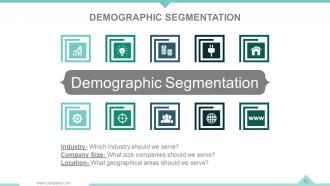
Slide 15: This slide shows Demographic Segmentation with- Industry- Which industry should we serve? Company Size- What size companies should we serve? Location- What geographical areas should we serve?.
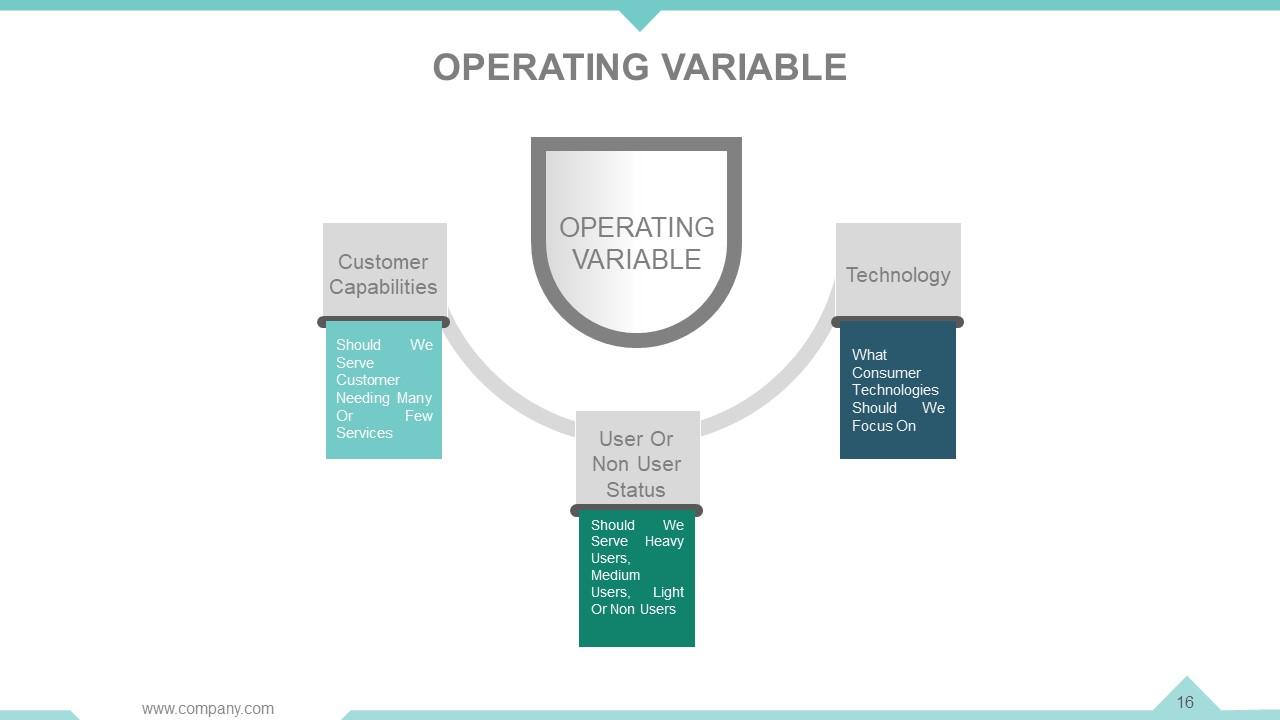
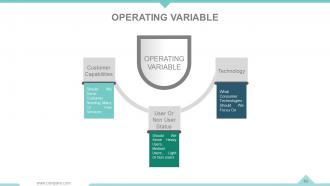
Slide 16: This slide shows Operating Variable such as- Customer Capabilities, User Or Non User Status, Technology.
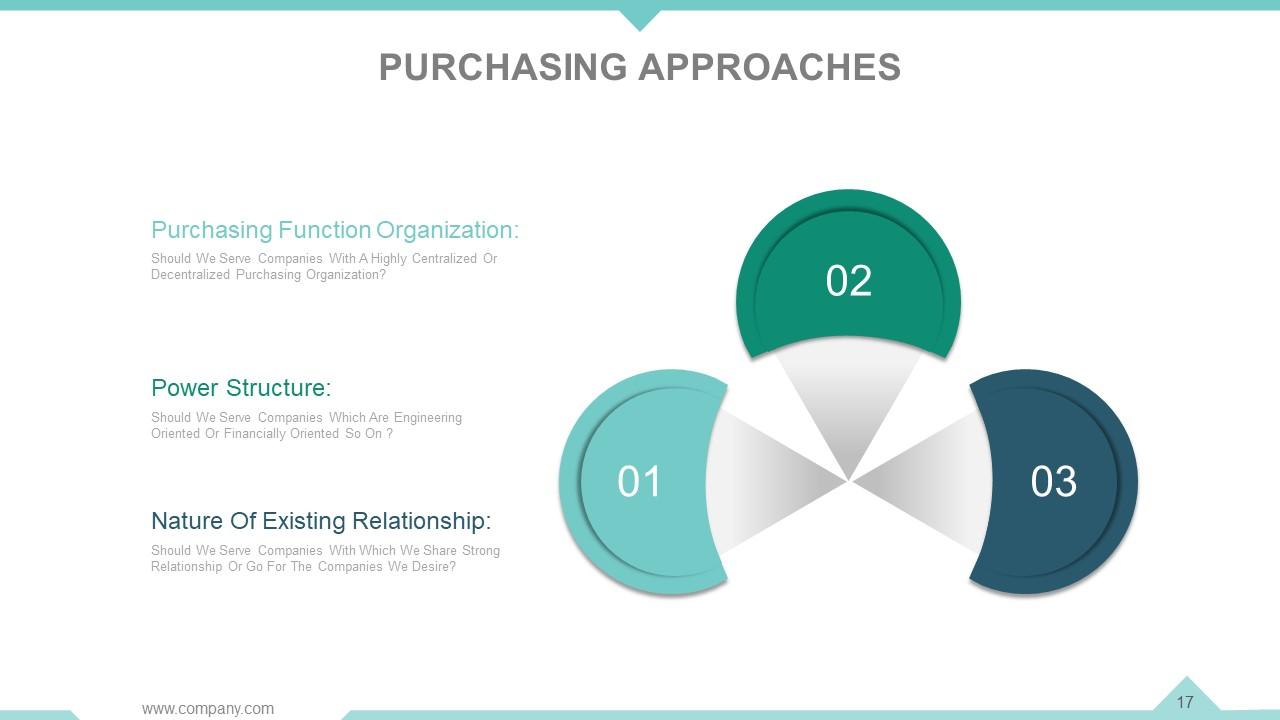
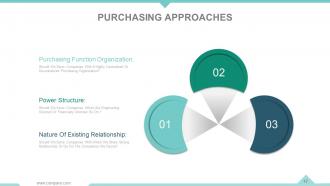
Slide 17: This slide shows Purchasing Approaches with- Purchasing Function Organization, Power Structure, Nature Of Existing Relationship.
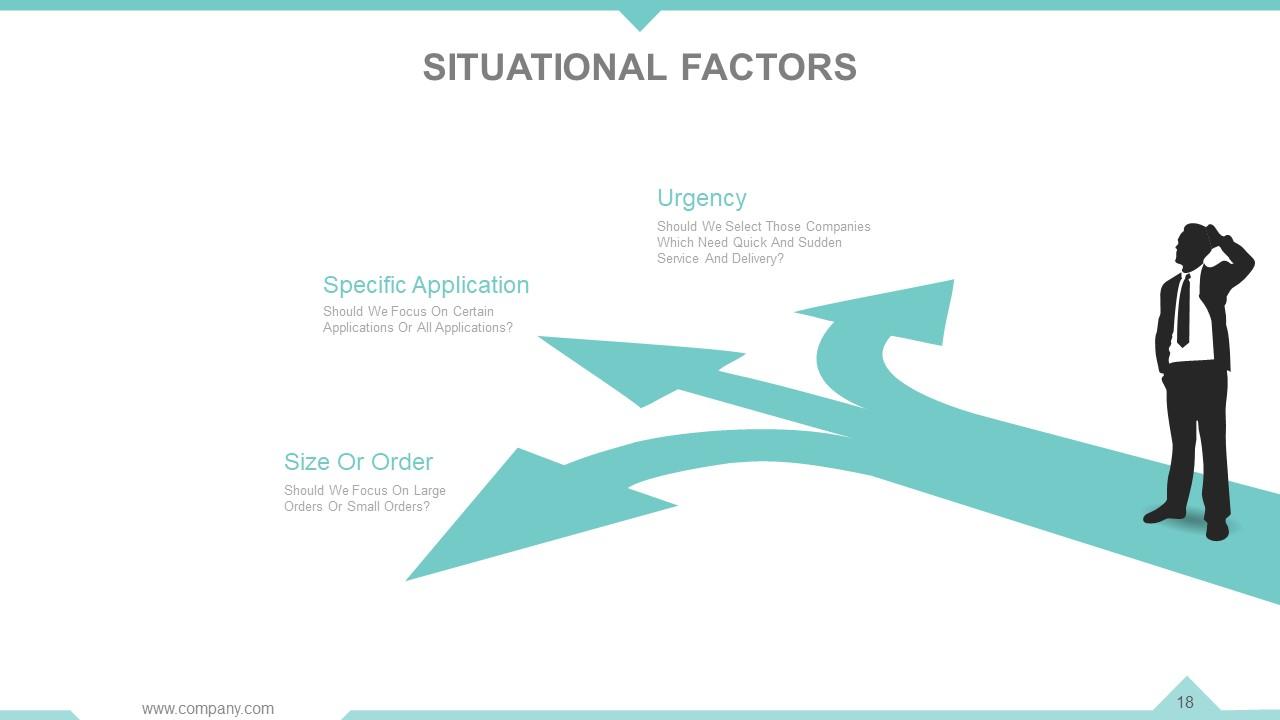
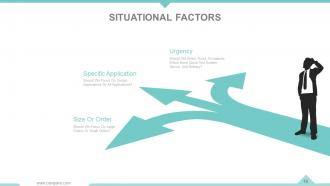
Slide 18: This slide shows Situational Factors with- Urgency, Specific Application, Size Or Order.
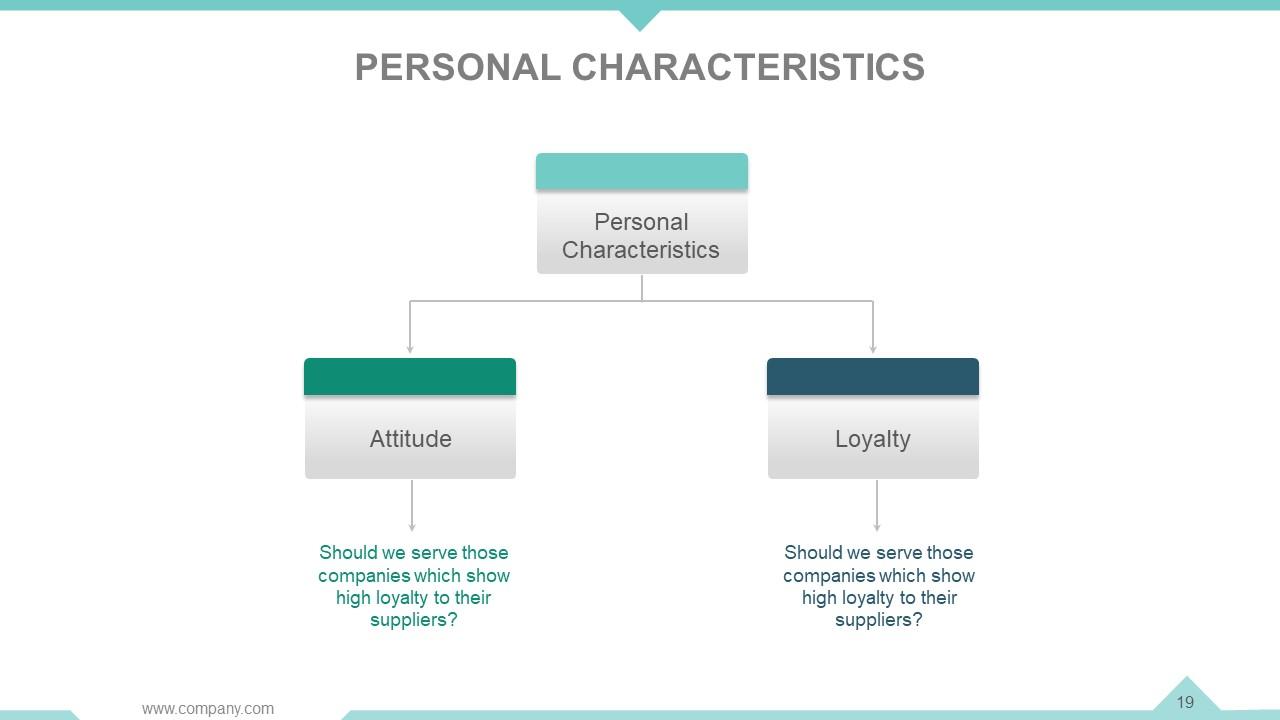
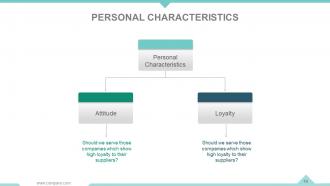
Slide 19: This slide states Personal Characteristics segregated into- Attitude and Loyalty
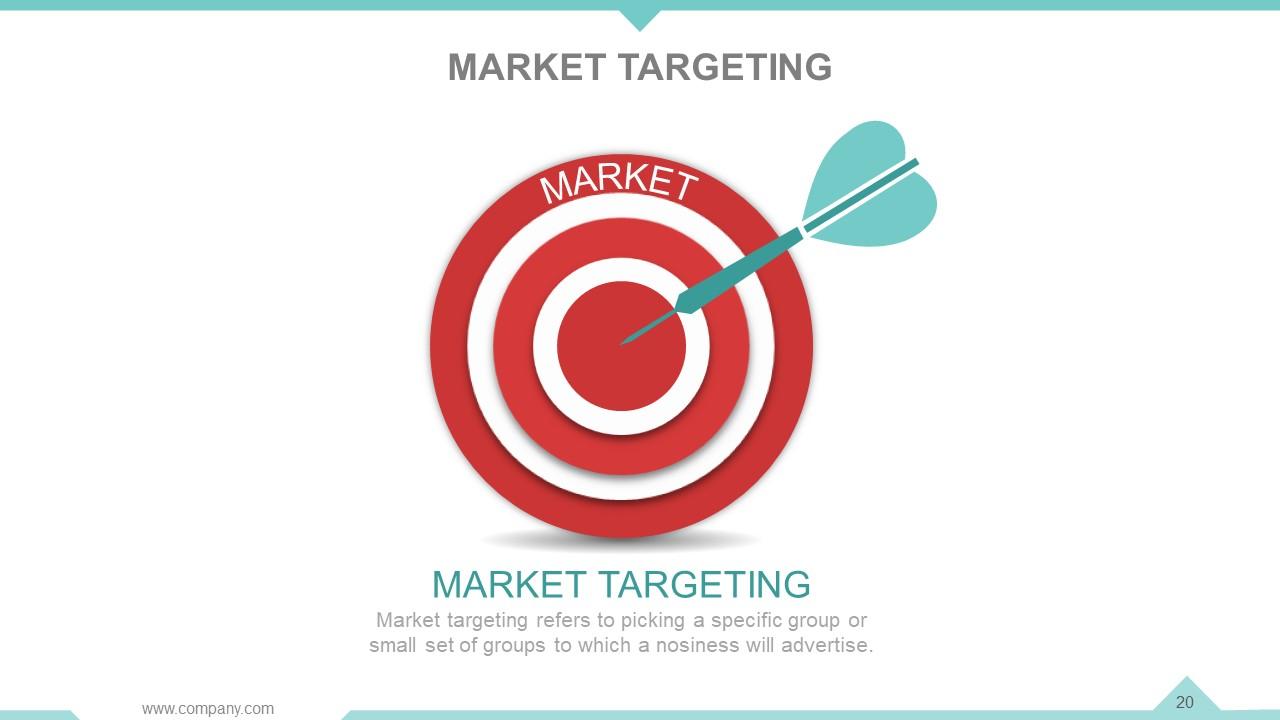
Slide 20: This slide shows Market targeting with arrow and target imagery.
Slide 21: This slide states the Purpose Of Market Targeting.
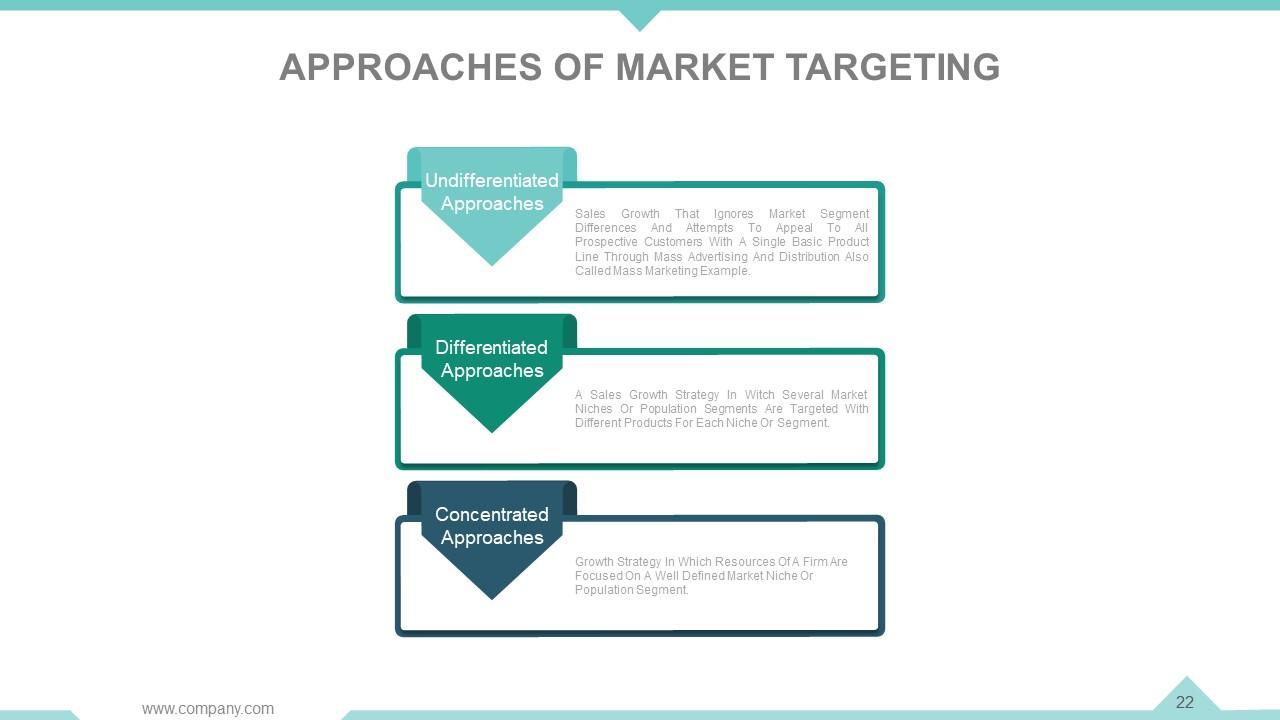
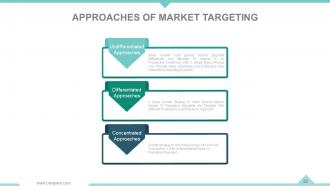
Slide 22: This slide showcases Approaches Of Market Targeting segregated into 3 categories- Undifferentiated Approaches, Differentiated Approaches, Concentrated Approaches.
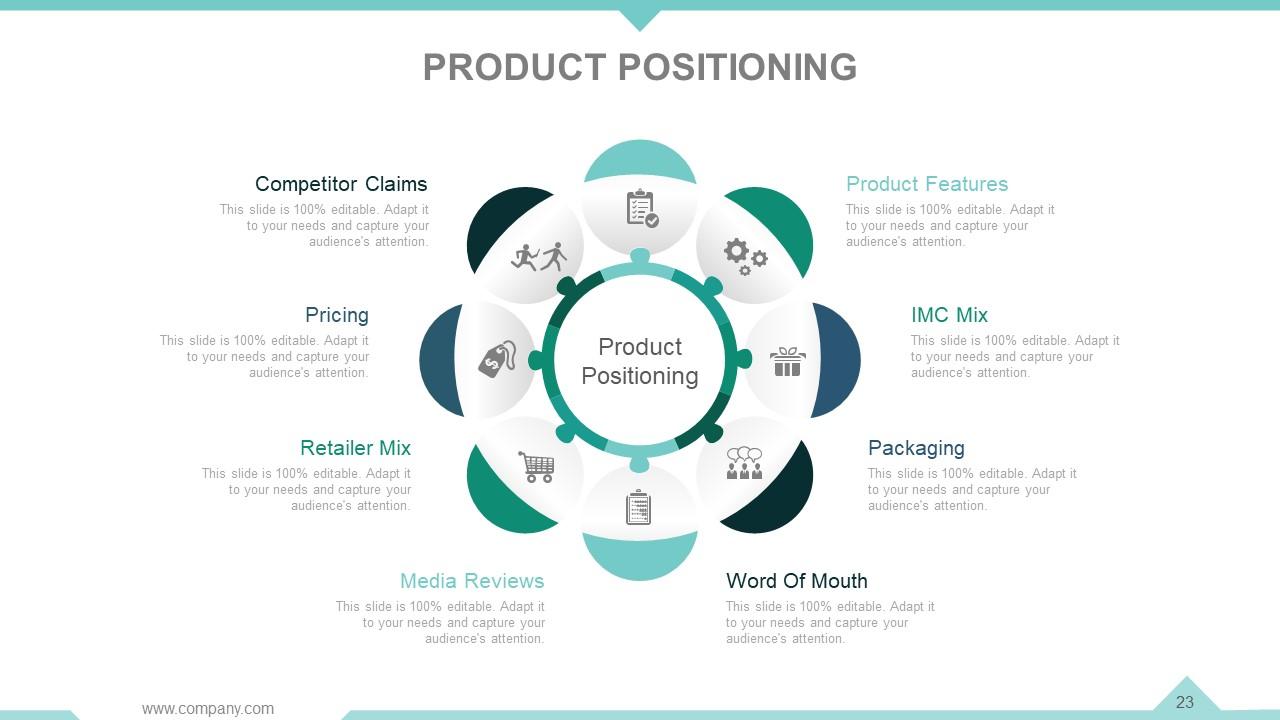
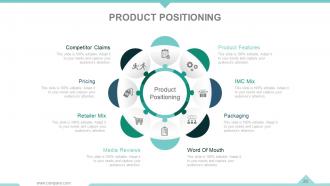
Slide 23: This is Product Positioning slide with the following points- Product Features, IMC Mix, Packaging, Competitor Claims, Pricing, Retailer Mix, Word Of Mouth, Media Reviews.
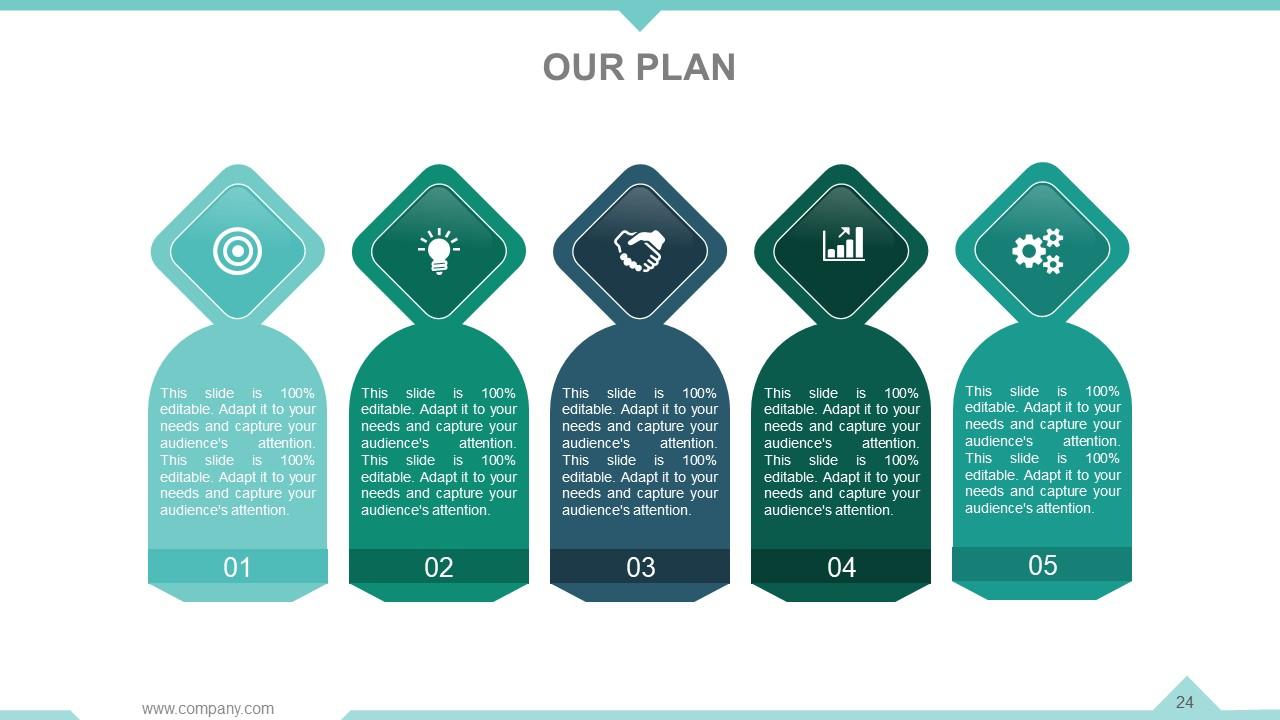
Slide 24: This is Our Plan slide to state.
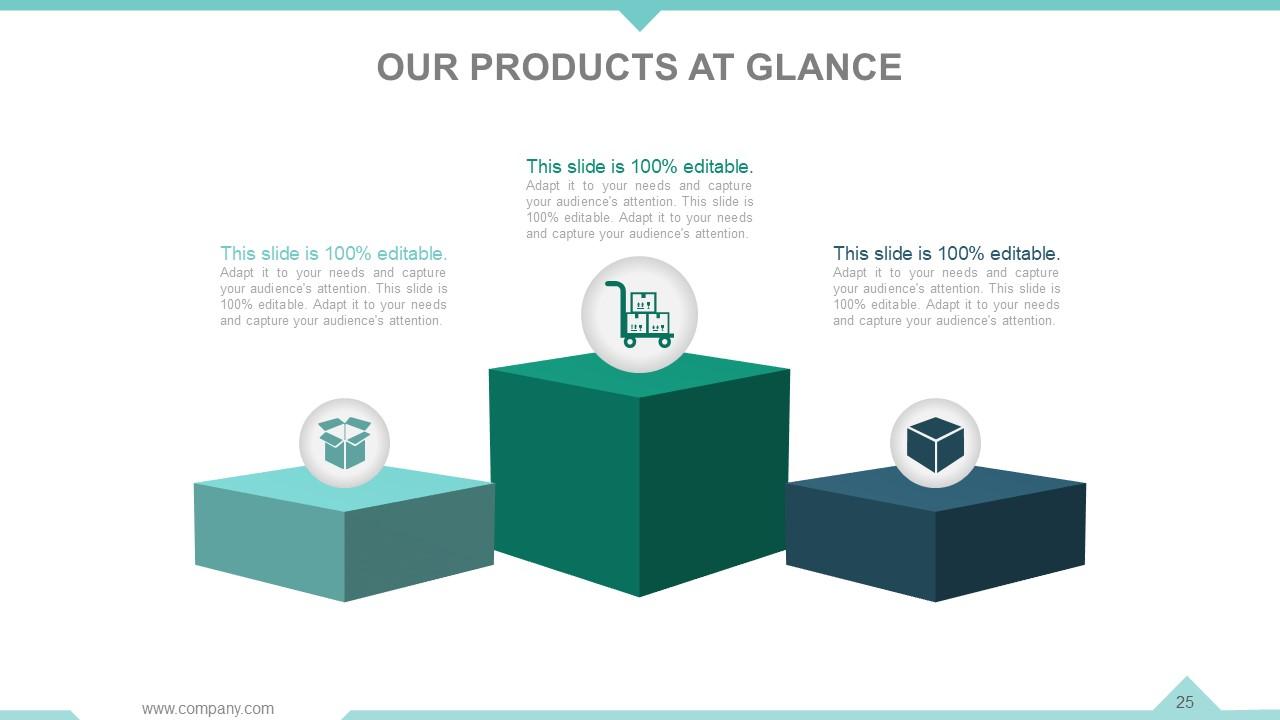
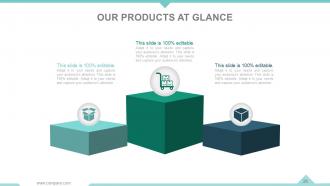
Slide 25: This is Our Products At Glance slide. Use it to state product specifications, information etc.
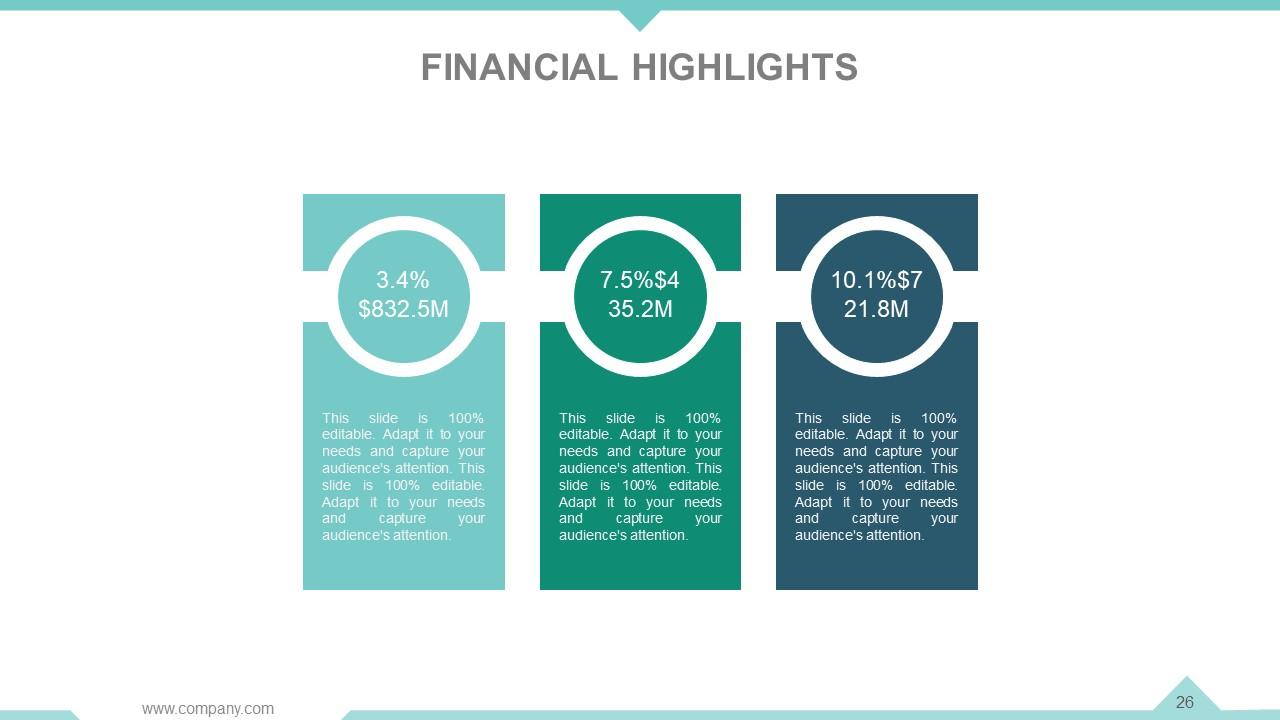
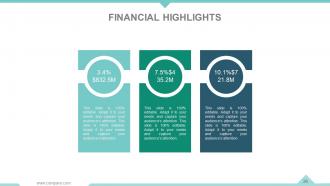
Slide 26: This slide presents Financial Highlights. Use it to state financial aspects, stats etc.
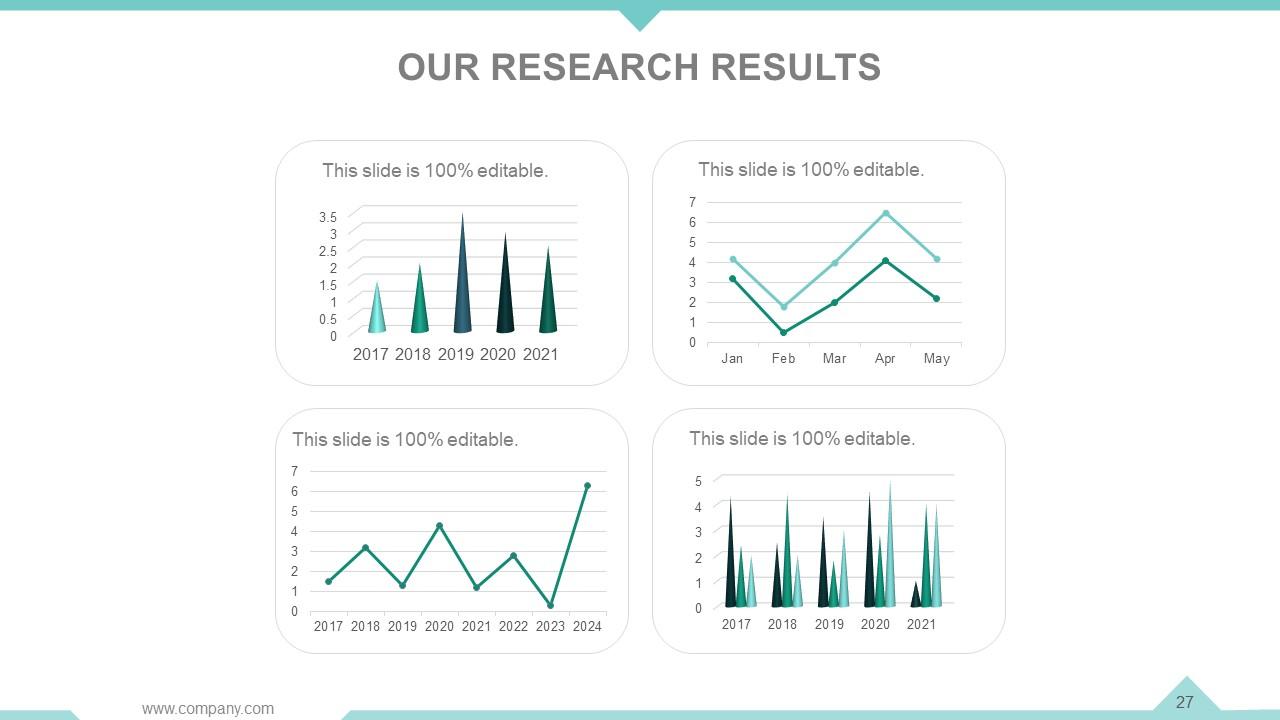
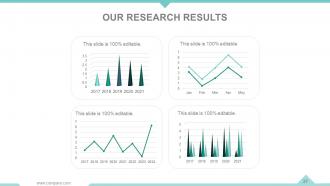
Slide 27: This slide showcases Our Research Results in charts and graphs.
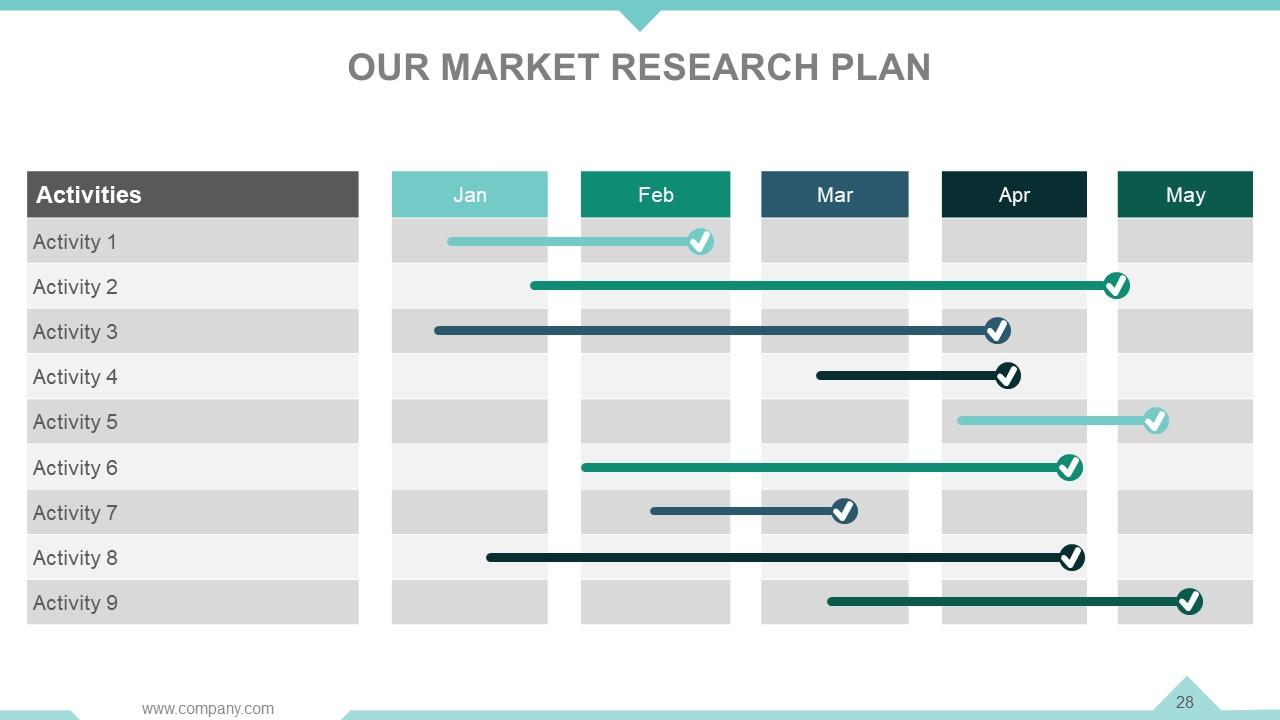
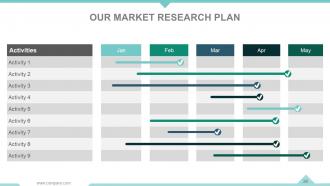
Slide 28: This slide presents Our Market Research Plan in gantt chart form.
Slide 29: This slide showcases Our Customers with name and image boxes to state.
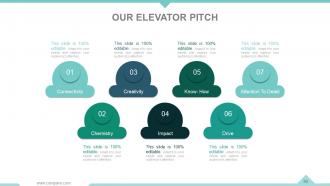
Slide 30: This slide showcases Our Elevator Pitch with- Chemistry, Impact, Drive, Connectivity, Creativity, Know- How, Attention To Detail.
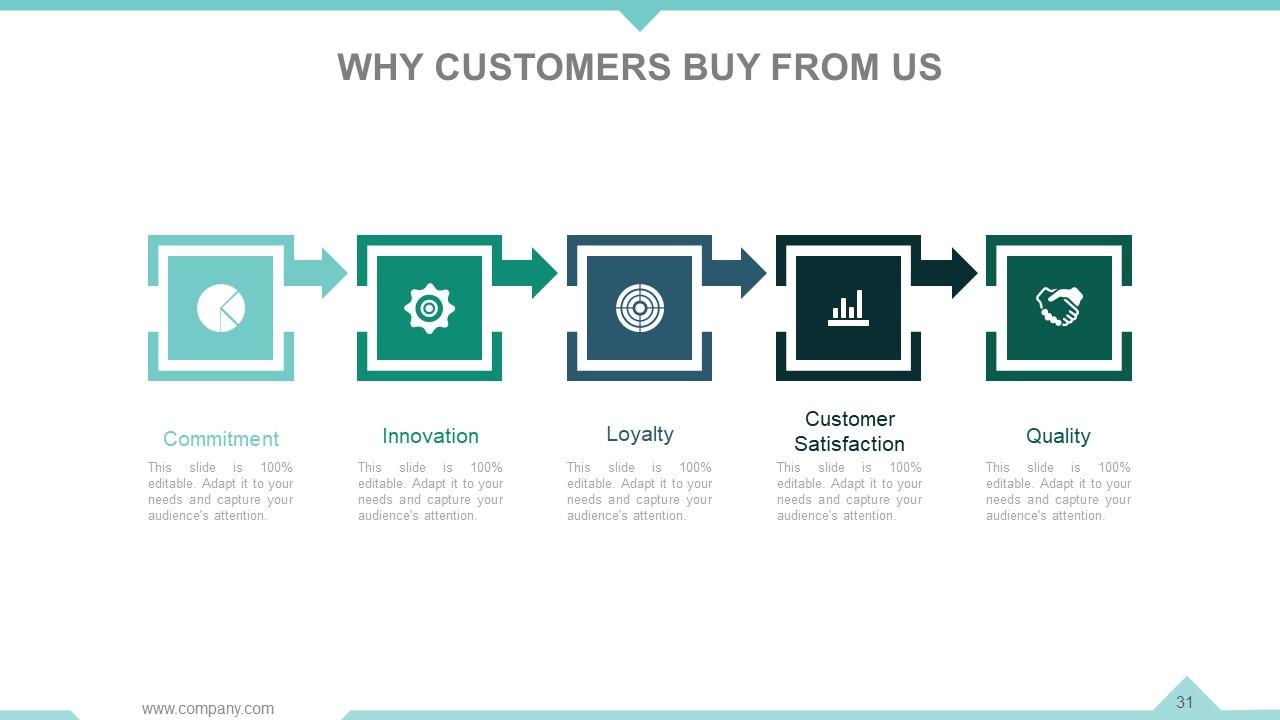
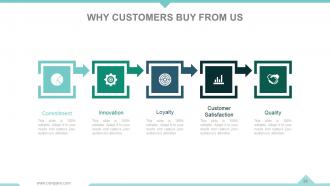
Slide 31: This slide states Why Customers Buy From Us with examples such as- Commitment, Innovation, Loyalty, Quality, Customer Satisfaction.
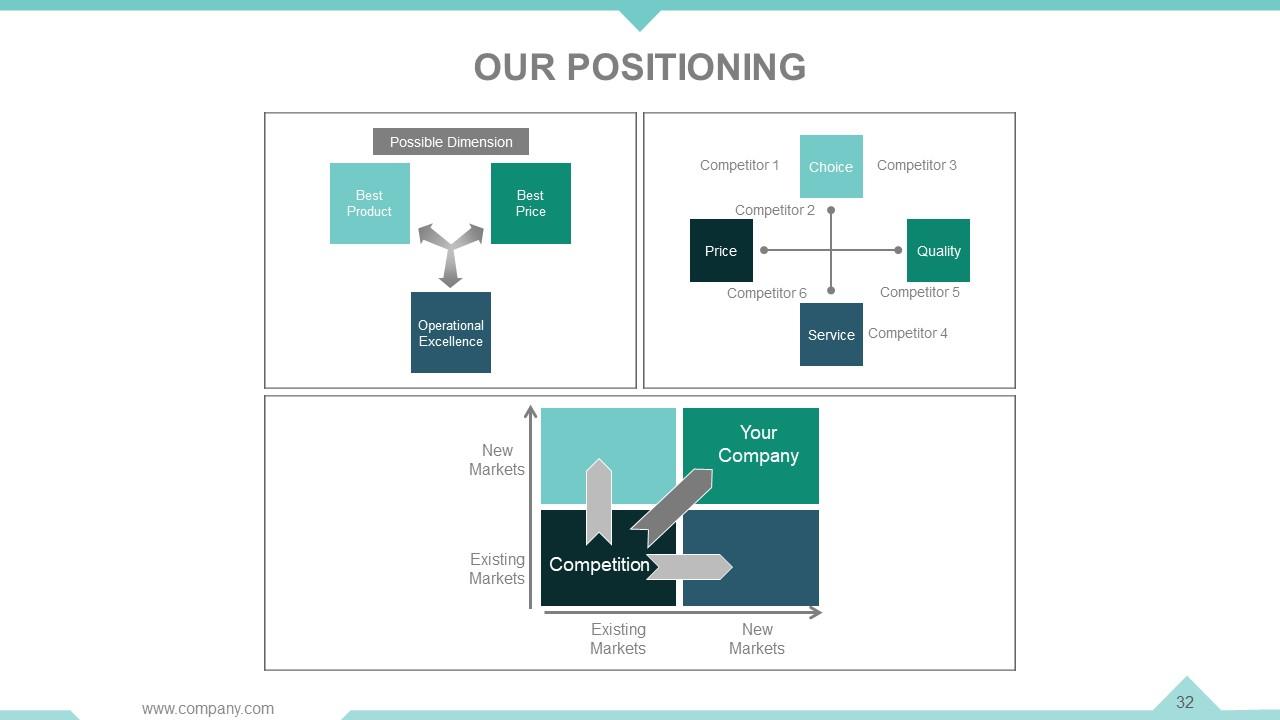
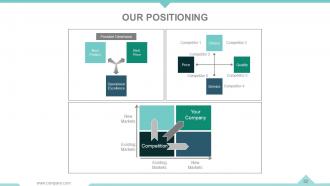
Slide 32: This slide shows Our Positioning matrix to show information etc.
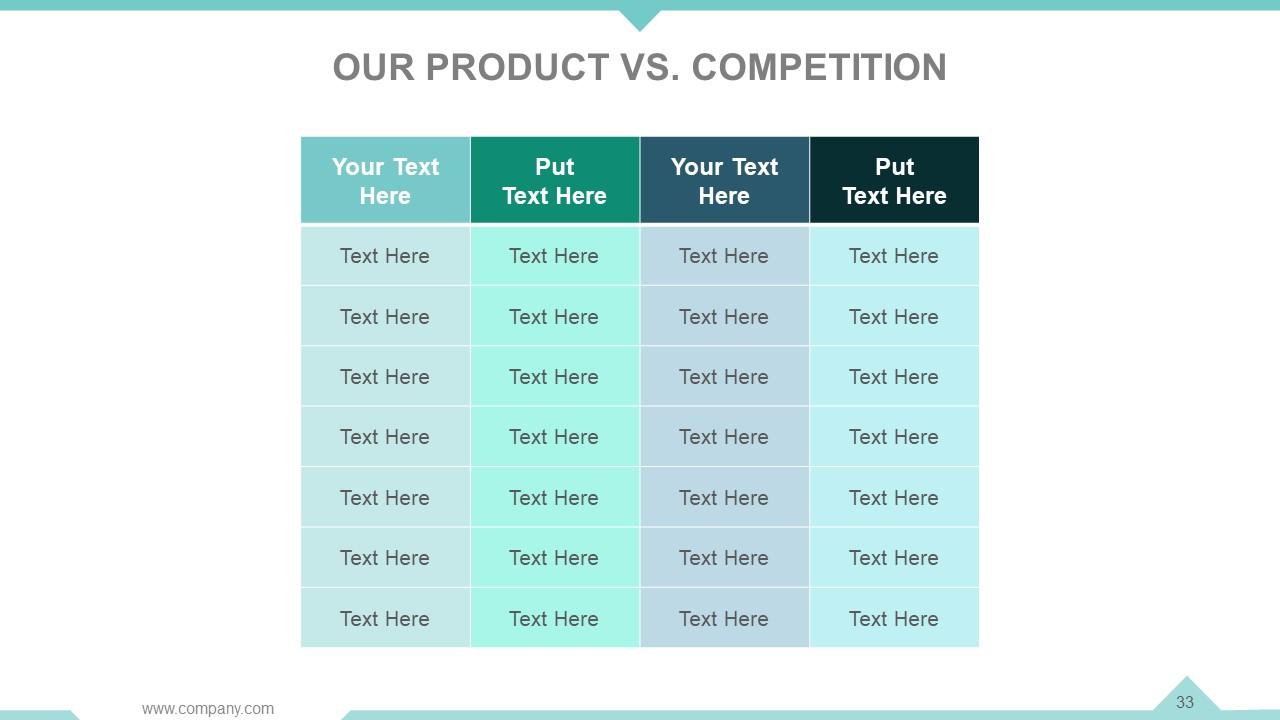
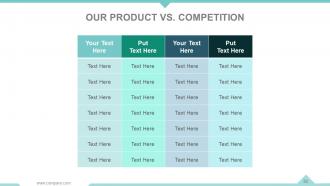
Slide 33: This is Our Product Vs. Competition slide presented in a tabular form.
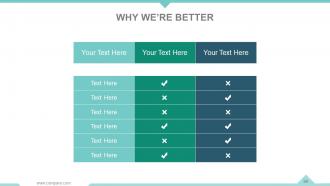
Slide 34: This slide shows Why We’re Better. State credentials etc. here.
Slide 35: This slide is titled Additional Slides to move forward. You can modify the content as required.
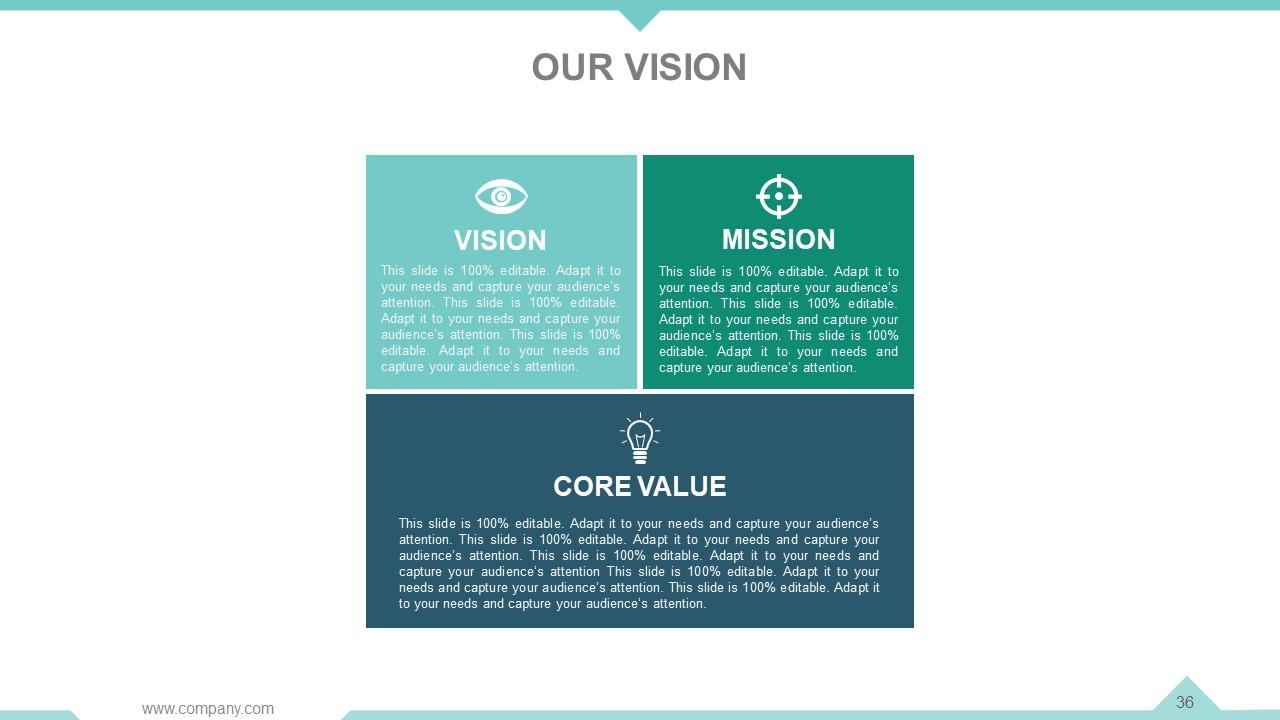
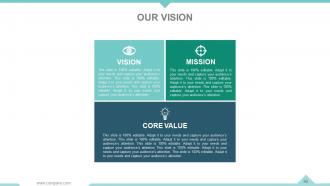
Slide 36: This is Our Vision slide with text boxes. State your vision, mission and core values here.
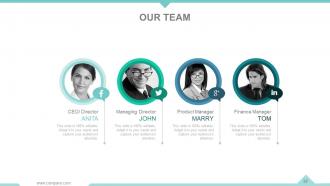
Slide 37: This is Our Team slide. Mention name, designation etc. of the members here.
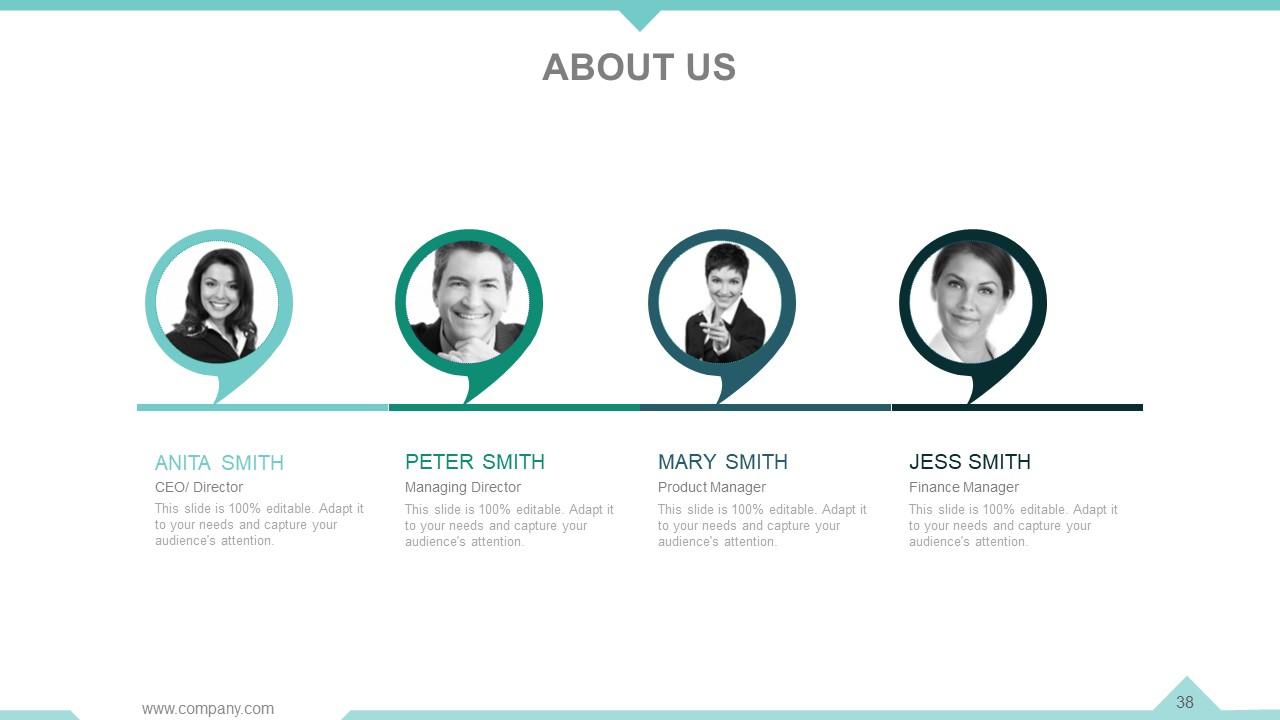
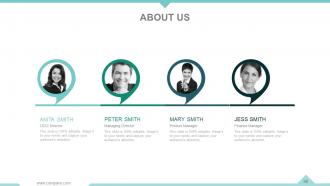
Slide 38: This is an About Us slide. Provide a brief introduction about company/ team here.
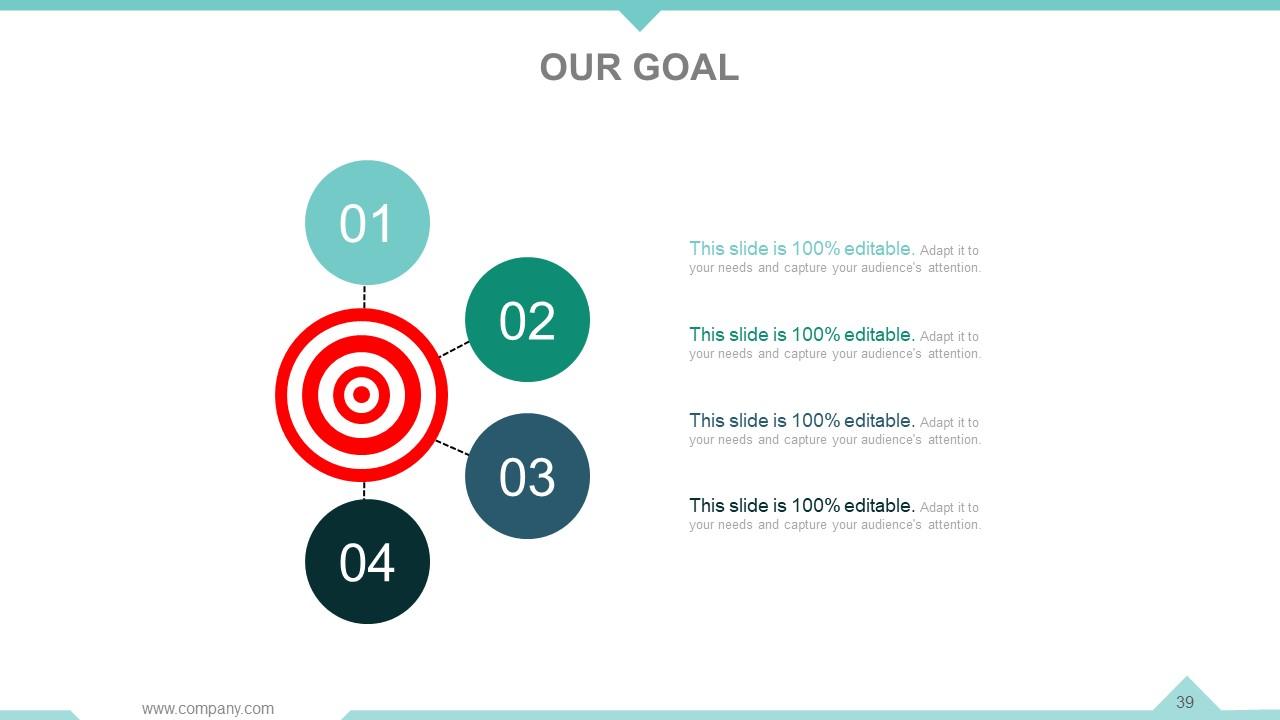
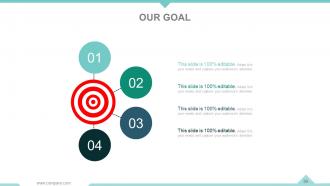
Slide 39: This is Our Goal slide to state company goals, aspirations etc.
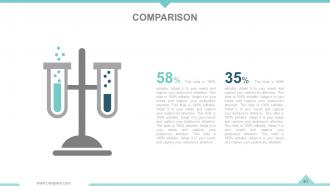
Slide 40: This is a Comparison slide to compare two products/ entities etc.
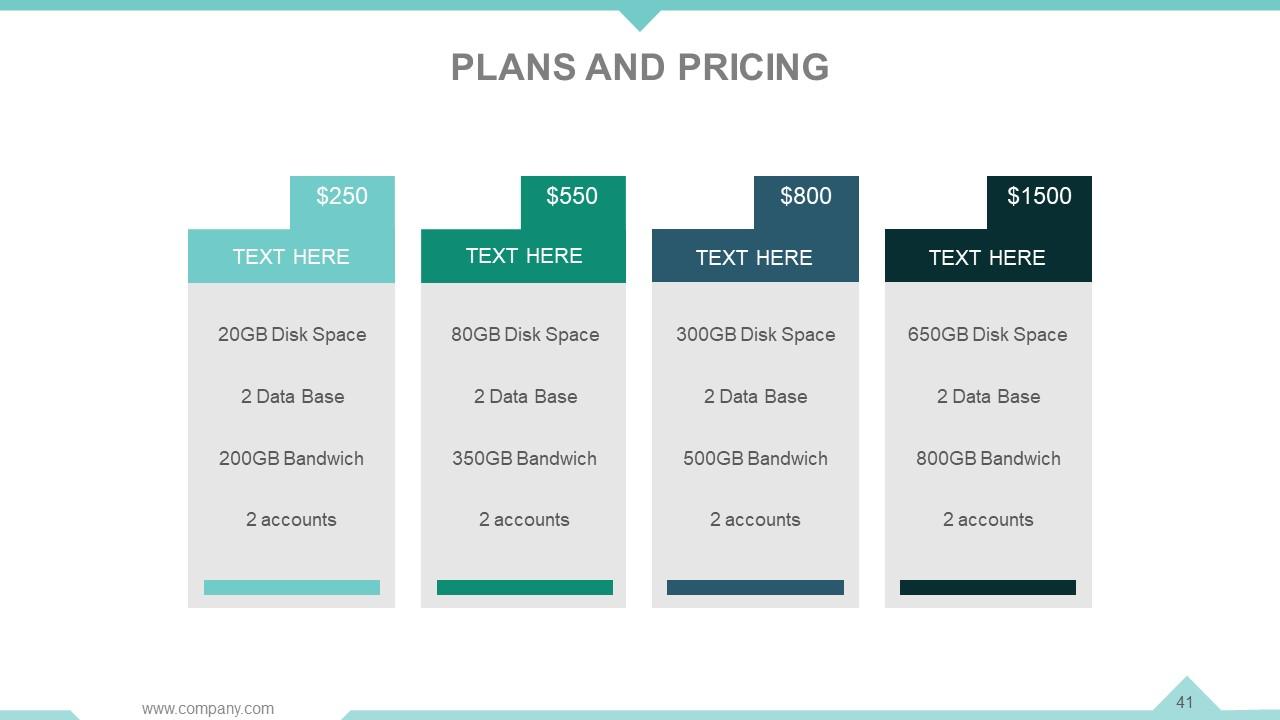
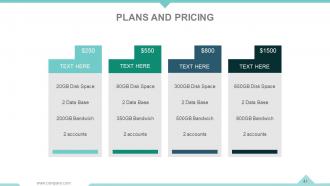
Slide 41: This is Plans And Pricing slide. State your plans and pricing here.
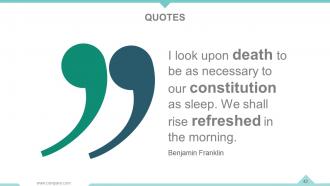
Slide 42: This slide presents Quotes. Sate your inspirational quotes here. You may change the slide content as per need.
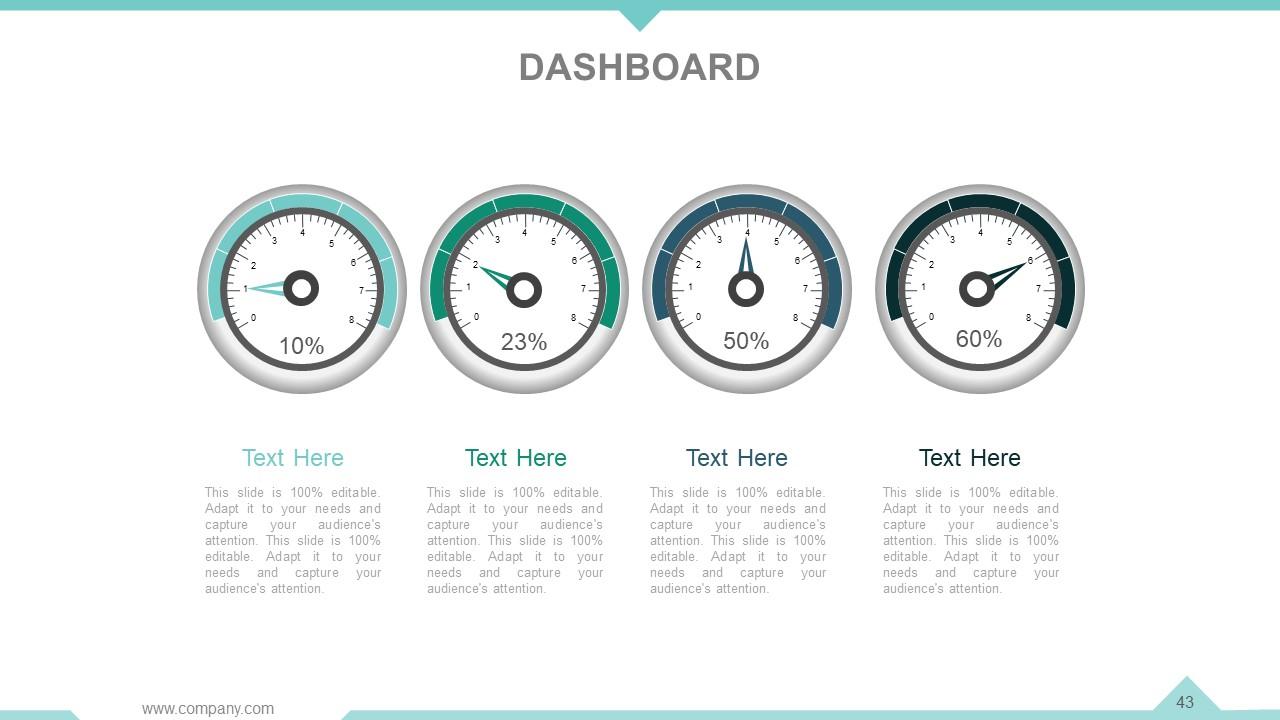
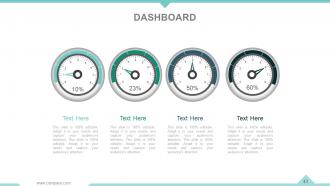
Slide 43: This is Dashboard slide to show information in percentages etc.
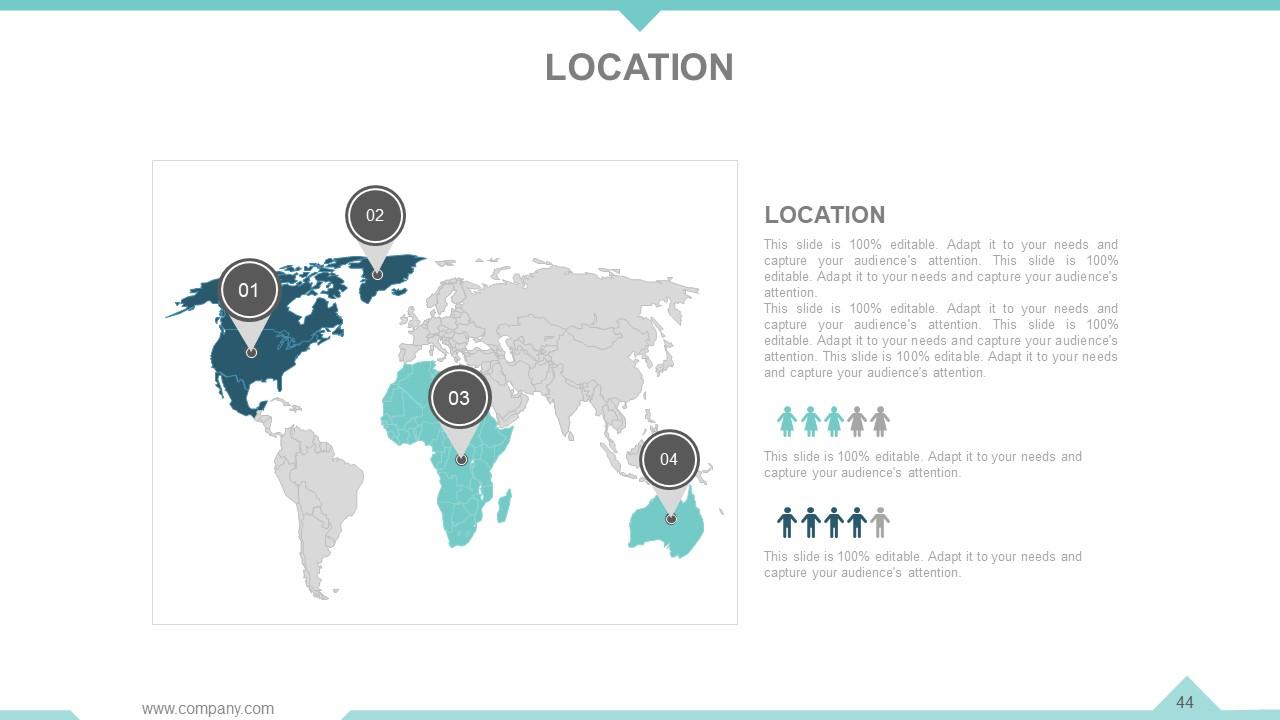
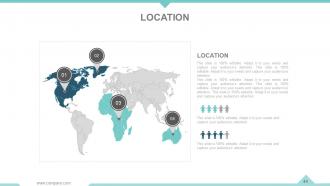
Slide 44: This is a Location slide to show global growth, presence etc. on a world map image.
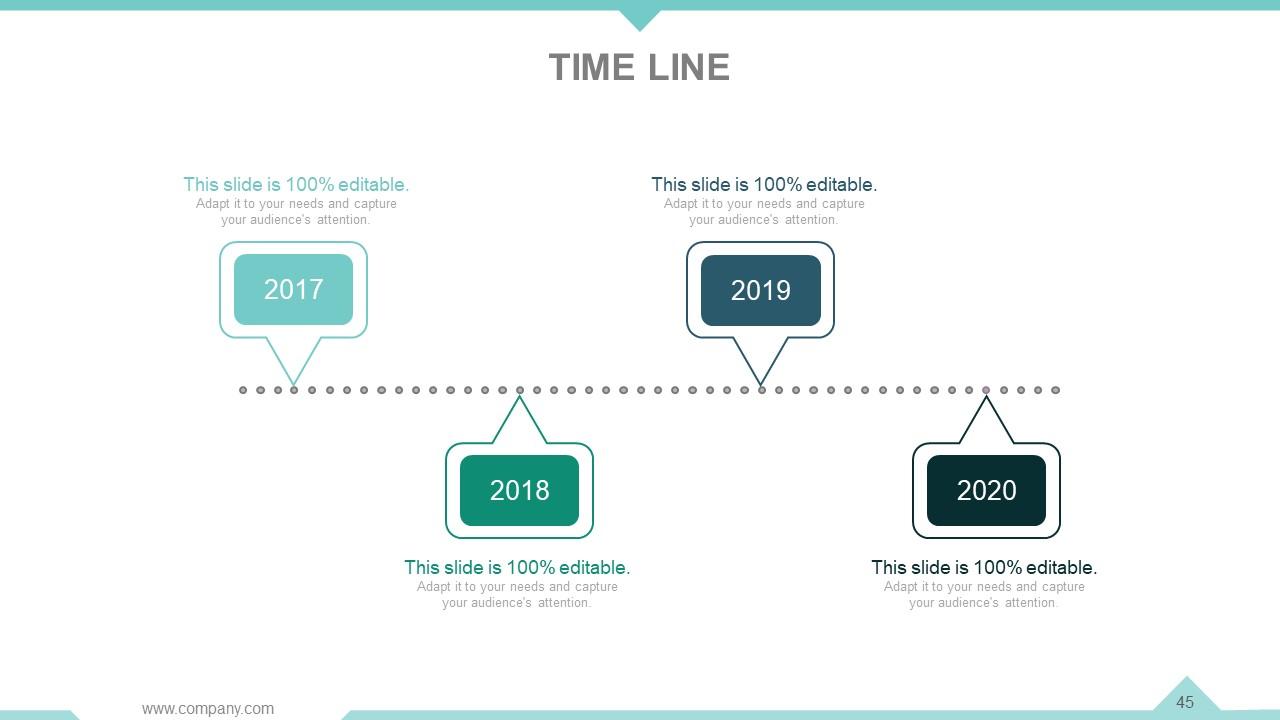
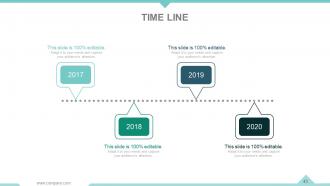
Slide 45: This slide presents a Timeline to show milestones, important highlights etc.
Slide 46: This is a Newspaper slide to highlight something or add memorabilia.
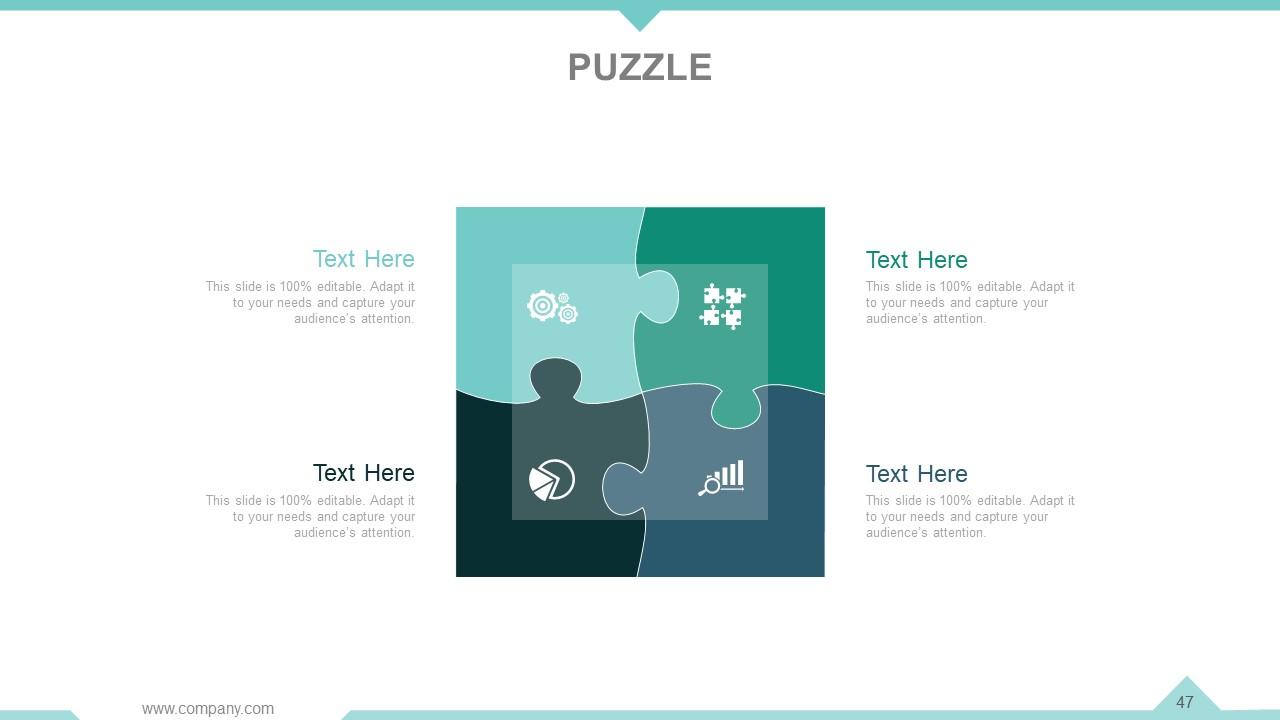
Slide 47: This is a Puzzle pieces image slide to show information, specifications etc.
Slide 48: This is a Target image slide. State targets, etc. here.
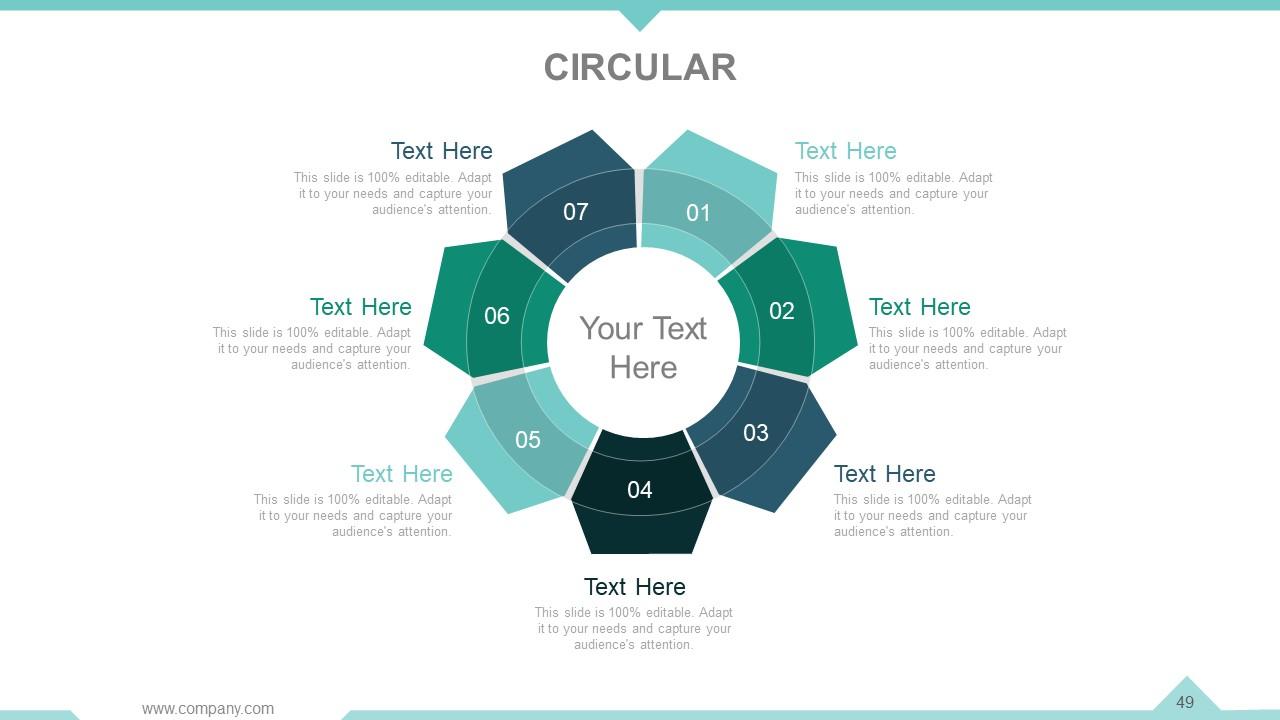
Slide 49: This is a Circular image slide to show information etc.
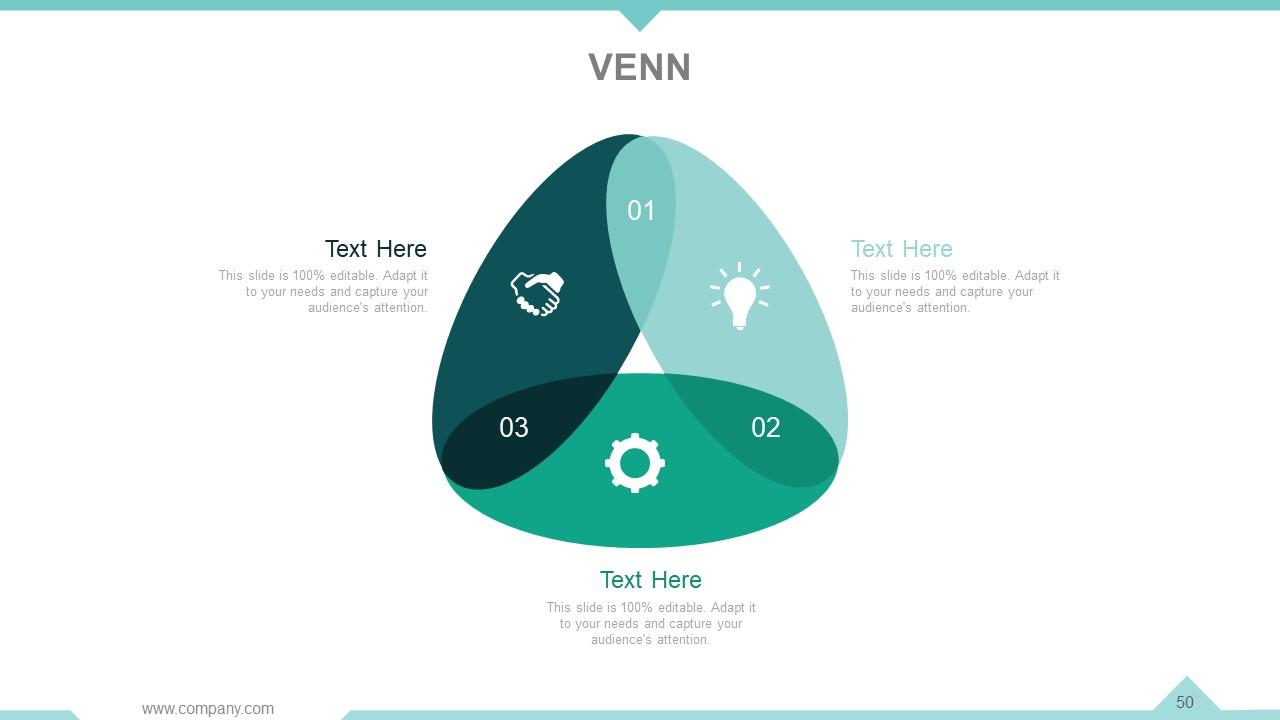
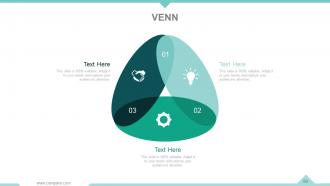
Slide 50: This is a Venn diagram slide to show information etc.
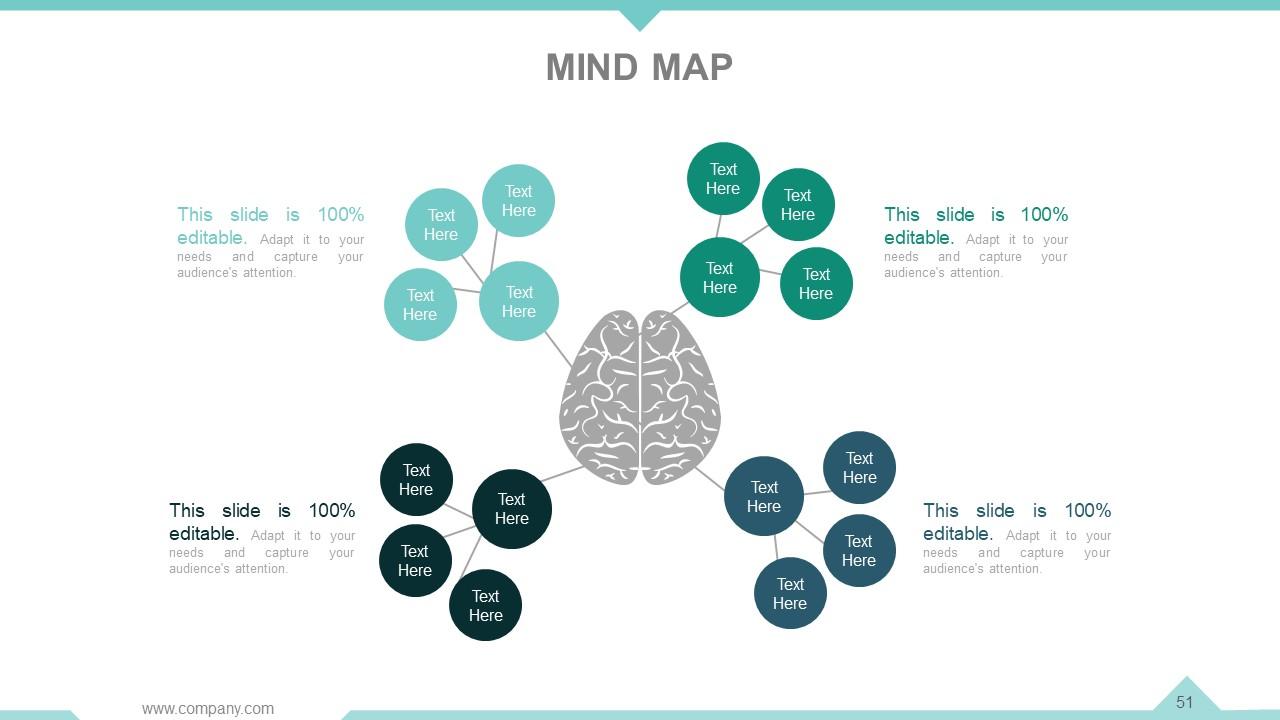
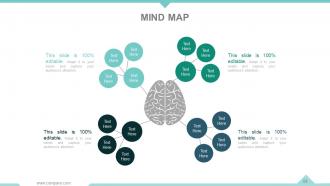
Slide 51: This is a Mind map image slide with text boxes to state information, specifications etc.
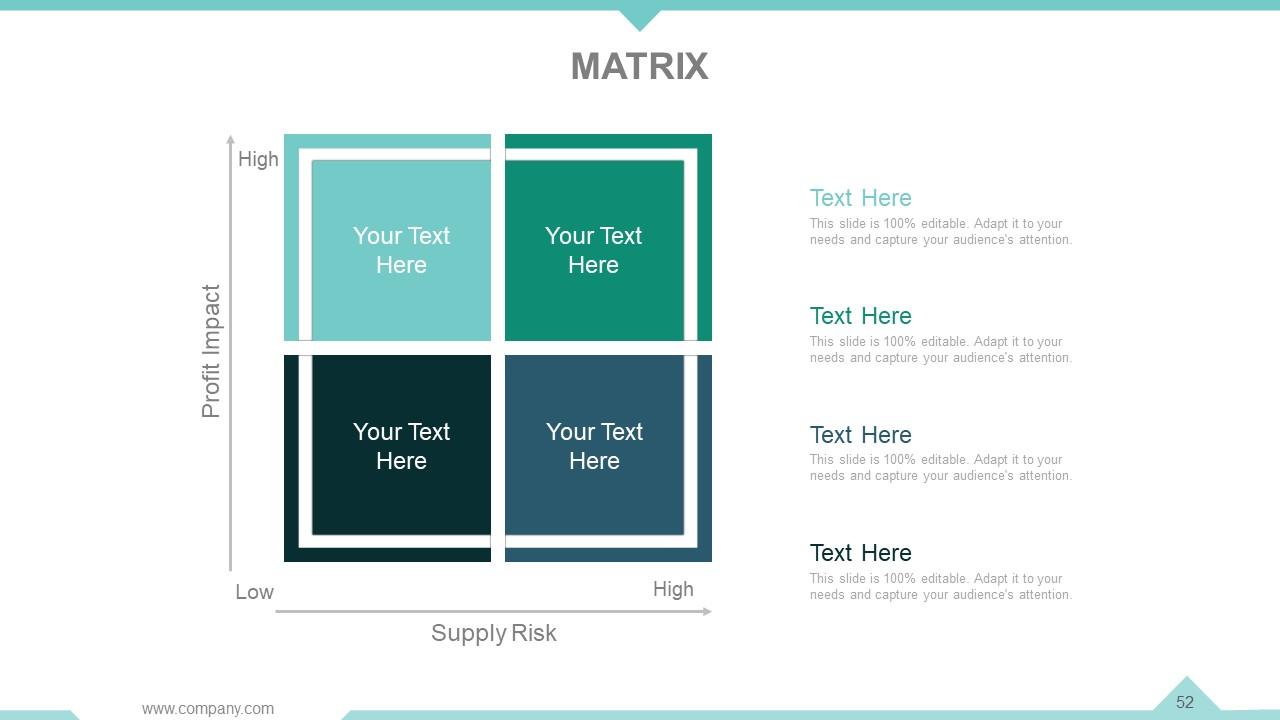
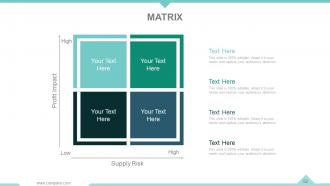
Slide 52: This is a MATRIX slide. Put relevant comparing data here.
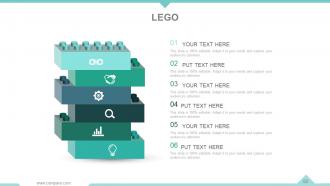
Slide 53: This is a LEGO box image slide with text boxes to show information.
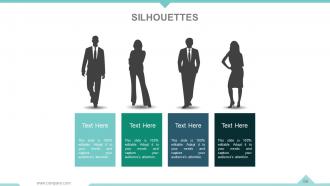
Slide 54: This slide shows Silhouettes with text boxes. State people related information, specification etc. here.
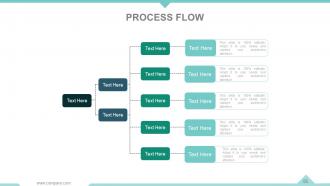
Slide 55: This slide shows Process Flow with text boxes. State information, specifications etc.
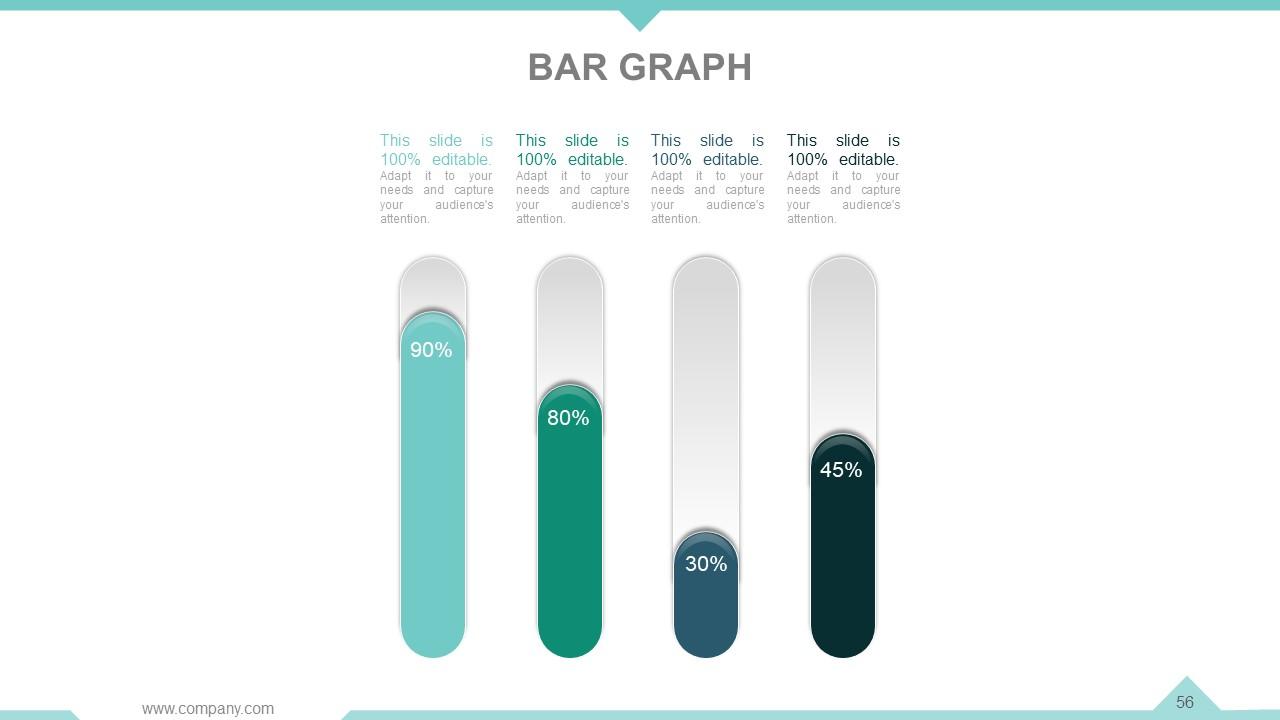
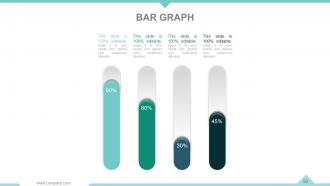
Slide 56: This is a Bar Graph slide to show product/ entity comparison, specifications etc.
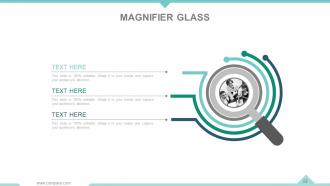
Slide 57: This is a Magnifying Glass image slide to show information, specifications etc.
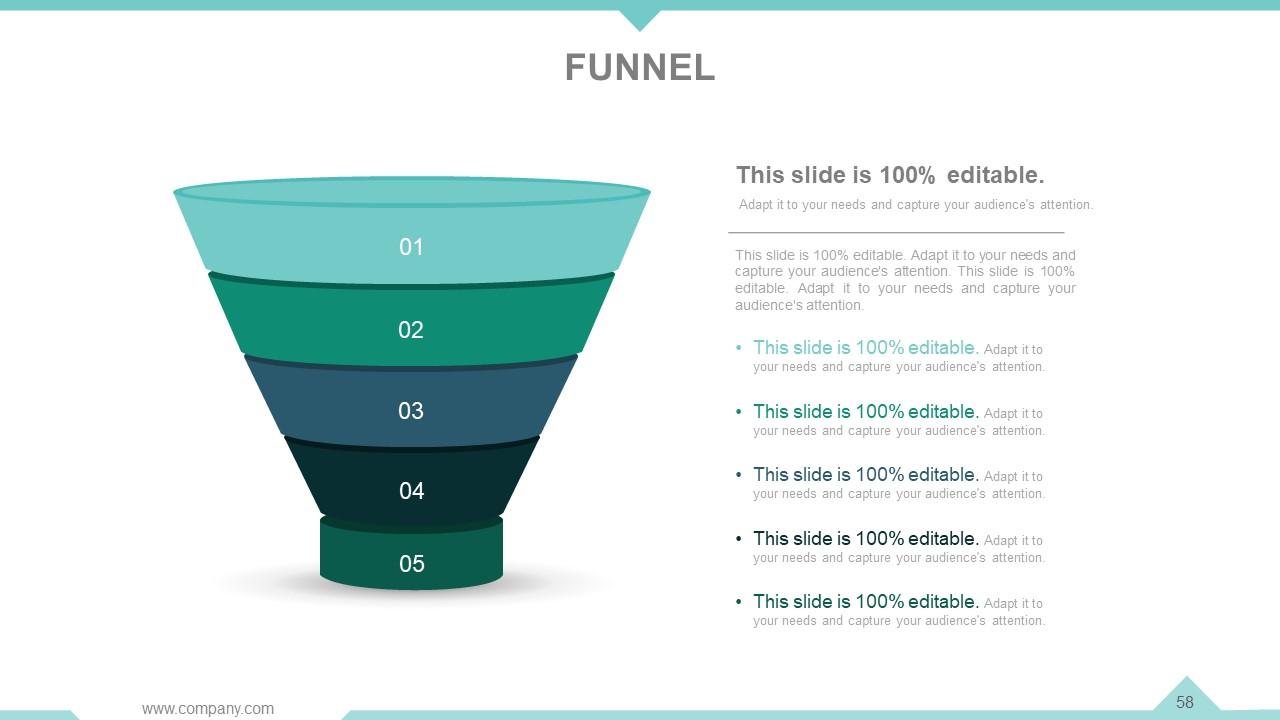
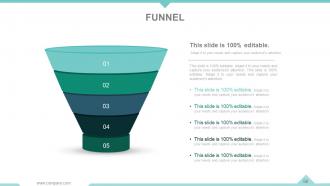
Slide 58: This is a Funnel image slide to show information, funneling aspects, specifications etc.
Slide 59: This is a Thank You slide with Address# street number, city, state, Contact Numbers, Email Address.
Targeting the mature market powerpoint presentation slides go to market with all 59 slides:
Interpret indications with our Targeting The Mature Market Complete Powerpoint Deck With Slides. Focus on future choices.
-
Unique and attractive product design.
-
Excellent design and quick turnaround.
-
Colors used are bright and distinctive.
-
Easily Editable.
