Team Building Skills Powerpoint Ppt Template Bundles
Try Before you Buy Download Free Sample Product
Audience
Editable
of Time
People who downloaded this PowerPoint presentation also viewed the following :
Team Building Skills Powerpoint Ppt Template Bundles with all 17 slides:
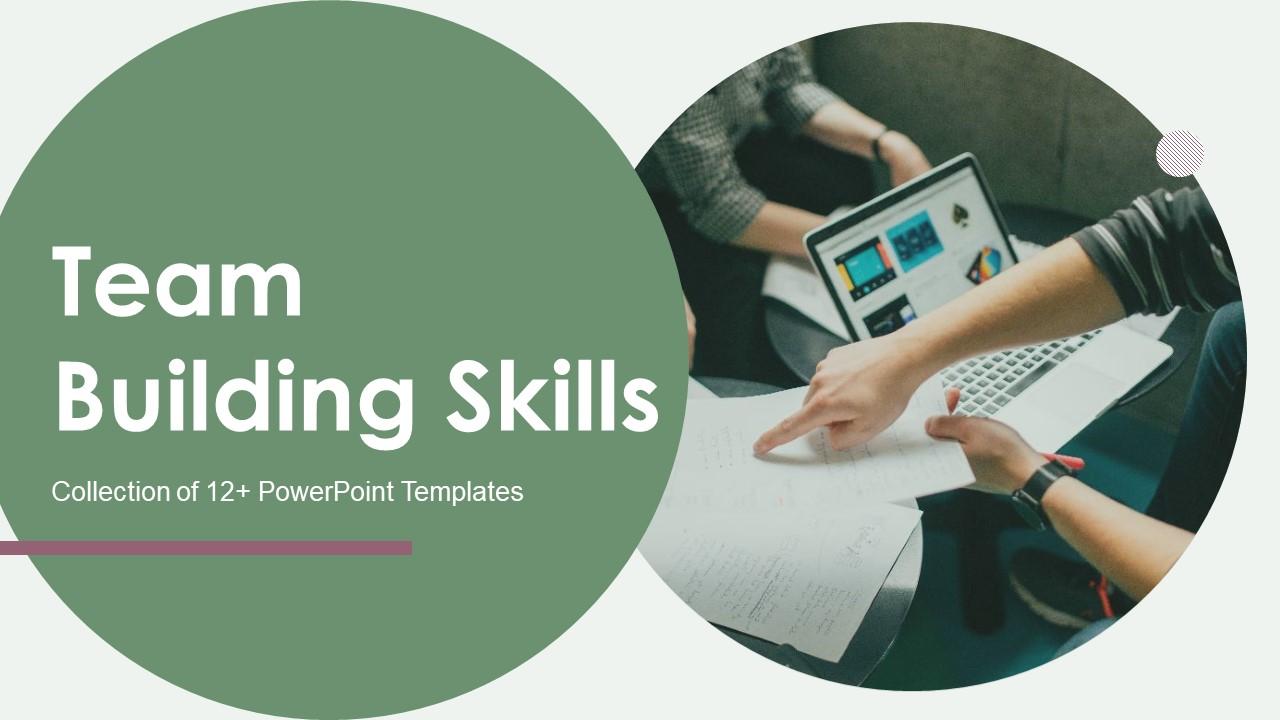
Use our Team Building Skills Powerpoint Ppt Template Bundles to effectively help you save your valuable time. They are readymade to fit into any presentation structure.
FAQs for Team Building Skills Powerpoint
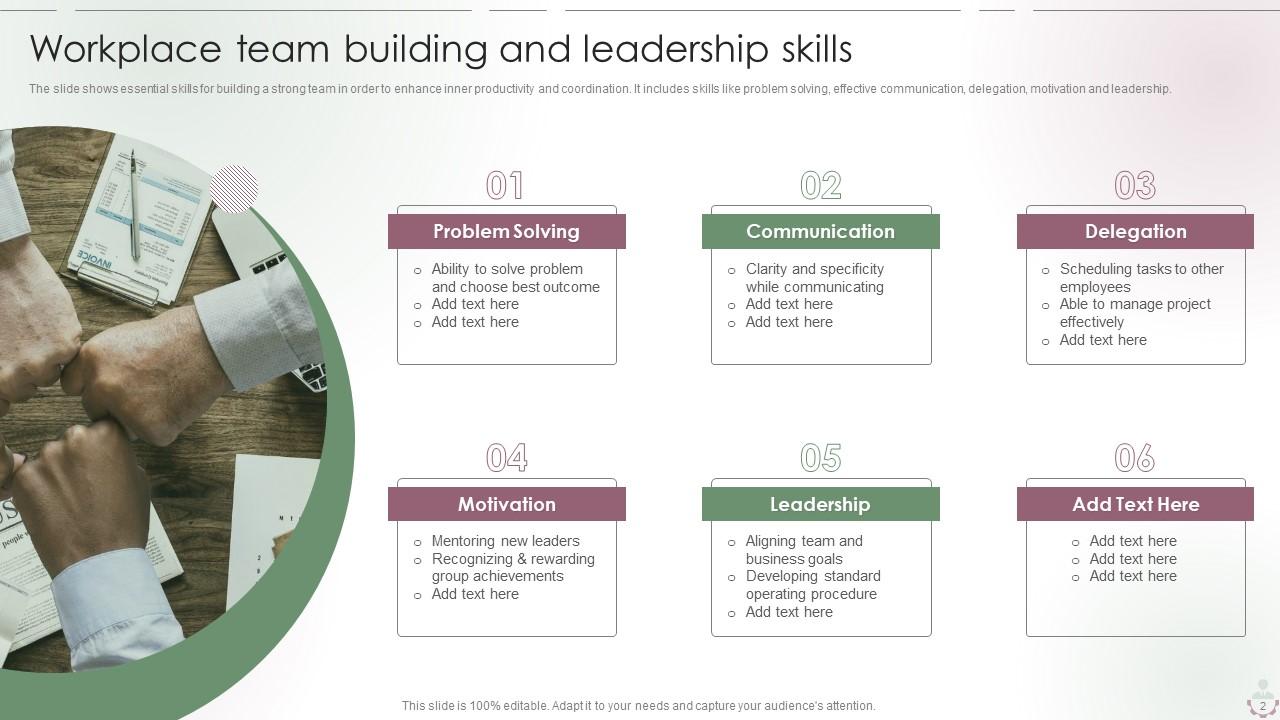
Effective team building includes clear communication channels, defined roles and responsibilities, shared goals and vision, trust-building activities, and collaborative problem-solving frameworks. These elements work together by fostering psychological safety, encouraging diverse perspectives, and creating accountability structures, with many organizations finding that strategic team building ultimately delivers enhanced productivity, reduced turnover, and stronger competitive advantage.
Diverse personalities enhance collaboration by bringing varied perspectives, complementary problem-solving approaches, different communication styles, and unique creative insights to team dynamics. Through strategic personality mapping, organizations can leverage these differences to streamline decision-making, accelerate innovation, and deliver more comprehensive solutions, with many companies finding that personality diversity ultimately drives stronger team performance and competitive advantage.
Communication serves as the foundation for successful team building by establishing trust, clarifying expectations, facilitating collaboration, and enabling effective conflict resolution. Through regular meetings, feedback sessions, and transparent dialogue, teams streamline decision-making processes, enhance problem-solving capabilities, and build stronger interpersonal relationships, ultimately delivering improved productivity and workplace cohesion across organizations.
Leaders facilitate trust among team members by modeling transparency, encouraging open communication, creating psychological safety, and consistently following through on commitments. Through regular team-building activities, collaborative decision-making processes, and recognizing individual contributions, organizations find that trust-building initiatives enhance team cohesion, improve project outcomes, and ultimately deliver stronger performance across departments.
Teams can use SMART goal-setting frameworks, collaborative milestone mapping, regular progress check-ins, shared accountability systems, and transparent communication channels to establish and achieve collective objectives. These techniques streamline coordination by aligning individual contributions with team priorities, tracking measurable outcomes, and maintaining momentum through structured feedback loops, ultimately delivering enhanced productivity and stronger team cohesion across organizations.
Conflict can strengthen team dynamics by encouraging diverse perspectives, surfacing underlying issues, and promoting creative problem-solving through structured dialogue. When managed effectively through active listening and collaborative resolution processes, teams in sectors like consulting and healthcare find that constructive disagreement ultimately enhances trust, innovation, and collective decision-making capabilities.
Practical icebreaker activities for new teams include two truths and a lie, human bingo, skills mapping exercises, collaborative problem-solving challenges, and personal timeline sharing. These activities streamline relationship building by encouraging authentic self-disclosure, identifying complementary strengths, and establishing psychological safety, with many organizations finding that structured icebreakers accelerate team cohesion and enhance collaborative productivity.
Emotional intelligence significantly enhances team building by improving communication, fostering empathy, and enabling better conflict resolution among team members. Leaders with high emotional intelligence create psychologically safe environments where team members feel valued and understood, ultimately driving stronger collaboration, increased trust, and more effective problem-solving across diverse organizational contexts.
Remote teams can strengthen bonds through virtual coffee chats, online team-building games, collaborative project sessions, regular video check-ins, and shared digital workspaces. These strategies enhance communication and trust by creating informal interaction opportunities, fostering cross-departmental collaboration, and maintaining personal connections, with many organizations finding that consistent virtual engagement ultimately delivers improved team cohesion and productivity.
Feedback integration enhances team-building through regular peer evaluations, structured debriefing sessions after activities, anonymous suggestion systems, and real-time coaching during collaborative exercises. These practices streamline communication, identify development opportunities, and build trust within teams, with many organizations finding that consistent feedback loops ultimately deliver stronger team cohesion and improved performance outcomes.
Team-building games deliver enhanced communication, improved collaboration, increased trust, stronger problem-solving abilities, and boosted employee morale across organizations. These activities streamline workplace dynamics by breaking down silos, fostering cross-departmental relationships, and developing leadership skills, with many companies finding that regular team-building initiatives ultimately reduce turnover while enhancing overall productivity and organizational culture.
Team-building activities foster creativity and innovation by breaking down silos, encouraging diverse perspectives, and creating psychological safety for risk-taking and experimentation. Through collaborative problem-solving exercises and cross-functional challenges, organizations enhance communication, build trust, and stimulate creative thinking, with many companies finding that structured team activities ultimately deliver breakthrough solutions and competitive advantage.
Team building effectiveness can be measured through employee engagement scores, team productivity metrics, communication frequency assessments, conflict resolution rates, and retention statistics. These measurements enable organizations to track collaboration improvements, project completion times, and cross-functional cooperation, with many companies finding that regular assessment ultimately delivers enhanced performance and stronger workplace relationships.
Cultural differences significantly influence team-building strategies by affecting communication styles, decision-making processes, conflict resolution approaches, and relationship-building preferences. Organizations must adapt their methods to accommodate diverse cultural norms, with many multinational companies finding that culturally-aware strategies enhance collaboration, improve trust-building, and ultimately deliver stronger team cohesion across global operations.
Team-building significantly enhances employee retention and satisfaction by fostering stronger workplace relationships, improving communication channels, and creating shared purpose among colleagues. Through collaborative activities and strategic team exercises, organizations build trust, reduce workplace conflicts, and enhance job satisfaction, with many companies finding that employees in cohesive teams show 40% higher retention rates and increased engagement.
-
Great experience, I would definitely use your services further.
-
Excellent Designs.