Technical solution product integration social emotional learning facilitator

Rating:
90%
Technical solution product integration social emotional learning facilitator
Slide 1 of 5
Favourites Favourites

Try Before you Buy Download Free Sample Product

Audience Impress Your
Audience
Editable 100%
Editable
Time Save Hours
of Time
The Biggest Sale is ending soon in
0
0
:
0
0
:
0
0
Rating:
90%
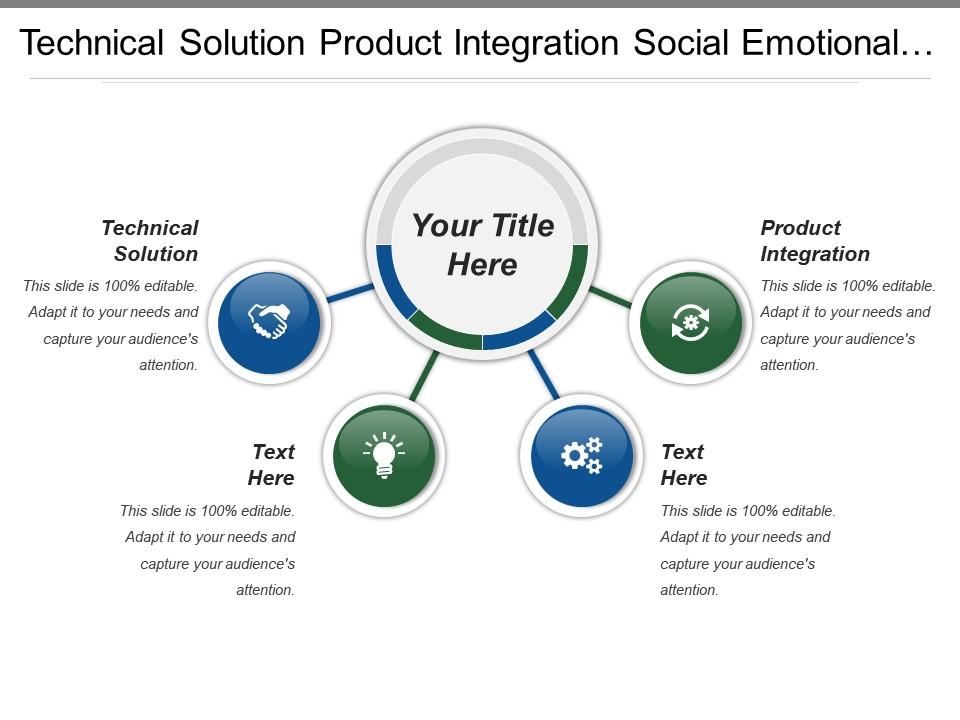
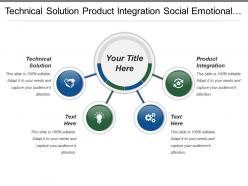
Presenting this set of slides with name - Technical Solution Product Integration Social Emotional Learning Facilitator. This is an editable four stages graphic that deals with topics like technical solution, product integration, social emotional learning facilitator to help convey your message better graphically. This product is a premium product available for immediate download, and is 100 percent editable in Powerpoint. Download this now and use it in your presentations to impress your audience.

People who downloaded this PowerPoint presentation also viewed the following :

FAQs for Technical solution product integration social

Effective SEL product integration includes curriculum alignment, teacher training programs, assessment tools, student engagement platforms, and administrative oversight systems. These components work together by embedding social-emotional learning seamlessly into daily instruction, providing educators with implementation support, and delivering measurable outcomes that enhance student wellbeing, academic performance, and classroom culture across diverse educational environments.

Educators can assess SEL product impact through pre/post behavioral assessments, academic performance tracking, student self-reflection surveys, peer interaction observations, and disciplinary incident monitoring. These measurement approaches enable schools to evaluate emotional regulation improvements, social skill development, and academic engagement increases, with many districts finding that comprehensive data collection ultimately delivers clearer insights into student well-being and learning outcomes.

Technology serves as a catalyst for SEL product integration by providing data analytics for tracking emotional development, interactive platforms for skill-building activities, and digital tools for personalized learning experiences. Through learning management systems and mobile applications, educators can seamlessly deliver SEL curricula, monitor student progress in real-time, and facilitate peer collaboration, ultimately creating more engaging and measurable social-emotional learning environments.

Schools ensure SEL product alignment by conducting thorough curriculum audits, engaging stakeholders in evaluation processes, and piloting programs with clear assessment metrics. Educational institutions increasingly find success through collaborative selection committees that include teachers, counselors, and administrators, ultimately delivering integrated approaches that enhance student outcomes while maintaining institutional values and academic standards.

Integrating SEL products into traditional learning environments presents challenges including resistance to curriculum changes, limited teacher training resources, inadequate assessment frameworks, technology integration barriers, and competing academic priorities. While these obstacles require strategic planning and professional development investment, many educational institutions find that systematic implementation approaches, comprehensive staff training, and phased rollouts ultimately deliver enhanced student engagement and improved emotional learning outcomes.

Educators can provide ongoing support through regular professional development workshops, peer mentoring programs, collaborative planning sessions, and data-driven feedback cycles that reinforce SEL practices. Through structured coaching models, schools enable teachers to integrate social-emotional learning seamlessly into daily instruction, while administrative support and resource allocation ensure sustained implementation, ultimately delivering improved student outcomes and enhanced classroom environments.

Promoting student buy-in for SEL initiatives involves creating authentic peer leadership opportunities, incorporating student voice in program design, connecting activities to real-world scenarios, and using interactive formats like role-playing and collaborative projects. These strategies enhance engagement by making SEL personally relevant and socially meaningful, with many schools finding that student-led discussions and peer mentoring ultimately deliver stronger participation rates and sustained behavioral changes.

Younger students respond best to interactive games, visual storytelling, and hands-on activities, while middle schoolers prefer collaborative projects, peer discussions, and scenario-based learning. High school students engage more with case studies, real-world applications, and reflective journaling formats, with many educators finding that age-appropriate SEL products significantly improve emotional intelligence development and classroom engagement across all grade levels.

**INPUT**: What metrics can be used to evaluate the success of SEL product integration? **OUTPUT**: SEL product integration success metrics include student engagement rates, behavioral incident reductions, academic performance improvements, teacher confidence levels, and social skills development assessments. These measurements enable schools to track emotional regulation progress, classroom climate enhancements, and long-term student outcomes, with many educational institutions finding that comprehensive data collection ultimately delivers measurable improvements in both academic achievement and student well-being. [Word count: 60 words]

Parents and guardians can be engaged through regular communication about SEL goals, home-based activity resources, and progress sharing sessions that connect classroom learning with family discussions. Schools increasingly find that involving families through workshops, digital platforms, and collaborative goal-setting enhances student emotional development, while creating consistent support systems that reinforce SEL skills across both educational and home environments.

Trending SEL products include AI-powered emotion recognition platforms, virtual reality empathy training modules, gamified social skills applications, biometric stress monitoring wearables, and interactive mindfulness platforms. These technologies enhance student emotional intelligence by providing real-time feedback, personalized learning pathways, and data-driven insights, with many schools finding that integrated SEL solutions significantly improve classroom behavior and academic performance.

Cultural differences significantly influence SEL product acceptance through varying communication styles, emotional expression norms, collectivist versus individualist values, and educational expectations. These variations require culturally responsive design and implementation strategies, with many international schools and diverse organizations finding that localized content, culturally relevant scenarios, and flexible delivery methods enhance program effectiveness and student engagement across different cultural contexts.

Educators can tailor SEL products by conducting comprehensive needs assessments, customizing content for different learning styles and cultural backgrounds, implementing differentiated instruction approaches, and utilizing adaptive technology features. Through personalized learning paths, multilingual resources, and culturally responsive materials, schools enhance student engagement and social-emotional development outcomes, with many districts finding that targeted customization significantly improves program effectiveness and student participation rates.

Schools with successful SEL product implementations reveal that comprehensive teacher training, consistent program usage, and administrative support drive meaningful outcomes. These institutions typically see improved student emotional regulation, reduced behavioral incidents, and enhanced classroom climates, with many finding that strategic integration across multiple grade levels and subjects delivers sustained social-emotional learning benefits.

Student feedback should be incorporated through regular surveys, focus groups, interactive assessment tools, and usage analytics to identify engagement gaps and emotional learning preferences. Educational institutions can enhance SEL programs by analyzing this data to customize content delivery, adjust difficulty levels, and introduce culturally relevant scenarios, ultimately creating more personalized learning experiences that improve social-emotional development outcomes.

Ratings and Reviews

90% of 100
Review Form
Write a review
Most Relevant Reviews
  1. 100%

    by Dion Dunn

    Attractive design and informative presentation.
  2. 80%

    by Clair Gray

    Innovative and attractive designs.

2 Item(s)

per page: