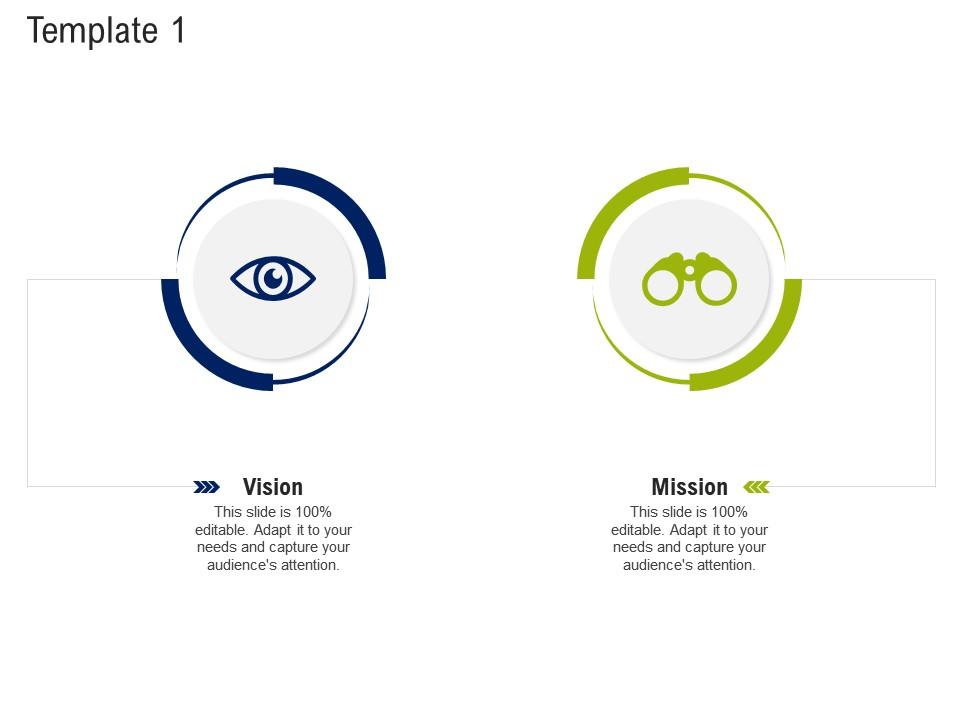
Template vision mission and vision statement ppt mockup
Try Before you Buy Download Free Sample Product
Audience
Editable
of Time
Our Template Vision Mission And Vision Statement Ppt Mockup are topically designed to provide an attractive backdrop to any subject. Use them to look like a presentation pro.
People who downloaded this PowerPoint presentation also viewed the following :
Template vision mission and vision statement ppt mockup with all 2 slides:
Use our Template Vision Mission And Vision Statement Ppt Mockup to effectively help you save your valuable time. They are readymade to fit into any presentation structure.
FAQs for Template vision mission and vision
An effective vision statement template should include aspirational language that describes the organization's future impact, specific outcomes the company aims to achieve, clear timeframes or scope indicators, and distinctive elements that differentiate from competitors. These components work together by providing directional clarity, inspiring stakeholder engagement, and establishing measurable goals, with many organizations finding that well-crafted vision statements ultimately drive strategic alignment and competitive positioning.
Templates help organizations craft resonating mission statements by providing structured frameworks, audience-focused language prompts, stakeholder alignment tools, and proven messaging formulas. These resources streamline the development process by offering tested phrases, value proposition structures, and emotional connection strategies, with many companies finding that template-guided statements achieve greater clarity, authenticity, and market resonance.
Common pitfalls include using generic language without customization, failing to reflect unique organizational values, copying competitor statements verbatim, creating overly complex or lengthy statements, and neglecting stakeholder input during development. These templates work best when organizations adapt them strategically, incorporating specific industry contexts and authentic company culture, with many businesses finding that personalized templates deliver stronger employee engagement and clearer strategic direction.
Visuals enhance vision and mission statement templates by creating emotional connections, improving comprehension, and reinforcing brand identity through strategic use of colors, icons, typography, and imagery. These design elements streamline complex messaging into memorable formats, with many organizations finding that visual templates increase employee engagement and stakeholder understanding, ultimately delivering stronger organizational alignment and more effective communication outcomes.
Technology companies, healthcare organizations, startups, consulting firms, and retail businesses benefit most from tailored vision and mission statement templates. These industries require clear strategic direction and stakeholder alignment, with many organizations finding that customized templates streamline the development process while ensuring their unique value propositions and market positioning are effectively communicated to investors and customers.
A well-crafted mission statement template aligns with strategic goals by establishing clear organizational purpose, defining target audiences, articulating core values, and outlining competitive positioning that directly supports business objectives. This strategic alignment enables companies across industries, from manufacturing to financial services, to maintain consistent decision-making frameworks, enhance stakeholder communication, and ultimately deliver focused resource allocation that drives measurable growth and sustainable competitive advantage.
Feedback plays a crucial role in refining vision statement templates by identifying clarity gaps, ensuring stakeholder alignment, and validating emotional resonance across different audiences. Through systematic input from employees, customers, and leadership teams, organizations can strengthen their messaging, eliminate ambiguous language, and enhance strategic focus, with many companies finding that iterative refinement ultimately delivers more compelling and actionable vision statements.
Templates facilitate stakeholder engagement by providing structured frameworks for collaborative input, standardized discussion formats, and clear visual hierarchies that organize diverse perspectives. These tools streamline workshop processes, enable systematic feedback collection, and create shared reference points, with many organizations finding that templated approaches enhance participation while ensuring comprehensive stakeholder voices are captured and integrated effectively.
Cultural considerations significantly impact vision and mission statement templates by influencing language preferences, value hierarchies, communication styles, decision-making processes, and stakeholder expectations across different markets. Organizations operating globally must balance universal core messages with culturally relevant expressions, with many multinational companies finding that localized adaptations of their foundational templates enhance employee engagement and customer resonance while maintaining strategic coherence.
Innovative layouts for vision and mission statement templates include circular infographic designs, timeline-based narratives, split-screen comparisons, pyramid hierarchies, and interactive dashboard formats. These approaches enhance organizational communication by creating visual impact, improving stakeholder engagement, and facilitating clearer strategic messaging, with many companies finding that well-designed templates significantly strengthen brand alignment and employee understanding.
Organizations can evaluate their vision and mission statements through employee engagement surveys, customer alignment assessments, strategic goal achievement rates, brand recognition metrics, and stakeholder feedback analyses. These measurement approaches enable companies to track how effectively their statements drive decision-making, inspire teams, and resonate with target audiences, with many finding that regular evaluation helps refine messaging and strengthen organizational focus.
Collaborative tools enhance vision and mission development by facilitating real-time input, ensuring diverse perspectives, streamlining feedback collection, and maintaining transparent documentation throughout the process. These platforms enable organizations to gather insights from multiple stakeholders simultaneously, reduce revision cycles, and create more inclusive statements, with many leadership teams finding that collaborative approaches ultimately deliver stronger organizational alignment and buy-in.
Storytelling can be incorporated through narrative frameworks that include origin stories, future aspirations, customer journeys, and transformational outcomes within vision and mission templates. These storytelling elements help organizations articulate their purpose through compelling narratives, with companies like Patagonia and Tesla finding that story-driven statements resonate more deeply with stakeholders, ultimately creating stronger emotional connections and clearer strategic direction.
Companies can maintain vision statement relevance by conducting annual strategic reviews, incorporating stakeholder feedback, monitoring industry trends, adapting to technological changes, and benchmarking against competitors. These methods ensure templates evolve with organizational growth, with many businesses finding that quarterly assessments and cross-departmental input sessions deliver sustained alignment and competitive advantage.
Simplicity and clarity in vision or mission statement templates can be achieved by using concise language, avoiding jargon, focusing on core purpose, and limiting statements to one or two impactful sentences. Organizations across sectors like healthcare, retail, and financial services find that streamlined templates with clear action verbs and specific outcomes resonate better with stakeholders, ultimately delivering stronger organizational alignment and enhanced strategic communication.
-
Use of different colors is good. It's simple and attractive.