Three Stages Of Brand Value Proposition Pyramid

Rating:
90%
Three Stages Of Brand Value Proposition Pyramid
Slide 1 of 6
Favourites Favourites

Try Before you Buy Download Free Sample Product

Audience Impress Your
Audience
Editable 100%
Editable
Time Save Hours
of Time
The Biggest Sale is ending soon in
0
0
:
0
0
:
0
0
Rating:
90%
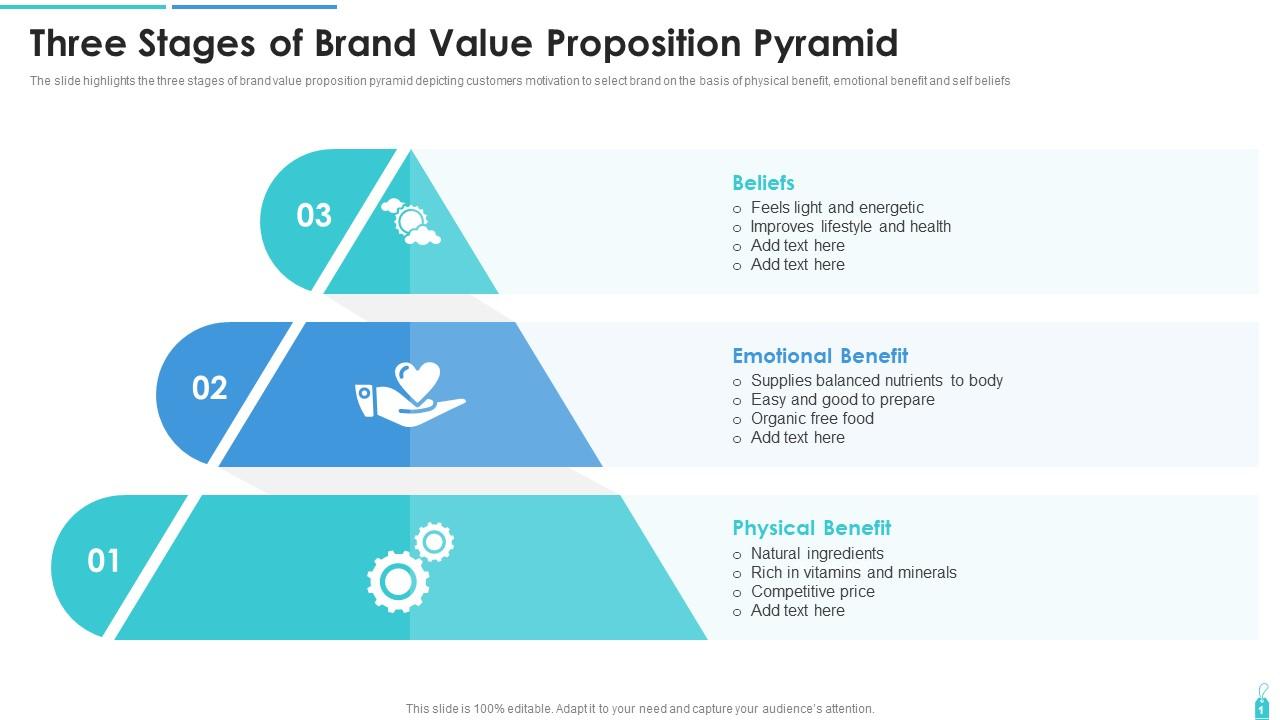
The slide highlights the three stages of brand value proposition pyramid depicting customers motivation to select brand on the basis of physical benefit, emotional benefit and self beliefs. Introducing our premium set of slides with Three Stages Of Brand Value Proposition Pyramid. Ellicudate the three stages and present information using this PPT slide. This is a completely adaptable PowerPoint template design that can be used to interpret topics like Competitive Price, Emotional Benefit, Competitive Price. So download instantly and tailor it with your information.
FAQs for Three Stages Of Brand

Your value prop needs to nail three things: what problem you're fixing, how you fix it differently, and what customers actually get out of it. Most companies sound like they copied each other's homework here - boring as hell. Talk about their real pain points, not just features nobody cares about. Skip the fancy business speak too. I'd test it with actual customers first though, since what sounds good to you might fall flat with them. Oh, and make sure it's crystal clear - if someone needs to think twice about what you do, you've already lost them.

Okay so first 30 seconds are everything - jump straight into the actual problem you fix. Don't say "we help businesses grow" or whatever. Say "we cut customer churn by 40%" with real numbers. People's attention spans are honestly terrible these days. Throw in customer stories throughout because data without faces is just boring spreadsheet stuff. Keep slides super visual - you want to be talking, not reading bullet points like a robot. Oh and here's something I learned the hard way: design your deck so if someone walks in late, they'll get what makes you special within like two slides max.

Honestly, you can't build a solid value prop without knowing your audience inside and out. Their pain points, what they actually want, what they're using now - all of that matters way more than people think. I always tell people to interview real customers first because they'll literally give you the words for your messaging. You'd be surprised how often their exact phrases work better than anything you'd write yourself. Once you really get their motivations and unmet needs, positioning becomes so much easier. It's like having cheat codes.

Your value prop needs visuals to hit home - nobody wants to read walls of text. Clean layouts and consistent colors make complex stuff way easier to digest. I've watched so many good presentations bomb because they looked like someone copy-pasted from Word (brutal). Use visual hierarchy to spotlight what makes you different. Pick images that actually connect with your audience's problems, not just generic stock photos. You want people thinking "oh shit, they totally get my situation." Start with one solid visual metaphor that captures your main benefit. Makes everything click faster.

Don't be generic - saying you're "innovative" is basically meaningless at this point. Focus on benefits, not just features. I see people trying to appeal to everyone and it never works. You'll waste time copying competitors instead of figuring out what actually makes you different. Honestly, the biggest mistake is making promises you can't keep. Test your value prop with real customers first - seriously, their feedback will save you from looking dumb later. Make it specific to your audience and what they actually care about, not what sounds impressive in your head.

Dude, stories are everything when you're pitching. People's brains just shut off when you rattle off features and stats. But tell them about Sarah who used to work every weekend until your product gave her back family dinners? Now they're actually listening. I've watched this completely flip pitches - it's wild how much more engaged people get. The 30% efficiency boost still matters, obviously. But wrapping those numbers in a real customer's journey makes people actually give a shit about what you're selling. Try opening with an actual story next time instead of jumping straight into features.

Track the usual suspects first - conversion rates, customer acquisition costs, NPS scores, that kind of thing. Brand awareness surveys help too. But honestly? The real gold is in actually talking to your customers. Set up some interviews because they'll straight-up tell you if your messaging sucks or not. Customer lifetime value matters a ton since good value props keep people around longer. I always think the combo of hard data plus genuine customer feedback gives you the clearest picture. Numbers don't lie, but they don't always tell the whole story either.

Here's the thing - your value prop needs to show customers exactly why they should pick you instead of the other guys. Don't just list what you do though, that's boring. Focus on the actual results they'll get and problems you'll solve. I always think of it like... if someone had 30 seconds in an elevator, what would make them remember you? Once you get this right, everything else gets way easier. Your marketing hits harder, sales calls flow better, and people actually understand what makes you different. Start by figuring out what your customers really want, then connect that to whatever you do best.

So B2B is all about the numbers - "boost productivity 30%" or "cut costs in half." Hard data sells. B2C? Total opposite. You're hitting emotions and lifestyle stuff like "feel amazing" or "more family time." Here's the annoying part with B2B - you've got like 5 different people making decisions, so everything gets complicated. B2C buyers just... buy. They feel first, think later. Honestly, B2B folks want spreadsheets and case studies as proof. B2C wants to picture themselves using your thing. Different languages entirely.

Honestly, start with surveys and just talking to your customers directly - reviews are gold too. Social media comments can be brutal but they're weirdly the most honest feedback you'll get. Look for patterns in what people complain about vs what they love. Then compare that to what you're actually telling them you do. If there's a disconnect, that's your answer right there. Maybe customers rave about something you barely mention, or they're totally confused about your main selling point. Test any changes with a small group first though - don't just flip everything overnight and hope for the best.

Figure out what each group actually cares about, then spotlight those specific benefits. Budget-conscious small businesses? Talk cost savings and efficiency. Enterprise clients want to hear about advanced features and scalability. Same product, totally different angles - honestly, it's pretty smart when you think about it. Your core promise stays the same, but everything else can shift. Messaging tone, where you advertise, even pricing. Like being a chameleon without losing who you are. The trick is really understanding what makes each segment tick, then adjusting your positioning to match what they value most.

Honestly, you can't just set your value prop once and call it done. Markets shift constantly - look how sustainability exploded, or how everyone scrambled for remote work tools during COVID. Brands that stay relevant keep tabs on what their customers actually care about now, not three years ago. You don't have to reinvent the wheel every time, but definitely audit yours regularly. I'd check quarterly and ask myself: what's different in our space? Does our main promise still land, or are we talking to ghosts? The good news is most adjustments are tweaks, not total overhauls.

Dude, emotional appeal is basically what separates good marketing from great marketing. People don't just buy stuff - they buy feelings. Take Starbucks, right? We both know their coffee isn't *that* amazing, but somehow they make you feel all sophisticated and part of some cool club. That's the power of emotion right there. You gotta figure out what deeper need your product actually fills. Is it making people feel secure? Important? Happy? Once you nail that emotional connection, the functional stuff becomes way more compelling. Start by thinking about what feeling you want stuck to your brand.

Don't just tack social proof onto the end - weave it right into your main pitch. Like "trusted by 10,000+ businesses" or throw in some customer logos if they're recognizable brands. Honestly, seeing familiar company names instantly makes people think you're legit. Numbers work too, but make them specific to your benefit. So instead of random stats, if you're selling speed, say something like "the platform that cut X company's processing time by 60%." Just don't make it sound like you're bragging - keep it natural.

Start with brand guidelines - write down your visual stuff, voice, and key messages so everyone knows what's what. Do an audit of everything you have now. I bet you'll find way more inconsistencies than you think (always happens). Get one person or team to approve content before it goes out anywhere. Training new people is huge since they obviously don't know your brand yet. Oh, and don't try to fix everything at once - pick your top three channels first. Get those perfect, then move on. Way less overwhelming that way.

Ratings and Reviews

90% of 100
Review Form
Write a review
Most Relevant Reviews
  1. 80%

    by Dick Ryan

    SlideTeam is the best in the business. Their templates are engaging and customizable. You can rely on them.
  2. 100%

    by Walsh Turner

    Easily Editable.

2 Item(s)

per page: