Tracking hr recruitment process kpi with placement rate

Rating:
100%
Tracking hr recruitment process kpi with placement rate
Slide 1 of 2
Favourites Favourites

Try Before you Buy Download Free Sample Product

Audience Impress Your
Audience
Editable 100%
Editable
Time Save Hours
of Time
The Biggest Sale is ending soon in
0
0
:
0
0
:
0
0
AI-Ready
Upload this template to AI and ask it to make any changes to content or color
100% editable Powerpoint Template for AI-assisted presentations. Finish your work in less time. Download Prompt Kit ​
Works with
Microsoft PowerPoint
Microsoft 365
Claude for PowerPoint
ChatGPT
Google Slides
Microsoft Copilot
Rating:
100%
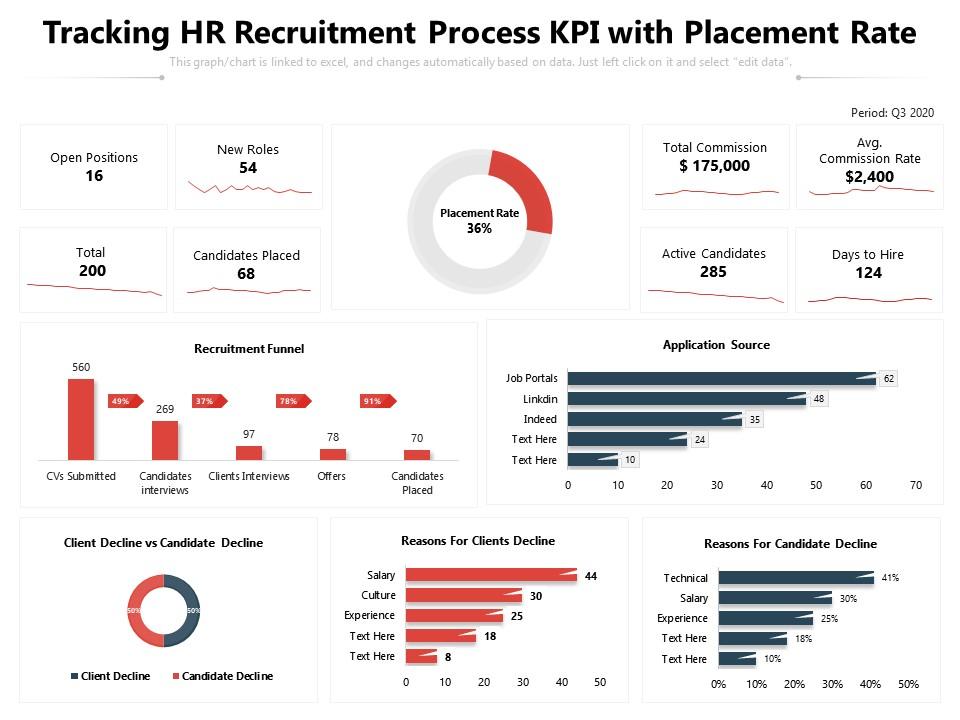
Presenting this set of slides with name Tracking HR Recruitment Process KPI With Placement Rate. The topics discussed in these slides are Open Positions, Total Commission, Recrement Funnel, Application Source, Client Decline, Candidate Decline. This is a completely editable PowerPoint presentation and is available for immediate download. Download now and impress your audience.

FAQs for Tracking hr recruitment process kpi

Critical HR recruitment KPIs include time-to-fill, cost-per-hire, quality of hire, candidate experience scores, and source effectiveness metrics. These measurements streamline talent acquisition by identifying bottlenecks, optimizing budget allocation, and enhancing hiring decisions, with many organizations finding that tracking these KPIs reduces recruitment costs while significantly improving candidate quality and retention rates.

Time-to-fill KPI significantly impacts recruitment efficiency by identifying bottlenecks, streamlining hiring processes, and optimizing resource allocation across talent acquisition teams. A lengthy time-to-fill creates cascading effects, including increased workloads for existing staff, delayed project timelines, and higher recruitment costs, while organizations with optimized time-to-fill metrics ultimately deliver faster onboarding and enhanced operational productivity.

Cost-per-hire serves as a critical financial metric that measures recruitment efficiency by calculating total hiring expenses divided by number of successful hires, including advertising, recruiter salaries, and onboarding costs. This KPI enables HR teams to optimize budget allocation, compare recruitment channel effectiveness, and demonstrate ROI to leadership, with many organizations finding that strategic cost-per-hire analysis delivers significant resource savings while maintaining quality talent acquisition.

Candidate quality can be measured through performance ratings of hired employees, retention rates beyond probationary periods, time-to-productivity metrics, and hiring manager satisfaction scores. These indicators enable HR teams to assess recruitment effectiveness by tracking how well new hires perform in their roles, with many organizations finding that combining these metrics delivers better hiring decisions and ultimately reduces turnover costs while improving workforce quality.

Strategies to improve candidate experience include streamlined application processes, transparent communication timelines, personalized feedback delivery, mobile-optimized platforms, and regular touchpoint updates throughout recruitment stages. This experience is quantified through candidate satisfaction scores, application completion rates, and time-to-hire metrics, with many organizations finding that enhanced candidate experiences reduce dropout rates by 40% while strengthening employer branding.

Organizations can leverage source of hire KPIs by tracking which channels deliver the highest-quality candidates, measuring cost-per-hire across platforms, and analyzing time-to-fill metrics for each source. This data enables HR teams to reallocate budgets toward top-performing channels like employee referrals or specialized job boards, while reducing investment in underperforming sources, ultimately streamlining recruitment efficiency and improving candidate quality.

Offer acceptance rate measures the percentage of job offers candidates accept, reflecting your employer brand strength, competitive compensation packages, candidate experience quality, and market positioning accuracy. A high acceptance rate indicates effective recruitment processes, strong company reputation, and well-calibrated offers, while low rates signal potential issues with salary competitiveness, lengthy hiring processes, or misaligned candidate expectations, ultimately impacting time-to-fill and recruitment costs.

Diversity hiring metrics integrate into standard recruitment KPIs through tracking representation percentages across sourcing channels, interview-to-offer ratios by demographic groups, and inclusive hiring manager training completion rates. These measurements enhance traditional metrics by providing comprehensive talent pipeline insights, with many organizations finding that diverse recruitment strategies ultimately deliver broader candidate pools, reduced unconscious bias, and stronger long-term retention outcomes.

HR recruitment KPI tracking tools include applicant tracking systems (ATS), recruitment analytics platforms, CRM software, AI-powered assessment tools, and integrated HR dashboards. These technologies streamline data collection, automate candidate screening, and deliver real-time insights, with many organizations finding that strategic combinations ultimately enhance hiring efficiency, reduce time-to-fill, and improve candidate quality through comprehensive performance analytics.

Recruitment KPIs should be reviewed quarterly and adjusted annually, with critical metrics monitored monthly during high-growth periods or organizational changes. This strategic approach enables HR teams to respond to evolving business needs, market conditions, and talent acquisition challenges, while many organizations find that regular review cycles ultimately deliver improved hiring quality, reduced time-to-fill, and enhanced alignment with company objectives.

Employer brand perception significantly impacts recruitment KPIs by reducing time-to-hire, lowering cost-per-hire, and increasing offer acceptance rates through enhanced candidate attraction. Companies with strong employer brands, particularly in competitive sectors like technology and financial services, experience 50% more qualified applicants and higher retention rates, ultimately delivering sustainable talent acquisition advantages.

Organizations identify hiring bottlenecks by analyzing recruitment funnel metrics including application-to-interview ratios, interview-to-offer conversion rates, time-to-fill by stage, and candidate drop-off points throughout the process. These metrics enable HR teams to pinpoint specific stages causing delays, whether in initial screening, interview scheduling, or final decision-making, ultimately streamlining recruitment efficiency and reducing time-to-hire across departments.

Employee retention rates directly influence recruitment KPIs by reducing hiring frequency, lowering cost-per-hire, and improving quality-of-hire metrics, while poor retention inflates recruitment volumes and associated costs. Organizations with strong retention, particularly in competitive sectors like technology and healthcare, find their recruitment teams can focus on strategic hiring rather than constant replacement, ultimately delivering more efficient resource allocation and enhanced employer branding.

Benchmarking recruitment KPIs against industry standards helps organizations identify performance gaps, optimize resource allocation, and adopt proven best practices from successful competitors. This strategic comparison enables HR teams to set realistic targets, streamline inefficient processes, and enhance candidate experiences, with many companies finding that data-driven benchmarking ultimately delivers faster hiring cycles and improved quality of hires.

Recruitment KPIs inform DEI efforts by tracking diversity sourcing rates, interview-to-hire ratios across demographics, salary equity metrics, retention rates by background, and inclusive hiring manager training effectiveness. These metrics enable organizations to identify bias patterns, measure progress toward representation goals, and optimize recruitment processes, with many companies finding that data-driven DEI strategies significantly enhance workplace culture and competitive talent acquisition.

Ratings and Reviews

100% of 100
Review Form
Write a review
Most Relevant Reviews
  1. 100%

    by Earl Contreras

    Awesome presentation, really professional and easy to edit.

1 Item

per page: