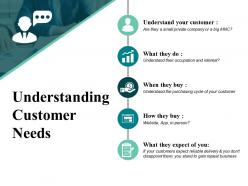
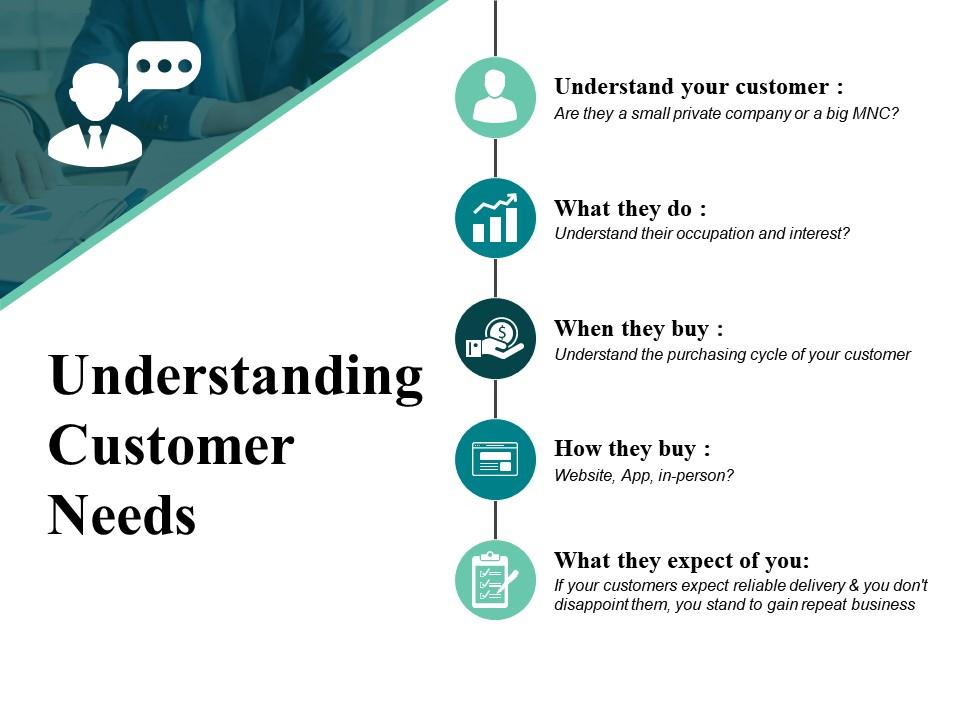
Understanding customer needs ppt samples download
Try Before you Buy Download Free Sample Product
Audience
Editable
of Time
Advance fearlessly with our Understanding Customer Needs Ppt Samples Download. They are a guarantee against every challenge.
People who downloaded this PowerPoint presentation also viewed the following :
Understanding customer needs ppt samples download with all 5 slides:
Our Understanding Customer Needs Ppt Samples Download giveyou greater credit. And they add to it with their interest.
FAQs for Understanding customer needs
Most prospects hit the same three walls. First, they're buried in manual work that eats up their day - honestly, this one's huge. Second issue is their tools don't play nice together, so data gets trapped everywhere. Third thing? They can't handle more business even when it comes their way because everything breaks down at scale. I'd dig into the workflow mess first during discovery calls - that's where you'll strike gold. People get genuinely frustrated talking about all the repetitive stuff they do. Then probe around integration headaches and whether they've had to turn away business because they couldn't handle it.
So customers basically look at three things when deciding if something's worth it. Does it actually fix their problem? What's the real cost - and I mean everything, not just money but time and hassle too. Then there's the whole experience of dealing with you. Price isn't everything, which honestly surprises a lot of businesses. Some people will pay extra for convenience. Others want every bell and whistle for their buck. Don't guess what they care about though - just ask them straight up. You might be totally wrong about what they value.
Price and quality matter, obviously. But trust is what actually closes deals - people need to believe you'll come through. Timing's tricky too. Here's what I've noticed though: social proof runs everything right now. Your prospects want to see case studies from companies just like theirs. Peer recommendations carry way more weight than your sales pitch ever will. Most people think features sell, but honestly? They care more about how easy implementation will be and whether your support team actually picks up the phone. During your discovery calls, pay attention to what they bring up first - that's your real answer for what's driving decisions in your market.
Your customers are literally changing as we speak - aging populations, shifting incomes, more diversity. Millennials just hit their prime spending years and they're obsessed with sustainability and buying everything online. Meanwhile older folks? Not so much. Different ethnic groups have totally different preferences too, from product features to how they want brands talking to them. Honestly, I think most companies are still marketing to customers from like 2015. You've got to slice up your data by these demographic shifts. What worked yesterday probably isn't working now.
So we run a bunch of feedback loops to figure out what customers actually want. Surveys and post-purchase stuff are obvious. Social media monitoring is massive though - people complain constantly online and it's pure gold for us. Our customer success team does quarterly calls with big accounts, plus we dig into usage data to see which features people ignore vs. use religiously. Oh, and support ticket analysis tells you a ton. I'd set up monthly meetings where sales, support, and product share what they're hearing. Patterns show up way faster that way instead of waiting around for formal reports to come in.
Your competitors basically train your customers on what's possible. See Feature X at Company A? Now customers expect you to have it too. Amazon ruined us all with free shipping - suddenly everyone had to offer it or look cheap. People are always comparing you to alternatives, even subconsciously. They're getting educated through your competitors' demos and marketing (honestly, sometimes better than your own). You've gotta regularly check what competitors are promising vs. actually delivering. Then decide: match them, beat them, or go completely different. Don't just copy though - that's boring.
Cultural stuff totally changes how customers behave. Some people trust what their community says way more than doing their own research. Others are crazy price-sensitive based on their background. Communication styles vary too - like, some cultures give super direct feedback while others are more subtle (which can mess up your surveys if you're not expecting it). Tech comfort levels are all over the place. Service expectations differ massively between cultures. Honestly, demographics alone won't cut it - you've got to segment by cultural factors to actually understand what's driving their decisions.
Honestly, three big things are changing everything right now. Sustainability is huge - people can smell BS greenwashing from a mile away and want brands that actually care about the environment. Then there's hyper-personalization where customers expect Netflix-level customization for literally everything they buy. Super annoying but that's where we are. Most people also want to fix stuff themselves before calling anyone - COVID really pushed that trend into overdrive. You'd probably want to check how your customer experience stacks up against these shifts, especially compared to what your competitors are doing.
Honestly, segmentation is a game-changer because you stop treating everyone like they're the same person. Break your customers into groups - maybe by age, buying habits, whatever makes sense. A working mom shops totally different than some college kid, you know? Once you see those patterns, you can actually give people what they want instead of guessing. I'd start small though - pick like 2 or 3 main groups and really figure out what makes them tick. Way better than blasting the same message at everyone and hoping something sticks.
Your customers are basically spoiled now (thanks, Amazon). Everyone expects instant everything - same-day delivery, real-time updates, stuff that just *works* across every platform. It's wild how one company set the bar so high. Here's the thing though - your customers aren't comparing you to your competitors anymore. They're comparing you to their best digital experience ever, period. Netflix recommendations, Uber tracking, whatever blew their mind recently. So when you're figuring out what people actually want, factor in these crazy-high tech expectations. You either need to meet them or be really upfront about why you do things differently.
Honestly? I'd say quarterly at minimum, but it really depends on your industry. Tech moves crazy fast so monthly makes more sense there. Don't just wing it though - be systematic about this stuff. Customer interviews are gold, plus targeted surveys work great. Support tickets and sales feedback help too, but that's not enough on its own. I've watched so many teams think they "get" their customers and then... yikes. Major wake-up call when they're totally wrong. Pick whatever schedule actually works for your team and don't skip it. Consistency beats perfection here.
Look, I'd start with NPS - that's your loyalty gold mine right there. Customer Satisfaction Score gives you the real-time pulse on specific interactions. Then there's Customer Effort Score, which honestly everyone sleeps on but it's huge - shows how easy you make things for people. Track your retention rates too, plus how fast you're closing support tickets. Oh, and don't try to measure everything at once or you'll go crazy. These five will give you a pretty solid picture of where you stand. CES might surprise you though - customers hate jumping through hoops more than anything.
Honestly, just bake customer feedback right into how you build stuff. Pull from support tickets, user interviews, usage data - whatever shows you where people are actually struggling. I've watched so many teams waste months building features literally no one asked for because they thought they knew better. Set up regular check-ins with your support and sales folks. Create some shared space where all these insights can live together. Don't make it a one-off thing though - it needs to be ongoing. Pick one customer complaint this week and see how it might shift what you're planning next.
Honestly, the worst one is customers thinking we're all identical - like we're selling the exact same thing. Quality and support vary wildly between providers, but they don't see it. Price shopping drives me crazy too. They'll go with whoever's cheapest without thinking about what that "deal" actually costs them down the road. Implementation always takes longer than they expect - I swear they think it's plug-and-play. Most also assume once it's running, they're done. Wrong! You need ongoing maintenance and updates. My advice? Address this stuff upfront during discovery. Trust me, it'll save you major headaches later when they're surprised about something you could've explained from day one.
Honestly, forget basic demographics - that stuff's pretty useless now. Look at what people actually DO instead. Check your CRM for patterns like who buys eco stuff or shops on mobile. Once you spot those behaviors, customize everything for each group. Your messaging, product suggestions, even how your site looks. AI tools can handle the heavy lifting if you've got tons of customers (trust me, doing it manually sucks). Don't go crazy at first though. Pick maybe 3-4 customer types, build specific experiences for each, then see what actually works. You can always tweak later.
-
Commendable slides with attractive designs. Extremely pleased with the fact that they are easy to modify. Great work!
-
Great quality product.