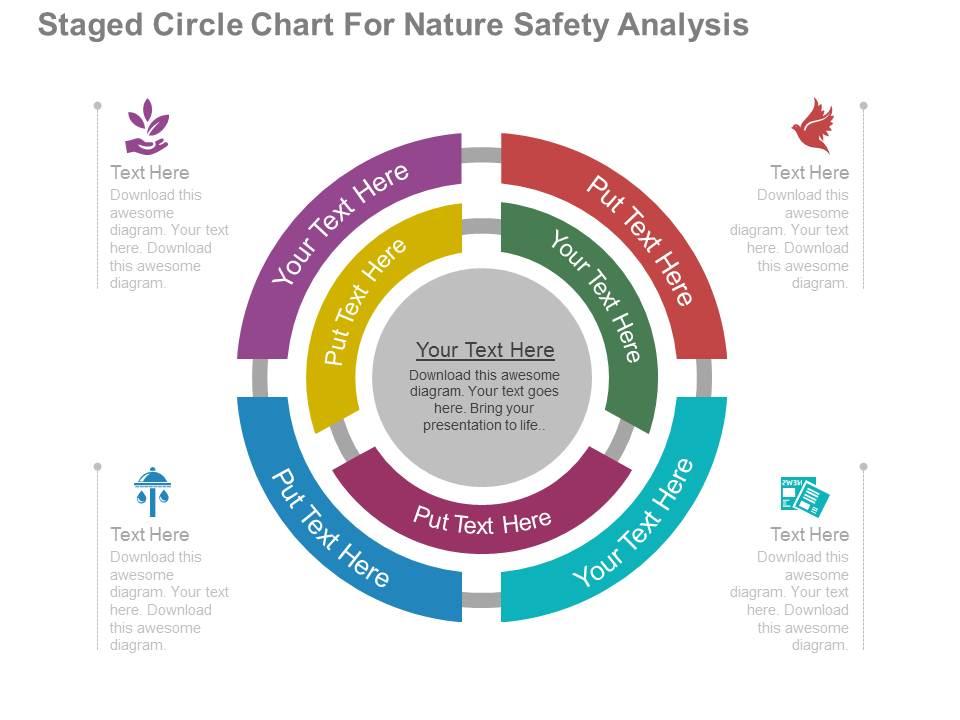
Use four staged circle chart for nature safety analysis flat powerpoint design

Rating:
100%
Use four staged circle chart for nature safety analysis flat powerpoint design
Slide 1 of 4
Favourites Favourites

Try Before you Buy Download Free Sample Product

Audience Impress Your
Audience
Editable 100%
Editable
Time Save Hours
of Time
The Biggest Sale is ending soon in
0
0
:
0
0
:
0
0
Rating:
100%
Presentation slide is beneficial for Banking operations, marketing, sales team and businessmen. Plentiful color choices, briskness and effects. Delete or add the slide as and when required. Compatible with PowerPoint for Windows and Mac as well as Google slides. Simply download the PPT graphic, enter text and present. Supports widescreen format.

FAQs for Use four staged circle chart for nature safety analysis

Key components include environmental hazard identification, ecological impact assessment, species vulnerability mapping, climate risk evaluation, and human-wildlife interaction protocols. These analytical frameworks streamline conservation planning by quantifying threats, predicting ecosystem changes, and establishing mitigation strategies, with many environmental organizations finding that comprehensive assessments ultimately deliver enhanced biodiversity protection and sustainable resource management outcomes.

Technology enhances natural environment safety assessment through GPS tracking systems, weather monitoring sensors, satellite imagery analysis, drone surveillance, and mobile emergency communication tools. These technologies streamline risk evaluation by providing real-time environmental data, automated hazard detection, and instant emergency response coordination, with many outdoor recreation organizations and environmental agencies finding that integrated monitoring systems ultimately deliver faster incident response and significantly improved safety outcomes.

Local communities serve as essential frontline partners in nature safety protocols through early warning systems, traditional ecological knowledge, emergency response coordination, and ongoing environmental monitoring. These community networks enhance protocol effectiveness by providing real-time ground intelligence, culturally appropriate safety measures, and rapid mobilization during natural disasters, with many conservation programs finding that local engagement significantly improves both environmental protection and public safety outcomes.

Different ecosystems present unique safety challenges through varying environmental hazards, wildlife interactions, terrain difficulties, weather extremes, and resource limitations. While forests pose risks from wildlife encounters and navigation challenges, deserts threaten through dehydration and extreme temperatures, and marine environments present drowning and current dangers, ultimately requiring specialized preparation, equipment, and knowledge for safe exploration across diverse natural landscapes.

Best practices for conducting nature safety analysis include comprehensive hazard assessment, weather monitoring, terrain evaluation, wildlife risk analysis, and emergency preparedness planning. These methodologies enhance outdoor program safety by identifying potential risks, establishing clear protocols, and ensuring proper equipment allocation, with adventure tourism companies, educational institutions, and corporate retreat organizers finding that systematic analysis significantly reduces incidents while improving participant confidence.

Organizations measure nature safety initiative efficacy through biodiversity monitoring, environmental impact assessments, compliance auditing, stakeholder feedback analysis, and sustainability metrics tracking. These measurement frameworks enable companies to quantify habitat restoration progress, carbon footprint reduction, and regulatory adherence, with many manufacturing and energy sectors finding that comprehensive monitoring ultimately delivers measurable environmental improvements and enhanced corporate sustainability credentials.

Common misconceptions include believing all natural water is safe to drink, underestimating weather changes, assuming wildlife won't attack if unprovoked, and thinking basic first aid isn't necessary outdoors. These misconceptions create significant risks by encouraging inadequate preparation, insufficient safety equipment, and poor decision-making, with many outdoor enthusiasts finding that comprehensive safety training and proper gear ultimately prevent accidents and enhance wilderness experiences.

Climate change significantly impacts nature safety analysis by altering precipitation patterns, increasing extreme weather frequency, shifting ecosystem boundaries, and intensifying natural disaster risks across regions. These changes require analysts to continuously update risk models and assessment protocols, with coastal areas facing sea-level threats, while arid regions experience increased wildfire risks, ultimately demanding more adaptive and region-specific safety frameworks.

Effective wilderness risk assessment tools include GIS mapping systems, weather monitoring equipment, terrain analysis software, satellite communication devices, and hazard identification checklists. These methodologies enhance safety planning by providing real-time environmental data, predictive weather patterns, and comprehensive risk documentation, with many outdoor organizations finding that integrated technology systems significantly reduce incident rates while improving emergency response capabilities.

Nature safety analysis contributes to conservation efforts by identifying environmental risks, monitoring ecosystem health, and assessing threats to biodiversity across various habitats. Through comprehensive data collection and risk assessment frameworks, conservation organizations can prioritize resource allocation, develop targeted protection strategies, and implement early warning systems, ultimately delivering more effective habitat preservation and species protection outcomes.

Neglecting safety in ecotourism ventures leads to visitor injuries, legal liabilities, regulatory penalties, damaged reputation, and ultimately business failure. These oversights particularly impact adventure tourism operators, wildlife tour companies, and remote lodge facilities, with many organizations finding that comprehensive safety protocols significantly reduce insurance costs, enhance customer satisfaction, and deliver sustainable competitive advantage in increasingly safety-conscious travel markets.

Behavior-based safety principles enhance nature safety analysis by observing human interactions with natural environments, identifying risk patterns through data collection, and implementing targeted interventions based on behavioral insights. Through systematic observation and feedback loops, organizations managing outdoor activities, national parks, and adventure tourism can reduce incidents, improve safety protocols, and create predictive models that address common behavioral risks, ultimately delivering safer outdoor experiences while maintaining operational efficiency.

Essential training for nature safety professionals includes environmental hazard identification, risk assessment methodologies, emergency response protocols, wildlife behavior analysis, and regulatory compliance standards. Through specialized certifications and field experience, safety assessors develop expertise in evaluating natural threats, implementing protective measures, and ensuring operational continuity, with many organizations finding that comprehensive training programs significantly enhance assessment accuracy and workplace safety outcomes.

Regulations and policies significantly shape nature safety implementation by establishing mandatory standards, funding mechanisms, and compliance frameworks that organizations must follow. These governance structures enable businesses to streamline environmental risk assessments, enhance operational transparency, and deliver sustainable practices, with many industries finding that regulatory alignment ultimately provides competitive advantage and improved stakeholder confidence.

Risk perception in nature safety involves cognitive biases, emotional responses, previous experiences, social influences, and personal risk tolerance levels. These psychological factors significantly influence decision-making in outdoor environments, with many hikers and outdoor enthusiasts finding that understanding availability bias, optimism bias, and social proof helps them make more informed safety choices, ultimately reducing accidents and enhancing outdoor experiences.

Ratings and Reviews

100% of 100
Review Form
Write a review
Most Relevant Reviews
  1. 100%

    by Denver Fox

    Commendable slides with attractive designs. Extremely pleased with the fact that they are easy to modify. Great work!
  2. 100%

    by Jones Cook

    Very unique, user-friendly presentation interface.

2 Item(s)

per page: