Vendor Management Dashboard With Risk Assessment

Rating:
100%
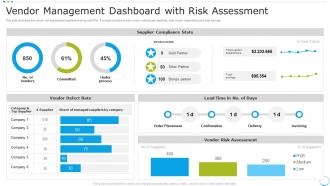
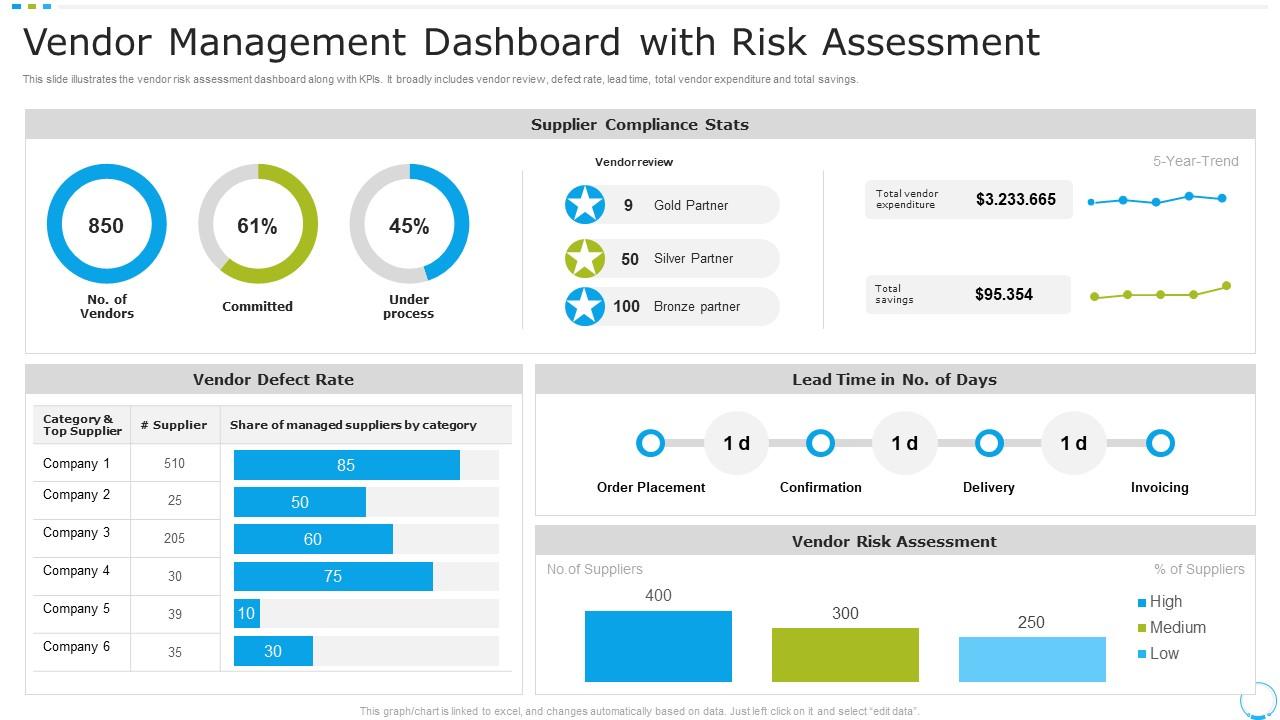
A dashboard showing vendor management metrics including compliance stats, defect rates, lead times, and risk assessment
Slide 1 of 6

or

Favourites Favourites

Try Before you Buy Download Free Sample Product

Audience Impress Your
Audience
Editable 100%
Editable
Time Save Hours
of Time
The Biggest Sale is ending soon in
0
0
:
0
0
:
0
0
Rating:
100%
This slide illustrates the vendor risk assessment dashboard along with KPIs. It broadly includes vendor review, defect rate, lead time, total vendor expenditure and total savings. Introducing our Vendor Management Dashboard With Risk Assessment set of slides. The topics discussed in these slides are Vendor Management Dashboard With Risk Assessment. This is an immediately available PowerPoint presentation that can be conveniently customized. Download it and convince your audience.
FAQs for Vendor Management Dashboard

You'll want to nail down your vendor criteria first - cost, quality, reliability, all that stuff. Get contracts that actually spell out what you expect and when (trust me, vague agreements bite you later). Monthly check-ins work great for tracking how they're doing. The relationship part is honestly huge though - if you're just cold and transactional, good luck getting quick help when things go sideways. Keep communication open and do quarterly reviews to catch problems early. Oh, and don't just sign the contract then disappear - staying engaged makes all the difference.

Dude, vendor management platforms are seriously worth looking into. They'll automate all that tedious RFP scoring and proposal comparison stuff you're probably doing by hand right now. Background checks and compliance verification happen way faster too. What I love most is having everything in one dashboard instead of digging through a million emails - that alone saves me like an hour a day. You can run financial assessments automatically and actually compare vendors with real data instead of just gut feelings. Honestly, just pick one piece to digitize first. Maybe start with document management? Don't try to overhaul everything at once or you'll burn out.

Track the basics first - on-time delivery, defect rates, cost vs budget. Responsiveness when stuff goes wrong is huge too, honestly more telling than perfect scores on paper. Contract compliance matters obviously. If your vendors interact with customers, throw in satisfaction scores - that soft stuff can make or break relationships. Don't go overboard though, like 4-6 metrics max or you'll drown in data. Simple scorecard works fine, review quarterly so you can actually have meaningful conversations about what's working and what isn't.

Don't just look at the sticker price - that's rookie mistake territory. Cheap vendors can absolutely destroy your budget later with crappy quality and endless headaches. Been there, trust me. First figure out your minimum quality bar, then compare costs only for vendors who actually meet it. Also think about stuff like how fast they respond when things go wrong and whether they're a pain to deal with. Oh, and make some kind of scoring sheet that weighs cost vs quality so you're not just guessing. Makes the whole decision way cleaner.

Biggest headaches with vendors? Data breaches, service outages, and compliance screwups. Their financial troubles become your problem too. Do your homework first - security checks, financial reviews, the works. Set up monitoring with real penalties in your contracts. Include audit rights and data protection stuff (boring but necessary). Here's what saved me once: have backup vendors lined up already. Don't wait until you're scrambling. Also make sure you can actually audit them - some vendors get weird about that. Regular performance reviews help catch issues early. Honestly, most problems happen when people skip the upfront work and just hope for the best.

Having multiple vendors is honestly a game-changer for avoiding disasters. You don't want to be that company scrambling when your main supplier gets hit by a hurricane or goes belly-up. Spread your bets across different regions and company sizes - it's like diversifying your investments but for your supply chain. Plus, working with various vendors means you'll get fresh ideas and approaches you wouldn't see otherwise. I'd start by looking at where you're too dependent on one source. Trust me, that backup plan will save your butt someday.

Honestly, communication makes or breaks these relationships. I'd start with monthly calls for your main vendors if you aren't already. Set clear expectations right from the start - saves so much headache later. When things go sideways (and they will), give honest feedback instead of just staying quiet about it. Regular check-ins help you catch problems while they're still small. Document the important stuff too. I've watched vendor relationships completely tank just because people got lazy about staying in touch. Being proactive beats scrambling to fix things after they've blown up.

Honestly, the best thing we ever did was stop treating vendors like they're just there to take orders. Set up regular check-ins - not just the "where's my stuff" calls, but actual conversations about where your business is headed. Share the bigger picture with them! Some of our smartest ideas have come from vendors who actually understood what we were trying to do. Make it a two-way street with feedback going both directions. Don't be weird about bringing them into planning meetings either. When they feel like they're part of your team, they'll actually care about your success.

Honestly, the biggest mistakes I see are skipping proper research upfront and then ghosting vendors after signing. Don't just pick whoever's cheapest - trust me, I've watched that blow up when the work quality tanks. Communication breaks everything too. Set up regular calls from the start or things get messy fast. Oh, and actually read those service agreements! Most people shove contracts in a drawer and never look again. Sounds boring but you need to track if they're hitting their targets. Basically treat them like actual partners, not just some company you hired once.

Look, contract talks basically set up your whole relationship with vendors - mess it up and you're starting from behind. Being too aggressive just kills trust right away. That said, most vendors actually respect you more when you negotiate well (weird but true). Stay firm on stuff that really matters, but keep things collaborative. Focus on win-win deals instead of trying to squeeze every dollar out of them. You want them feeling like a partner, not someone you're beating up. Oh, and always kick off by talking about shared goals first - makes everything smoother.

Honestly, I'd start with a real conversation to figure out what's actually going wrong - could be miscommunication or they're just swamped. Give them clear deadlines and metrics to hit. Improvement plans sound formal but they actually work when you mean business about it. Document everything though, trust me on this one. If they don't step up, start looking at backup options or scale back their work. Sometimes you gotta be the bad guy, but at least you'll have the paper trail to show your boss why changes were necessary.

Honestly, most companies screw this up by treating vendors like separate little islands instead of connected pieces. You've got to align your vendor game with your bigger supply chain goals - match their performance metrics to your delivery times, quality stuff, and cost targets. Map out which vendors actually matter for keeping things running smoothly first. Those are the relationships worth investing in. Your contracts should reflect what matters to your whole supply chain flow, not just that one vendor relationship. And yeah, you need visibility into how each one affects everything downstream. It's all connected, even though it doesn't always feel that way.

Dude, this stuff is a game changer. Instead of digging through endless emails and messy spreadsheets, everything's in one place. Contract tracking becomes automatic, spending gets way clearer, and you can actually see how vendors are performing. The compliance piece saves so much stress - like, no more panic when audit time rolls around or when contracts expire out of nowhere. New vendor onboarding gets smoother too. Honestly took me forever to finally try it, but now I can't imagine going back. I'd say figure out what's driving you crazy first, then test drive a couple platforms.

So basically, start adding green requirements to your contracts when picking suppliers. Look for vendors doing carbon assessments, waste reduction, that kind of stuff. I'd definitely audit them regularly to see if they're actually following through. Some companies even throw in bonuses for hitting environmental targets - which honestly makes sense since it gets results. The cool thing is this extends your sustainability way beyond just what your company does internally. Next time you're evaluating vendors, just toss in some environmental criteria and see what happens. You might be surprised how many suppliers are already on board.

Honestly, don't wait until audit season to get your vendor docs together - learned that lesson the hard way! Keep contracts, SLAs, and performance stuff organized from day one. Update those risk assessments regularly too. Build a central spot where you can grab vendor certs and security reports fast. Do internal checks periodically so you catch problems before auditors show up at your door. Oh, and make sure your vendors know they need to respond quickly when you ask for compliance paperwork - some of them can be painfully slow about it. Trust me, having everything ready makes audits way less stressful.

Ratings and Reviews

100% of 100
Review Form
Write a review
Most Relevant Reviews
  1. 100%

    by Smith Gomez

    The best and engaging collection of PPTs I’ve seen so far. Great work!
  2. 100%

    by Damian Martin

    “I really like the convenient operation and professionalism I saw on the SlideTeam website. I want to express my regards and appreciation to the team.”

2 Item(s)

per page: