Vision and mission statement definitions which comes business objectives future position statements

Rating:
85%
Vision and mission statement definitions which comes business objectives future position statements
Slide 1 of 9
Favourites Favourites

Try Before you Buy Download Free Sample Product

Audience Impress Your
Audience
Editable 100%
Editable
Time Save Hours
of Time
The Biggest Sale is ending soon in
0
0
:
0
0
:
0
0
Rating:
85%
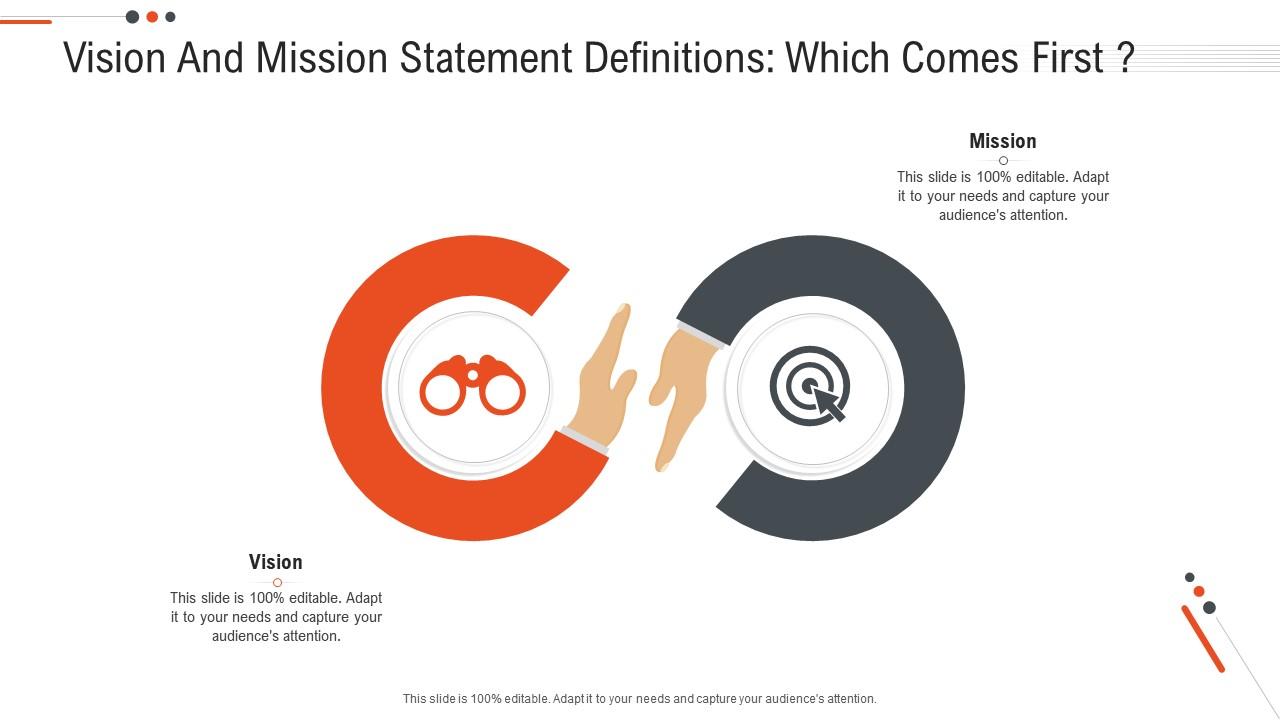
Introducing Vision And Mission Statement Definitions Which Comes Business Objectives Future Position Statements to increase your presentation threshold. Encompassed with two stages, this template is a great option to educate and entice your audience. Dispence information on Mission, Vision, using this template. Grab it now to reap its full benefits.

People who downloaded this PowerPoint presentation also viewed the following :

FAQs for Vision and mission statement definitions which comes business objectives

Essential elements for crafting effective vision statements include clarity and conciseness, inspirational language, future-focused direction, stakeholder alignment, and measurable aspirational goals. These components work together by establishing organizational purpose, guiding strategic decisions, and motivating teams toward unified objectives, with many successful companies finding that well-crafted vision statements enhance employee engagement and drive sustainable competitive advantage.

A mission statement reflects core values by explicitly incorporating the organization's fundamental beliefs into its purpose, operations, and stakeholder commitments. Through strategic language that emphasizes ethical practices, customer focus, and employee development, companies like Patagonia weave environmental responsibility throughout their mission, while organizations across healthcare, technology, and retail sectors integrate values-driven messaging that guides decision-making, ultimately delivering authentic brand identity and organizational alignment.

A mission statement defines what an organization does, who it serves, and how it operates today, while a vision statement describes the aspirational future the organization wants to create. Mission statements focus on current purpose and operational activities, whereas vision statements paint the long-term impact and transformation the company seeks to achieve, with many organizations finding that combining both provides strategic clarity and inspirational direction for stakeholders.

Companies should revisit their vision and mission statements every 3-5 years, or when significant organizational changes occur, such as mergers, market shifts, or strategic pivots. Regular reviews ensure these foundational documents remain relevant and aligned with evolving business objectives, with many organizations finding that updated statements enhance employee engagement and strategic clarity in increasingly dynamic markets.

Vision statements can be overly ambitious when they lack realistic pathways or timelines, potentially leading to employee disengagement, stakeholder skepticism, and strategic misalignment. While bold visions inspire innovation and attract talent, organizations must balance aspiration with achievability, ensuring their vision connects to measurable milestones and operational capabilities, ultimately maintaining credibility while driving transformational growth.

Vision and mission statements shape company culture by establishing shared values, guiding decision-making processes, and creating unified organizational purpose across all departments. These foundational documents influence hiring practices, employee behavior, and strategic priorities, with companies like Patagonia and Google finding that well-crafted statements drive engagement, accountability, and cultural alignment throughout their organizations.

Vision and mission statements serve as foundational anchors in strategic planning, guiding decision-making, resource allocation, goal setting, and organizational priorities. These strategic documents enable leadership teams to align initiatives with core purpose, streamline planning processes, and maintain focus during expansion, with many organizations finding that clear statements enhance stakeholder engagement and competitive positioning.

Organizations can ensure their vision and mission statements inspire employees by making them authentic, actionable, and personally relevant, connecting daily work to broader purpose, and consistently communicating how individual contributions drive organizational impact. Through regular reinforcement, leadership modeling, and integration into performance discussions, companies create meaningful engagement, with many finding that employees become more motivated, aligned, and committed to achieving shared goals.

Common mistakes include being too vague or generic, creating overly lengthy statements, focusing solely on profits rather than purpose, and using jargon that confuses stakeholders. Organizations often struggle with crafting statements that lack measurability or fail to differentiate them from competitors, with many finding that unclear vision and mission statements ultimately weaken employee engagement and strategic alignment.

Visual elements in presentations enhance vision and mission understanding by transforming abstract concepts into memorable, engaging content through infographics, icons, charts, and compelling imagery. These design components help organizations communicate strategic direction more effectively, with many companies finding that visual presentations increase employee alignment, stakeholder buy-in, and retention rates, ultimately delivering clearer organizational focus and stronger cultural cohesion.

Companies with exemplary vision and mission statements include Apple ("to bring the best user experience through innovative hardware, software, and services"), Google ("to organize the world's information and make it universally accessible"), and Patagonia ("to save our home planet"). These statements effectively combine ambitious purpose with clear strategic direction, enabling organizations to align operations, inspire employees, and communicate value propositions, ultimately delivering stronger brand identity and competitive differentiation in increasingly crowded markets.

Employee feedback can be incorporated through structured surveys, focus groups, collaborative workshops, one-on-one interviews, and cross-departmental brainstorming sessions that capture diverse perspectives and organizational insights. This inclusive approach enhances buy-in and authenticity, with many organizations finding that employee-driven vision and mission statements deliver stronger engagement, clearer strategic alignment, and more meaningful cultural transformation across all levels.

Vision and mission statements significantly shape brand identity by defining core values, purpose, and strategic direction, creating consistent messaging across all customer touchpoints. These foundational elements influence customer perception through authentic storytelling and clear value propositions, with companies like Patagonia and Tesla demonstrating how aligned vision-mission frameworks build strong emotional connections, foster brand loyalty, and differentiate organizations in competitive markets.

Effective communication techniques include multi-channel messaging, storytelling approaches, visual presentations, interactive workshops, and consistent leadership reinforcement across all touchpoints. Through strategic combination of town halls, digital platforms, and departmental meetings, organizations enhance stakeholder alignment, improve engagement levels, and accelerate cultural integration, with many companies finding that regular reinforcement ultimately delivers stronger organizational cohesion and strategic clarity.

Social media amplifies organizational vision and mission through targeted content campaigns, employee advocacy programs, authentic storytelling, and community engagement initiatives that showcase values in action. Many companies leverage platforms like LinkedIn and Instagram to share behind-the-scenes content, highlight purpose-driven projects, and create meaningful dialogue with stakeholders, ultimately building stronger brand loyalty and attracting mission-aligned talent.

Ratings and Reviews

85% of 100
Review Form
Write a review
Most Relevant Reviews
  1. 80%

    by Dudley Delgado

    The content is very helpful from business point of view.
  2. 80%

    by Murphy Green

    Easily Editable.
  3. 80%

    by Dillon Payne

    Great quality slides in rapid time.
  4. 100%

    by Edward Nunez

    Innovative and attractive designs.

4 Item(s)

per page: