


Waste disposal and recycling management powerpoint presentation slides
Our Waste Disposal And Recycling Management Powerpoint Presentation Slides are topically designed to provide an attractive backdrop to any subject. Use them to look like a presentation pro.
Our Waste Disposal And Recycling Management Powerpoint Presentation Slides are topically designed to provide an attractive ..






-

- Google Slides is a new FREE Presentation software from Google.
- All our content is 100% compatible with Google Slides.
- Just download our designs, and upload them to Google Slides and they will work automatically.
- Amaze your audience with SlideTeam and Google Slides.
-

Want Changes to This PPT Slide? Check out our Presentation Design Services
-

- WideScreen Aspect ratio is becoming a very popular format. When you download this product, the downloaded ZIP will contain this product in both standard and widescreen format.
-

- Some older products that we have may only be in standard format, but they can easily be converted to widescreen.
- To do this, please open the SlideTeam product in Powerpoint, and go to
- Design ( On the top bar) -> Page Setup -> and select "On-screen Show (16:9)” in the drop down for "Slides Sized for".
- The slide or theme will change to widescreen, and all graphics will adjust automatically. You can similarly convert our content to any other desired screen aspect ratio.
Compatible With Google Slides

Get This In WideScreen
You must be logged in to download this presentation.


Do you want to remove this product from your favourites?
PowerPoint presentation slides
Deliver an informational PPT on various topics by using this Waste Disposal And Recycling Management Powerpoint Presentation Slides. This deck focuses and implements best industry practices, thus providing a birds eye view of the topic. Encompassed with fourty nine slides, designed using high quality visuals and graphics, this deck is a complete package to use and download. All the slides offered in this deck are subjective to innumerable alterations, thus making you a pro at delivering and educating. You can modify the color of the graphics, background, or anything else as per your needs and requirements. It suits every business vertical because of its adaptable layout.

People who downloaded this PowerPoint presentation also viewed the following :
Content of this Powerpoint Presentation
Slide 1: This slide marks the introduction of the "waste disposal & recycling management" PowerPoint presentation. Add the name of your company here.
Slide 2: This slide introduces the agenda of this PowerPoint presentation, i.e. to use all of the waste generated and find ways to convert it into high-value goods.
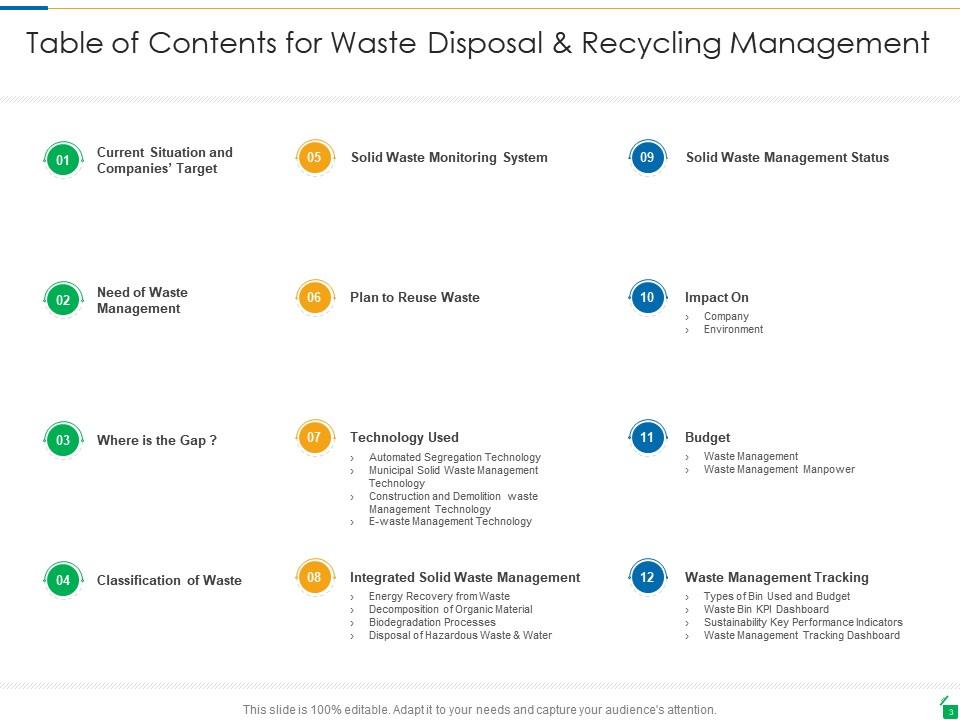
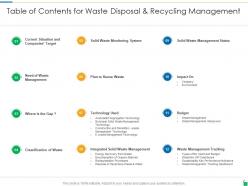
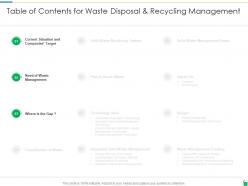
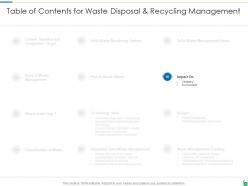
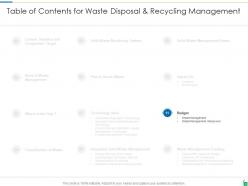
Slide 3: This slide marks the Table of Contents for this waste disposal & recycling management PPT presentation. Dwell on the need for awareness, company proposals, and solutions that can help you achieve this target.
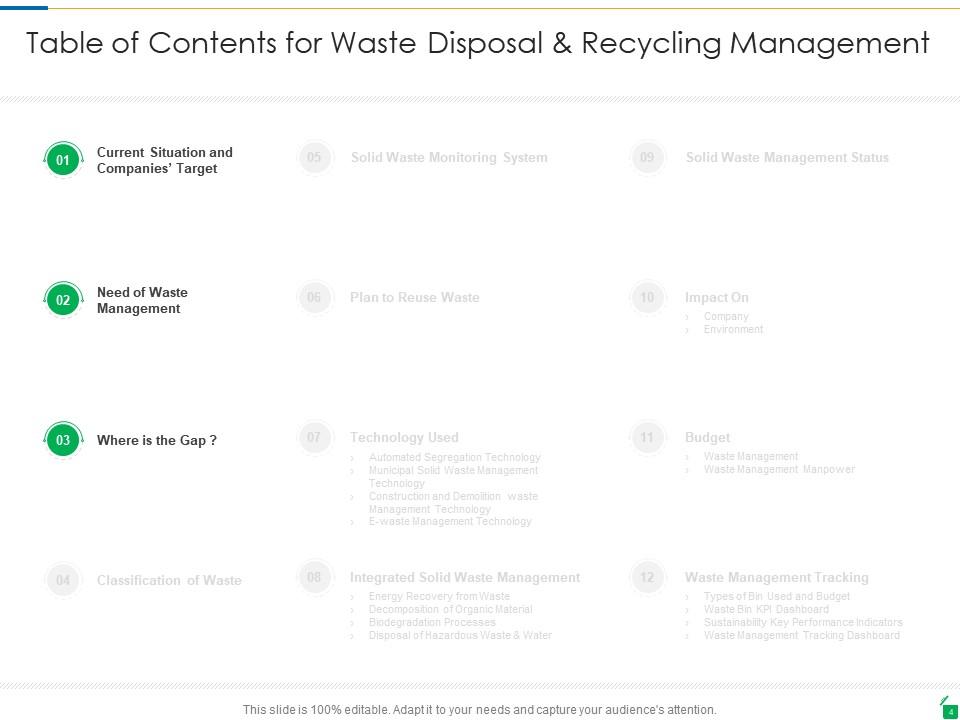
Slide 4: Focus on the first dimension of the table of contents in this slide, i.e. the situation analysis, need for waste management, and how to bridge this gap.
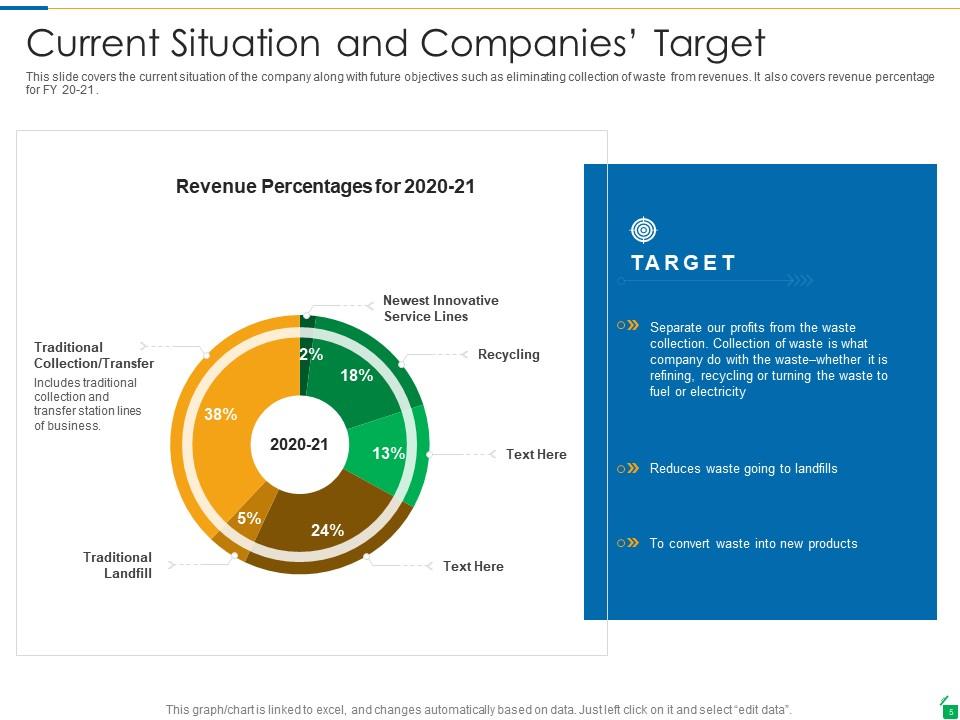
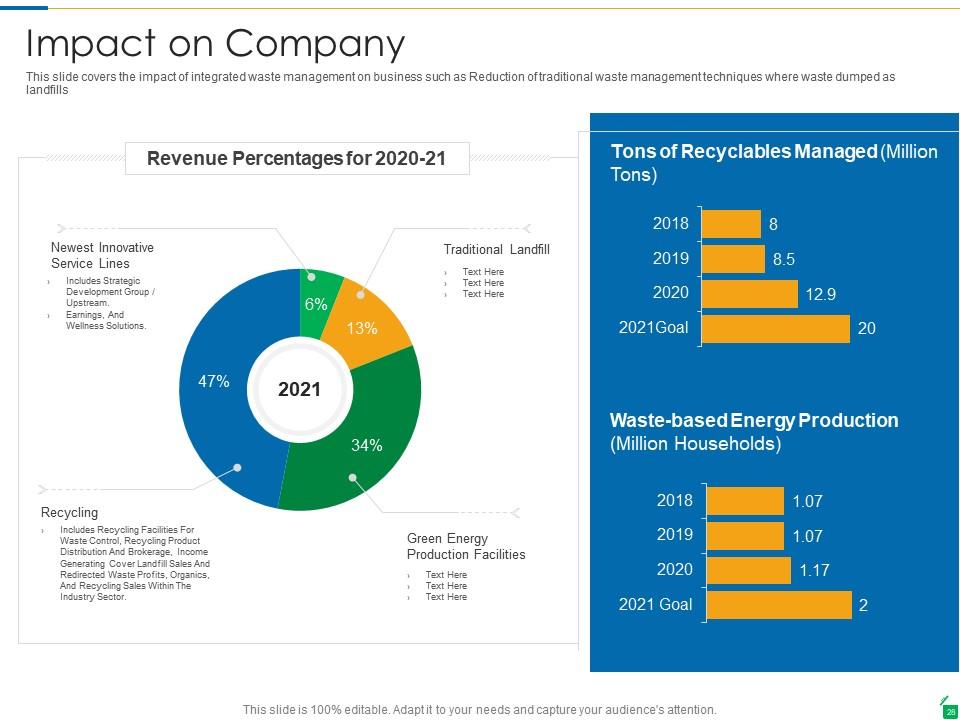
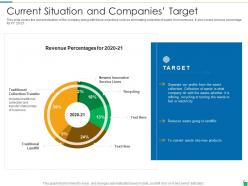
Slide 5: This slide covers the company's current situation and future objectives, such as reducing the waste to landfills and its conversion into new high-value products, including the revenue percentage for FY 20-21.
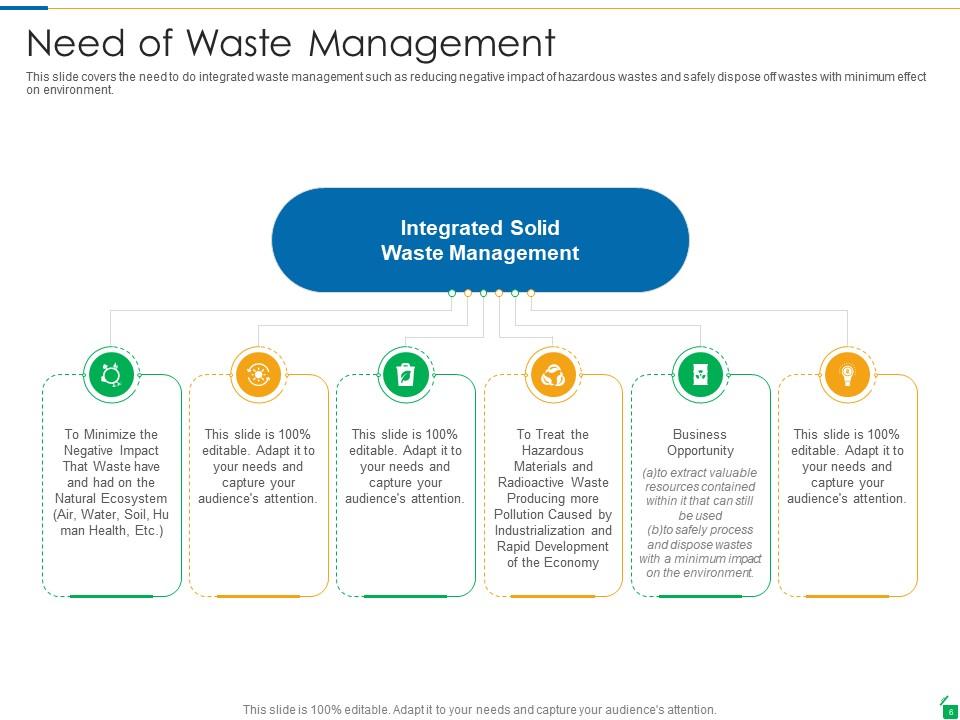
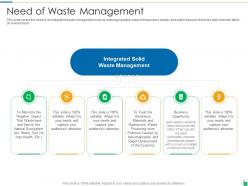
Slide 6: This slide covers the need to do integrated waste management, such as reducing the negative impact of hazardous waste and safely disposing of scraps with minimum effect on the environment.
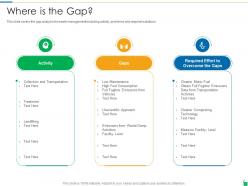
Slide 7: This slide covers the gap analysis for waste management, including activity, problems, and required solutions.
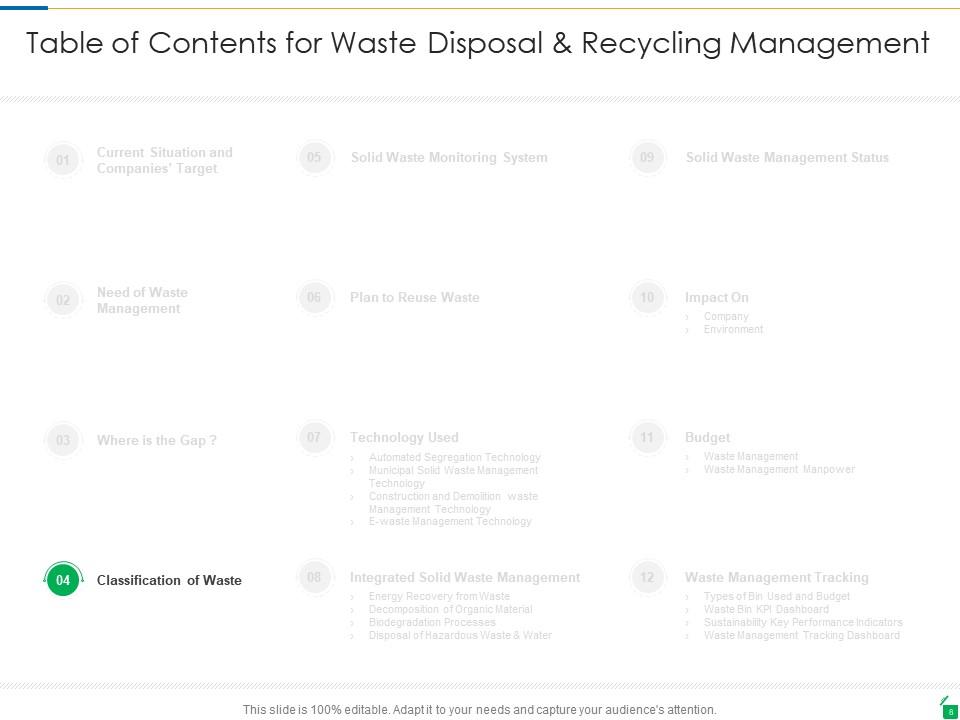
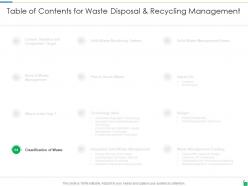
Slide 8: Introduce the second dimension of this PPT presentation in this slide, i.e. the waste classification.
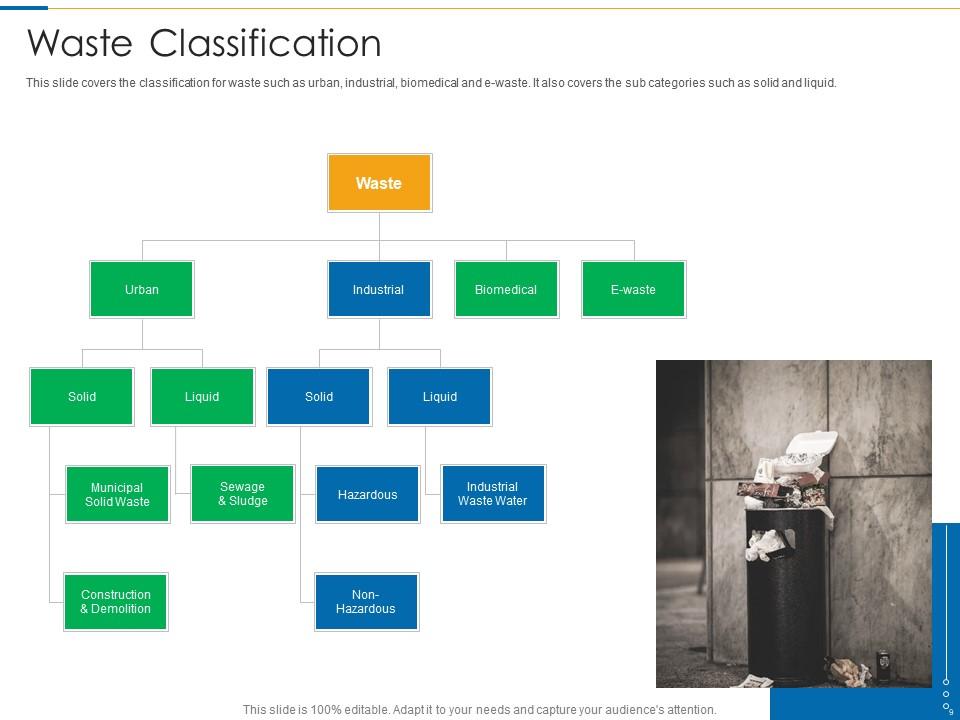
Slide 9: This slide covers the various categories of waste such as urban, industrial, biomedical, and e-waste. It also covers the sub-categories such as solid and liquid.
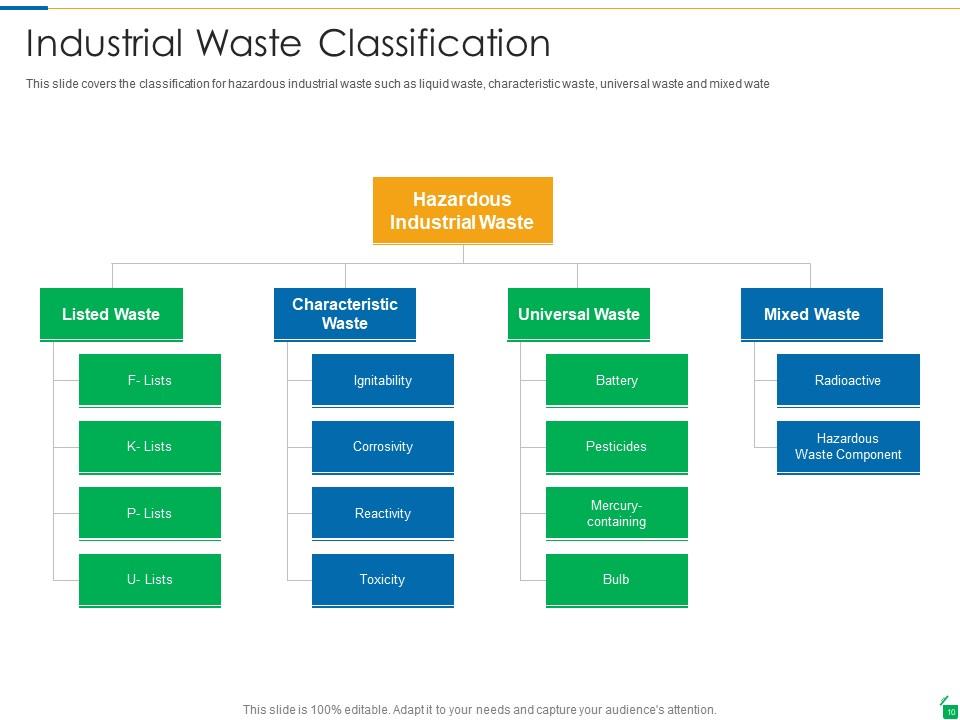
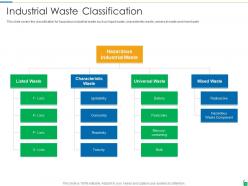
Slide 10: This slide covers the classification of hazardous industrial waste such as liquid waste, characteristic waste, universal waste, and mixed waste.
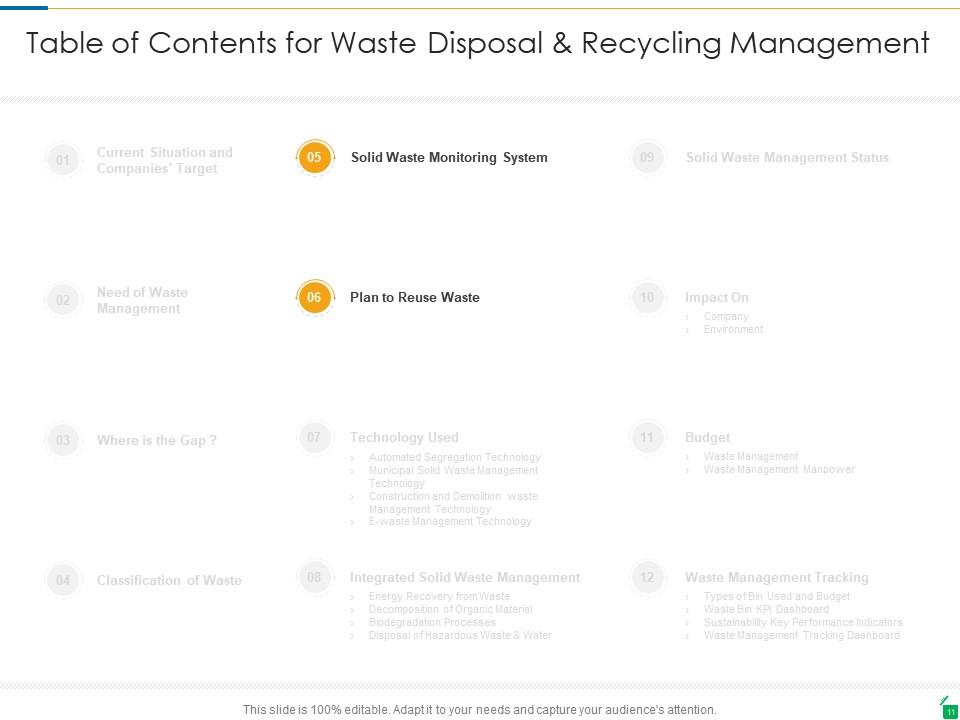
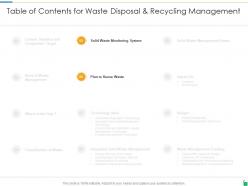
Slide 11: Cover the third aspect of your presentation, namely the solid waste management system and the course of action to reuse the waste in this slide.
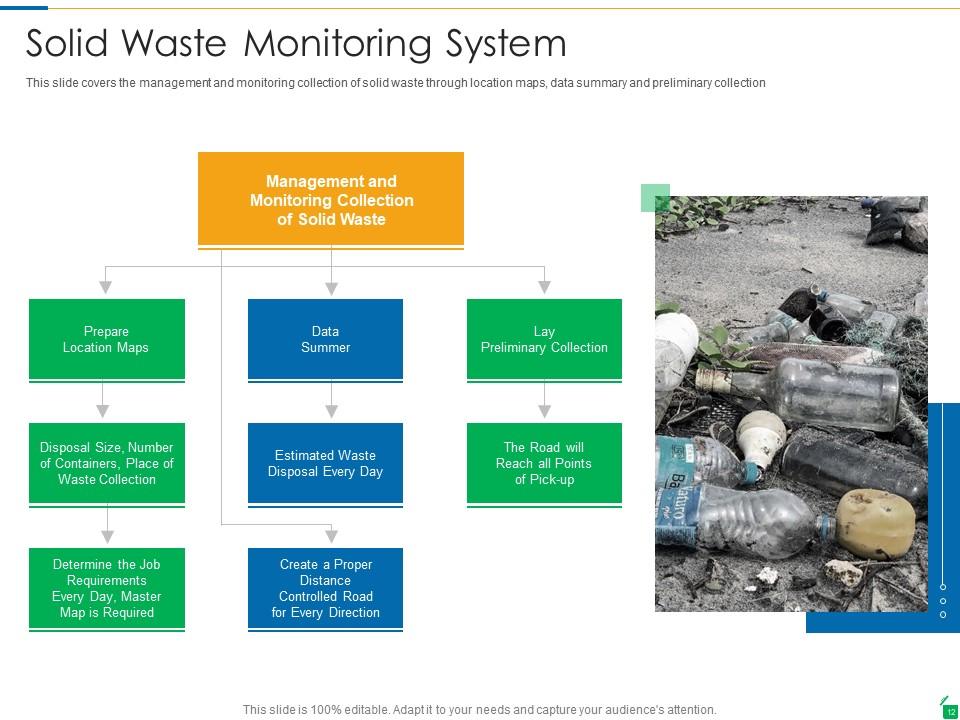
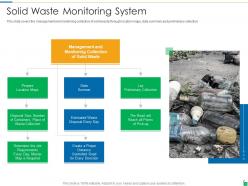
Slide 12: This slide covers solid waste management and monitoring collection through location maps, data summary, and a preliminary collection.
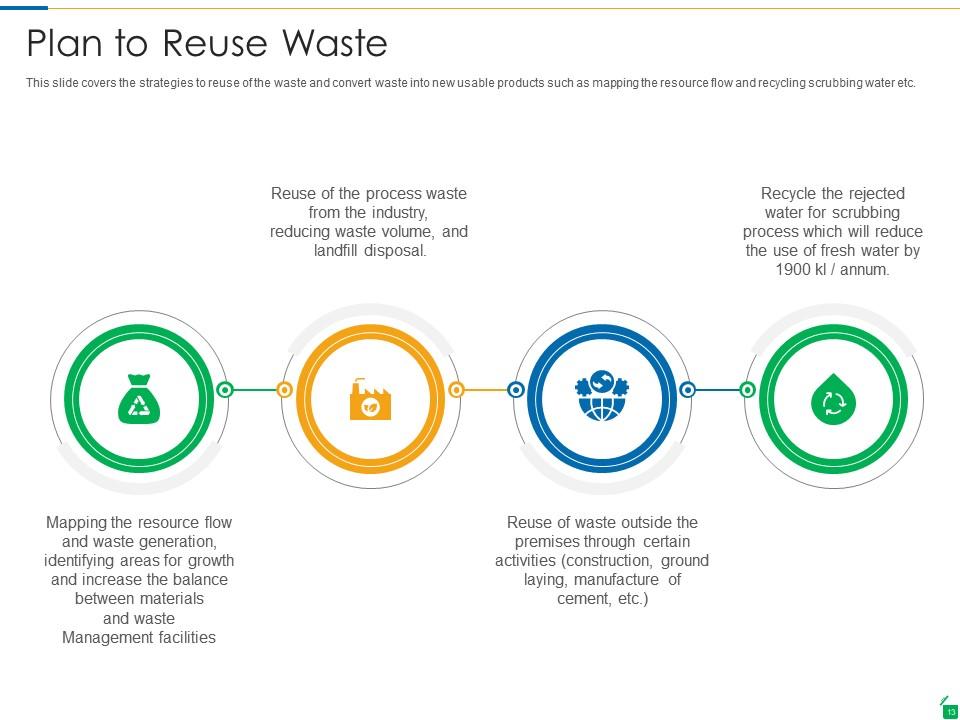
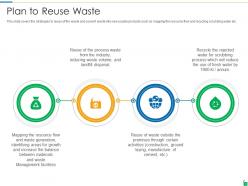
Slide 13: This slide covers the strategies to reuse the waste and convert it into new usable products, such as mapping the resource flow, recycling the scrubbing water, etc.
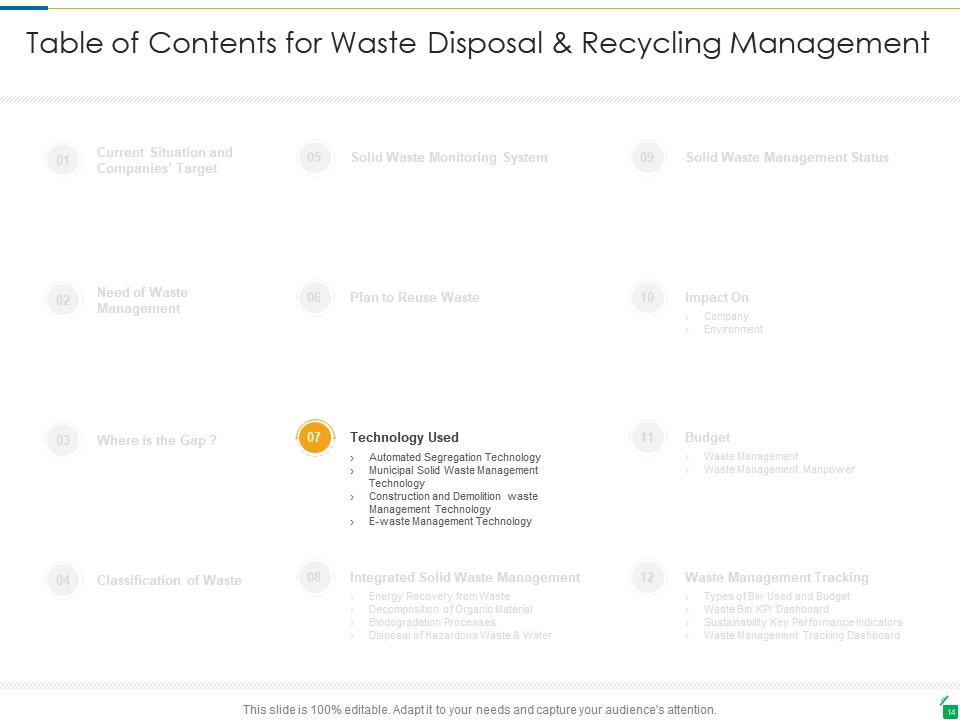
Slide 14: The fourth aspect of this presentation is shared in this slide, which is the use of technology for correct waste management.
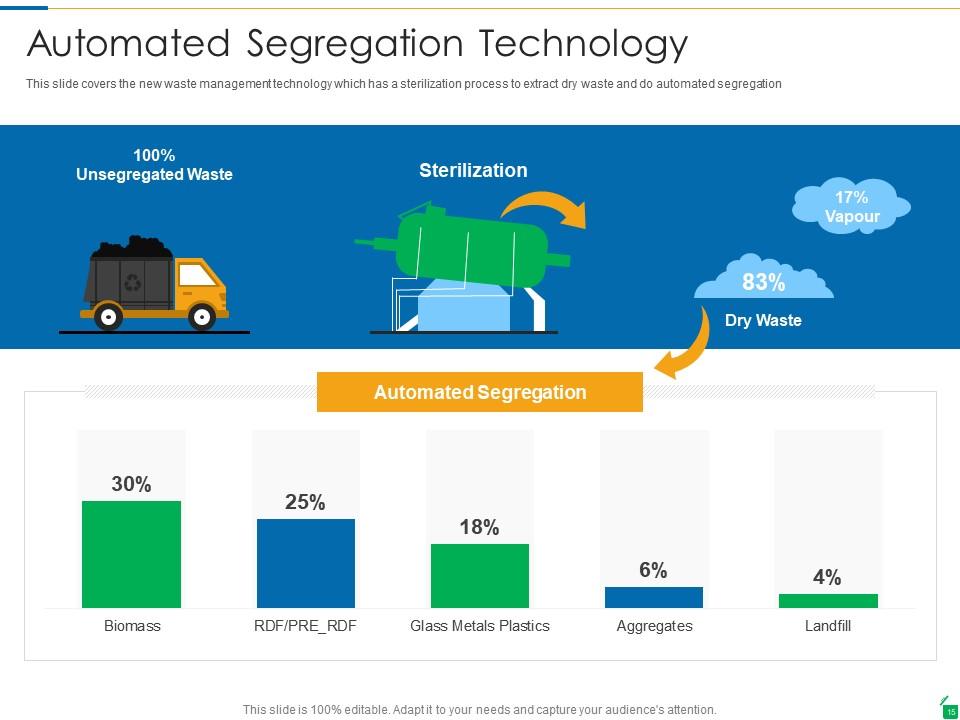
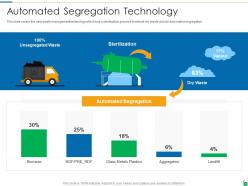
Slide 15: This slide covers the new waste management technology, a sterilization process to extract dry waste and perform automated segregation.
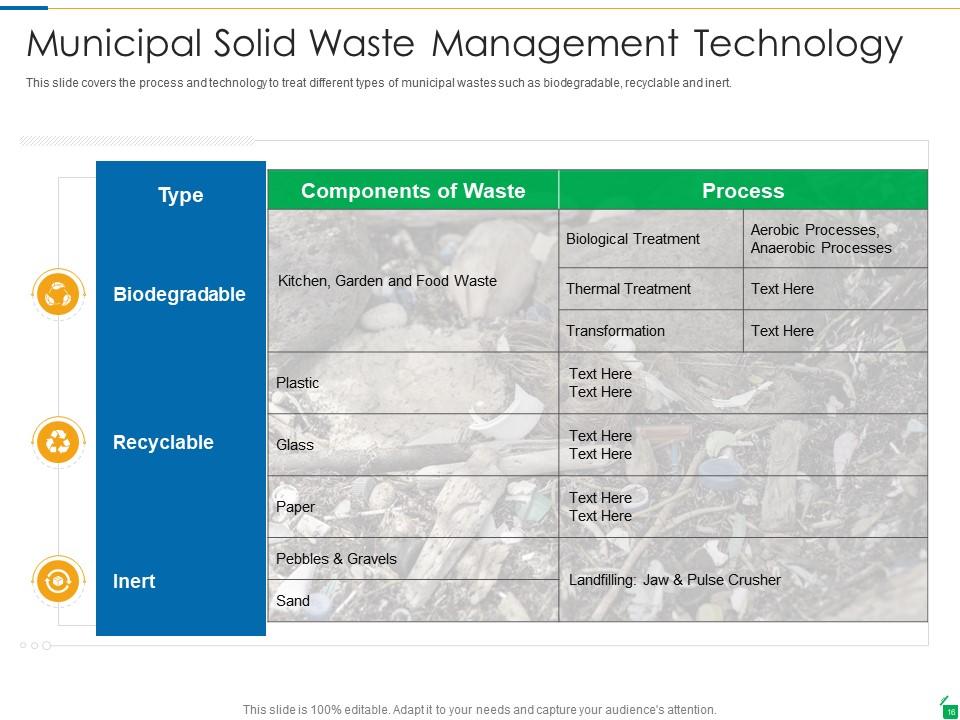
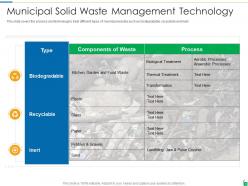
Slide 16: This slide covers the process and technology to treat different types of municipal wastes such as biodegradable, recyclable, and inert.
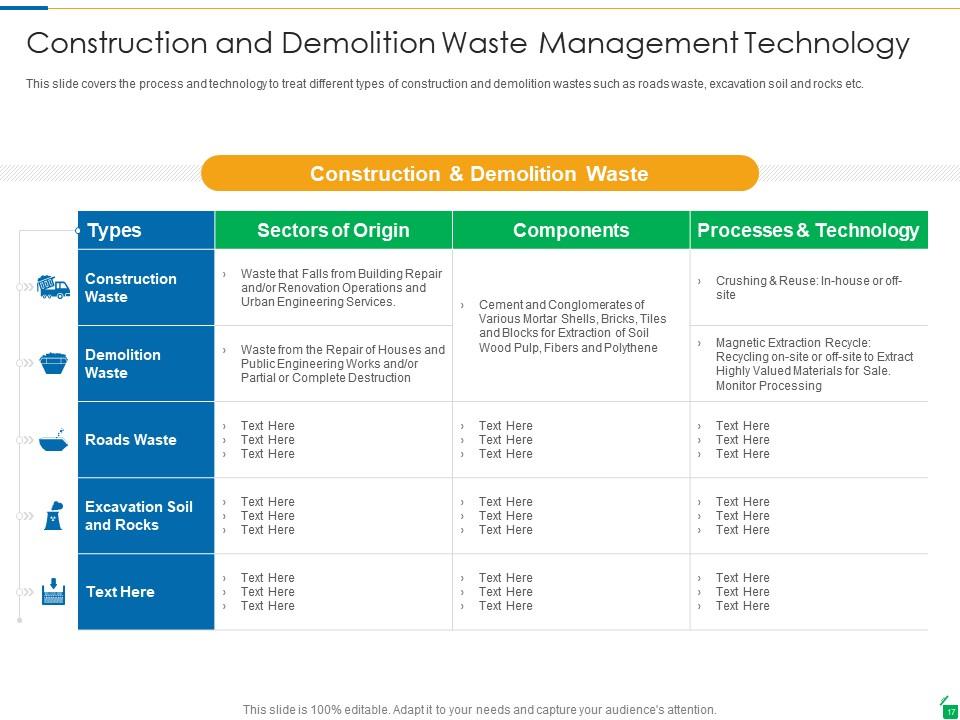
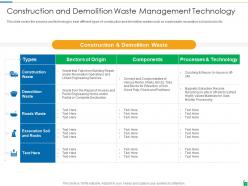
Slide 17: This slide covers the process and technology used to treat construction and demolition wastes such as road waste, excavation soil, rocks, etc.
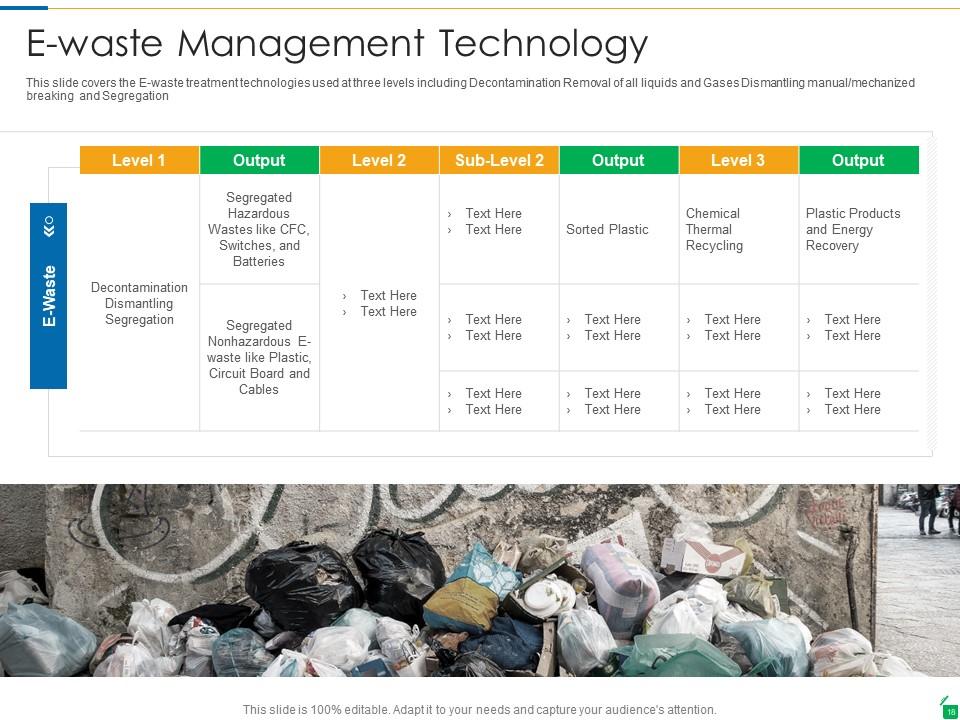
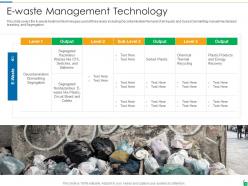
Slide 18: This slide covers the e-waste treatment technologies used at three levels: decontamination, removal of all liquids and gases, dismantling manual/mechanized breaking, and segregation.
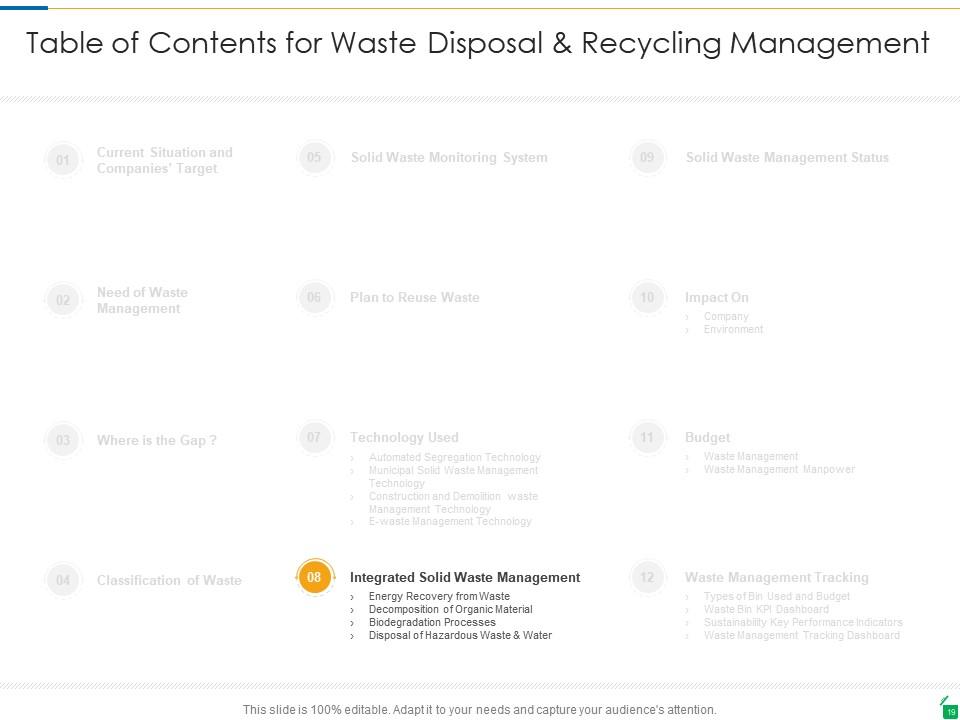
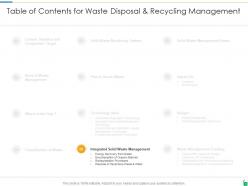
Slide 19: This slide focuses on the fifth aspect of this PowerPoint presentation, i.e. the integrated solid waste management system.
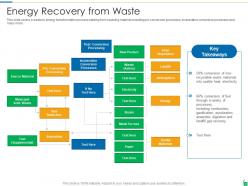
Slide 20: This slide covers a waste-to-energy transformation process starting from sourcing material, including pre-conversion methods, incineration conversion processes, and much more.
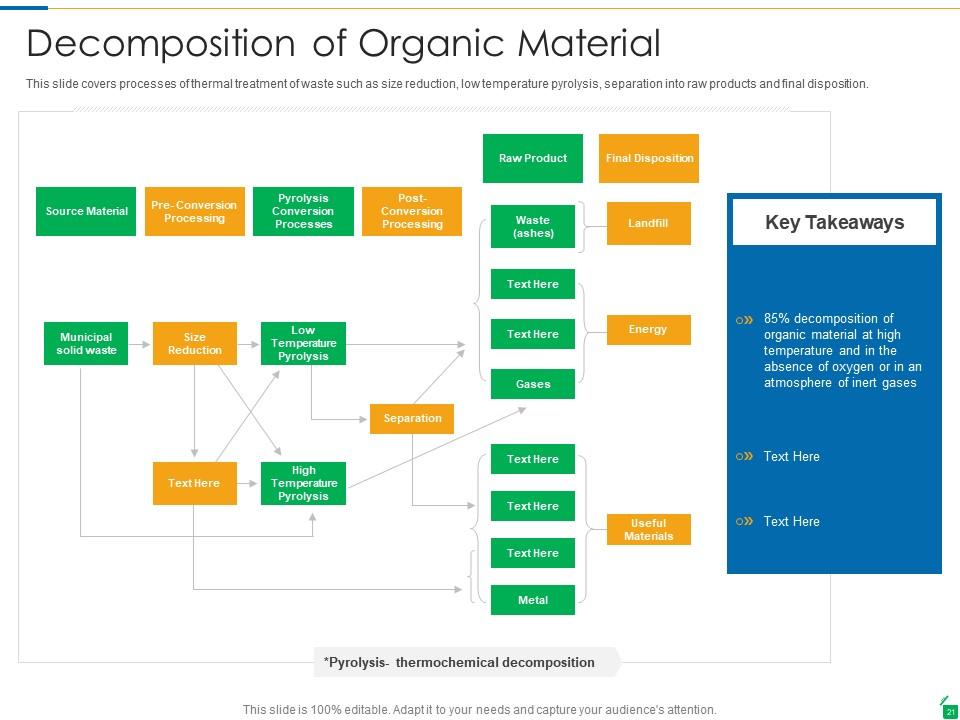
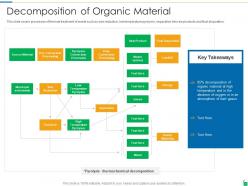
Slide 21: This slide covers the thermal treatment processes of waste such as size reduction, low-temperature pyrolysis, separation into raw products, and final disposition.
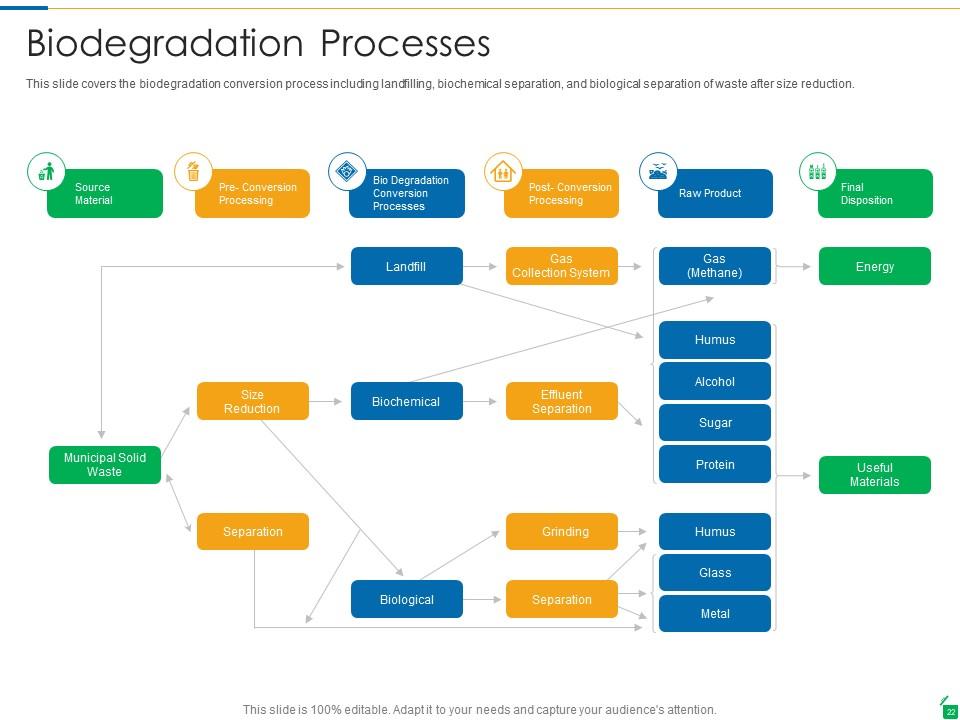
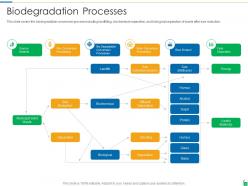
Slide 22: This slide covers the biodegradation conversion process, including landfill, biochemical separation, and biological waste separation after size reduction.
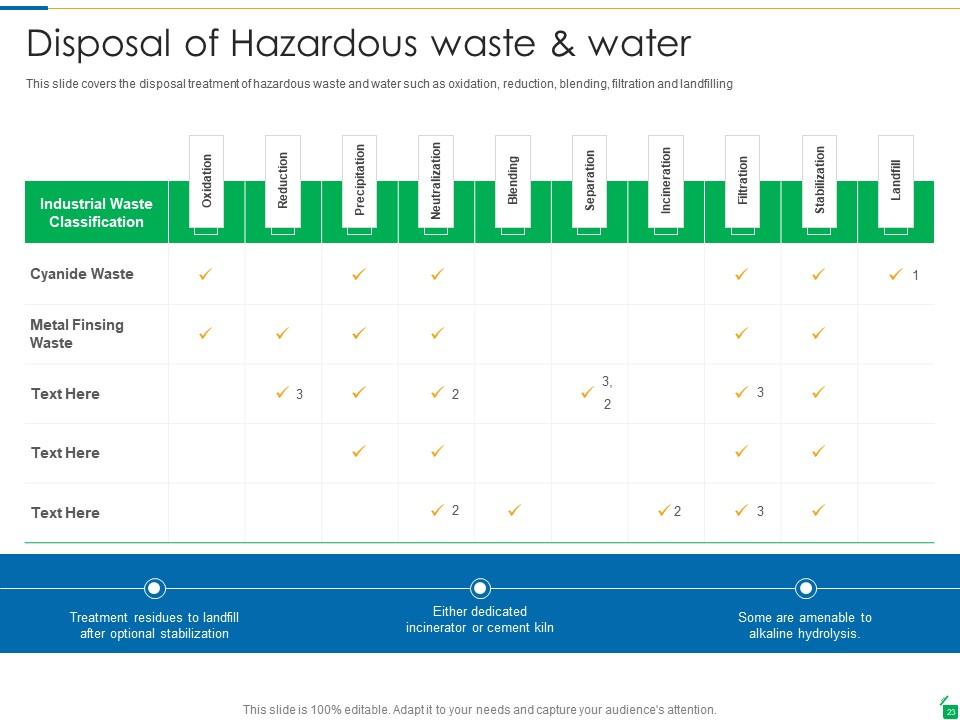
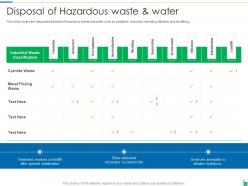
Slide 23: This slide covers the disposal treatment of hazardous waste and water such as oxidation, reduction, blending, filtration, and landfilling.
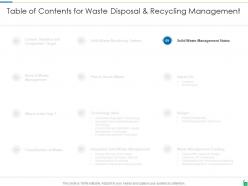
Slide 24: Focus on the sixth area of discussion for this PPT presentation in this slide, i.e. the solid waste management status.
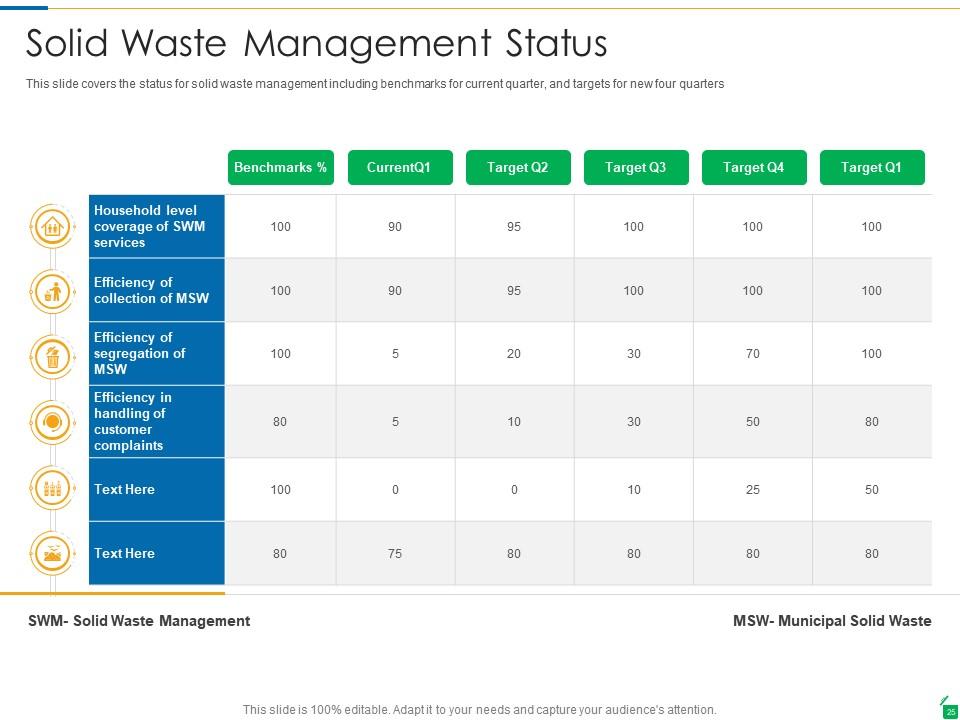
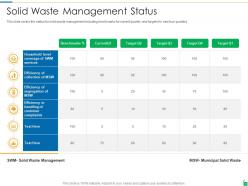
Slide 25: This slide covers the status of solid waste management, including the benchmarks for the current quarter and targets for the new four quarters.
Slide 26: Cover the seventh area of discussion on this slide, i.e. analyzing the impact on the company and the environment.
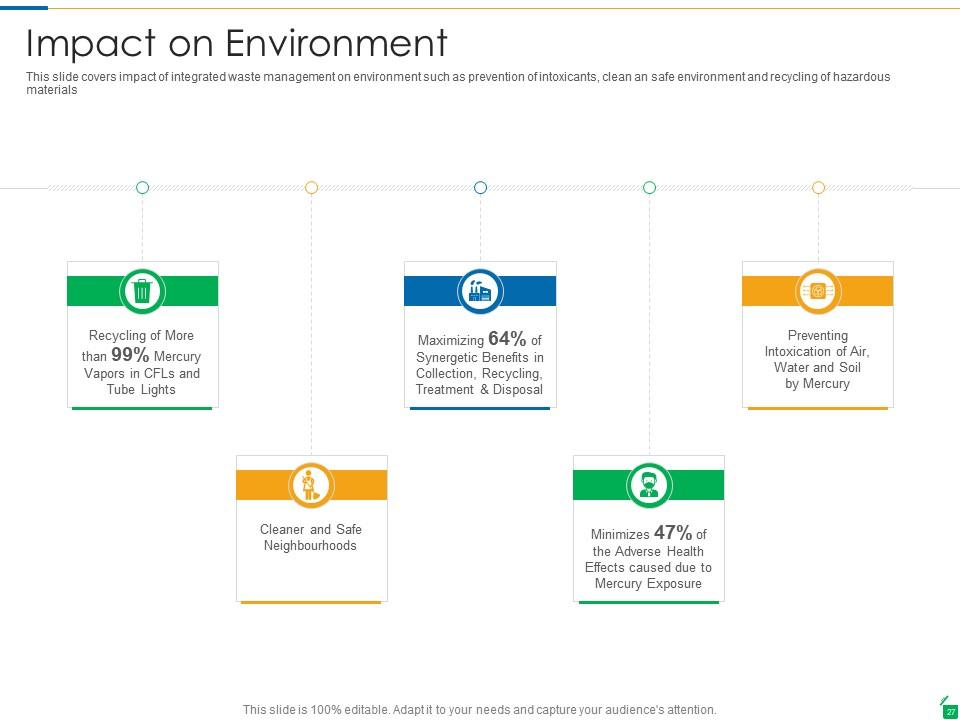
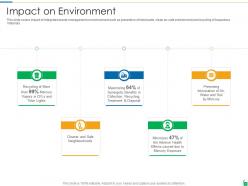
Slide 27: This slide highlights the impact of integrated waste management on the environment, such as the prevention of intoxicants, clean and safe environment, and recycling of hazardous materials.
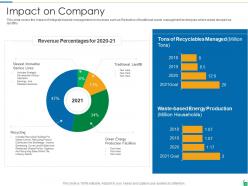
Slide 28: This slide covers the impact of integrated waste management on business, such as reduction of traditional waste management techniques where waste is dumped as landfills.
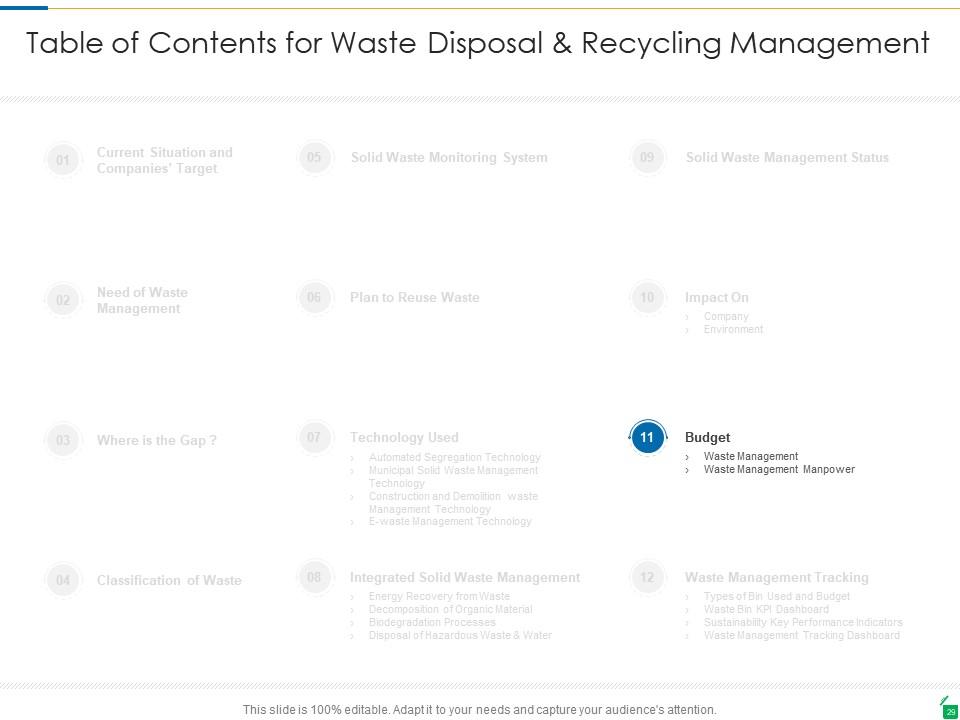
Slide 29: Highlight the eighth dimension of this PPT presentation in this slide: the budget and expenditure involved in this waste management process.
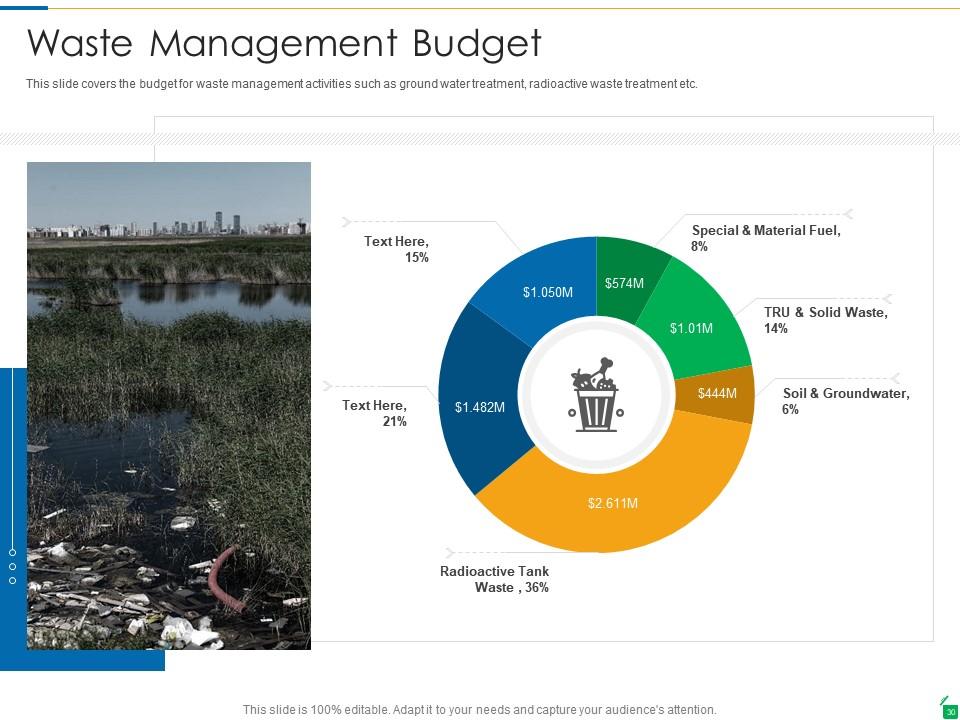
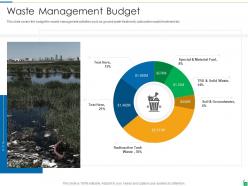
Slide 30: This slide covers the budget for waste management activities such as groundwater treatment, radioactive waste treatment, etc.
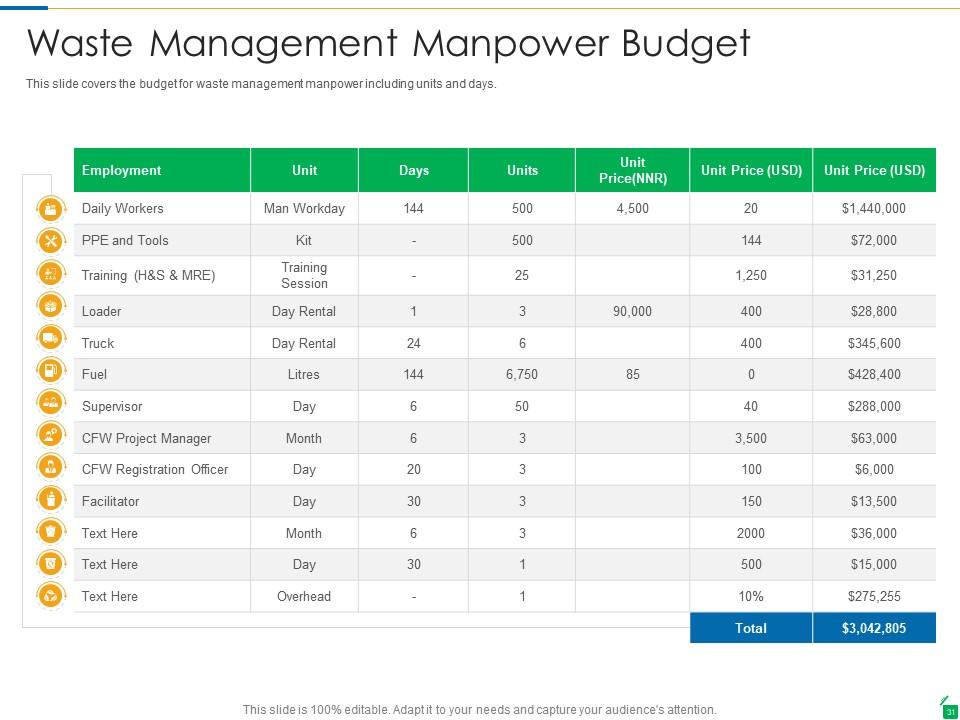
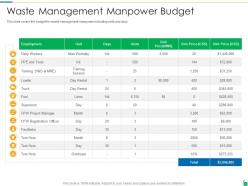
Slide 31: This slide covers the budget for the waste management workforce, including units and days.
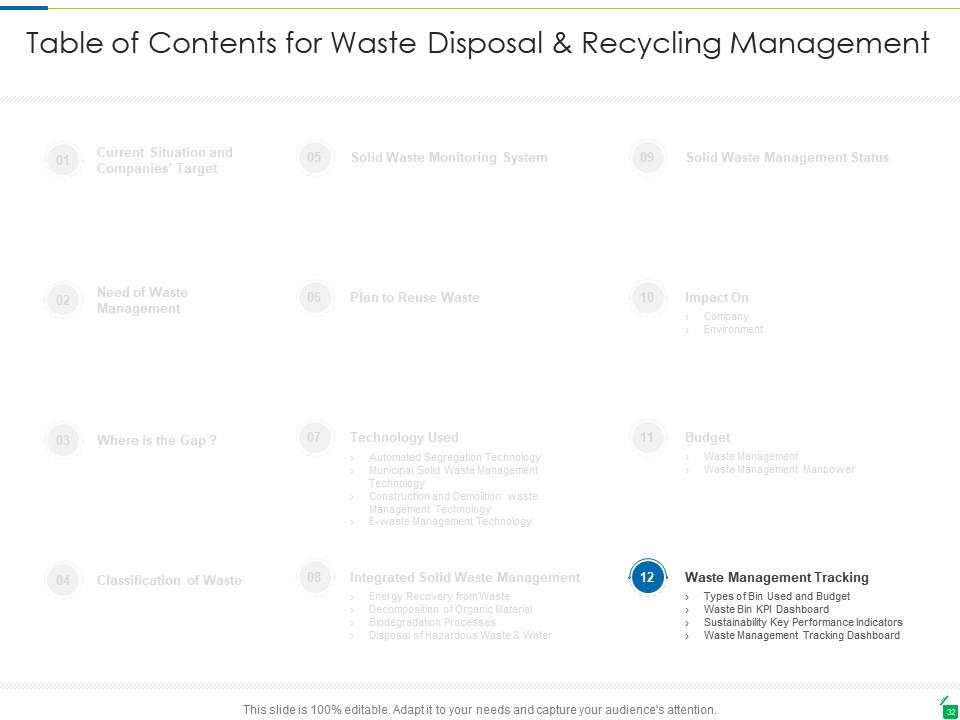
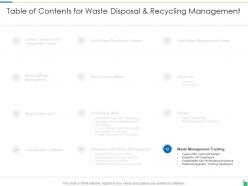
Slide 32: Cover the ninth theme of this PPT presentation in this slide, i.e. the waste management tracking.
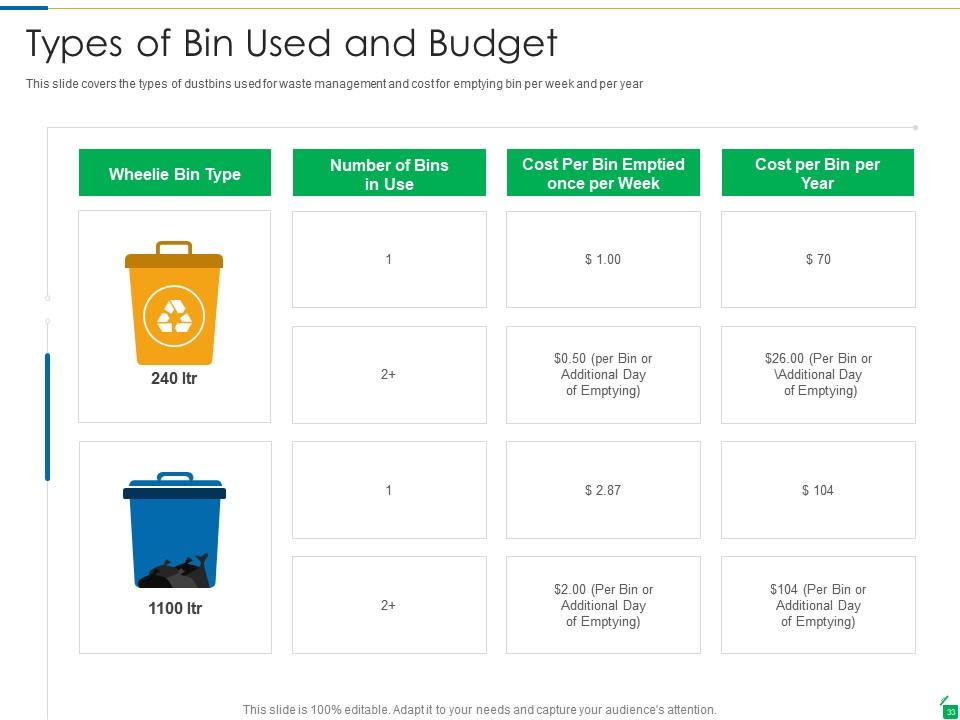
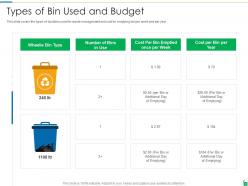
Slide 33: This slide covers the types of dustbins used for waste management and the cost of emptying bins per week and year.
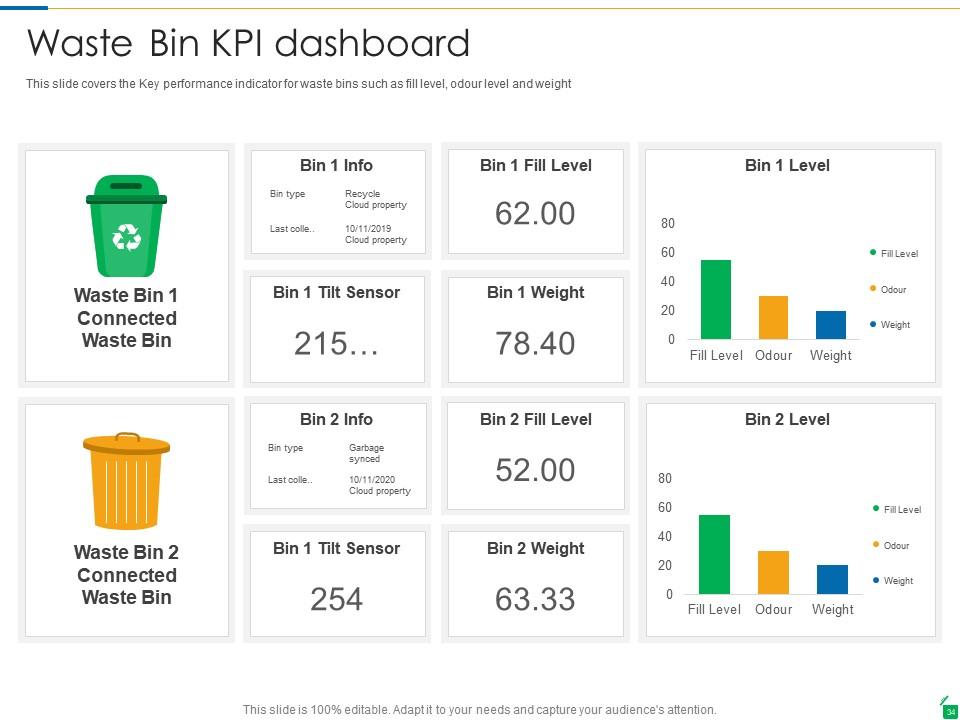
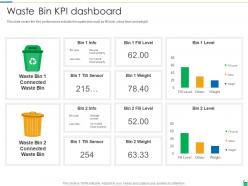
Slide 34: This slide covers the key performance indicators for waste bins, such as fill level, odor level, and weight.
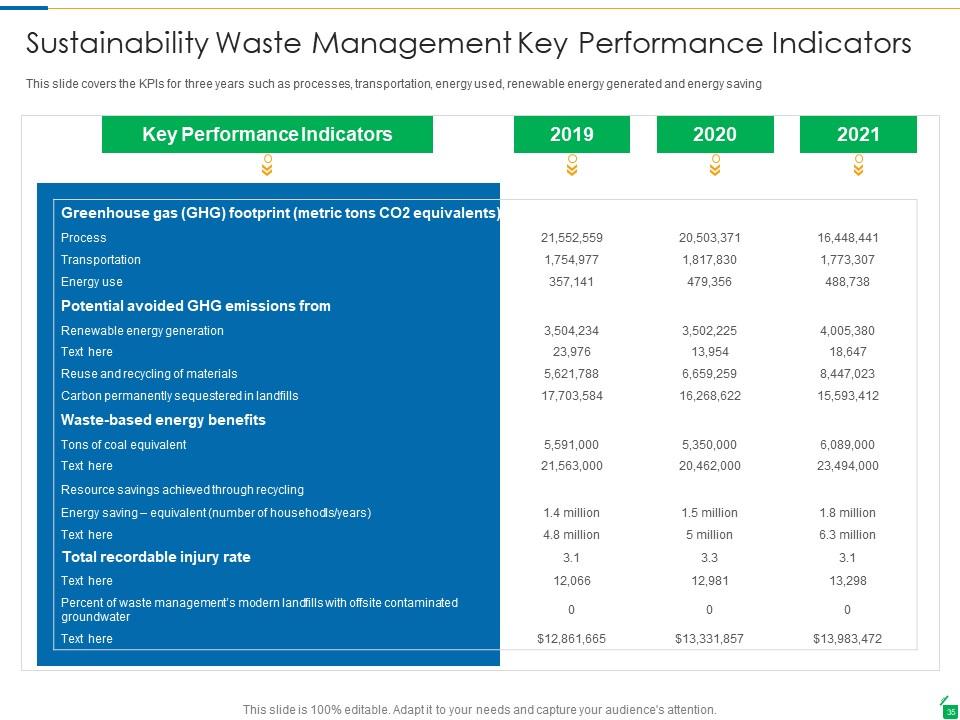
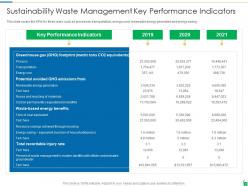
Slide 35: This slide covers the KPIs for three years, such as processes, transportation, energy used, renewable energy generated, and energy saving.
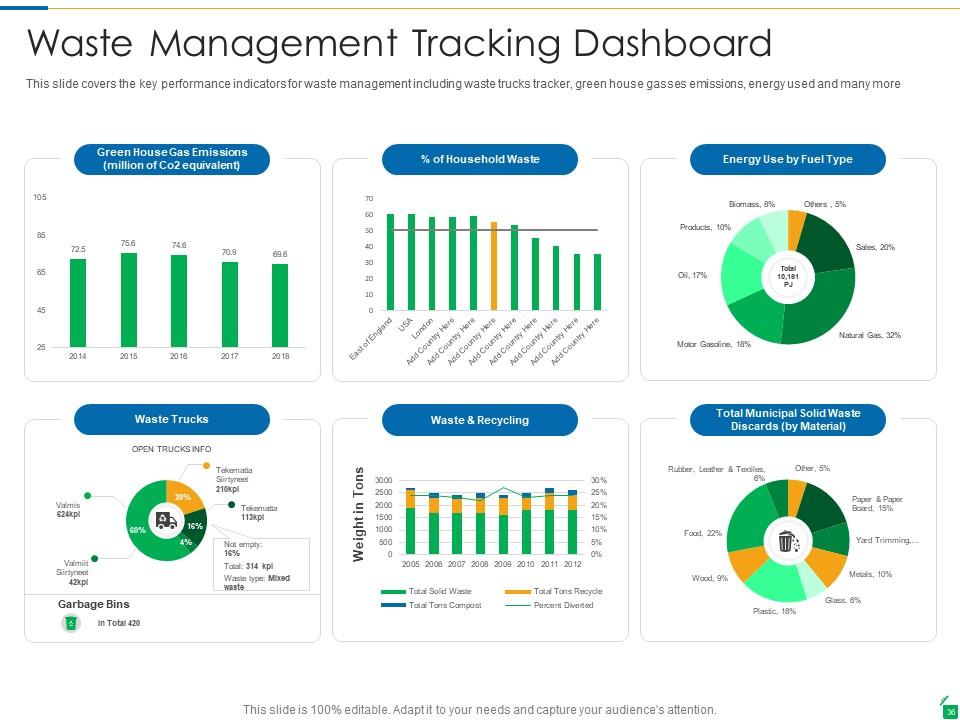
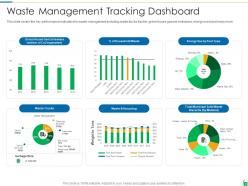
Slide 36: This slide covers the key performance indicators for waste management, including waste trucks tracker, greenhouse gases’ emissions, energy used, and others.
Slide 37: This slide comprises the high quality icons relevant to this presentation.
Slide 38: This slide marks the beginning of the additional slides for this PPT slideshow.
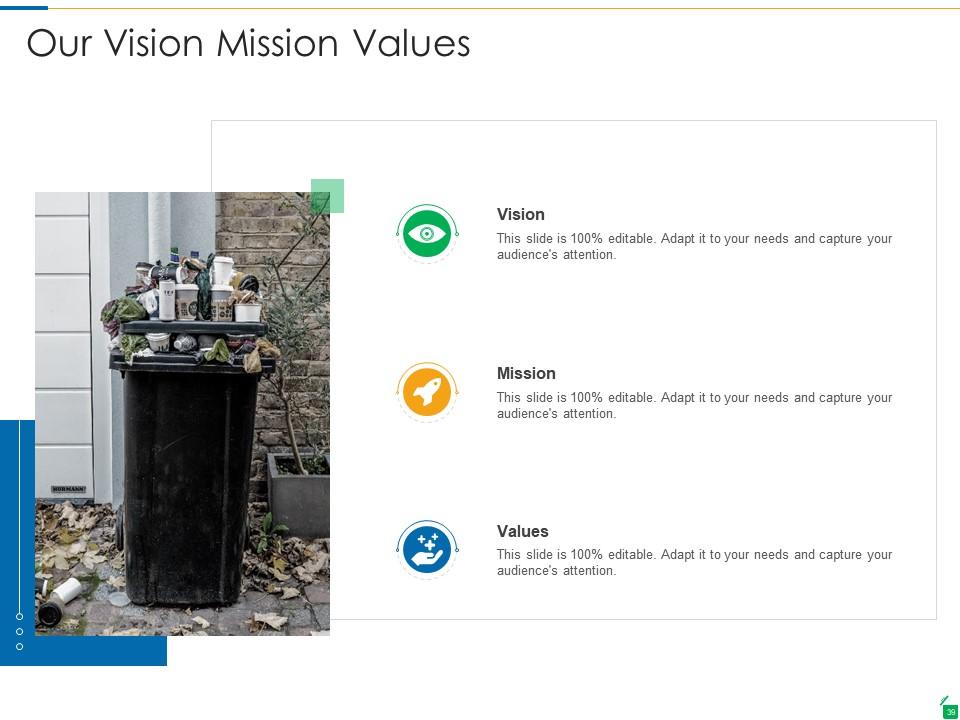
Slide 39: Share your company vision, mission and values in this PPT slide.
Slide 40: Share the three key goals for your project in this slide.
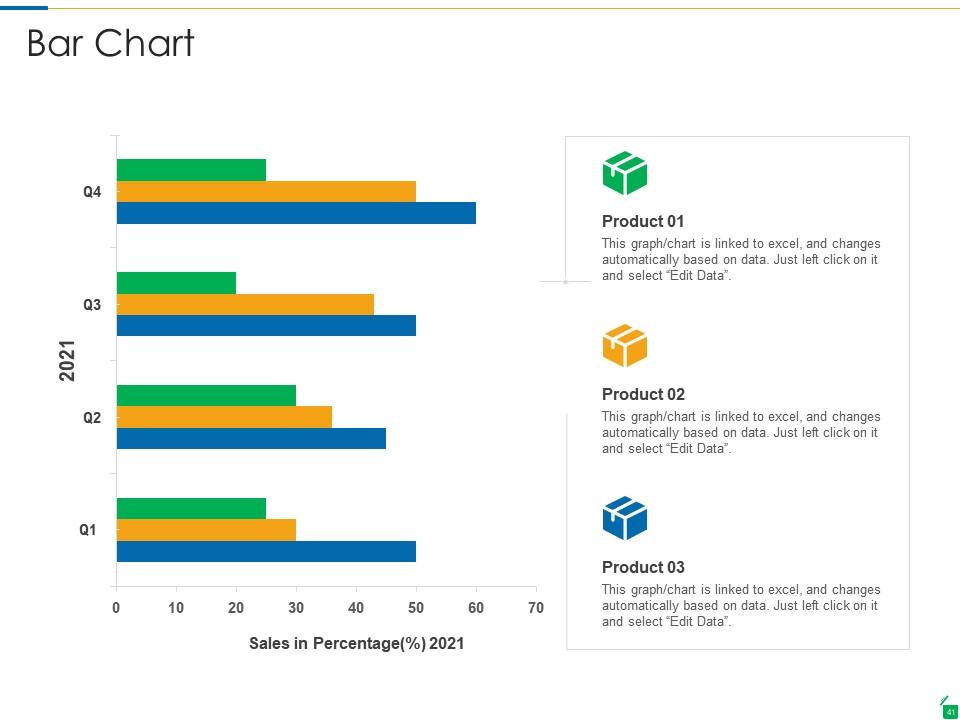
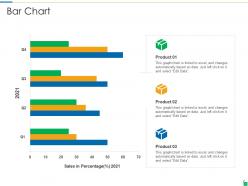
Slide 41: This is a graphical slide comprising a bar chart to analyze budget, revenue, or key performance in general for variable products and procedures.
Slide 42: This is the Post-It Notes slide to share any additional information related to this waste management project.
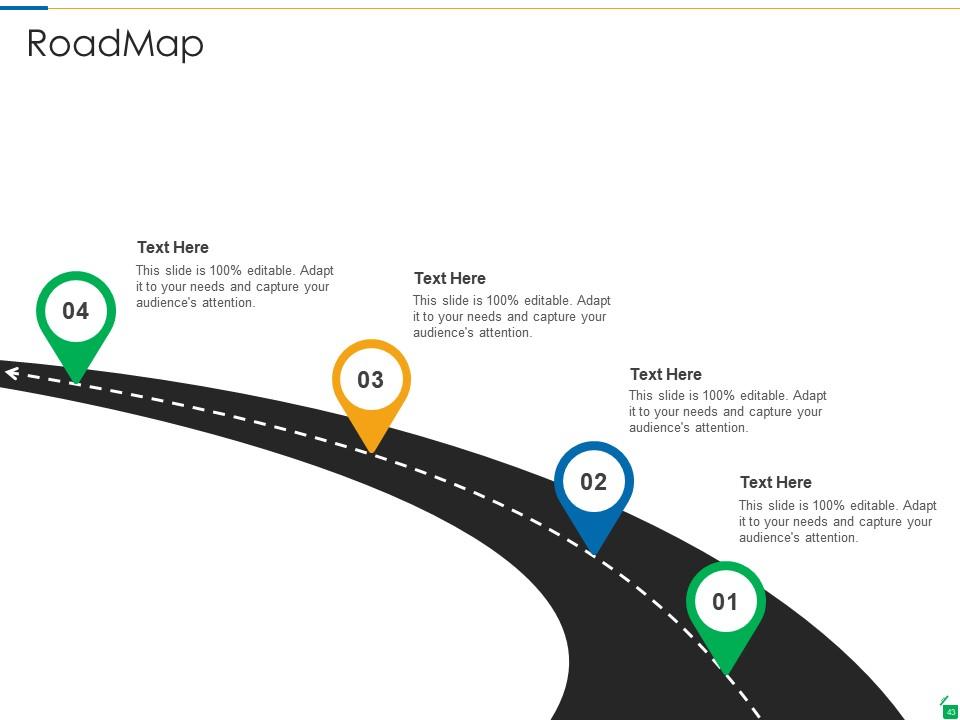
Slide 43: Demonstrate your strategy and the plan of action for this project via this roadmap slide.
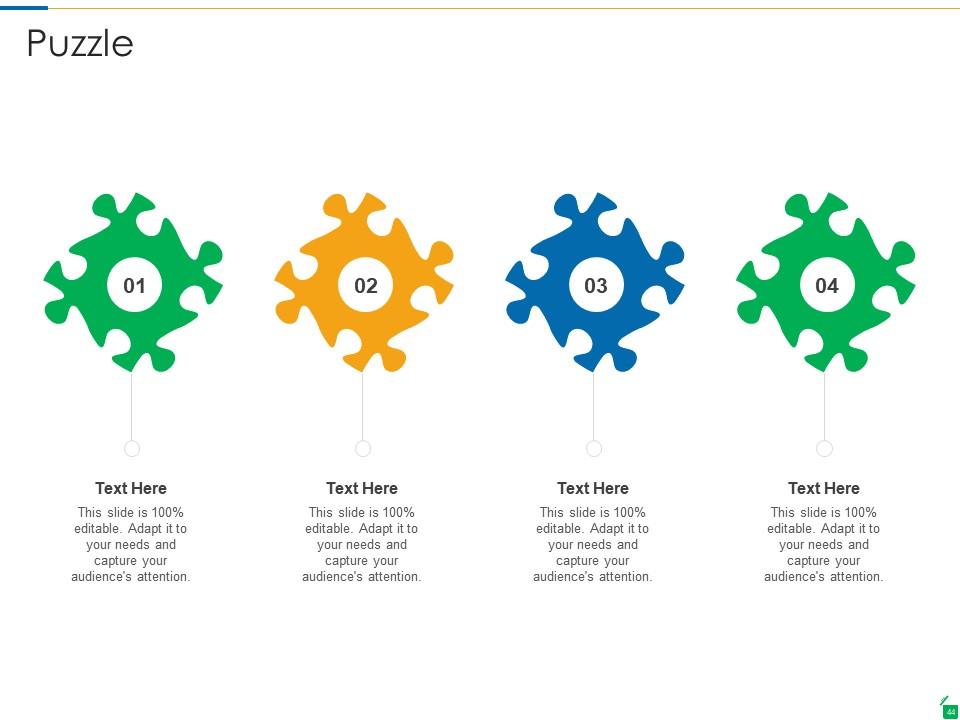
Slide 44: This is a creative aspect of this PPT presentation comprising a puzzle infographic to convey the unison between processes, departments, and workforce in general.
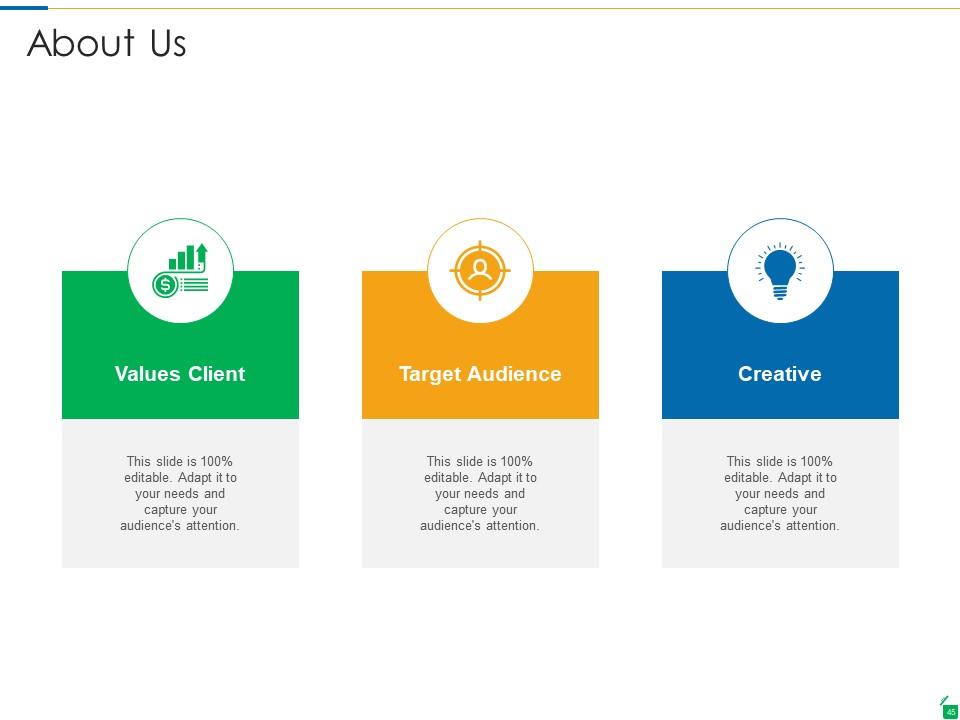
Slide 45: Share some exciting aspects of your company in this About Us in this slide. Include your characteristic features, target audience, and distinct clients here.
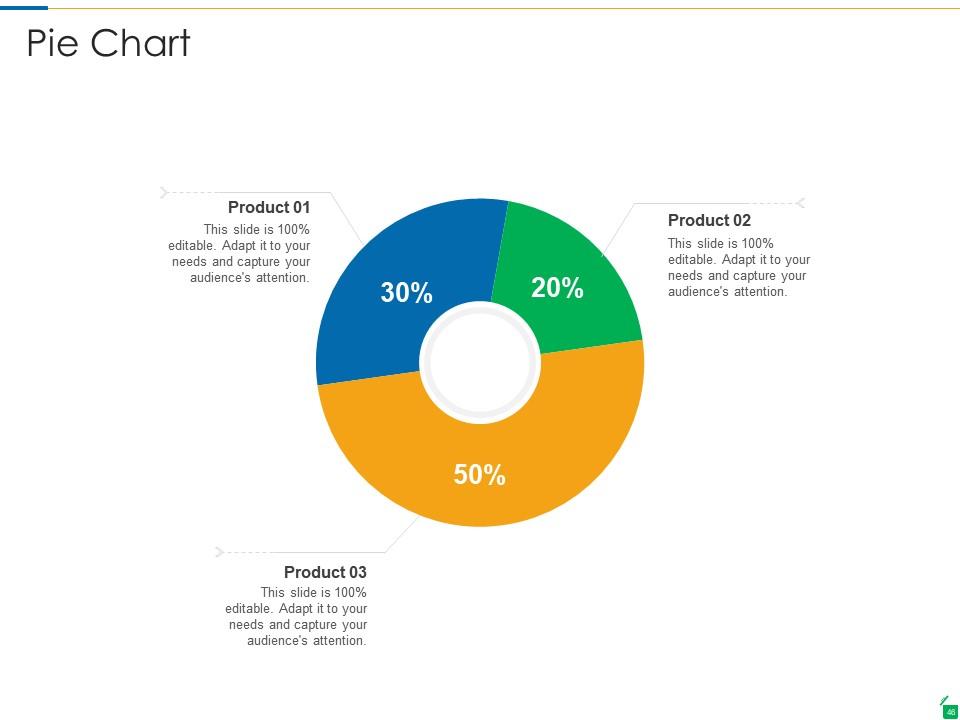
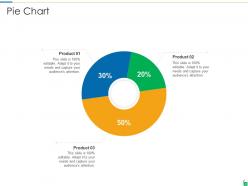
Slide 46: This graphical slide comprises a pie chart to visualize budget, revenue, or key performance in general for variable products and procedures.
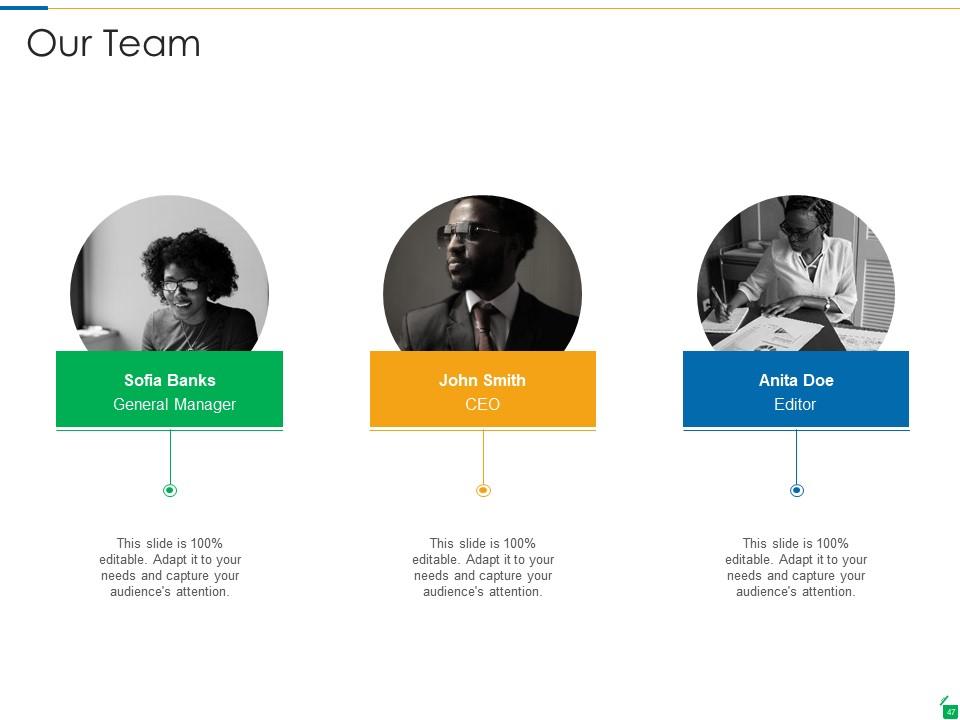
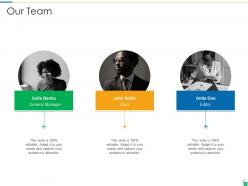
Slide 47: This is the slide to introduce the key members of your team, especially the ones responsible for and heading this project.
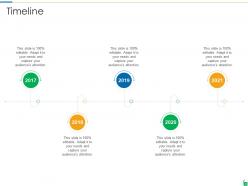
Slide 48: This is a timeline slide to share your growth and milestones creatively.
Slide 49: This is a Thank You slide where details such as the address, contact number, and email address are added.
Waste disposal and recycling management powerpoint presentation slides with all 49 slides:
Use our Waste Disposal And Recycling Management Powerpoint Presentation Slides to effectively help you save your valuable time. They are readymade to fit into any presentation structure.
-
Topic best represented with attractive design.
-
Easily Understandable slides.
