




 0 Comment
 Customer Reviews

The proposal has been sitting in the inbox for six days now.
Not because it is bad—you walked through those galleries twice, took notes on lighting, spacing, how people moved through the rooms. You know what works. But there is the gap between having an idea for an exhibit and making it sound like something a museum should actually build.
The committee meets next Thursday. Someone will ask about audience numbers, educational outcomes, installation costs. They will want to see how this fits their mission statement, upcoming calendar, donor priorities. They will nod politely at your passion but vote based on what is written.
Most good exhibit ideas die in PowerPoint. Not because the concept was weak—because the presentation couldn't carry the weight of all those practical questions. Because someone who loves Roman pottery couldn't translate that into budget line items and marketing angles. Because the gap between "this would be amazing" and "this makes institutional sense" is wider than it looks.
The worst part? Other people's successful cultural exhibit proposals always seem so obvious afterward. Of course they structured it that way. They led with visitor engagement metrics. They addressed storage requirements upfront.
Museum boards don't reject ideas they can't imagine. They reject ideas they can't defend to other people.
So templates exist—not because exhibit proposals follow some secret formula, but because the stakes make everyone freeze up. Because curators know their collections better than their committees. Because the difference between a yes and "we'll consider it for next year" often comes down to following exhibit curation best practices and hitting the right points in the right order.
SlideTeam's museum exhibit proposal templates handle the structure so you can focus on the story. Pre-designed slides that cover what committees actually vote on—from interactive museum exhibits and hands-on exhibit experiences to museum audience outreach strategies—not just what they say they care about.
What follows are the frameworks that work when your idea is already good enough, but your presentation needs to prove it.
Template 1: Designing an Engaging Museum Exhibit Proposal Template
This slide delivers exceptional design through modern geometric layouts and dynamic diagonal framing that captivates audiences instantly. The expertly balanced typography combines elegant serif headers with crystal clear body text for maximum readability. Discover versatile templates spanning workflows, timelines, radial diagrams, and stunning gallery layouts perfect for exhibit design concepts, educational exhibit strategies, and immersive exhibits. Seamless customization awaits with placeholder ready content and effortless brand color integration across PowerPoint, Google Slides, and Keynote. Download now to transform your presentations with professional-grade design excellence.
[product_image id=1530413]
Template 2: Museum Exhibit Proposal Report Document Template
This Museum Exhibit Proposal template transforms complex planning into clear, actionable presentations. Bold visual hierarchy and vibrant color coding ensure your ideas capture attention immediately. Two column layouts maximize information density while maintaining readability. Customizable timeline displays keep stakeholders aligned on project milestones. Audience analysis matrices help target visitor demographics effectively. Interactive process flows simplify workflow communication. This comprehensive exhibit planning guide takes you through every proposal element systematically. Professional aesthetics meet practical functionality perfectly. Secure your funding with compelling visual storytelling. Download this template now and elevate your next exhibit proposal.
[product_image id=1474164]
Template 3: Museum Exhibit Proposal Report Template
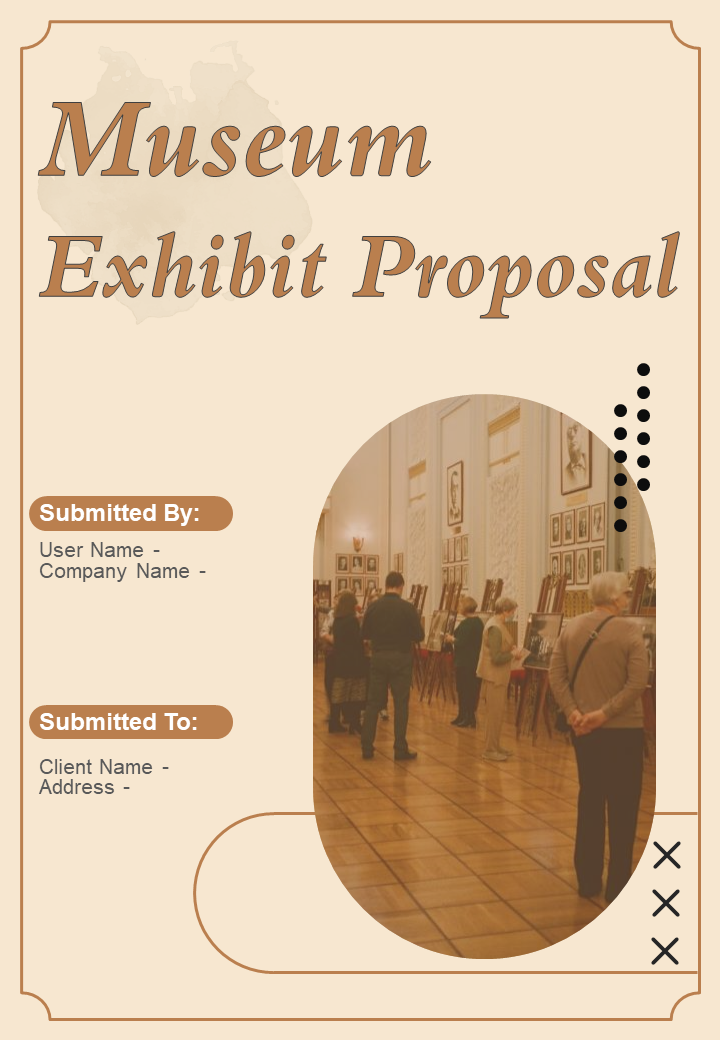
This Museum Exhibit Proposal Template delivers sophisticated vintage aesthetics with ornate borders and elegant serif typography. The comprehensive package includes essential elements from cover letters to floorplan layouts, exhibitor forms, and detailed guidelines. Professional structured design ensures seamless museum presentations while rounded placeholders and fully editable content streamline customization. The refined beige brown palette adds distinguished character to your museum grant proposal, educational exhibit strategies, and exhibit project management needs. Transform your museum exhibition pitches with this complete, polished template. Download now to elevate your next museum proposal presentation!
Download this PowerPoint Template
Transform Your Museum Exhibit Proposal into a Masterpiece with SlideTeam
SlideTeam brings you museum exhibit proposal templates that are best in the industry. These content-ready slides provide professional structure and compelling visual storytelling that captivates stakeholders and funding committees through effective exhibition marketing strategies and community engagement in exhibits. Our ready-made templates streamline your proposal development while maintaining museum-quality presentation standards. Deploy these PowerPoint slides to secure exhibit funding and bring your vision to life. Download now!
FAQs on Museum Exhibit Proposal
What are the key objectives of the proposed museum exhibit?
Key objectives of the proposed museum exhibit include enhancing visitor engagement through interactive displays, preserving cultural heritage through strategic storytelling, expanding educational outreach, increasing institutional revenue streams, and strengthening community partnerships. These objectives work together by attracting diverse audiences, delivering immersive learning experiences through educational exhibit strategies.
How does the exhibit align with the museum's overall mission and values?
Museum exhibit proposals align with institutional missions by demonstrating clear connections to educational objectives, community engagement goals, and cultural preservation mandates through detailed mission statements, target audience analysis, and learning outcomes. Successful proposals articulate how exhibit design concepts, community engagement in exhibits, and educational exhibit strategies advance the museum's core values.
What target audience is the exhibit designed to engage, and how will their needs be addressed?
The exhibit targets families with children, history enthusiasts, educational groups, and cultural tourists, addressing their diverse learning preferences through interactive museum exhibits, multilingual content, and accessible design features. These audiences benefit from hands-on activities for younger visitors, detailed historical context for enthusiasts, and guided tour options for groups.
What is the central theme or narrative of the exhibit, and how will it be visually represented?
The central theme should clearly connect historical events, cultural movements, or artistic periods to contemporary relevance, creating an engaging narrative arc that resonates with diverse audiences. Through interactive displays, multimedia installations and immersive exhibits, museums can deliver compelling storytelling experiences that enhance visitor engagement, increase educational impact, and ultimately drive higher attendance.
What types of artifacts, artworks, or multimedia will be included in the exhibit?
Museum exhibits typically include historical artifacts, contemporary artworks, interactive digital displays, archival photographs, documentary films, and immersive multimedia installations. These diverse elements work together by engaging multiple senses, accommodating different learning styles, and creating compelling narratives.
How will the exhibit facilitate visitor interaction and encourage dialogue among attendees?
The exhibit facilitates visitor interaction through interactive museum exhibits, hands-on activity stations, collaborative workshop spaces, guided discussion areas, and multimedia storytelling zones. These engagement methods encourage dialogue by creating shared experiences, prompting questions about artifacts and themes.
What partnerships or collaborations can enhance the impact and reach of the exhibit?
Strategic partnerships include educational institutions, cultural organizations, corporate sponsors, media outlets, and community groups, each bringing unique audiences and resources. These collaborations enhance impact by expanding promotional reach, providing educational content, and securing exhibit funding opportunities.
What is the proposed budget for the exhibit, and how will funding be sourced?
The proposed exhibit budget typically encompasses design development, artifact acquisition, interactive technology integration, marketing campaigns, and operational staffing costs. Funding sources include institutional allocations, corporate sponsorships, government cultural grants, and donor contributionst.
How will the effectiveness of the exhibit be evaluated post-launch?
Post-launch evaluation involves visitor surveys, engagement analytics, educational impact assessments, attendance tracking, and feedback collection from docents and educators. Museums typically measure dwell time, interactive participation rates, and knowledge retention through pre-and-post visit surveys, while also analyzing social media mentions and repeat visitation patterns.
What safety and preservation considerations need to be accounted for in the exhibit design?
Museum exhibit safety and preservation considerations include climate control systems, security measures, lighting specifications, visitor flow management, and artifact handling protocols. These elements work together by maintaining optimal temperature and humidity levels, preventing theft or damage, minimizing light exposure to sensitive materials, controlling crowd density around fragile pieces.
How will technology be integrated into the exhibit to enhance the visitor experience?
Technology integration includes interactive museum exhibits, augmented reality displays, digital storytelling platforms, immersive audio guides, and virtual reconstruction tools. These technologies enhance visitor engagement by providing personalized learning paths, multilingual accessibility, and hands-on exploration opportunities.
What educational programs or workshops will accompany the exhibit to deepen understanding?
Educational programs accompanying museum exhibits include guided curator tours, hands-on workshops, interactive demonstrations, expert lecture series, and specialized school group sessions. These educational exhibit strategies deepen visitor engagement by providing contextual background, facilitating direct interaction with artifacts or concepts, and offering multiple learning modalities.
How will the exhibit accommodate diverse perspectives and stories within its theme?
The exhibit will accommodate diverse perspectives through multilingual narratives, community-sourced artifacts, rotating cultural showcases, interactive storytelling stations, and collaborative partnerships with local organizations. This strategic approach enables museums to present authentic, inclusive experiences while expanding visitor engagement and fostering deeper cultural understanding.
What marketing strategies will be employed to promote the exhibit and attract visitors?
Museum exhibit marketing strategies include digital advertising, social media campaigns, community partnerships, educational outreach programs, and targeted media relations. These exhibition marketing strategies enhance visitor engagement by leveraging local cultural institutions, schools, and tourism boards through effective community engagement in exhibits and museum audience outreach.
What are the potential challenges in curating the exhibit, and how can they be mitigated?
Potential challenges include budget constraints, artifact availability, space limitations, visitor engagement concerns, and timeline pressures. These obstacles can be mitigated by establishing clear priorities, developing alternative artifact sourcing strategies, creating flexible design solutions, and implementing phased planning approaches.


