





 0 Comment
 Customer Reviews

Not long ago, most business decisions were made through a mix of experience, instinct, and guesswork. If something has worked in the past, it is safe to continue doing it. This was the case before data began to dominate the business world. Today, nine out of ten companies are data-driven or are striving to become one.
For example, Netflix started out as a DVD rental service company but transformed into a streaming company. What really set it apart was how seriously the company took the data. Every time someone watched the show, hit pause, or searched for something, Netflix paid attention. Over time, they understood what people enjoy watching and how long their attention span is, etc. Instead of guessing what might work or copying what others were doing, Netflix used what it already knew from its users to make better decisions. That’s how they decided to back shows like House of Cards — not just because it seemed like a good idea, but because the data pointed toward strong interest in political dramas, the director, and the lead actor.
Being data-driven doesn’t mean losing the human touch. It means using the information that’s already there to make better choices — about what to build, how to serve customers, and where to focus next.
Download our 100% editable and customizable templates from this blog to get fresh ideas and perspectives on data-driven business models. If you are starting a new business or striving to become a data-driven decision-making company, then this blog is for you. You can also use these templates for presentations on the topic to your investors and stakeholders. The templates encompass a range of approaches, including analytics-based models, insight-driven strategies, data-centric businesses, predictive analytics models, information-led approaches, AI-powered business models, and big data strategies.
Explore top 10 data strategy templates with samples and examples.
Let’s explore!
Template 1: Core Concepts of Data-Driven Models
This slide breaks down some key ideas businesses use to make better decisions with data. It discusses understanding customers by examining what they like and how they behave. It demonstrates how companies can adjust prices rapidly in response to market developments. It also explains how they guess future trends by studying past data. The slide highlights how careful tracking can help run operations smoothly. Lastly, it covers using customer info to send marketing that actually feels relevant. Together, these ideas demonstrate how data enables businesses to work smarter.

Template 2: Transforming Raw Data into Insights
This slide outlines the journey of data in a straightforward manner. It guides you through the process of how businesses transition from collecting raw data to making informed decisions. You’ll see the key steps — gathering data, cleaning it up, spotting patterns, and turning those into simple visuals. From there, it’s about understanding what the data is telling you and actually doing something with it. It ends with a step that’s often skipped — checking back later to see if what you did made a difference. The slide isn’t just informative; it’s built to make the whole process feel less overwhelming and more practical.

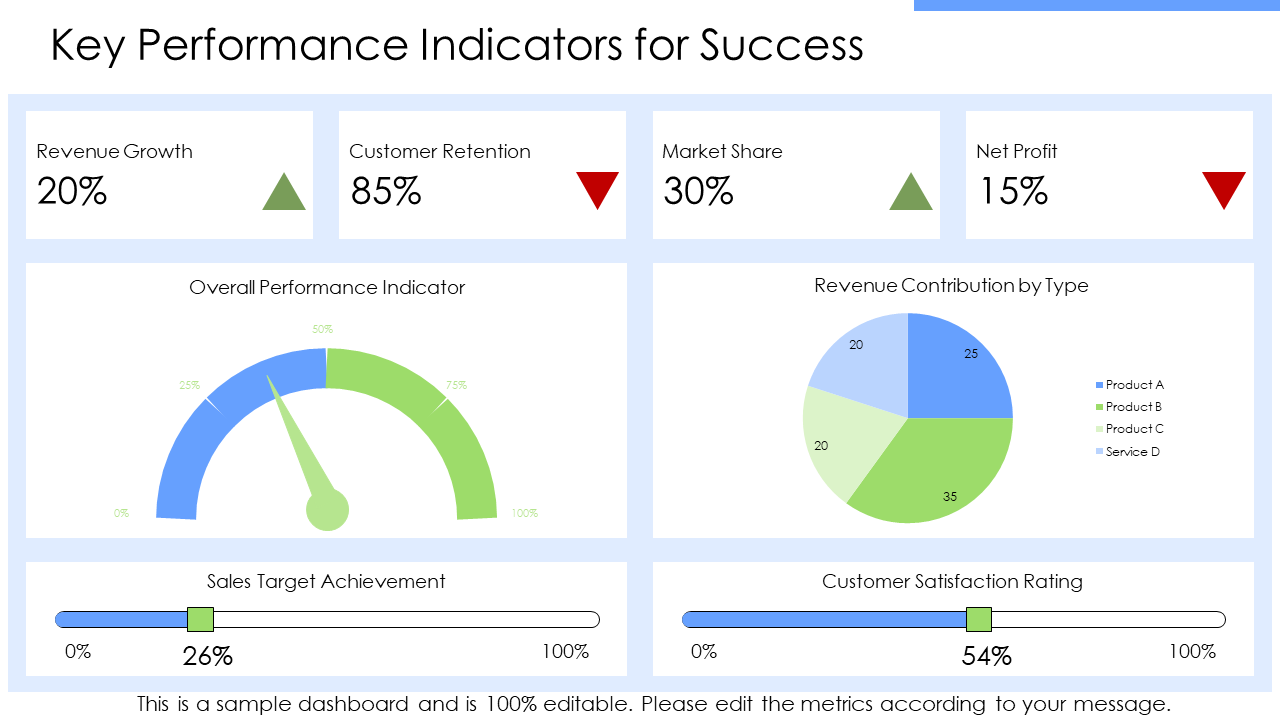
Template 3: Key Performance Indicators for Success
This slide provides a quick and clear overview of the business's current performance. It's designed to provide owners and key players with a quick overview of performance in key areas. You'll see what's working, such as revenue growth, and what needs a closer look, including customer retention and profits. Having all this information in one spot makes it easy to identify trends and make informed decisions quickly. Sales, marketing, and customer service teams can all utilize this to track progress, align their efforts, and focus their energy where it'll make the most difference.
Template 4: Predictive Analytics in Business Strategies
This slide aims to show how predictive analytics can help a business achieve consistent, long-term growth. It provides leaders with a clear picture of how revenue can gradually increase when decisions are driven by data, helping them truly understand why investing in these tools is valuable. The example graph makes the potential impact easy to understand, but remember to swap it out with your own data. Ultimately, it’s a straightforward way to explain why relying on predictions can lead to better, more dependable growth.

Template 5: Growth Strategies for Big Data Startups
This slide focuses on helping big data startups identify two primary ways to grow their business. First, it highlights that you can generate revenue from the data you already have – essentially, transforming your data into valuable insights that other companies want. Second, it demonstrates how partnering with other businesses can open up new opportunities, whether it's expanding customer reach or sharing resources. The image at the top, showing someone working with data, helps tie these ideas back to real-world business situations.

Template 6: Best Practices for Data Governance
The slide is titled "Best Practices for Data Governance" and lists some important steps companies follow to manage their data responsibly. There are eight points, each marked with a blue check. It starts with assigning clear data ownership, so every team knows who is in charge of what. Then, it covers limiting access to sensitive information, verifying the accuracy of the data, and ensuring the company adheres to legal regulations. It also includes conducting training for employees, maintaining accurate records of how data is handled, understanding the retention period for data, and performing regular checks to ensure all processes are functioning properly.

Template 7: Integration of IT into Business Strategy
This slide is all about helping companies determine how to make their IT truly support their broader business goals. It guides you through the process, from evaluating your current IT tools to ensuring every tech effort directly supports the business's objectives. It also emphasizes making smart investments in IT projects, rolling out solutions that genuinely improve efficiency, and continually monitoring progress to make adjustments as needed. Additionally, it emphasizes the importance of training employees on new technology and continually seeking ways IT can enhance your operations.

Template 8: Building an Innovative Company Culture
This slide aims to help leaders cultivate a company culture that truly sparks innovation. It highlights simple yet crucial actions: creating a safe space for sharing ideas, building flexible teams that collaborate effectively on problem-solving, and valuing continuous learning. It also emphasizes the importance of being open to taking risks and recognizing employees' creative contributions. By focusing on diverse perspectives, providing regular feedback, and supporting new ideas, the slide offers a straightforward guide to maintaining a vibrant and thriving innovation culture in the workplace.

Template 9: Data Collection Methods and Strategies
This slide is designed to help teams determine the most effective ways to gather data that informs smart business decisions. It breaks down different methods: surveys for clear answers from specific customers, and interviews for diving deeper into people's thoughts and feelings. It also highlights tracking tools that reveal user behavior on websites or apps, as well as social media monitoring to track what is being said about the brand. Essentially, it's a helpful guide for selecting the most effective approach to gather information that truly matters.

Template 10: Data Collection Methods and Strategies
This slide clearly breaks down data-driven decision-making into five easy steps. Although there is considerable hype about data-driven decision-making, most companies don't follow a clear-cut process for this approach. This slide is for them. It helps teams figure out how to start by pinpointing the exact problem or opportunity, then gathering the right data to dig in deeply. After that, the slide guides you through how to analyze the data and understand its meaning. Finally, it guides you on using those insights to make smart decisions and take action.

Over to you!
When a business uses data well, it stops guessing and starts knowing what’s going on. This blog provided you with insights into the KPI-driven model, customer data utilization, data monetization strategy, business intelligence model, and smart data framework, among other topics. It helps figure out what customers want so they can offer the right stuff. It also means using money and resources more efficiently without wasting them. Plus, it’s easier to keep up when things change fast. The bottom line is that paying attention to data enables a business to work more effectively and last longer. These days, that’s how companies stay ahead.
PS: Click here for an intriguing blog post about the Top 10 business model templates.
FAQs on Data Driven Business Model
1. What are the types of business models?
There are various types, including selling products, offering services, providing subscriptions, or operating marketplaces. Each one demonstrates how a business generates revenue and serves its customers. It really depends on what they do and who they’re for.
2. What are the 4 pillars of the business model?
The main parts are what the business offers, who it’s for, how it generates revenue, and what it costs to operate. These four things help explain how a business operates on a day-to-day basis. They’re the basics that keep things going.
3. What is a data-driven method?
It’s about using actual numbers and facts to make choices instead of just guessing. Businesses look at data to figure out what’s working and what’s not. This way, they make smarter, more sensible decisions.


