





 0 Comment
 Customer Reviews

Demand planning has become one of the important ways to stay ahead in this economy. Today, businesses need to predict customer demands so they can easily fulfill them. These demands include balancing supply, avoiding stakeouts, reducing costs, and improving customer satisfaction.
That’s when demand planning metrics enter the picture.
Through these metrics, you can easily measure the accuracy and efficiency of forecasting. These metrics can also help you make smart and informed decisions.
With the help of demand planning metrics, you can track areas like forecast accuracy, customer service levels, and demand variability. When companies monitor such indicators, they can align production with demand. Businesses can also optimize resources and reduce waste.
These demand planning metrics can give you a structured approach that leads to better performance and long term growth.
Let’s understand it with an example!
If your company is keeping an eye on tracking forecast accuracy, it can easily identify gaps between expected and actual demand. These insights can easily help in refining future predictions and avoiding stock shortages. Also, these metrics can highlight how efficiently products move through the supply chain.
There are several benefits to these metrics such as the ability to simplify complex supply chain challenges. These metrics make reporting more transparent and collaboration across teams more effective. In addition, the managers, stakeholders, and executives can stay aligned while making decisions.
Explore our demand planning templates to plot sales trends, perform market analysis, and even address seasonal demands!
In this blog, we bring you demand planning metrics templates so you can make the demand forecasting process easier. It doesn’t matter whether you want to track KPIs, improve inventory management, or analyze demand patterns, you get practical frameworks to visualize, monitor and improve the planning process.
Get your hands on our demand management templates to explain the process and its role in the supply chain process.
Template 1: Demand Planning KPIs and Metrics
There are different key performance indicators that help you anticipate the demands of customers. This pre-designed slide deck will help you demonstrate the importance of demand planning metrics, forecast accuracy measurement, demand variance analysis, service level metrics, inventory turnover rate, lead time performance metrics, and safety stock calculations. Get your hands on this slide collection so you can improve forecasting, resource optimization, and take data-driven decisions.
[product_image id=1492579]
Template 2: Importance of Demand Planning Metrics
Demand planning metrics are important for every business, so you can make informed and data-driven decisions. This pre-designed slide will help you highlight its importance. You get to underline the benefits such as cross-functional alignment, forecast accuracy, inventory optimization, and tracking performance. You get to mention the significance of this planning metrics in detail.

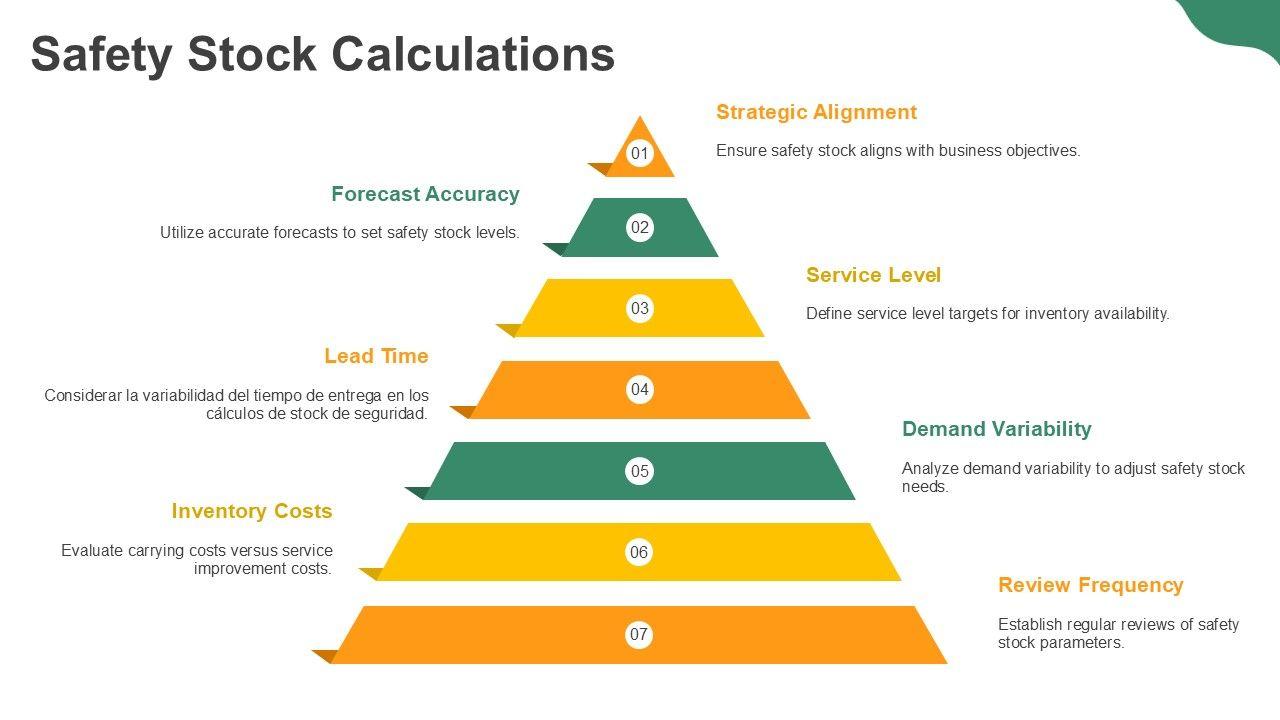
Template 3: Safety Stock Calculations
Having safety stock is essential for a business so you can meet your audience’s demands. This content-ready template will help you calculate safety stock calculations. You get to emphasize different elements such as strategic alignment, forecast accuracy, service level, lead time, demand variability, inventory costs, and review frequency which will help you compute safety stock. Get to demonstrate the factors that determine safety stock through effective visuals.
Template 4: Demand Forecast Bias
Forecast bias is a common challenge in demand planning that leads to inaccurate predictions. It happens when forecasts consistently overestimate or underestimate actual outcomes. This pre-designed template is built to help you clearly present and analyze such biases in your planning process. With this content-ready template, you can showcase key factors that influence demand forecast bias, such as bias trends, adjust forecasts, team training, validation tools, and review processes.

Template 5: Sales and Operations Planning (S&OP) Metrics
Sales and operations planning is essential for streamlined demand fulfillment for your customers. This pre-designed template will help you highlight what needs to be done while planning sales and operations. You get to highlight the essentials for planning, such as forecast accuracy, customer service level, inventory turns, backorder rate, lead time, sales variance, and capacity utilization.

Template 6: Collaborative Planning Metrics
These planning metrics are essential to measure the effectiveness as well as efficiency of teamwork in achieving shared goals. This pre-designed slide will help you highlight the essentials of collaborative planning, which include collaboration, feedback, visibility, training, technology, and metrics in detail. Download this slide so you can easily highlight why collaborative planning is essential.

Template 7: Data Integrity and Quality Metrics
Data integrity is essential because it is essential to ensure data remains accurate, consistent, and reliable throughout its lifecycle. This content-ready template will help you highlight the ways to keep data integrity intact. The elements include data accuracy, timeliness, consistency, completeness, validation checks, user training, reporting metrics, and a feedback loop, which are essential to keep data integrity and maintain quality.

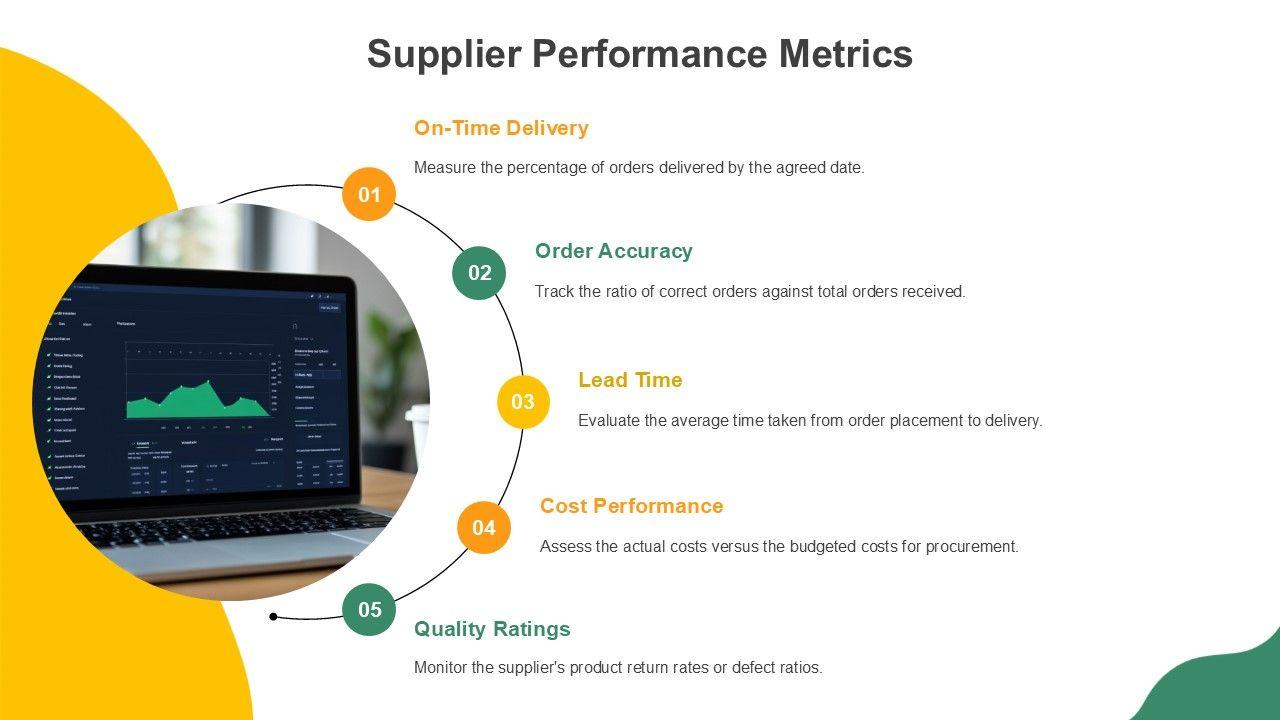
Template 8: Supply Performance Metrics
Tracking supply performance is essential to keep a check on the stock available and how well it is performing. Through this slide, you get to highlight elements to determine supply performance metrics such as on-time delivery, order accuracy, lead time, cost performance, and quality rating in detail. This slide will help you mention these essentials of the metrics in detail.
Template 9: Key Metrics to Evaluate Customer Demand Planning
Evaluating customer demand planning is essential to minimizing costs and boosting customer satisfaction. This pre-designed template will help you highlight the elements of key metrics, such as forecast accuracy, sales conversion rate, and order fill rate for different years, along with the reasons to change. This pre-designed template will help you mention the factors through creative and innovative icons.

Template 10: Demand Creation Strategy and Planning Process
Creating demand among customers is essential so you can make room for your product. This pre-designed template will help you underline the process, prospect, lead, and conversation. Also, you can mention the strategies such as awareness, consideration, research, selection, purchase, and delivery. You can comprehensively mention the planning process with this content-ready template.

Demand planning metrics are not a nicety anymore—they're a must-have for companies who desire to remain competitive, responsive, and customer-driven. From the monitoring of forecast accuracy to safety stock measurement and supply performance tracking, these metrics provide organizations with the insight they require in order to make more informed choices. They lower costs and provide customers with what they require when they require it.
You can easily streamline the supply chain management complexities. You can also put data into easily interpretable visuals with SlideTeam’s ready-to-use templates. These slides serve as a blueprint to analyze KPIs, enhance collaboration, and drive long-term growth.
Use these templates to coordinate your teams better, enhance visibility, and add accuracy to your planning process.
P.S. Explore our demand generation strategy templates to streamline the effort and keep everything consistent with your campaigns.
Demand Planning Metrics Questions (FAQs)
What is demand planning?
Demand planning is the actual process of predicting future customer demand. It helps businesses plan inventory, production, and supply chain activities effectively. It also helps businesses balance supply with demand, reduce costs, and improve customer satisfaction.
Why is forecast accuracy important?
Forecast accuracy shows how close your demand predictions are to actual outcomes. It prevents overstocking, reduces stockouts, and improves resource allocation.
What is forecast bias?
These biases occur when demand forecasts consistently overestimate or underestimate actual results. It reflects a systematic error in planning.