

 0 Comment
 Customer Reviews

Every disease tells a story—pathology is the science that deciphers it.
Behind every diagnosis lies a hidden narrative written in cells, tissues, and molecules. Pathology is the bridge that lies between symptoms and solutions. This offers the vital clues that lead to understanding, diagnosing, and ultimately treating diseases. It’s not just about identifying illness—it’s about uncovering why it happens and how it unfolds.
From examining cells under a microscope to unraveling genetic mysteries, pathology spans a vast landscape of specialized fields. For instance, histopathology dives into tissue abnormalities, helping detect conditions like cancer through detailed microscopic analysis. Meanwhile, cytopathology focuses on individual cells, playing a crucial role in the early detection of diseases such as cervical cancer.
On the other hand, biopsy analysis and microscopic examination allow for the early detection of tumors, guided by critical indicators like tumor markers.
For blood-related conditions, Hematopathology sheds light on disorders such as leukemia, while Immunopathology examines how immune system dysfunctions contribute to disease.
(If you want to scale up your healthcare services and reach every nook of the world, SlideTeam’s telemedicine templates are the way forward. Explore our top templates today!)
Beyond Life: The Investigative Edge of Pathology
Pathology’s importance doesn’t end with life. Forensic pathology uncovers truths hidden within autopsy findings, solving mysteries behind unexpected deaths. Whether investigating infectious diseases or determining the pathogenesis of an illness, forensic experts play a crucial role in both criminal investigations and public health crises.
(Radiology is the backbone of modern medicine, providing critical insights that drive patient care and clinical decision-making. Follow this link to know more!)
Today, with advancements in medicine, pathology isn’t just about observation—it’s about precision .Laboratory medicine now offers faster, more accurate disease diagnoses than ever before.
Whether you’re analyzing patient data or conducting research, having the right tools is vital for accurate results. Our expertly designed PowerPoint templates cover every aspect of pathology, from strategic biopsy analysis charts to laboratory medicine frameworks. The use of graphics, like icons, tables, charts, etc., makes complex concepts visually attractive and easy to understand.
Let’s explore these templates now!
Template 1: Pathology Pneumonia PPT Template Deck
Add to your understanding of pneumonia with our comprehensive PowerPoint presentation deck. This professionally curated summary covers key pathology concepts, diagnostic criteria, and treatment strategies. It is ideal for healthcare professionals, educators, and students who wish to communicate details regarding pathology pneumonia. The bundle provides clear visuals and insights to enhance your knowledge and presentation skills in pathology. Grab now!
[product_image id=1322239]
Template 2: Paclitaxel Skin Rash Pathology PPT
Explore this below mentioned PowerPoint deck on Paclitaxel Skin Rash Pathology. This expertly crafted deck provides an in-depth analysis of clinical findings, histopathological features, and management strategies. The bundle proves to be ideal for healthcare professionals considering that it enhances understanding of Paclitaxel-induced skin reactions and supports informed decision-making in patient care. Download today!
[product_image id=1384402]
Template 3: Digital Imaging and Analysis Techniques
This PowerPoint Slide presents a complete review of digital imaging and analysis techniques in medical diagnostics, with a particular emphasis on forensic pathology and microscopic examination. The framework consists of seven major components such as picture capture, annotation, segmentation, quantitative analysis, data integration, machine learning, and visualization tools. These aspects are crucial for accurate disease diagnosis and origin. Together, they allow for the complete analysis and integration of complicated biological data. Grab this well-structured template for presenting your diagnostic workflows and analysis methodologies. Grab it today!

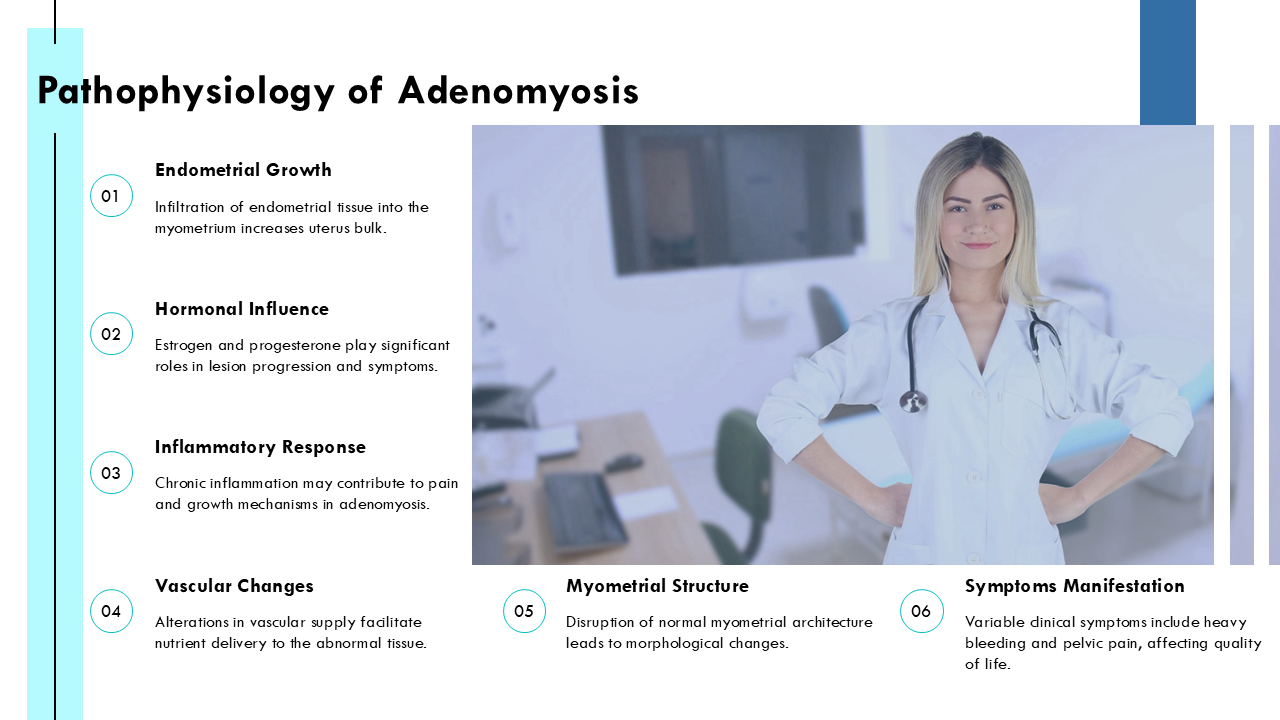
Template 4: Pathophysiology of Adenomyosis
This PowerPoint Template presents an in-depth description of adenomyosis pathophysiology, addressing six main elements of the disorder in a professional medical format. It examines the disease diagnosis process, from endometrial growth to hormonal impacts, inflammatory reactions, and vascular abnormalities. It also looks at changes in myometrial anatomy and how symptoms appear. The clean design includes microscopic examination findings and integrates biopsy analysis results in an easy-to-follow format. This accurate, engaging template can help medical students, gynecologists, pathologists, and other healthcare professionals who study reproductive problems. Grab it today!
Template 5: Risk Factors for Developing Skin Rash
The interesting interplay between external factors and human immune responses frequently emerges as skin rashes, making this PowerPoint Template an essential educational tool. The template extensively covers the risk variables that contribute to skin symptoms, drawing on insights from immunopathology and clinical pathology. It neatly describes the pathophysiology of numerous skin disorders, including allergic reactions, autoimmune responses, genetic predispositions, environmental variables, and lifestyle impacts. Download now!

Template 6: Types of Pneumonia: Overview and Classification
Understanding the many forms of pneumonia is critical for effective medical treatment. This PowerPoint Slide illustrates an attractive classification of six different forms of pneumonia with a clean, medical-oriented design. It effectively describes acute, chronic, bacterial, viral, aspiration, and fungal pneumonia, including their unique characteristics, progression patterns, and treatment requirements. The comprehensive yet concise format makes this template invaluable for medical educators, pulmonologists, primary care physicians, medical students, and more. Download today!

Template 7: Diagnosis of Endosalpingiosis
Have you ever wondered how professionals systematically diagnose endosalpingiosis? This PowerPoint Template depicts a step-by-step diagnostic process that begins with an assessment of the patient's health history and the identification of symptoms. It proceeds through imaging, biopsy, and pathology to ensure proper histological confirmation before discussing treatment choices and scheduling follow-up appointments. This template is a useful tool for reducing difficult diagnostic processes and increasing knowledge of this often-overlooked gynecological illness. Download today!

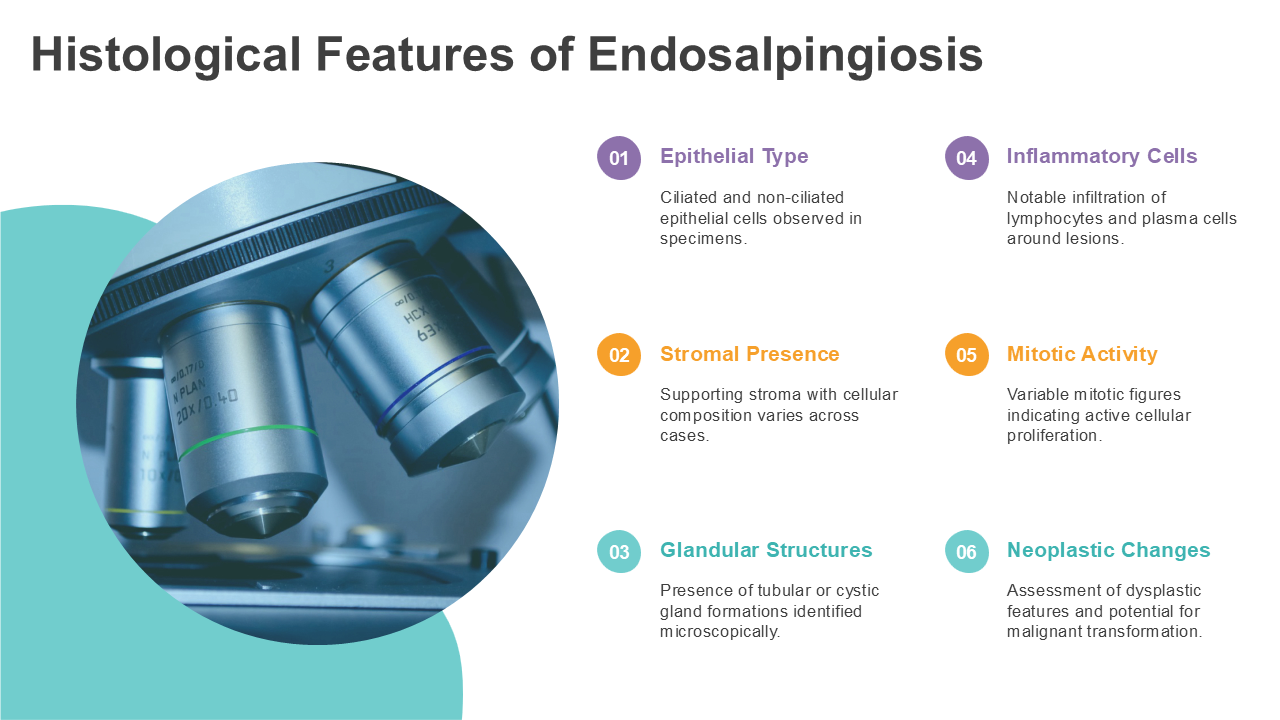
Template 8: Histological Features of Endosalpingiosis
This PowerPoint Template illustrates the main histological findings required for diagnosis, such as epithelial cell types, stromal composition, glandular structures, and inflammatory cell infiltration. It also discusses mitotic activity and probable neoplastic alterations, providing a full understanding of cellular disorders. This template is useful for pathologists, medical students, and researchers, as it provides a clear, organized framework for comprehending the microscopic features of this gynecological disorder. Download today!
Template 9: Diagnosis: Clinical and Radiological Approaches
Pneumonia diagnosis requires a comprehensive strategy that involves many diagnostic techniques. This PowerPoint Slide shows a comprehensive timeline that depicts the entire diagnostic journey, incorporating clinical pathology and histology data at different phases. The template contains seven important diagnostic processes, beginning with an initial patient history and physical examination. It then proceeds to imaging studies, cytopathology lab tests, and a final assessment. Download today!

Template 10: Mechanism of Rash Development
What sophisticated series of actions turn a single trigger into a visible skin emergence? This PowerPoint Slide beautifully illustrates the detailed mechanism of rash development using an inverted pyramid form. The template carefully lays out eight essential stages, from the initial immune response to cytokine release, keratinocyte activation, vascular alterations, and allergy sensitization, concluding in clinical findings. The expertly designed layout includes clear descriptions of each stage and related explanations, resulting in a thorough visual guide. Grab this template for teaching and understanding the pathophysiology of skin reactions. Download now!

Final Thoughts
With that, scale up your healthcare services and provide exemplary services to people with pathology worldwide by employing SlideTeam’s PPT templates.
Take advantage of our pathology presentation templates and begin your path to success today!
At SlideTeam, we have ensured that we are covering almost the entire field of pathology through our well-researched templates. These slides help in conveying technical information clearly, improving communication. Each template allows you to study details regarding pathology and all the elements related to it.
PS: A case report, which could be completed within 2-3 hours, can take up to two when written without proper tools. SlideTeam brings you a number of customizable and content-ready templates to create power-packed presentations. From Business to Medicine, we have got you covered.