

 0 Comment
 Customer Reviews

Peer recognition is important in modern workplaces. It plays a vital role in maintaining a positive workplace culture. Peer recognition acknowledges and celebrates the contributions of each other in organizations where we work, creating a sense of belongingness and value. The main goal of such recognition programs is to ensure staff appreciation, improve employee engagement, boost team morale, and strengthen team building.
Click here to browse through our top peer feedback templates.
However, to implement peer recognition programs, having a well-designed and structured plan is essential. With an effective plan, providing insights into the significance of team acknowledgement and obtaining the approval of stakeholders becomes easier.
Check out our recognition program templates and make your employees feel valued.
Are you clueless about how to get started with creating an attractive presentation on peer recognition? There is always room for growth, and the content-ready templates of SlideTeam are the ideal solution. Our expertly-designed templates are user-friendly and offer a comprehensive overview of the topic. They are 100% customizable, giving you the flexibility to make requisite changes to individual slides in a hassle-free manner.
This blog will delve into the top 10 peer recognition templates. Let’s explore!
Template 1: Peer-to-Peer Recognition Methods
Use this template to showcase prominent techniques for peer-to-peer recognition. These slides promote the successful implementation of the recognition strategies and ensure employee engagement. The methods highlighted are social media recognition, point-based system, LinkedIn endorsements, use of peer recognition software, and card and handwritten notes.

Template 2: Effective Peer Identification Strategies PowerPoint Template
Discover the power of employee collaboration with our deck on peer identification strategies. This comprehensive deck provides a clear understanding of proven techniques to identify influential peers. The main goal is to identify and leverage the strength of peers to drive optimal innovation and performance.
[product_image id=1393456]
Template 3: Criteria for Selecting Peer Candidates
Are you wondering how to choose the best peer candidates? If so, this template can be your perfect tool. Understand key criteria, such as experience, availability, communication skills, learning skills, skill alignment, cultural fit, and reputation using this PPT Layout. Explain each of the criteria and ensure effective understanding by the key stakeholders.

Template 4: Assessment Techniques for Peer Compatibility PPT Template
Use this template to showcase top techniques for assessing peer compatibility. The techniques covered are observation, surveys, group activities, and interviews. Compare these assessment techniques on factors, such as purpose, tools, frequency, and outcome. Evaluate the techniques and select the best one based on the unique requirements of your organization.

Template 5: Peer-to-Peer Recognition Programs PPT Template
Enhance your workplace culture with these peer-to-peer recognition programs template deck. This powerful deck enables organizations to improve employee engagement, enhance team morale, and foster a sense of collaboration. Use this template to transform your team dynamics with ease. This template deck is perfect for managers in modern organizations.
[product_image id=1499861]
Template 6: Setting Objectives for Recognition Initiatives
This template is designed to help you implement the steps essential for setting objectives for employee recognition initiatives. The major steps that work are defining goals, engaging employees, setting criteria, fostering culture, and measuring impact. The simplicity of the template makes it easier for the target audience to grasp the intended message easily.

Template 7: Types of Peer-to-Peer Recognition PPT Presentation Template
Use this template to provide an idea of peer-to-peer recognition types. It includes shoutouts, employee rewards, recognition boards, thank you notes, digital badges, team celebrations, feedback forums, and spot bonuses. Provide a brief of each of the recognition types to promote a better understanding among the target audience. Download this template and implement the best recognition types in your organization.

Template 8: Understanding Peer Identity
Explore the power of social connection with our professionally designed, attractive templates. This PPT Layout Deck provides information on understanding peer identity. The simplified content and engaging visuals take you deeper into the dynamics of peer relationships.
[product_image id=1386247]
Template 9: Core Concepts of Peer Identity PPT Layout
Use this template to educate your target audience on the core concepts of peer identity. It includes social bonds, group dynamics, communication skills, identity formation, cultural influence, support networks, conflict resolution, and peer mentorship. This template provides a brief on concepts for easy understanding by the stakeholders. Download this template and offer clarity on peer identity.

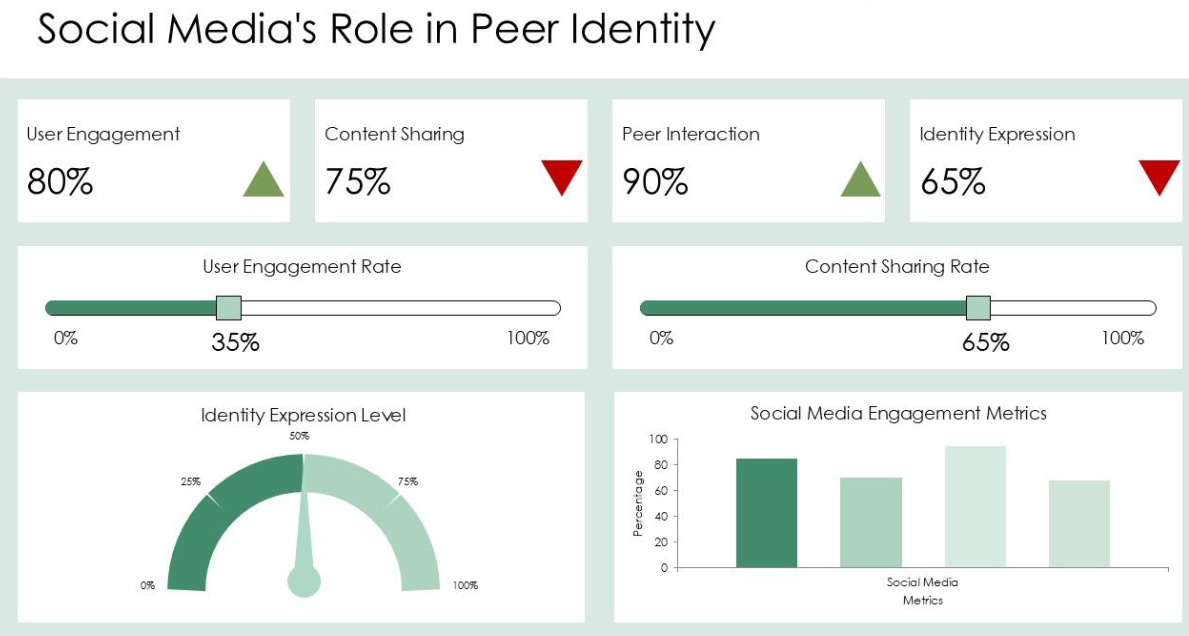
Template 10: Social Media’s Role in Peer Identity
Get this template to understand the role of social media in enhancing peer identity. The key aspects covered in the template are engagement rate, content sharing, peer interaction, and identity expression. Use this template to enhance social connections easily. The graphical representation allows conveying the information in an effective manner.
PS Drive employee growth with our professional peer review templates.
PEER RECOGNITION POWERS PERFORMANCE
The significance of peer recognition in recent times cannot be undermined. It not only helps improve employee motivation but also has a significant impact on their performance. If you want to inform your stakeholders about the need and relevance of peer recognition, using our user-friendly templates is a good idea. Designed by the experts in the industry, all our templates are well-structured and consist of the essential elements. As they are completely editable, you can customize individual slides and add content based on your unique requirements.
FAQs on Peer Recognition
-
What is peer recognition and why is it important in the workplace?
Peer recognition refers to an approach in which employees publicly appreciate and acknowledge their colleagues for the positive contributions made by them. This lateral appreciation mainly aims at creating a more connected, motivated, and positive workplace. Peer recognition is crucial as it helps improve employee morale and teamwork.
-
How does peer-to-peer recognition improve employee engagement?
By fostering a motivated, positive, and connected workplace, peer-to-peer recognition helps enhance employee engagement. When employees value and appreciate the contributions of each other, it creates a culture of appreciation, increasing the sense of belongingness. Eventually, it leads to better employee morale, increased job satisfaction, and higher productivity.
-
What are the benefits of implementing a peer recognition program?
Implementing peer recognition programs can offer many benefits to organizations. Some benefits include higher job satisfaction, improved work environment, and better employee performance. Moreover, it also helps in the creation of a collaborative and positive work environment within modern organizations where employees feel valued and appreciated. Ultimately, business outcomes improve.