

 0 Comment
 Customer Reviews

Ever feel like you’re working hard, but not getting the results you want? Don’t worry, all of us feel this pain and frustration at certain stages. But what if it’s not you but rather your process behind this situation? What if we tell you that the answer to your performance problems or the solution to the lack of desired results hides in plain sight, right under your nose?
Starbucks, Amazon, and many organizations acknowledged the fact that they couldn’t fix something without understanding or measuring it. Starbucks introduced a customer satisfaction score in the early 2000s and decided to train their baristas to improve customer experience once they figured that it was dipping. Chicago Public School adopted a reformation strategy when it witnessed lower test scores than the national average.
That’s where a lot of businesses and institutes falter. Even when their assessment data screams the answers, they choose to fly directionless because they don’t ask the right questions.
SlideTeam, however, identifies these common patterns early on to design a comprehensive and 100% customizable data evaluation and response plan.
It prioritizes classifying information into appropriate categories to identify prevalent industry trends and your performance gaps in relation to them to build your desired and result-inducing action framework.
Grab our performance action plan templates to improve organizational productivity.
Let’s explore!
Template 1: Review Assessment Data and Action Plan Templates
This PPT template bundle carries attention to particular details without missing the bigger picture of optimizing data monitoring and intervention plans. It allows the user not just to introduce the framework and discuss its importance in front of the panel, but also to explore its major components and techniques used for harnessing data. Use this package to set quantifiable and achievable goals with a structured timeline for completing them. Its data visualization tools encourage the presenter to convert raw and clustered data to insightful metrics and indicators. It further offers a step-by-step action plan design and implementation strategies. Download now!
[product_image id=1486089]
Template 2: Key Components of Assessment Data
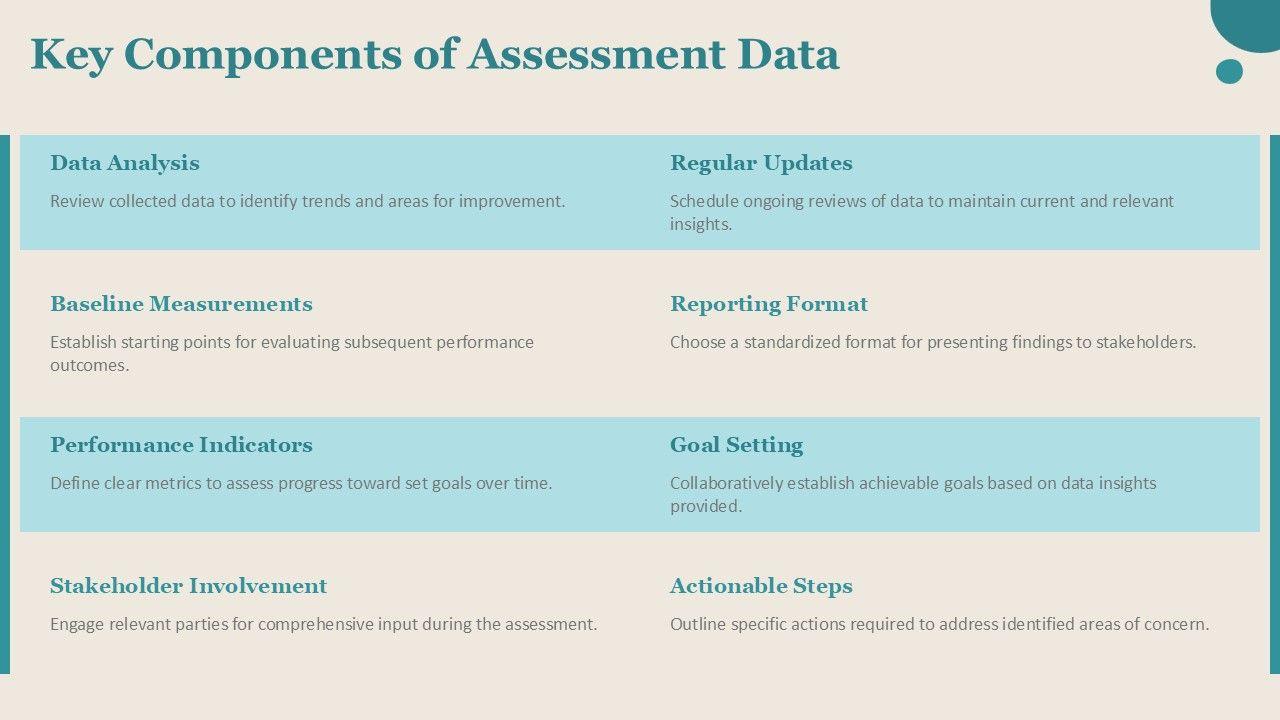
This template breaks down the process of data review and improvement plan into its essential and strategic components. This step-by-step, structured categorization involves reviewing collected data for identifying trends, establishing vantage points, and performance indicators to assess relative progress both in quantitative and qualitative terms. Additionally, it emphasizes the importance of a standard reporting format for clarity. Use this slide to educate your audience and gain your stakeholders’ trust.
Template 3: Types of Review Assessment Data
Here is a preset that fosters different ways of implementing information analysis and action steps in your educational setup. It highlights the importance of taking a bottom-up route, where you optimize the parts to work towards a larger and comprehensive picture. It breaks down the assessment data into formative, summative, diagnostic, and benchmark categories. They cater to diverse student needs like immediate feedback, long-term evaluation, and identifying strengths & weaknesses, without fail. Download now!

Template 4: Essential Elements of Action Plans
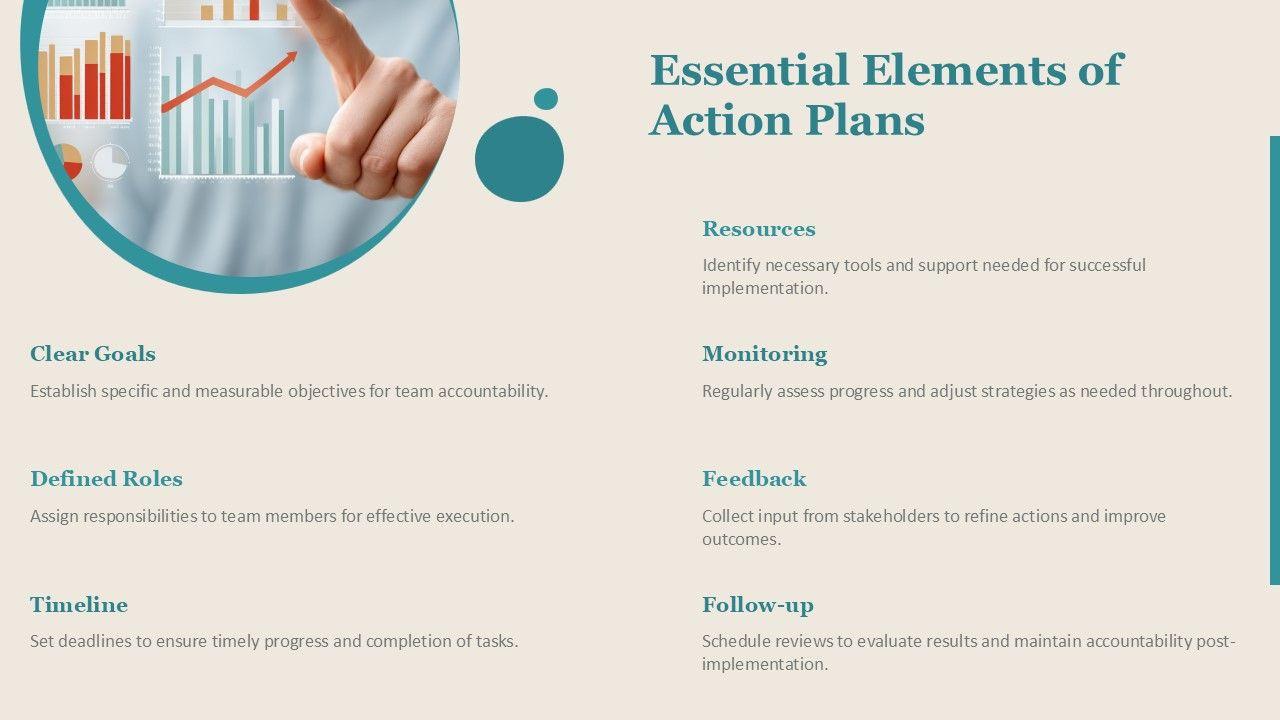
Having an asymmetrical action plan is like having determination towards the cause without skills. This template identifies major steps and elements that constitute a holistic evaluation summary and action framework. Work through establishing realistic goals, assigning responsibilities, setting deadlines, and identifying necessary resources to put an organized plan into action. Download now!
Template 5: Aligning Action Plans with Goals
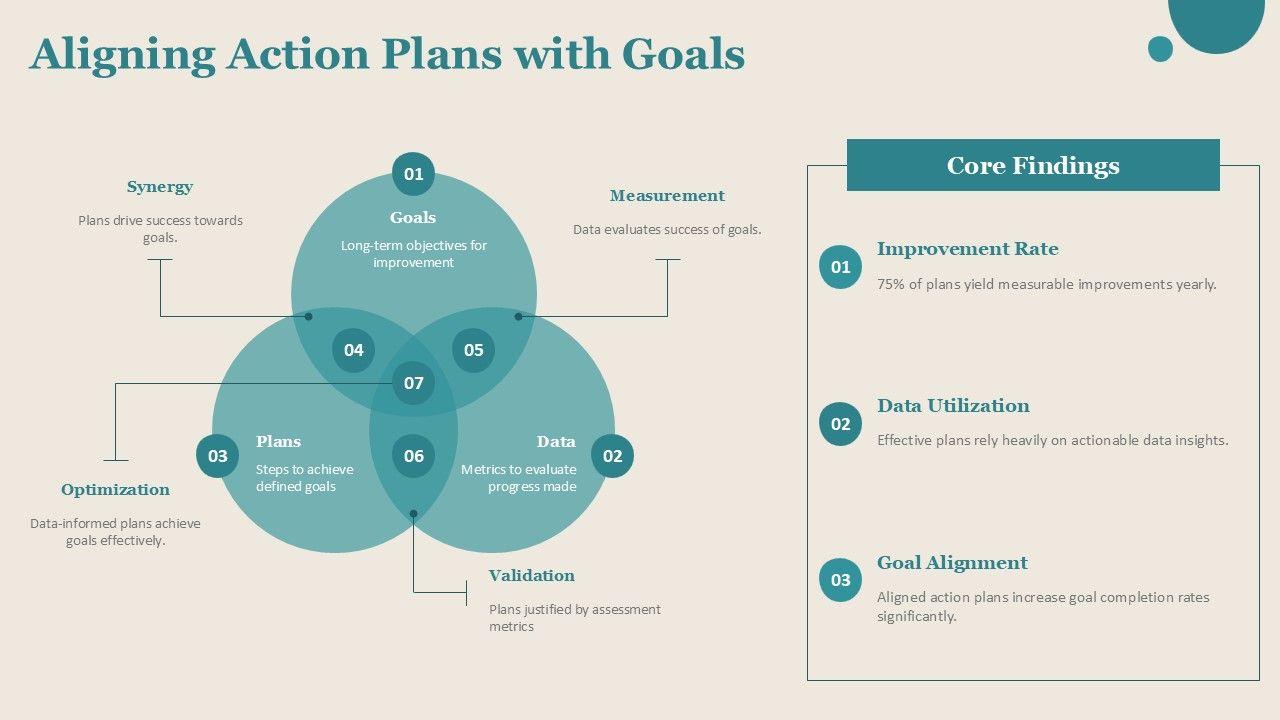
Once you have an organized framework, ensuring every step remains in sync with the goal becomes your next concern. This is where our template weaves a comprehensive relationship among the use of data-backed metrics and outlined steps to achieve desired goals using a Venn diagram as a visualization tool. Channel its focus on the use of actionable data insights to regularly monitor progress made by your action roadmap for necessary tweaks.
Template 6: Setting Measurable Objectives
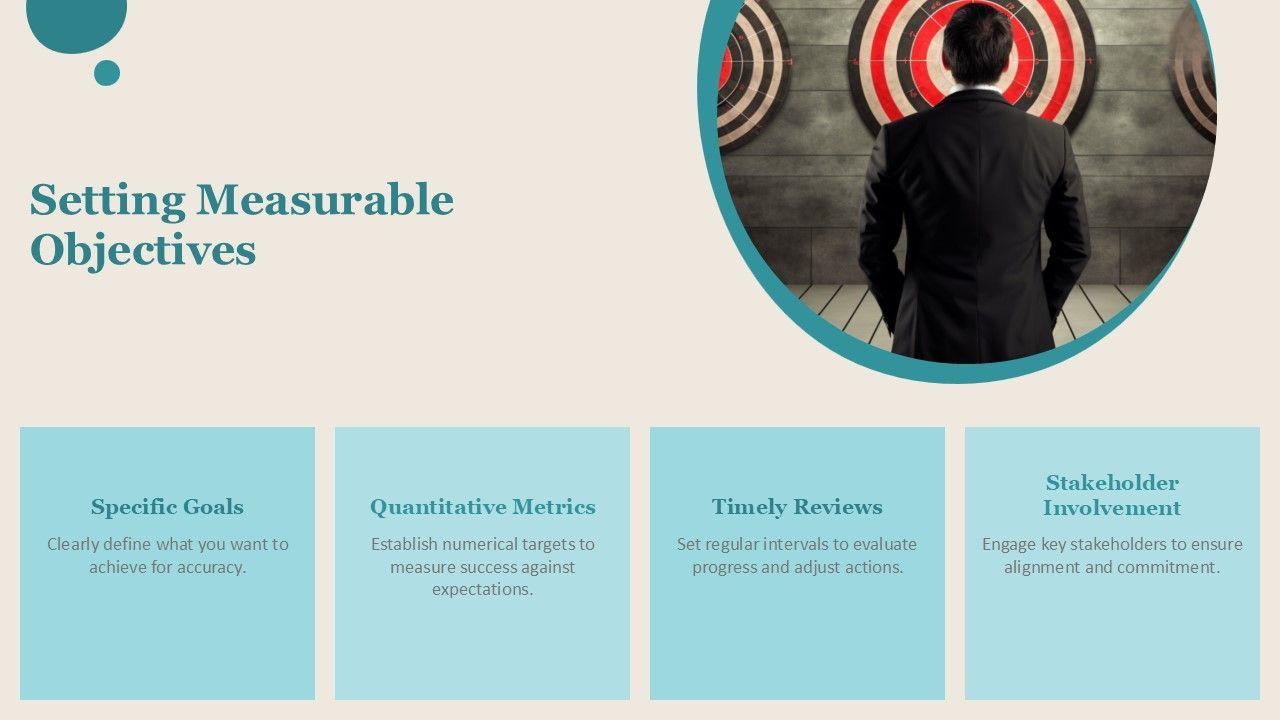
You often hear, “ setting goals is one thing and achieving them is another “. Our assessment findings and action roadmap only partially support this theory, as it recognizes establishing targets as a key component towards completing them, as long as you have their specific definitions. Furthermore, it includes mandatory usage of quantitative objectives to measure data-backed progress on a timely basis. Use this to target constant stakeholders’ commitment. Download now!
Template 7: Incorporating Stakeholder Feedback
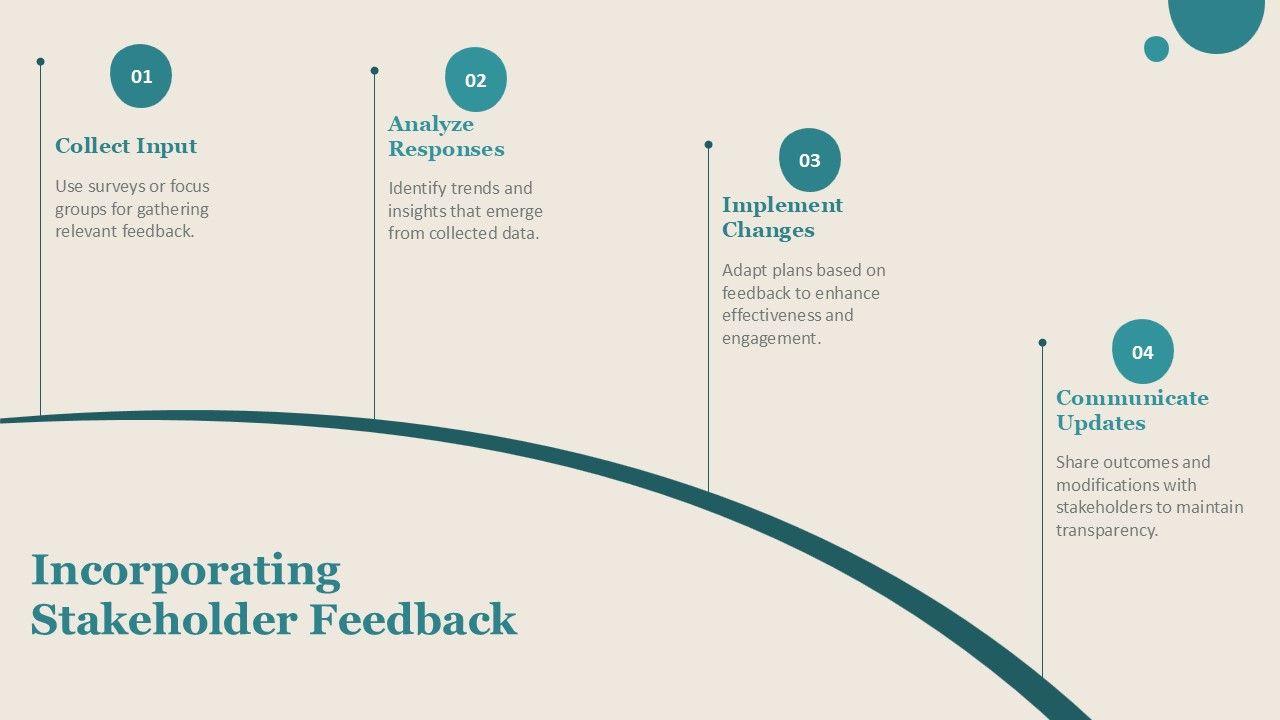
While keeping your stakeholders aligned with your assessment goals is a key objective of your outcome evaluation and action agenda, this template defines systematic ways in which you can achieve this goal. It encourages using surveys to gather their feedback, followed by a thorough analysis of responses to determine their insightfulness. The last two steps involve implementing suggested and approved changes and sharing their outcomes for a transparent two-way relationship.
Template 8: Analyzing Assessment Data Insights
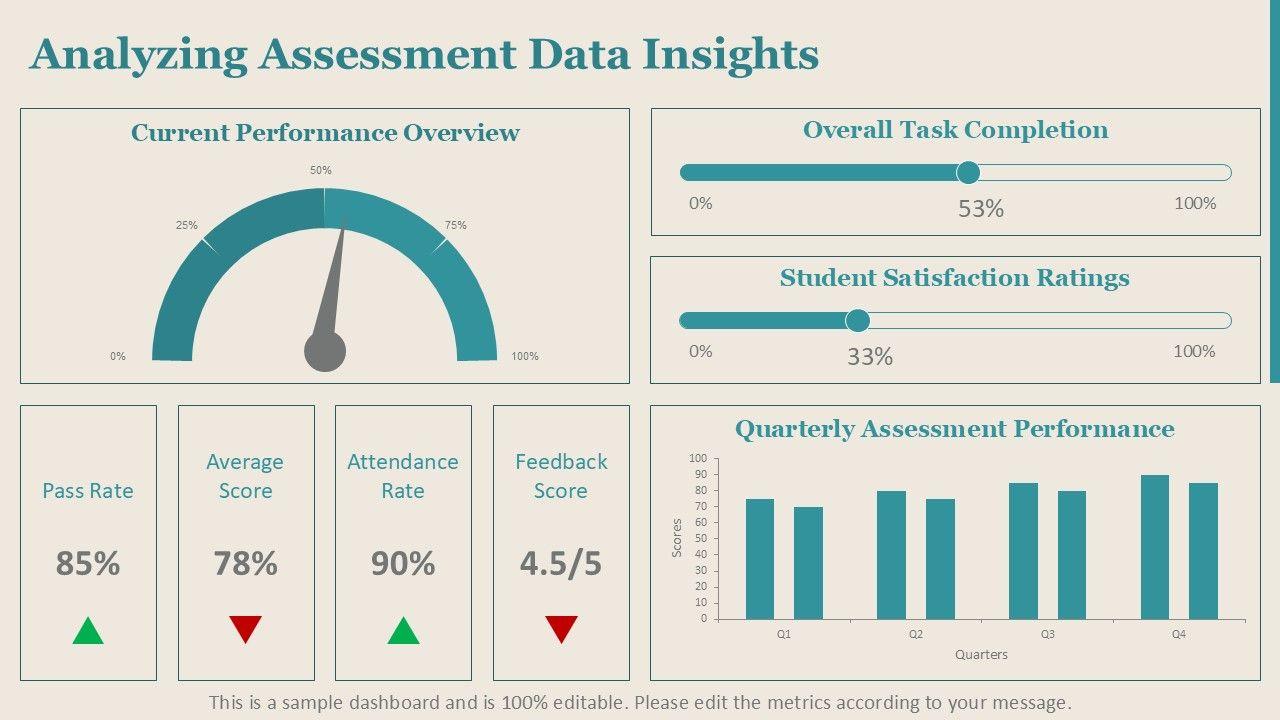
Struggling to quantify your student assessment data along with stakeholders' responses and objectively measure their perspicacity? Educators and administrators often grapple with disconnected data points when they're flooded with numbers and scores for attendance, pass rates, and task completion, resulting in missed opportunities. This all-in-one, customizable dashboard offers a centralized platform with key metrics, charts, and performance indicators to present and visualize insights for informed decision-making.
Template 9: Challenges in Data Review Processes
This template identifies some persistent problems associated with actionizing a data analysis and implementation plan in order to address them proactively. It highlights the inconsistency and confusion created by using different formats and practices for the same data collection purpose. It also identifies the problem of limited access, inadequate staff training, and misaligned data with the organizational goals, becoming major obstacles in streamlining your workflow. Download now!

Template 10: Evaluation of Action Plan Effectiveness
Our final template stimulates an across-the-board assessment review and strategy SWOT analysis to measure the success of the action plan put in action at any given point. It is illuminating knowing both your strengths and weaknesses at a given point, but this goes one step further. It extracts upcoming opportunities like leveraging technology and potential threats, including changing regulations, all at once, to maximize rewards and minimize damages. Download now!

Conclusion
Data isn’t just raw numbers; it’s a narrative, or a fabula, irrespective of the nature of the requirements. This fabula, with necessary attention and context-backed presentation, weaves a story, telling you where you are, what’s holding you back, and exactly what steps to take next.
The slides mentioned in this blog help you create a review, insights and execution plan, enabling you to work smarter rather than harder.
Get our data assessment templates to evaluate a chunk of qualitative data and stand out among your competitors.
PS: Create insightful action plans with more of our assessment and plan templates.
FAQs on Review Assessment Data and Action Plan
What is the purpose of reviewing assessment data?
Educational institutes often implement a performance review and response strategy to review assessment data to access game-changing insights, necessary to enhance students' learning outcomes. Its main purpose is to explore the student's strengths & weaknesses for required support through interventions. This works both ways as it additionally improves the teaching quality, leading to the overall success of the educational program.
What types of assessment data are being analyzed?
Institutes create their assessment report and follow-up plan after analyzing both quantitative and qualitative assessment data. While the former suggests assessing students’ test scores, pass rates, average score, attendance rate, and overall task completion, sometimes using a previous benchmark, the latter focuses on analyzing their work samples, such as completed projects, along with learning experiences, and overall satisfaction with the program. Each gives a different perspective on institutional effectiveness.
Who is responsible for reviewing and interpreting the data?
Teachers play the most significant role in data reviewing and interpretation as they are primarily and constantly monitoring attendance rates, test scores, and pass rates of the students. They also identify specific support areas for students with certain shortcomings. However, the responsibility also falls on the shoulders of administrators to use data to monitor trends and establish achievable goals. Sometimes, data analysts, curriculum designers, and students themselves review assessment data for an overall nourished and self-reflexive learning.