

 0 Comment
 Customer Reviews

Imagine a woman on top of the world, pregnant and nearing her day of delivery when she learns, with utmost disappointment, that her regular checkup has uncovered toxoplasmosis, a parasitic infection caused by Toxoplasma gondii. The news is devastating, but it does not end here. Congenital toxoplasmosis is listed with other conditions causing defects in birth and may even lead to a miscarriage.
Lacking any idea, she never would have wanted to even go to her cat just to clean its litter box, and neither would she have thought the danger came from consuming undercooked meat.
What is Toxoplasmosis and Why is it a Concern?
Toxoplasmosis is a common but often overlooked zoonotic disease. It is mostly transmitted through cat feces, food contamination, and undercooked meat. When the parasite invades the human body, it creates tissue cysts in muscles, brains, and other organs, leading to a host of possible lifelong health complications.
According to the Centers for Disease Control and Prevention (CDC), more than 40 million people in the U.S. are estimated to be infected with Toxoplasma gondii. Most individuals do not develop symptoms due to a strong immune response. However, those with weakened immunity, such as HIV/AIDS patients or pregnant women, may suffer from severe complications, including neurological symptoms, visual loss from ocular toxoplasmosis, and even life-threatening conditions.
In Brazil, an extensive outbreak of toxoplasmosis was recognized in 2012, owing to the suspected contamination of drinking water exposing thousands to the parasite. Most had flu-like symptoms while pregnant women faced dire consequences. Another case that was documented involved a French woman who, unaware, consumed undercooked meat and infected her unborn baby, leaving the child with ocular toxoplasmosis causing vision defects. This accentuated the need for early serological testing during pregnancy.
How the Parasite Spreads?
The life cycle of Toxoplasma gondii is elaborate, with the cat representing the primary host. Oocysts are released by the parasite into feline feces, and these persist for months in soil, water, and on contaminated surfaces. Infection may occur in the following ways:
Direct transmission via cat feces: Litter or soil that is contaminated with feces.
Transmission through food consumption: Eating undercooked meat, especially pork, lamb, and venison.
Congenital toxoplasmosis: When an infected mother transmits the parasite to the fetus during pregnancy.
Waterborne transmission: Drinking water contaminated by oocysts.
Welcome to SlideTeam
We understand the need to familiarize the masses with zoonotic diseases such as toxoplasmosis. This is why we have created several slide presentations on Toxoplasmosis Medication, guiding a group of healthcare professionals, educators, and policymakers to convey important information about this silent threat.
Template 1: Toxoplasmosis Medication Set
Do you need a comprehensive and visually engaging presentation on Toxoplasmosis Medication? You are at the right place! Our Toxoplasmosis Medication PowerPoint Deck is simply what healthcare professionals need to convey the treatment options, research findings, and management advice effectively. This PPT pack of 44 slides comes with well-structured slides, attractive illustrations, and totally customizable content. Perfect for medical conferences, lectures, and educational discussions! From antiparasitic treatments to recent advances, this template gives one-audience endeavors enough clarity and impact. Go ahead and present without any fuss; download this pack today!
[product_image id=1334994]
Template 2: Toxoplasmosis Overviews and Background
A well-planned PowerPoint slide on Toxoplasmosis Overviews and Background is critical to building a case for understanding the transmission, symptoms, treatment, and prevention of the disease.
- Transmission of the Disease: Understanding toxoplasmosis transmission, such as cat feces transmission, food transmission, and congenital toxoplasmosis, enables risk reduction.
- Medical Treatment Options: This slide describes the attributes of various antiparasitic treatments and their effective management of infections.
- Symptom Management Diagnosis: Flu-like and neurological symptoms facilitate diagnosis and treatment.
- Prevention of the Diseases: Hygiene; food preparation, as well as serological testing is emphasized to mitigate infection occurrence.
This slide is valuable for healthcare professionals and individuals seeking clear guidance on managing and preventing toxoplasmosis effectively.

Template 3: Understanding the Toxoplasma Parasite
This PowerPoint slide discusses the main issues regarding toxoplasmosis to help people take appropriate precautions and seek medical treatment in a timely manner. It highlights:
- Modes of Transmission: Identifies the spread of Toxoplasma gondii through transmission by cat feces, foodborne transmission, and congenital toxoplasmosis to lessen the threat of exposure.
- Awareness of Symptoms: Discusses flu-like symptoms, neurological symptoms, and ocular toxoplasmosis so patients can be treated at the earliest.
- Preventive Measures: Stress on practices of hygiene, safe food handling, and serological testing for high-risk individuals.
This slide provides an excellent medium for awareness, early diagnosis, and prevention efforts.

Template 4: Clinical Symptoms and Diagnosis
The slide contains useful information that aids in recognizing and diagnosing toxoplasmosis. It covers the critical symptoms that will allow for early detection of the infection:
- Fever: This is a persistent fever that could indicate either an acute infection or an acute attack;
- Fatigue: Extreme tiredness would affect one due to its impacts felt in general life and personal health;
- Vision Changes: Retinal involvement by the pathogen could induce blurred vision, thus requiring medical attention;
- Neurological Symptoms: Headaches, seizures, and or confusion indicate that there might be some involvement of the brain.
This particular slide provides information on symptoms of toxoplasmosis, thus enabling timely serological tests and efficient antiparasitic treatment for better patient outcomes.

Template 5: First-Line Medications for Toxoplasmosis
Download this slide to learn the important drugs in treating infections from Toxoplasma gondii. This slide outlines the basic medications:
- Pyrimethamine: It is taken daily to reduce the load of parasites undergoing primary treatment.
- Sulfadiazine: It functions in conjunction with pyrimethamine to maximize efficacy by attacking tissue cysts within the host's cells.
This slide will be helpful in understanding the antiparasitic treatment approach for toxoplasmosis, ensuring a structured and effective medication regimen. It simplifies treatment planning for healthcare professionals while improving patient outcomes.

Template 6: Alternative and Adjunctive Treatments
Use this template to explore other tactics worth employing to treat toxoplasmosis successfully. This highlights key supportive treatments that can enhance recovery and improve patient outcomes.
- Nutritional Support – The inclusion of vitamin supplementation boosts the immune response.
- Antimicrobial treatment – Azithromycin may be used as a co-agent in conjunction with standard treatment.
- Corticosteroid therapy – Corticosteroids may be used for very severe inflammatory responses.
- Patient follow-up – The patient should have regular visits to assess treatment progress.
- Patient education – Assist in the consciousness of the signs and symptoms of this infection in the patient.
- Alternative medications – Clindamycin may be considered in those allergic to sulfonamides.
Therefore, this slide outlines a systematic approach for supporting adjunctive treatments and thus improving patient care and treatment outcomes.

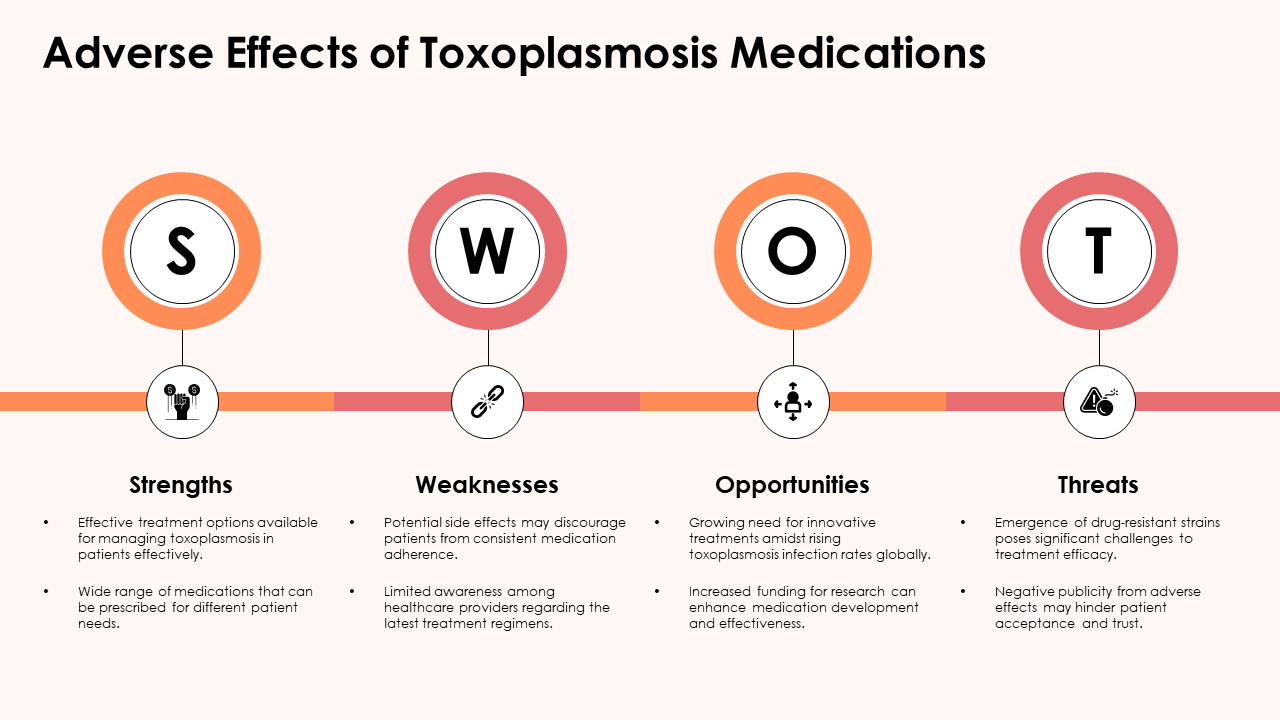
Template 7: Adverse Effects of Toxoplasmosis Medications
This slide provides insight into challenges that make it tough to treat toxoplasmosis effectively. The slide stages the main issues as follows:
- Strengths: Effective medications currently exist to offer different treatment options suited for each patient.
- Weaknesses: Possible side effects may deter patients from complying with treatment and a low level of knowledge among healthcare providers about updated regimens may exist.
- Opportunities: Greater funding and research are now on the cards for improving drug effectiveness aimed at treating the greater demand globally for better treatments.
- Threats: Drug-resistant strains from negative publicity about side effects can break the trust of the patients and non-adherence of the treatment regimen.
This slide serves to evaluate the risk of the medications in question to assist informed decision-making and management of toxoplasmosis.
Template 8: Guidelines for Monitoring Treatment
Use this PowerPoint slide to ensure effective management of toxoplasmosis medication. It highlights essential steps for tracking treatment progress and patient well-being:
- Symptom Assessment – Regularly monitor changes in toxoplasmosis symptoms to assess improvement or complications.
- Medication Adherence – Ensure patients follow their prescribed medication regimen for effective recovery.
- Immunocompetence – Evaluate immune function, especially in immunocompromised patients.
- Patient Education – Help patients understand their treatment and necessary adjustments.
- Lab Testing – Conduct periodic blood tests to check treatment effectiveness.
This slide serves as a structured guide for healthcare providers, ensuring comprehensive patient monitoring and better treatment outcomes.

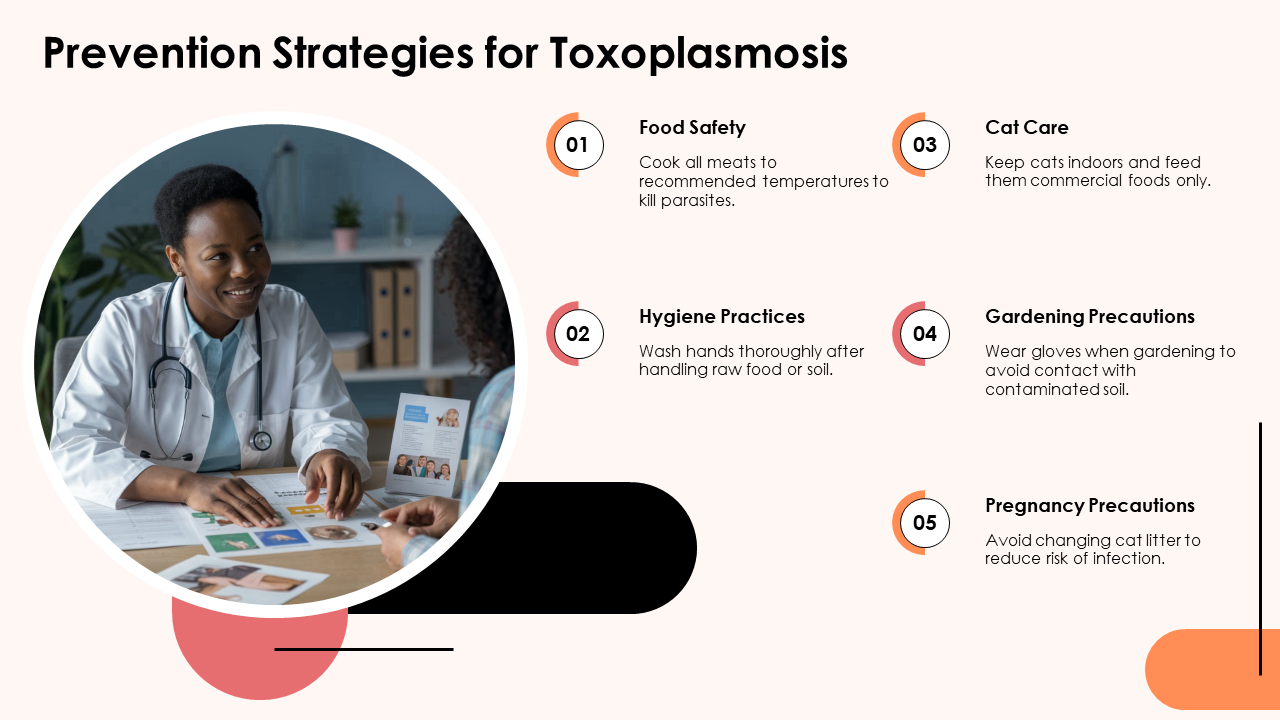
Template 9: Prevention Strategies for Toxoplasmosis
Use this slide and learn how to safeguard yourself from Toxoplasma gondii infection. The slide highlights key preventive measures:
- Food Safety: Avoid undercooked meat and wash fruits and vegetables thoroughly.
- Hygiene Practices: Wash hands regularly, especially after handling raw food or soil.
- Cat Care: Change litter boxes daily and keep cats indoors to prevent exposure.
- Gardening Precautions: Wear gloves while gardening to avoid contact with oocysts.
- Pregnancy Precautions: Expecting mothers should avoid handling cat litter and opt for serological testing.
This slide is essential for understanding practical steps to reduce the risk of toxoplasmosis, ensuring better health and safety.
Template 10: Role of Public Health in Management
Use this template to understand how public health plays a crucial role in handling toxoplasmosis medication through:
- Awareness
- Prevention
- Screening
- Treatment
- Monitoring
- Education
- Collaboration
- Evaluation
Public health efforts ensure early detection, timely serological testing, and effective antiparasitic treatment for toxoplasmosis. This slide highlights the importance of public health in reducing infection rates, preventing outbreaks, and educating communities about safe food handling and cat feces transmission risks. It streamlines the management process, making toxoplasmosis medication strategies more efficient and accessible for at-risk populations.

Wrapping Up
Toxoplasmosis is a serious yet preventable parasitic infection that affects millions worldwide. Understanding its transmission, symptoms, and treatment can help reduce risks, especially for vulnerable groups like pregnant women and immunocompromised individuals. Early serological testing and proper antiparasitic treatment play a crucial role in managing the disease. To assist in raising awareness and streamlining prevention efforts, SlideTeam has prepared templates on Toxoplasmosis Medication, making information more accessible and actionable.