Cloud service models cloud computing ppt background

Rating:
80%
Cloud service models cloud computing ppt background
Slide 1 of 2
Favourites Favourites

Try Before you Buy Download Free Sample Product

Audience Impress Your
Audience
Editable 100%
Editable
Time Save Hours
of Time
The Biggest Sale is ending soon in
0
0
:
0
0
:
0
0
Rating:
80%
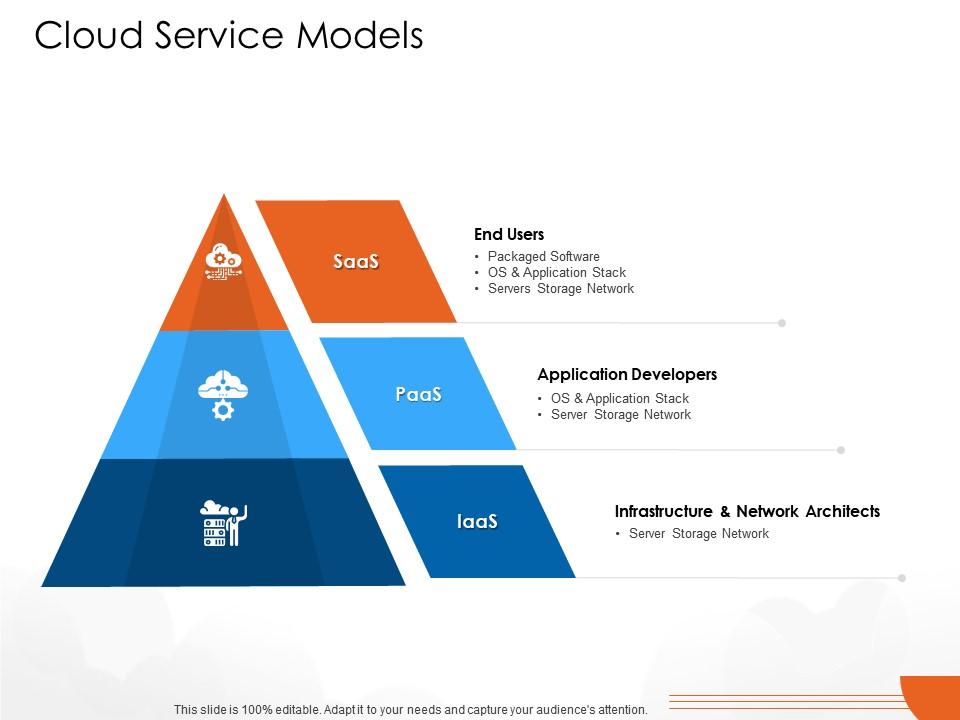
Increase audience engagement and knowledge by dispensing information using Cloud Service Models Cloud Computing Ppt Background. This template helps you present information on three stages. You can also present information on End Users, Application Developers, Infrastructure And Network Architects using this PPT design. This layout is completely editable so personaize it now to meet your audiences expectations.

People who downloaded this PowerPoint presentation also viewed the following :

FAQs for Cloud service models cloud

So there's three main types of cloud services - IaaS, PaaS, and SaaS. IaaS is like renting raw server space and you handle all the software stuff yourself. With PaaS, they give you the development tools too so you can just build your app without worrying about the underlying tech (honestly this one's my favorite for most projects). SaaS is when you're just using their finished software - think Gmail or Netflix. It's kinda like the difference between buying ingredients vs getting a meal kit vs ordering takeout. Just depends how much control you want versus how much hassle you're willing to deal with.

So IaaS lets you get all the cloud benefits without dealing with actual servers - which honestly is a game changer. You can spin resources up or down whenever you need them, so you're not burning money on hardware that's just sitting there. No more waiting years for refresh cycles either. Your team gets to focus on the fun stuff (building apps) instead of server maintenance hell. The cost savings alone make it worth considering, but I'd say start with something small first to test it out.

Dude, PaaS is a lifesaver - it handles all the server setup nonsense so you can just write code. No more weeks spent configuring databases and dev environments. You literally push your code and it deals with scaling, security updates, all that backend chaos. The CI/CD pipelines come ready to go, which is huge because setting those up manually is such a pain. Testing environments get spun up automatically too. Honestly saved my butt on so many tight deadlines. Oh and definitely start small with whatever provider you pick - their workflows can be quirky at first.

SaaS is great when you want standard stuff without dealing with IT nonsense. Gmail, Salesforce, accounting tools, Slack - you get the idea. Perfect for startups or anyone who doesn't want to babysit servers and updates. Most business software works this way now anyway. You trade some customization for instant setup and those predictable monthly bills (which honestly isn't a bad deal). Just double-check what integrations you'll need first - learned that one the hard way. Way easier than the old days of installing everything yourself.

Look at what your team can actually handle first. Strong devops skills? IaaS gives you total control over everything. PaaS is honestly where I'd go for most stuff - you just code and deploy without dealing with server headaches. SaaS works when you need something that just... works immediately. Budget matters too, obviously. Compliance can be tricky depending on your industry. Oh, and scaling speed - some solutions handle growth way better than others. Maybe try a small test project first? Way better than going all-in and regretting it later.

Okay so first thing - understand the shared responsibility model. Cloud providers cover some security stuff but you're still responsible for other parts depending on what service you pick. IaaS means you handle most security yourself. PaaS splits responsibilities more evenly. SaaS is easiest since they manage almost everything, though that can feel weird giving up so much control. Focus on these key areas: data encryption, access controls, meeting compliance rules, and having solid incident response plans. Oh and definitely get clear documentation on what they cover vs what's on you - that confusion bites people all the time.

Honestly? Compliance regs make you obsess over data location and control. Healthcare and finance usually get stuck with private cloud or on-premises since they need to know exactly where sensitive stuff lives. Public cloud works but vetting providers is brutal - the paperwork will make you want to quit. SaaS is the worst for control issues. My advice? Map your specific requirements first, then figure out which options won't completely destroy your budget. Trust me, don't go backwards on this process.

Honestly, it's gonna depend on what you're running right now. Upfront costs are usually way lower - no more buying servers or dealing with data center stuff. Monthly bills become more predictable with subscription pricing, which is nice for planning. But here's the thing - cloud costs can totally sneak up on you if you're not watching usage. It feels unlimited so people go overboard. You'll probably save on IT staff since they handle all the infrastructure headaches. My advice? Do a real cost breakdown of your workloads first, maybe try a small pilot project to see actual numbers before jumping in completely.

So basically hybrid clouds let you combine public and private infrastructure however works best for your situation. Keep your sensitive stuff on private servers, then use public cloud when you need to scale up during busy periods. Honestly, the orchestration tools are what make it all work smoothly - they handle moving workloads around automatically. You might run your databases privately for security reasons but then push heavy computing tasks over to AWS or Azure when things get crazy. It's pretty flexible for costs and compliance. Figure out which apps need tight control first, then go from there.

Honestly, security's gonna be your biggest headache - nobody wants their data floating around somewhere they can't see it. Moving existing stuff over is brutal too, especially if your current setup is ancient or weird. Cloud bills can get crazy fast if you're not watching them like a hawk. Oh, and your team will probably freak out about losing control over everything. Start small though - pick something that won't kill you if it breaks and test the waters first. Way better than diving in with critical systems and having everything blow up.

Okay so basically cloud services give your remote team shared workspaces they can all jump into from wherever. Google Workspace and Office 365 are perfect for this - real-time doc editing, video calls, file sharing, the whole thing. Your dev team will love PaaS because they can collaborate on apps without dealing with all that infrastructure headache (seriously such a pain). IaaS handles the underlying stuff so everyone gets reliable access to what they need. Everything lives in the cloud, so location doesn't matter anymore. Just pick whatever service level works for your team size and what you're actually trying to do.

Depends on how hands-on you want to get with scaling, honestly. IaaS lets you control everything - scale up, scale down, whatever you need - but you're doing all the heavy lifting yourself. PaaS is pretty nice because it handles the scaling automatically for your apps, though you're stuck with their options. SaaS just does its thing without asking you. I mean, that's fine if you don't need anything custom. Really comes down to whether your team wants to manage that stuff or just focus on building features.

So cloud services are pretty amazing for data stuff - you don't have to deal with all the server headaches. IaaS lets you fire up huge computing power when you need it, then dial it back down (saves money too). PaaS is where it gets interesting though - you get pre-made analytics tools so your team can actually focus on finding insights instead of wrestling with setup. Then there's SaaS like Tableau that has you analyzing data super fast. I mean, we're talking minutes instead of waiting around for months. You can try different tools and scale quickly once you figure out what clicks for your business.

Dude, serverless is absolutely everywhere now - nobody wants to deal with infrastructure headaches anymore. Multi-cloud setups are becoming standard too. Cloud providers are basically shoving AI/ML tools into everything they offer, which honestly makes sense. Edge computing's getting bigger, and you've got all these "as-a-service" options popping up. Database-as-a-service, security-as-a-service... the list goes on. Pay-as-you-go pricing is huge right now. Companies want vendor-agnostic stuff so they're not locked in. I'd watch how your current providers are handling automation and hybrid deployments - that's where things are headed.

So here's the deal with cloud disaster recovery - it really depends on which model you pick. IaaS gives you total control to build your own backup systems and spread stuff across regions, but honestly? It's a pain to set up. PaaS handles the infrastructure headaches for you, though you'll still need to worry about your app data. SaaS is definitely the lazy person's dream since they manage everything including backups. I'd say just figure out how fast you actually need to recover from disasters, then pick whichever model can handle that without breaking your budget.

Ratings and Reviews

80% of 100
Write a review
Most Relevant Reviews
  1. 80%

    by Derrick Rice

    Informative presentations that are easily editable.
  2. 80%

    by Clarence Mendoza

    Informative design.
  3. 80%

    by Smith Diaz

    Much better than the original! Thanks for the quick turnaround.

3 Item(s)

per page: